
 France
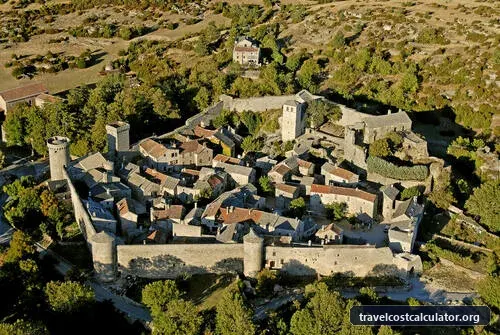
The Causses and the Cévennes, Mediterranean agro-pastoral Cultural Landscape
This 302,319 ha property, in the southern part of central France, is a mountain landscape interspersed by deep valleys that is representative of the relationship between agro-pastoral systems and their biophysi...
The Causses and the Cévennes, Mediterranean agro-pastoral Cultural Landscape
🏛️ Overview & Historical Significance
Inscribed as a UNESCO World Heritage site in 2011 under Criteria (iii) and (v), The Causses and the Cévennes, Mediterranean agro-pastoral Cultural Landscape represents one of the world's finest surviving examples of traditional Mediterranean subsistence livestock farming. Spanning over 3,028 square kilometers across four departments in southern France’s Massif Central—Lozère, Gard, Aveyron, and Hérault—this vast high-altitude landscape is a living testimony to a harmonious relationship between human husbandry and rugged topography that has endured for over a millennium.
The site is divided into two distinctly contrasting geological terrains:
-
✦
The Causses: Massive, windswept limestone plateaus (such as Causse Méjean, Causse Noir, and Causse de Sauveterre) carved by breathtaking canyon systems like the Gorges du Tarn and Gorges de la Jonte. The porous karst geology forced historic inhabitants to construct ingenious rainwater collection basins called lavognes and heavy drystone architecture (jasses).
-
✦
The Cévennes: Steep, heavily forested valleys composed of schist and granite, famous for ancient chestnut groves (known locally as the "bread tree" or arbre à pain), terraced agricultural plots (traversiers), and deep valleys.
What makes this territory globally unique is its active continuation of transhumance—the seasonal movement of livestock between low-altitude winter pastures and high-mountain summer grazing lands. Shepherds still drive flocks of sheep along ancient network trails known as drailles, some of which date back to prehistoric times. This agro-pastoral ecosystem directly sustains world-renowned culinary heritage, including AOP Roquefort cheese (cured in the natural caves of Causse du Combalou) and artisanal Pélardon goat cheese. Visiting in 2026 allows travelers to experience a living cultural landscape where centuries-old pastoral practices actively preserve biodiversity, prevent forest fires, and maintain rural French heritage.
🎟️ Entrance Fees, Opening Hours & Ticket Booking Tips
Because the region is an expansive, living territory encompassing national parklands, historic villages, and working farms, there is no general entrance gate or overall fee to access the Causses and the Cévennes. The landscape, public trails, belvederes, and historic rural villages are entirely free to explore year-round 24/7.
However, specific natural sites, underground caves, heritage museums, and cheese cellars within the UNESCO boundary operate with fixed opening hours and ticketing. Below are the estimated 2026 pricing and entry details for the region's major highlights:
Key Paid Attractions & Visitor Centers (Estimated 2026 Rates)
-
✦
Maison du Parc National des Cévennes (Florac Castle): Free admission to the visitor center; special thematic exhibitions range from $6 – $8.50 (€5.50 – €7.80) for adults. Open daily from April through October (9:30 AM – 6:00 PM), with reduced winter hours.
-
✦
Aven Armand Underground Cave (Causse Méjean): Adult entry is approximately $19.50 – $23.00 (€18.00 – €21.00); youth/children tickets cost $13.00 – $16.00 (€12.00 – €14.50). Open daily from early April to early November (10:00 AM – 5:00 PM; until 6:30 PM in July/August).
-
✦
Roquefort Société Caves Tour (Roquefort-Sur Travel Budget-Soulzon): Guided tour and tasting costs roughly $10.50 – $13.50 (€9.50 – €12.50) for adults. Open daily year-round (9:30 AM – 4:30 PM; peak hours extended in summer).
-
✦
Abbaye de Saint-Guilhem-le-Désert & Cloister Museum: Church entry is free; museum access is $6.50 – $8.00 (€6.00 – €7.50) per adult. Open year-round from 10:00 AM to 6:00 PM.
-
✦
Cirque de Navacelles Eco-Shuttle (Maison du Grand Site): Parking is free or low-cost (~€3–€5), but the mandatory peak-summer shuttle down into the canyon floor costs $4.50 – $6.50 (€4.00 – €6.00) round-trip. Shuttle operates mid-June through September (9:00 AM – 6:30 PM).
Pro Booking & Money-Saving Tips for 2026
-
✦
Book Cave & Cellar Tours Early: Popular underground experiences like Aven Armand, Grotte de Dargilan, and Roquefort cheese tours sell out days in advance during July and August. Secure time slots on their official websites at least 48 hours prior.
-
✦
Travel Off-Peak: Visit in May, June, or September. You will enjoy free, uncrowded parking at major sites like the Cirque de Navacelles and avoid peak summer shuttle queues.
-
✦
Pass Cévennes / Occitanie Discounts: Check local tourist offices in Florac, Meyrueis, or Millau for regional multi-attraction discount cards offering 15%–20% off entry fees across participating eco-museums and heritage sites.
🚌 How to Get There & Local Transit Costs
The UNESCO landscape is located in a rural, mountainous part of southern France. While regional transit exists, renting a car is strongly recommended to properly navigate the spread-out plateaus, gorge roads, and remote sheep farms.
Step-by-Step Routes from Major Gateway Cities (2026)
The primary entry gateways with international airports and high-speed TGV rail connections are Montpellier, Nîmes, and Toulouse.
-
✦
Option A: Renting a Car from Montpellier or Nîmes (Recommended)
- From Montpellier: Take the A75 highway north toward Millau/Clermont-Ferrand. The southern gateway (Saint-Guilhem-le-Désert or Cirque de Navacelles) is reached in 45 to 75 minutes. Reaching Florac (heart of the Cévennes) takes roughly 1 hour and 45 minutes via the N106.
-
✦
2026 Car Rental Costs: Standard compact rental cars cost between $45.00 – $85.00 (€41 – €78) per day depending on the season, plus fuel (~€1.85–€1.95/liter).
-
✦
Tolls: The A75 highway is mostly toll-free, except for the famous Millau Viaduct (Viaduc de Millau), which incurs a toll of roughly $12.50 – $16.00 (€11.50 – €14.80) depending on whether you cross during peak summer months.
- By Train: Take the TER train from Montpellier Saint-Roch or Nîmes Central to Millau, Mende, or Alès. A one-way TER ticket costs between $16.00 – $32.00 (€14.50 – €29.50).
- Taxis from Montpellier Airport (MPL) to southern UNESCO entry points (like Saint-Guilhem) cost approximately $95.00 – $140.00 (€87 – €128) one-way. Long-distance taxi fares to central Florac or Meyrueis can exceed $230.00 (€210) and are not cost-effective compared to car rentals.
📸 Best Photography Spots & Insider Visit Hacks
With its dramatic karst topography, deep river canyons, sweeping steppes, and historic stone architecture, the Causses and Cévennes region is a photographer's paradise. Planning around optimal lighting and seasonal conditions will yield spectacular images.
Top Photography Locations
-
✦
Cirque de Navacelles (Belvédères de Blandas & Baume Auriol): A 300-meter-deep natural amphitheater formed by an oxbow loop of the Vis River. Shoot from the Blandas lookout point at golden hour (sunrise) to catch the light illuminating the central village mound surrounded by deep shadows.
-
✦
Chaos de Nîmes-le-Vieux (Causse Méjean): A surreal, labyrinthine landscape of weathered dolomite rock formations scattered over golden grasslands. Visit during late afternoon to capture long, dramatic shadows across the limestone pinnacles.
-
✦
Point Sublime (Gorges du Tarn): Located high above the Tarn River on the Causse de Sauveterre, offering an unbeatable panorama looking down into the 400-meter canyon walls. Best shot in early morning when river mist frequently fills the gorge base.
-
✦
Mont Aigoual Weather Station (1,567m): The highest peak in the southern Cévennes. On exceptionally clear days after a rain front, you can photograph a sweeping panorama that extends from the Alps across the Mediterranean coastline to the Pyrenees.
-
✦
Saint-Guilhem-le-Désert: A medieval stone village tucked in a narrow gorge along the Santiago Travel Budget de Compostela pilgrimage route. Photograph the 11th-century Romanesque abbey court surrounded by steep cliffs during the soft mid-morning light.
Insider Visit Hacks for 2026
-
✦
Catch the Spring Transhumance (Fête de la Transhumance): Visit in late May or early June. Shepherds adorn their sheep and Aubrac cattle with flowers, bells, and ribbons as they lead them along the ancient drailles to high pastures (notably around Col de Bonnecombe and Mont Aigoual). It is an unmissable cultural event filled with traditional music and local gastronomy.
-
✦
Experience Dark Sky Park Stargazing: The Cévennes National Park is an officially designated International Dark Sky Reserve (IDSR). Pack a tripod and wide-angle lens; the low light pollution on the Causse Méjean yields world-class astrophotography opportunities of the Milky Way between July and September.
-
✦
Beware of Narrow Mountain Drives: Road D986 across the causses and D907B through the Gorges du Tarn are scenic but extremely narrow with tight hairpin curves. Drive cautiously, watch out for free-roaming livestock on plateau roads, and use designated pull-outs rather than stopping on blind turns.
-
✦
Prepare for Alpine Weather Shifts: Even during summer heat in the valleys, high plateaus like Causse Méjean and Mont Aigoual experience sudden wind changes, dropping temperatures, and severe thunderstorms. Always pack a windproof/waterproof jacket and sturdy hiking boots.
🏨 Nearby Accommodation & Daily Budget Allocation
Staying within the UNESCO zone allows travelers to immerse themselves in peaceful rural life. Accommodations range from eco-friendly gîtes (country cottages) to charming boutique hotels in historic stone buildings.
Recommended Lodging Base Cities & Towns
-
✦
Florac-Trois-Rivières: The administrative heart of the Cévennes National Park. Excellent central hub for hikers, cyclists, and families.
-
✦
Meyrueis or Saint-Enimie: Ideal bases for exploring the Gorges du Tarn, Gorges de la Jonte, and the Causse Méjean caves.
-
✦
Saint-Guilhem-le-Désert: Perfect for a romantic, historical stay on the southern Mediterranean fringe of the park.
Estimated Daily Budget Allocations (2026)
1. Budget / Backpacker Travel (~$65 – $95 / €60 – €87 per day)
-
✦
Lodging: Campsite pitch or dormitory bed in a gîte d'étape (hiker's lodge): $24.00 – $44.00 (€22 – €40) per night.
-
✦
Meals: Self-catering from local markets (baguettes, Pélardon goat cheese, cured meats, fruit): $18.00 – $25.00 (€16.50 – €23) per day.
-
✦
Transport & Activities: Regional bus travel or shared fuel, self-guided hiking, free scenic viewpoints: $20.00 – $26.00 (€18.50 – €24) per day.
2. Mid-Range Traveler (~$165 – $260 / €150 – €238 per day)
-
✦
Lodging: Comfortable 3-star hotel or authentic chambre d'hôtes (B&B) in Florac or Meyrueis: $105.00 – $165.00 (€96 – €151) per night.
-
✦
Meals: Sitting down for lunch or dinner at traditional bistros featuring local specialties (Aligot-Saucisse, lamb ragout, Roquefort tarts): $45.00 – $65.00 (€41 – €60) per day.
-
✦
Transport & Activities: Rental car share/fuel/tolls plus entry fees for caves (Aven Armand) or cheese tours: $35.00 – $55.00 (€32 – €50) per day.
3. Luxury / High-End Traveler (~$420 – $750+ / €385 – €685+ per day)
-
✦
Lodging: Boutique luxury stay in historic properties such as Château de la Caze (Ste-Enimie) or high-end eco-resorts: $290.00 – $520.00 (€265 – €475) per night.
-
✦
Meals: Gourmet and Michelin-rated dining paired with fine Languedoc and Rhone Valley wines: $110.00 – $170.00 (€100 – €155) per day.
-
✦
Transport & Activities: Private car rental/chauffeur, guided private transhumance hikes, kayak rentals on the Tarn, and exclusive cellar tastings: $80.00 – $150.00 (€73 – €137) per day.
Frequently Asked Questions
Essential visitor FAQs for The Causses and the Cévennes, Mediterranean agro-pastoral Cultural Landscape
What is the entrance fee for The Causses and the Cévennes, Mediterranean agro-pastoral Cultural Landscape?
How much time do you need to explore The Causses and the Cévennes, Mediterranean agro-pastoral Cultural Landscape?
How do I get to The Causses and the Cévennes, Mediterranean agro-pastoral Cultural Landscape from the nearest city?
📊 Heritage Quick Specs
Visiting France on a Budget?
Calculate your full daily travel budget for France — including hotel costs, local transport, food, and sightseeing expenses.
View France Daily Travel Costs →Explore more UNESCO World Heritage Sites
🏛️ All 1,200+ Heritage Sites →