
 Spain
Spain
Roman Walls of Lugo
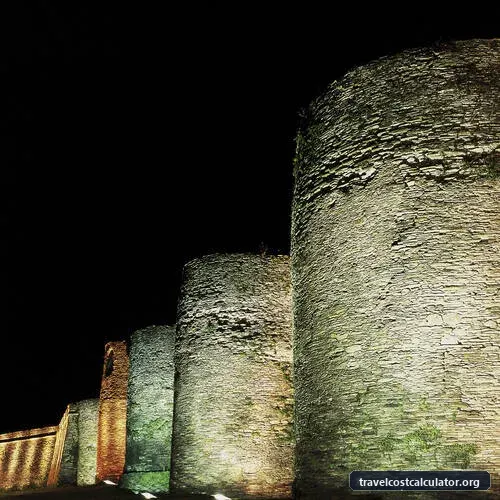
The walls of Lugo were built in the later part of the 3rd century to defend the Roman town of Lucus. The entire circuit survives intact and is the finest example of late Roman fortifications in western Europe.
Roman Walls of Lugo
🏛️ Overview & Historical Significance
Standing tall in the heart of Galicia in northwestern Spain, the Roman Walls of Lugo (Muralla Romana de Lugo) represent one of the most astonishing surviving architectural feats of the ancient world. Erected between 263 and 310 AD under the reign of Emperor Diocletian to defend the Roman town of Lucus Augusti against local barbarian tribes and Germanic invaders, this fortification holds a unique distinction: it is the only complete, fully intact Roman city wall remaining on Earth.
Recognized by UNESCO as a World Heritage site in 2000, the ramparts form an unbroken perimeter spanning 2,117 meters (nearly 1.3 miles) around Lugo's historic quarter. Unlike many ancient defensive systems that were dismantled to expand modern cities, Lugo’s walls integrated seamlessly into the daily life of its residents. The wall boasts 71 surviving towers (out of an original 85), wall heights ranging between 10 and 15 meters, and a thick defensive core built from granite, slate, and mortar that has weathered over 1,700 years of Iberian history.
In 2026, the Roman Walls stand not as a dormant museum piece, but as a living public park. The walkway along the top of the ramparts—known as the paseo de ronda—serves as an elevated promenade where locals jog, socialize, and commute daily. Walking atop these ancient stones provides an unexcelled historical vantage point, bridging Roman antiquity, medieval architecture, and modern Galician gastronomy.
🎟️ Entrance Fees, Opening Hours & Ticket Booking Tips
One of the most remarkable aspects of visiting the Roman Walls of Lugo is its unprecedented accessibility. Because the ramparts function as a public urban walkway, exploring the wall itself is completely free of charge around the clock.
-
✦
The Wall Walkway (Paseo de Ronda): FREE (Open 24 hours a day, 365 days a year). Access is provided via multiple access staircases and a ramp designed for full wheelchair accessibility located at Porta Bispo Odoario.
-
✦
Centro de Interpretación de la Muralla (Wall Visitor Center): FREE (2026 regular hours: Tuesday to Sunday, 10:00 AM – 2:00 PM and 4:30 PM – 8:00 PM). Situated on Rúa do Miño, this interactive center provides deep historical context, scale models, and multimedia displays detailing the wall's construction.
-
✦
Domus do Mitreo (Archaeological Museum & Temple of Mithras): €3.50 EUR (~$3.85 USD) for adults; €1.50 EUR (~$1.65 USD) for students and seniors over 65. Located directly adjacent to the Lugo Cathedral and the wall, this site reveals the excavated remains of an authentic 3rd-century Roman villa and a secret temple dedicated to the god Mithras.
-
✦
Lugo Provincial Museum (Museo Provincial de Lugo): FREE (Donations welcomed). Houses exceptional Roman mosaics, epigraphy, and Celtic gold artifacts.
Insider Ticket & Booking Advice: No advance booking is required to walk the wall perimeter. However, if you plan to visit the Domus do Mitreo during peak summer months (July through September) or during major festivals, booking a timed entry ticket through the University of Santiago Travel Budget de Compostela’s online portal is highly recommended to secure a spot in the underground excavation area.
🚌 How to Get There & Local Transit Costs
Lugo is situated in the inland section of the Autonomous Community of Galicia in northwestern Spain. It is easily reachable from major regional hubs like Santiago de Compostela, A Coruña, and Madrid Travel Budget.
1. From Santiago de Compostela (Nearest Major Hub & Airport)
Santiago de Compostela Airport (SCQ) offers the best international air connections. From Santiago city center or airport:
-
✦
Intercity Bus (Monbus): Direct buses depart frequently from the Estación Intermodal de Santiago to Lugo Bus Station (located just 300 meters from the Roman Walls).
- Travel Time: Approximately 1 hour 45 minutes.
-
✦
Estimated 2026 Fare: €9.50 – €12.00 EUR ($10.50 – $13.20 USD) one-way.
- Travel Time: Around 1 hour 15 minutes. Highway tolls are minimal, and parking garages outside the wall (such as Parking Praza da Ferreiría) cost roughly €14.00 – €18.00 EUR ($15.40 – $19.80 USD) per 24-hour period.
2. From A Coruña
-
✦
Train (RENFE Media Distancia): Trains run regularly from A Coruña-San Cristóbal station to Lugo Station.
- Travel Time: 1 hour 30 minutes.
-
✦
Estimated 2026 Fare: €10.00 – €14.50 EUR ($11.00 – $16.00 USD) one-way.
3. From Madrid (High-Speed Transit)
-
✦
Train (RENFE Alvia / High-Speed): Direct Alvia trains link Madrid Chamartín-Clara Campoamor station to Lugo, or you can take the high-speed AVE to Ourense and transfer to a regional connection.
- Travel Time: 3 hours 45 minutes to 4 hours 30 minutes.
-
✦
Estimated 2026 Fare: €38.00 – €85.00 EUR ($41.80 – $93.50 USD) when booked 4–6 weeks in advance.
Getting Around Lugo: The historic core within the walls is entirely pedestrianized and best explored on foot. Urban buses (Urbanos de Lugo) operate citywide for €0.85 EUR ($0.95 USD) per trip, but you will rarely need them once you reach the ancient city center.
📸 Best Photography Spots & Insider Visit Hacks
Prime Photography Locations
-
✦
A Mosqueira (The Icon): Located on the eastern side of the wall near Plaza de A Mosqueira. This is the only section where the original upper-story Roman window arches remain intact atop the towers. Early morning sunlight hits these stone arches beautifully.
-
✦
Porta de Santiago (Santiago Gate): Positioned right opposite the magnificent Santa María Cathedral. Shoot from the interior plaza looking out through the gate for a frame-within-a-frame capture of the cathedral’s baroque facade.
-
✦
Porta Miñá: The oldest gate in the wall that retains its original Roman arch structure almost unchanged. Photographers will appreciate the moody, rustic stone texture during late afternoon "golden hour."
-
✦
Sunset Walk on the Ramparts: Climb the wall near Porta Bispo Odoario around 45 minutes before sunset. As the sun drops over the Galician hills, the granite walls glow with warm bronze and amber hues.
Insider Travel Hacks for 2026
-
✦
Time Your Visit for Arde Lucus: If you want an unforgettable experience, visit in mid-June during Arde Lucus. This massive historical reenactment festival transforms Lugo back into a Roman-Celtic encampment. Tens of thousands of locals dress in authentic Roman armor and Celtic robes, featuring gladiator battles, chariot races, and torchlit wall parades.
-
✦
Master the Free Tapas Culture: Lugo is legendary throughout Spain for maintaining traditional, generous free tapas. When you order a glass of local Galician wine (like *Mencía* or *Ribeiro*) or a draught beer (*caña*) for around €2.50 – €3.20 EUR ($2.75 – $3.50 USD), you will be offered a substantial free hot tapa—ranging from *polbo á feira* (octopus) and *raxo* (marinated pork) to Spanish tortilla. Walking the street of *Rúa Nova* at lunch or dinner can yield a full meal for under €10 EUR.
-
✦
Beat the Galician Rain: Galicia is green for a reason—rain is common between November and April. Pack a compact windproof umbrella and sturdy footwear; the slate paths along the wall can get slick when wet.
🏨 Nearby Accommodation & Daily Budget Allocation
Lugo is one of Spain's most affordable UNESCO heritage destinations, offering exceptional value for mid-range and budget travelers alike compared to Madrid or Barcelona Travel Budget.
Recommended Accommodations in 2026
-
✦
Budget / Backpacker: Albergue Roots & Boots Lugo or Hostal Porta de Santiago – Centrally located hostel and guesthouse options right beside the wall access points. Clean, modern dorm beds and private rooms.
- Rates: €22.00 – €45.00 EUR ($24.00 – $49.50 USD) per night.
- Rates: €75.00 – €125.00 EUR ($82.50 – $137.50 USD) per night.
- Rates: €130.00 – €210.00 EUR ($143.00 – $231.00 USD) per night.
Estimated Daily Travel Budgets (2026 Pricing)
| Travel Style | Daily Budget (EUR) | Daily Budget (USD) | Includes |
|---|---|---|---|
| Budget | €45 – €65 | $50 – $71 | Hostel dorm/budget room, street tapas & bakeries, free wall access, public transit. |
| Mid-Range | €110 – €175 | $121 – $192 | 3-star hotel inside walls, sit-down Galician meals, museum tickets, regional train fares. |
| Luxury | €240 – €400+ | $264 – $440+ | Boutique heritage hotel, fine dining (seafood & fine wine), private tours & taxi transit. |
Frequently Asked Questions
Essential visitor FAQs for Roman Walls of Lugo
What is the entrance fee for Roman Walls of Lugo?
How much time do you need to explore Roman Walls of Lugo?
How do I get to Roman Walls of Lugo from the nearest city?
📊 Heritage Quick Specs
Visiting Spain on a Budget?
Calculate your full daily travel budget for Spain — including hotel costs, local transport, food, and sightseeing expenses.
View Spain Daily Travel Costs →Explore more UNESCO World Heritage Sites
🏛️ All 1,200+ Heritage Sites →