
 Spain
Spain
Archaeological Ensemble of Mérida
The colony of Augusta Emerita, which became present-day Mérida in Estremadura, was founded in 25 B.C.
Archaeological Ensemble of Mérida
🏛️ Overview & Historical Significance
Nestled in the heart of Extremadura, Spain, the Archaeological Ensemble of Mérida represents one of the most expansive, well-preserved, and architecturally brilliant Roman urban sites outside of Italy. Founded in 25 BCE by Emperor Augustus under the name Emerita Augusta, the city was established to grant lands to veteran soldiers (emeriti) from the V Alaudae and X Gemina legions. It rapidly expanded to become the prosperous capital of the Roman province of Lusitania, functioning as an administrative, economic, and cultural nexus of the Iberian Peninsula.
In 1993, UNESCO inscribed Mérida as a World Heritage site, citing its extraordinary preservation of an ancient Roman provincial capital. Unlike fragmented ruins found elsewhere in Europe, Mérida retains a complete ancient urban ecosystem. The designated ensemble spans dozens of structures across the modern city, including grand entertainment venues, complex civil engineering masterpieces, religious temples, and private domestic quarters.
Key highlights of the ensemble include:
-
✦
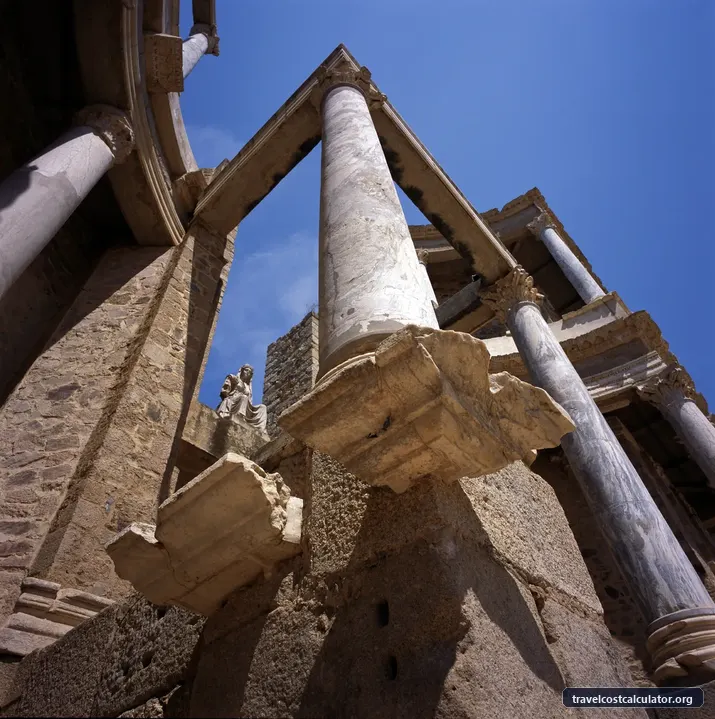
The Roman Theatre (Teatro Romano): Built by Marcus Vipsanius Agrippa around 16–15 BCE, seating up to 6,000 spectators with its stunning two-tiered scenae frons (stage backdrop) adorned with marble columns and statues of gods and emperors.
-
✦
The Roman Amphitheatre (Anfiteatro Romano): Inaugurated in 8 BCE, this gladiatorial arena once held over 14,000 spectators and features intact subterranean chambers (fossa bestiaria) for beasts and fighters.
-
✦
Acueducto de los Milagros (Aqueduct of Miracles): A soaring engineering feat originally stretching over 12 kilometers, whose surviving 25-meter-high granite and brick arcades cross the Albarregas River valley.
-
✦
The Roman Bridge (Puente Romano): Spanning the Guadiana River, this 792-meter bridge is one of the longest surviving bridges from antiquity, featuring 60 granite arches that supported vehicular traffic well into the 20th century.
-
✦
Temple of Diana (Templo de Diana): A massive hexastyle rectangular temple standing proud in the city center, preserved largely because a 16th-century Renaissance palace was constructed inside its cella.
-
✦
Circo Romano: One of the best-preserved Roman chariot racing tracks in existence, measuring over 400 meters in length and once capacity-rated for 30,000 spectators.
Visiting Mérida today offers an immersive journey through time. The interplay between 2,000-year-old monuments and modern Spanish life creates an atmosphere unlike any other archaeological destination in Southern Europe.
🎟️ Entrance Fees, Opening Hours & Ticket Booking Tips
Navigating ticket options for Mérida's vast archaeological park is straightforward if you opt for the comprehensive pass managed by the Consorcio de la Ciudad Monumental de Mérida. Pricing for the 2026 travel season reflects modest inflation adjustments while maintaining exceptional value for budget and culture-focused travelers.
2026 Ticket Pricing Breakdown
-
✦
Full Joint Monument Ticket (Entrada Conjunta): €17.00 EUR (~$18.50 USD). This ticket gives you access to all major archaeological sites, including the Roman Theatre & Amphitheatre, Alcazaba, Circo Romano, Casa del Mitreo & Columbarios, Archaeological Site of Morerías, and the Crypt of Santa Eulalia. It is valid for multiple days until you visit each site once.
-
✦
Reduced Joint Ticket: €8.50 EUR (~$9.25 USD). Available for seniors (65+), students (under 26 with valid ISIC/student ID), and youths aged 13–17.
-
✦
Children (12 and under): Free admission to all monuments.
-
✦
Single Site Ticket: €7.50 EUR (~$8.15 USD) for the Roman Theatre/Amphitheatre complex; €4.00 EUR (~$4.35 USD) for individual smaller sites. Pro Tip: If you plan to visit more than two sites, the Joint Ticket pays for itself immediately.
-
✦
Night Visit to the Theatre & Amphitheatre (Visita Nocturna): €13.00 EUR (~$14.15 USD). A specialized guided evening tour featuring dramatic illumination.
Opening Hours (2026 Schedule)
-
✦
Summer Season (April 1 – September 30): Daily from 9:00 AM to 9:00 PM (Ticket offices close at 8:30 PM).
-
✦
Winter Season (October 1 – March 31): Daily from 9:00 AM to 6:30 PM (Ticket offices close at 6:00 PM).
-
✦
Closures: Closed December 24, 25, 31, and January 1. Reduced hours apply on select public holidays.
Insider Booking & Smart Visiting Tips
To maximize your time and budget, reserve your tickets online through the official portal (turismomerida.org or consorciomerida.org) to skip main gate queues during peak spring months. Buying tickets on-site is also easy at the main ticket office adjacent to the Roman Theatre entrance. If visiting during July or August, buy tickets for early morning entry (9:00 AM) to complete outdoor walking before midday heat kicks in.
🚌 How to Get There & Local Transit Costs
Mérida is situated in western Spain within the Extremadura region, positioned conveniently between Madrid Travel Budget and Lisbon, and just north of Seville. Thanks to updated infrastructure and high-speed rail linkages serving the region in 2026, reaching Mérida is smooth and cost-effective.
1. From Seville (Closest Major Airport Hub)
Seville (SVQ) is the primary international transit hub for travelers heading to Mérida.
-
✦
By Regional Train (Renfe Media Distancia): Departs from Seville Santa Justa Station. Journey takes roughly 2 hours 15 minutes. One-way fares cost €16.50 – €22.00 EUR ($18.00 – $24.00 USD).
-
✦
By Coach (ALSA Bus): Departs from Plaza de Armas station in Seville. Journey takes about 2 hours. Tickets range from €14.00 – €19.00 EUR ($15.20 – $20.70 USD). Buses run several times daily.
2. From Madrid
Madrid (MAD) provides extensive international flight connections and fast rail access to Extremadura.
-
✦
By High-Speed / Long-Distance Train (Renfe Alvia / Intercity): Trains depart from Madrid Chamartín or Atocha. Travel time takes approximately 3 hours to 3 hours 30 minutes. Fares range between €28.00 – €55.00 EUR ($30.50 – $60.00 USD) depending on advance booking.
-
✦
By Direct Bus (Avanza Bus): Departs from Estación Sur Travel Budget de Autobuses (Méndez Álvaro). Travel time is roughly 4 hours. Fares cost €24.00 – €34.00 EUR ($26.00 – $37.00 USD).
3. Getting Around Mérida
Mérida is incredibly pedestrian-friendly; almost all main UNESCO sites lie within a 20-minute walk of one another. Local transit options include:
-
✦
City Bus (Urbano de Mérida): Standard single ticket costs €1.20 EUR ($1.30 USD). Useful for reaching the Circo Romano if walking from the riverfront.
-
✦
Taxis: Local rides within the urban core cost between €6.00 – €9.00 EUR ($6.50 – $9.80 USD). Taxi ranks are located at the train station and Plaza de España.
📸 Best Photography Spots & Insider Visit Hacks
Capturing the dramatic classical architecture of Mérida requires strategic timing, especially given the intense sunlight of southwestern Spain.
Top Photography Locations
-
✦
The Roman Theatre Scenae Frons: Photograph the dramatic two-tiered blue marble columns from the center aisle of the orchestra. Best Light: Morning light (9:30 AM – 11:30 AM) illuminates the statues without casting harsh front shadows.
-
✦
Acueducto de los Milagros: Capture the soaring granite arches reflected in the small streams of the surrounding green parkland. Best Light: Late afternoon / Golden Hour (1–2 hours before sunset).
-
✦
Temple of Diana at Twilight: The illuminated columns set against the navy night sky, framed by the modern square and historic plaza architecture, offer a striking blend of ancient and contemporary Spain.
-
✦
Puente Romano Sunset Walk: Stand along the banks of the Guadiana River or walk halfway across the bridge to photograph the reflection of ancient stone arches over smooth waters during sunset.
Crucial Insider Travel Hacks
-
✦
Beat the Extremadura Heat: Extremadura experiences extreme summer weather, with July and August temperatures regularly exceeding 40°C (104°F). If visiting in summer, conduct all outdoor sightseeing from 9:00 AM to 11:30 AM, rest during afternoon peak hours, and return for late evening strolls. Spring (March–May) and Autumn (September–November) feature ideal temperatures around 18°C–25°C (64°F–77°F).
-
✦
Festival International de Teatro Clásico (July–August): Every summer, ancient Greek and Roman plays are performed live on stage inside the 2,000-year-old Roman Theatre. If traveling during these months, booking tickets to an evening theatrical production is a once-in-a-lifetime E-E-A-T travel experience.
-
✦
Free Architectural Views: The Temple of Diana, Arch of Trajan, and Puente Romano are open public spaces that require no ticket and can be enjoyed 24/7.
-
✦
Hydration & Footwear: Roman cobblestones, gravel paths, and uneven ancient staircases require sturdy walking shoes. Carry a refillable water bottle; fresh drinking fountains are available near the major site entrances.
🏨 Nearby Accommodation & Daily Budget Allocation
Mérida offers exceptional value for travelers compared to Madrid, Barcelona Travel Budget, or coastal resort towns. Accommodation ranges from cozy family-run hostals to high-end historical conversions.
Recommended Accommodations in Mérida (2026 Rates)
-
✦
Budget Option (Hostels & Guesthouses): Hostal Roma or Hostal Restobar El Alfarero. Centrally located, clean private rooms ranging from €40.00 – €65.00 EUR ($43.50 – $70.00 USD) per night.
-
✦
Mid-Range Option (3/4-Star Hotels): Hotel Velada Mérida or Hotel Plaza de España Design. Modern amenities near major ruins ranging from €85.00 – €135.00 EUR ($92.50 – $147.00 USD) per night.
-
✦
Luxury / Unique Heritage Stay: Parador de Mérida. Housed in a converted 18th-century convent built over ancient Roman structure foundations. Rates range from €160.00 – €260.00 EUR ($174.00 – $283.00 USD) per night.
Food & Local Culinary Budget
Extremaduran cuisine is world-renowned for its cured meats, cheeses, and rustic flavors. Do not miss tasting Jamón Ibérico de Bellota (acorn-fed Iberian ham), Migas Extremeñas (savory seasoned breadcrumbs with chorizo), and local Ribera del Guadiana wines.
-
✦
Budget Meal (Menu del Día): €12.00 – €16.00 EUR ($13.00 – $17.40 USD) for a 3-course lunch including wine and bread.
-
✦
Tapas Dining: €3.00 – €5.00 EUR ($3.25 – $5.45 USD) per tapas plate at traditional taverns near Plaza de España.
-
✦
Mid-Range Dinner: €30.00 – €45.00 EUR ($32.60 – $49.00 USD) per person including drinks and dessert at a upscale regional restaurant.
Daily Budget Allocation Summary (Per Person)
-
✦
Backpacker / Low-Budget Traveler: €65.00 – €85.00 EUR ($70.00 – $92.00 USD) / day (Hostal bed, street food/tapas, bus travel, joint monument pass amortized over 2 days).
-
✦
Mid-Range Traveler: €140.00 – €210.00 EUR ($152.00 – $228.00 USD) / day (3-star hotel, sit-down lunches/dinners, rail transit, full monument pass, evening theatre show).
-
✦
Luxury / Comfort Traveler: €280.00 – €450.00 EUR ($304.00 – $490.00 USD) / day (Parador stay, fine dining, private guided tours, private taxi transfers).
Frequently Asked Questions
Essential visitor FAQs for Archaeological Ensemble of Mérida
What is the entrance fee for Archaeological Ensemble of Mérida?
How much time do you need to explore Archaeological Ensemble of Mérida?
How do I get to Archaeological Ensemble of Mérida from the nearest city?
📊 Heritage Quick Specs
Visiting Spain on a Budget?
Calculate your full daily travel budget for Spain — including hotel costs, local transport, food, and sightseeing expenses.
View Spain Daily Travel Costs →Explore more UNESCO World Heritage Sites
🏛️ All 1,200+ Heritage Sites →