
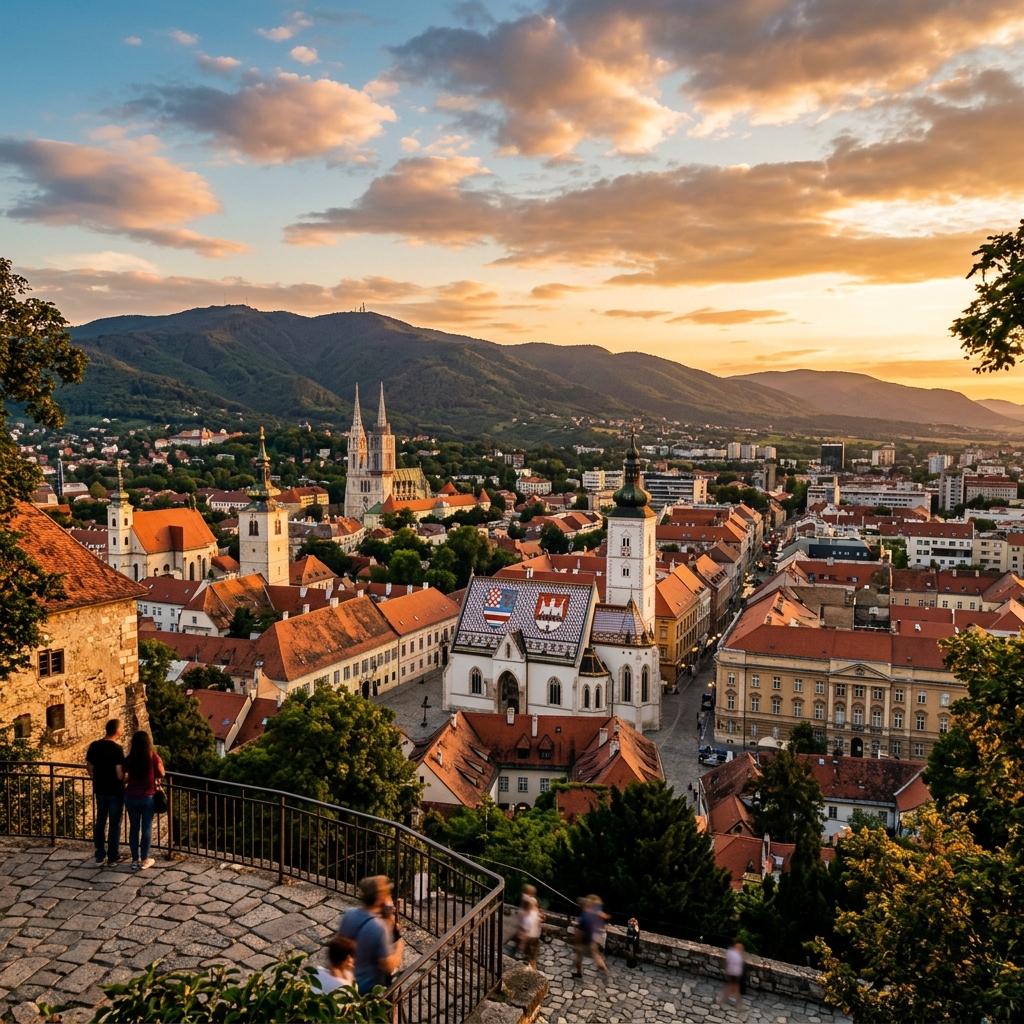
Introduction: Navigating Zagreb Travel Budget in the Post-Schengen Era
Zagreb, the vibrant capital of Croatia, has rapidly evolved from a mere stopover en route to the Dalmatian Coast into one of Central Europe's most compelling destinations for remote workers, long-term travelers, and culture enthusiasts. Following Croatia’s official entry into the Schengen Area and its adoption of the Euro (€) on January 1, 2023, the city’s border logistics and financial dynamics underwent a monumental shift. Border checks with neighboring EU countries vanished, but so did the ability to use Croatia as a non-Schengen "visa run" refuge to reset the classic 90-day clock.
Despite these changes, Zagreb remains an exceptionally high-value European capital. Offering rich Austro-Hungarian architecture, a legendary coffee culture, world-class museums, and a lower cost of living than Vienna Travel Budget, Prague, or Western European hubs, it presents unique opportunities for savvy travelers. Whether you are planning a short holiday, strategic travel across Central and Southeastern Europe, or a 12-month stay under Croatia’s groundbreaking Digital Nomad Living Index Temporary Stay permit, this comprehensive financial and administrative guide breaks down every visa hack, legal requirement, and euro spent in Zagreb.
Decoding Croatia's Visa Landscape: Rules, Permits, and Hacks
Understanding entry and stay requirements is the first step in financial travel planning. Missteps in visa duration can result in heavy fines, deportation, or Schengen-wide travel bans. Here is how to navigate the current legal framework efficiently.
1. Hacking the Schengen 90/180-Day Rule
As a member of the Schengen Zone, Croatia allows passport holders from non-EU/EEA countries (such as the US, Canada, Australia, the UK, and New Zealand) to enter visa-free for up to 90 days within any 180-day period. This 90-day counter is shared across all 29 Schengen member states.
- The Border-Hop Hack: Because Croatia now shares a open Schengen border with Slovenia and Hungary, moving between them will not use extra entry stamps. However, if your 90-day allowance is expiring, you must physically leave the entire Schengen Area.
- Nearby Non-Schengen Sanctuaries: Zagreb’s geographic position makes it an ideal launchpad to non-Schengen neighboring countries. You can take a short bus or train ride from Zagreb to Bosnia and Herzegovina (e.g., Bihać, Sarajevo Travel Budget) or Serbia (Belgrade). Staying in these non-Schengen nations allows you to pause your spend of Schengen days without traveling back across the globe, though you must wait until your 180-day rolling window allows a return.
2. The Ultimate Visa Hack: Croatia’s Digital Nomad Permit
If you want to live in Zagreb long-term without burning through your 90-day Schengen allowance, Croatia offers one of the most accessible Digital Nomad Temporary Stay permits in Europe. Introduced under the Foreigners Act, this permit allows remote workers employed by companies outside of Croatia (or owners of foreign-registered businesses) to reside in Croatia for up to 12 months.
- Tax Exemption: Income earned from remote work for foreign clients/employers while residing in Croatia under this permit is completely exempt from Croatian income tax.
- Minimum Financial Threshold: Applicants must prove a minimum monthly income of at least 2.5 times the average net salary in Croatia (roughly €2,539+ per month as of recent adjustments), or show a lump sum bank balance of approximately €30,468 for a 12-month stay. Add 10% to the base requirement for each accompanying family member.
- Application Hack: You can apply online or directly at a Croatian diplomatic mission abroad, but if you enter Croatia visa-free, you can submit your application directly at the local police station (Ministarstvo unutarnjih poslova or MUP) at Petrinjska 30 in Zagreb. Applying locally often speeds up processing and eliminates foreign consular handling fees.
- The 90-Day Reset Rule: The digital nomad permit cannot be extended directly beyond 12 months. However, you can reapply 90 days after your current permit expires. Smart nomads spend those intervening 90 days in neighboring non-Schengen countries before reapplying for another year in Zagreb.
Administrative & Legal Budget Breakdown
Setting up your stay in Zagreb involves several mandatory administrative procedures. Budgeting for these upfront administrative costs prevents unexpected financial surprises during your first month.
- Digital Nomad Permit Application Fee: Approximately €55 to €150 (varies based on whether you apply at an embassy, apply online, or pay locally for biometric residence card issuance).
- Police Registration (Prijava boravka): Free, but required within 48 hours of arrival (or 3 days for tourist accommodation providers who usually handle this automatically via the eVisitor system). If renting privately, your landlord must accompany you to MUP or provide a notarized lease agreement.
- Lease Notarization (Javni bilježnik): If applying for long-term permits, getting your rental contract notarized costs around €10 to €25.
- Personal Identification Number (OIB): Free. Required for official contracts, internet installations, and local banking setup. Issued at the local Tax Office (Porezna uprava).
- Mandatory Private Health Insurance: Applicants for long-term permits must show health insurance coverage that spans the duration of their stay. Compliant global travel health insurance policy premiums range from €45 to €130 per month (e.g., SafetyWing, Genki, or Feather), which is significantly cheaper than local voluntary insurance registration fees.
Comprehensive Zagreb Travel & Living Cost Breakdown
While prices have aligned with European standards since adopting the Euro, Zagreb remains considerably more affordable than coastal hotspots like Dubrovnik or Split—especially outside the peak summer months of July and August.
1. Accommodation Costs
Where you choose to stay in Zagreb heavily dictates your monthly cash flow. Neighborhoods like Donji Grad (Lower Town) and Gornji Grad (Upper Town) offer charm at a premium, whereas districts like Trešnjevka, Maksimir, or Kvart Kvatrić offer excellent public transport links and lower rent.
- Hostel Dorm Bed: €20 – €35 per night.
- Budget/Mid-Range Hotel Room: €65 – €120 per night.
- Short-Term Apartment Rental (Airbnb/Vrbo): €50 – €90 per night; €1,100 – €1,800 per month.
- Long-Term Apartment Lease (1-Bedroom outside historical center): €500 – €750 per month plus utilities.
- Monthly Residential Utilities (Electricity, Heating, Water, Trash): €100 – €160 per month depending on winter heating needs.
- High-Speed Fiber Internet: €20 – €30 per month.
2. Food, Dining, and Grocery Expenses
You can optimize your food budget in Zagreb by taking advantage of traditional Croatian dining customs and local produce markets.
- The "Gablec" or "Marenda" Hack: Traditional Croatian restaurants (Gostionica or Konoba) serve daily lunchtime specials called Gablec between 11:00 AM and 2:00 PM. These meals—such as stews (grah), goulash, or roasted meats—cost just €6.50 to €9.50 for generous portions.
- Local Open-Air Markets: Avoid overpriced supermarket produce by shopping at Dolac Market, located just above Ban Jelačić Square. Fresh local vegetables, fruit, cheeses, and meats sold by local producers (OPG-ovi) cost up to 30% less than at supermarket chains like Konzum or Spar.
- Coffee Culture (Kava s mlijekom): Sitting at outdoor cafes along Tkalčićeva Street is a core part of Zagreb life. Espresso with milk typically costs €1.80 to €2.50.
- Mid-Range Dinner for Two: €40 – €70 (including wine or local craft beer).
- Monthly Grocery Budget (Per person cooking at home): €220 – €320.
3. Transportation Costs
Zagreb boasts an efficient public transport network operated by ZET, consisting of extensive tram routes and bus connections.
- Single Tram/Bus Ticket (30 minutes): €0.53 (purchased at Tisak newsstands) or €0.80 (purchased directly from the driver).
- Single Tram/Bus Ticket (60 minutes): €0.93.
- Daily Transport Pass: €3.98.
- ZET Monthly Transit Pass: €47.70 (offers unlimited transit across trams and buses within Zone 1).
- Zagreb Funicular (Uspinjača): €0.66 per ride (connects Ilica Street to Upper Town).
- Ride-Hailing (Uber/Bolt) & Taxis: Average intra-city ride costs between €5.00 and €10.00.
4. Sightseeing, Culture, and Coworking
Cultural experiences in Zagreb are widely accessible and wallet-friendly compared to Western Europe.
- Zagreb Card (24-Hour / 72-Hour): Costs €18 / €25. Includes free public transit and entry to top venues like the Museum of Broken Relationships, Zagreb City Museum, and the Zoo.
- Standard Museum Entry (Museum of Broken Relationships, Nikola Tesla Technical Museum, Art Pavilion): €5 – €8.
- Day Trips by Train/Bus (e.g., Samobor or Karlovac): Return ticket €5 – €10.
- Day Trip to Plitvice Lakes National Park: Entry ticket €10 – €40 (depending on season); bus ticket return €20 – €28.
- Hot Desk at Coworking Spaces (Impact Hub, Wespa Spaces, HUB385): Day pass: €15 – €25; Monthly pass: €130 – €220.
Comprehensive Daily & Monthly Budget Frameworks
To help you structure your travel finances, the following frameworks break down prospective expenditure based on travel style and duration in Zagreb.
1. Short-Term Daily Budget Breakdown (Per Person)
- Backpacker / Ultra-Budget: €45 – €60 / day (Hostel bed, 30-min tram tickets, grocery shopping + 1 cheap gablec lunch, self-guided walking tours).
- Mid-Range Traveler: €110 – €175 / day (Private 3-star hotel/Airbnb, full daily public transit or occasional Uber, café visits, sit-down dinners, paid museum entries).
- Luxury / Business Traveler: €280+ / day (5-star luxury hotel like Esplanade Zagreb, high-end dining, private airport transfers, premium guided tours).
2. Monthly Budget for Long-Term Remote Workers / Digital Nomads
Below is a realistic monthly financial projection for living comfortably in Zagreb as a remote worker:
- Rent (1-Bed Apartment in Trešnjevka/Maksimir): €650
- Utilities & Fiber High-Speed Internet: €140
- Groceries & Local Markets: €280
- Dining Out & Cafe Culture: €250
- Public Transit (ZET Monthly Pass): €47.70
- Coworking Space Membership (Hot Desk): €150
- Health Insurance (Amortized): €60
- Entertainment, Leisure, & Regional Day Trips: €180
- TOTAL ESTIMATED MONTHLY SPEND: €1,757.70
Financial & Banking Hacks for Zagreb
Save money during your stay by avoiding common foreign exchange traps and transaction fees in Croatia.
- Beware of Euronet ATMs: Avoid independent yellow-and-blue Euronet ATMs scattered around tourist hotspots like Ban Jelačić Square and Tkalčićeva Street. They charge exorbitant conversion fees and high out-of-network withdrawal costs. Always use official bank ATMs attached to traditional institutions like Erste Bank, PBZ, HPB, or Zagrebačka Banka (ZABA), and decline dynamic currency conversion (DCC) so your home bank processes the FX rate.
- Use Multi-Currency Cards: Utilize digital banking options like Wise or Revolut to hold Euros natively. Card acceptance in Zagreb is high (over 85% of retail stores, supermarkets, and restaurants accept contactless card payments), though carrying €10–€20 in cash remains essential for small bakery purchases, outdoor markets, and tipping.
- Avoid Rental Agent Fees: When looking for medium-to-long-term rentals (3 to 12 months), check local classified sites like Njuškalo.hr or Facebook groups like "Zagreb Apartments for Rent" rather than relying exclusively on short-term booking portals. Renting directly from a landlord (najmodavac) can cut your monthly accommodation costs by 30% to 50%.
Conclusion
Zagreb offers an ideal blend of Central European order, Balkan hospitality, and Mediterranean cafe leisure—all at a price point that undercuts major European capitals. By leveraging strategic visa options like the 12-month Digital Nomad Permit, mastering local dining specials like gablec, utilizing efficient ZET public transit, and smart banking practices, you can maximize your stay in Croatia's capital while keeping your finances firmly under control.