
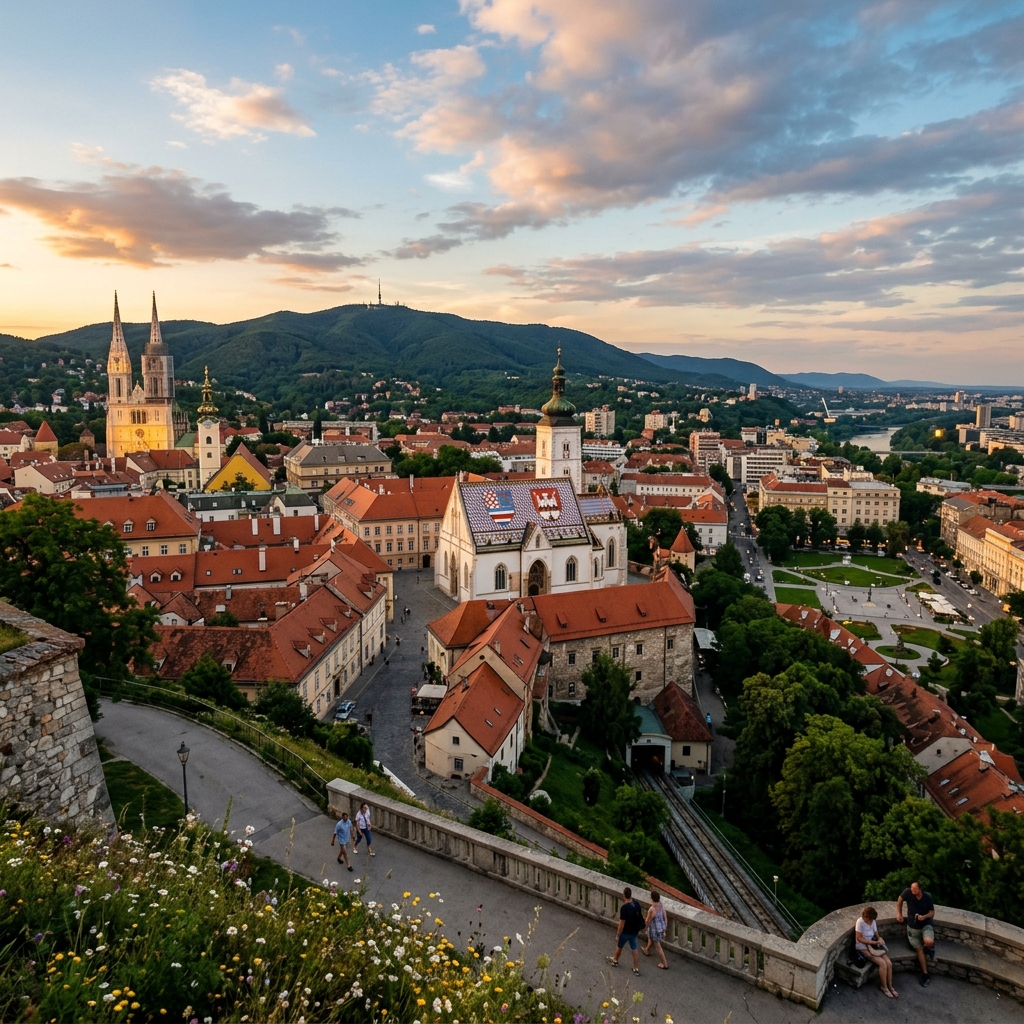
Introduction: Why Zagreb is Central Europe's Strategic Budget Capital
For years, Zagreb was treated merely as a brief pitstop for sun-seeking travelers rushing toward the coastal jewels of Split and Dubrovnik. However, since Croatia officially entered the Schengen Area and fully adopted the Euro (€) on January 1, 2023, Zagreb has transformed into one of the most strategically important and financially attractive hubs in Southern and Central Europe. Offering Austrian-style Austro-Hungarian architecture, vibrant café culture, and remarkably low living costs compared to Western European capitals, Zagreb delivers premier European urban culture at a fraction of the cost.
Navigating Zagreb today requires a smart understanding of money management and European immigration policy. Whether you are aiming to stretch a 90-day short-stay tourist allowance across the Schengen Zone or seeking long-term stay hacks via Croatia's groundbreaking Digital Nomad Living Index Visa, understanding the intersection of local prices and border logistics is key. This comprehensive financial and visa guide breaks down real-world costs for accommodation, dining, transport, and sightseeing, while delivering actionable visa hacks to maximize your stay in Zagreb without breaking the bank.
Navigating Croatia’s Schengen Status & Visa Strategies
The 90/180 Schengen Rule Demystified
With Croatia’s accession to Schengen, travelers holding passports from visa-exempt nations (such as the United States, Canada, Australia, the United Kingdom, and New Zealand) can enter Croatia without a visa for up to 90 days within any 180-day rolling window. However, the critical caveat is that time spent in Zagreb now counts directly toward your total Schengen limit across 28 European nations. You can no longer use Croatia as a "Schengen reset" location like travelers did prior to 2023.
Hack #1: The Croatian Digital Nomad Visa (1-Year Extended Stay)
If you want to stay in Zagreb beyond 90 days without violating immigration laws, Croatia’s Temporary Stay for Digital Nomads is one of the most accessible visa hacks in Europe. This residence permit allows remote workers employed by non-Croatian companies to reside in Croatia for up to 12 months.
- Financial Requirement: Applicants must demonstrate a regular monthly income of at least 2.5 times the average Croatian gross salary (approximately €2,540 / $2,750 per month) or present a verified bank statement showing a minimum balance of roughly €30,500 / $33,000 for a 12-month application.
- Tax-Free Benefit: Income earned from remote work outside Croatia while on this permit is completely exempt from Croatian income tax.
- Schengen Travel Bonus: Holding a Croatian Digital Nomad residence permit allows you to travel throughout the rest of the Schengen Area for up to 90 days out of any 180-day period while keeping your primary home base in low-cost Zagreb.
Hack #2: Strategic Non-Schengen Border Hacking
If you are nearing the end of your 90-day Schengen allowance and are not eligible for a long-term permit, Zagreb’s geographical location offers an unbeatable tactical advantage. The city sits less than two hours from non-Schengen border crossings into Bosnia and Herzegovina (via the Gradiška or Slavonski Brod crossings) and Serbia (via Bajakovo).
By hopping on an affordable FlixBus or taking a short drive across the border into neighboring non-Schengen countries, you can safely pause your Schengen clock while living in ultra-affordable Balkan destinations like Sarajevo Travel Budget, Mostar Travel Budget, or Belgrade, waiting out the required 90 days outside Schengen before returning to Zagreb.
Official Visa Fees & Administrative Expenses Breakdown
When planning your entry to Zagreb, budget for the following baseline administrative expenses depending on your nationality and visa strategy:
- Schengen Tourist Visa (Type C): €90 ($98) standard fee for citizens requiring a short-stay visa.
- ETIAS Travel Authorization (Launching late 2026/2026): €7 ($7.60) for visa-exempt travelers aged 18 to 70. Valid for 3 years.
- Croatian Digital Nomad Application Fee: Approximately €60–€150 ($65–$163) depending on whether you apply at a Croatian consulate abroad or locally at a Zagreb police station (Policijska Uprava Zagrebačka at Petrinjska 30).
- Biometric Residence Card: Around €40 ($43) plus administrative fees upon approval of temporary residency.
Detailed Financial Breakdown: Traveling Zagreb on Any Budget
Accommodation Costs in Zagreb
Accommodation in Zagreb remains significantly cheaper than in Dubrovnik or coastal Split during peak summer, and routinely undersells capitals like Vienna Travel Budget or Prague year-round. Prices vary depending on the season, with peak pricing around December (famous for the award-winning Zagreb Advent Christmas Market) and spring/autumn.
- Hostel Dorm Bed: €20 – €35 ($22 – $38) per night in high-rated hostels near Main Square (Trg Bana Jelačića).
- Budget Double Room / Studio Airbnb: €45 – €80 ($49 – $87) per night outside the immediate historic center or in neighborhoods like Donji Grad and Trešnjevka.
- Mid-Range 3 to 4-Star Hotel: €85 – €150 ($92 – $163) per night including breakfast.
- Luxury Hotel (e.g., Esplanade Zagreb Hotel): €180 – €380+ ($195 – $412+) per night for historic 5-star accommodations.
- Monthly Apartment Rental for Nomads: €550 – €900 ($595 – $975) per month plus utilities (approx. €100–€150) for a 1-bedroom flat outside the core tourist center.
Food & Dining: Eating Well for Less
Zagreb has a rich culinary landscape combining Austro-Hungarian hearty classics, Mediterranean seafood influences, and Balkan grilled meats. Budget dining is exceptionally easy if you leverage local eating habits.
- The Gablec / Dnevna Ponuda Hack: Between 11:00 AM and 2:00 PM, many traditional restaurants offer a daily lunch special called gablec (or dnevna ponuda). These generous, single-plate hot meals cost between €6.50 and €10 ($7 – $11), making them the cheapest way to sample authentic local dishes like goulash, stuffed peppers (punjena paprika), or beans with sausage (grah s kobasicom).
- Burek & Bakery Snacks: Freshly baked cheese or meat burek from bakeries like Mlinar or Dubravica costs just €2.20 – €3.50 ($2.40 – $3.80) and functions as a filling breakfast or quick lunch.
- Casual Dining & Pizzerias: A sit-down dinner at a neighborhood konoba (tavern) or top-rated pizzeria costs €12 – €22 ($13 – $24) per person including a drink.
- Craft Beer & Coffee Culture: Espresso or white coffee (kava s mlijekom) at a side-street café costs €1.80 – €2.50 ($1.95 – $2.70). A pint of local craft beer (like Zmajsko or Nova Runda) costs €3.50 – €5.00 ($3.80 – $5.40).
Transportation Costs & Transit Hacks
Zagreb features one of the most efficient and low-cost public transit networks in Europe, operated by ZET (Zagreb Electric Tram). The city is incredibly walkable, but public transit makes reaching outlying districts painless.
- Short-Hop Tram Ticket (30 Minutes): €0.53 ($0.58) when purchased at a Tisak newspaper kiosk or directly from the driver (paper ticket must be validated in the yellow machine upon boarding). This is one of the single cheapest public transit tickets in any EU capital.
- 60-Minute Ticket: €0.93 ($1.00).
- 90-Minute Ticket: €1.33 ($1.44).
- 24-Hour Unlimited Transit Pass: €3.98 ($4.30).
- Zagreb Funicular (Uspinjača): Connects Ilica street in Lower Town to St. Mark’s Church in Upper Town. At just 66 meters long, it is the shortest public cable railway in the world. Cost: €0.66 ($0.71) one-way.
- Zagreb Airport (ZAG) Shuttle Bus: Pleso Prijevoz operates direct shuttle buses between Franjo Tuđman Airport and the Zagreb Main Bus Station (Autobusni Kolodvor) for €8.00 ($8.70) one-way. Uber or Bolt rides for the same route average €18 – €28 ($19.50 – $30.00).
Sightseeing, Museums, and Attractions
Unlike Western European hubs that charge heavy entry fees for historic landmarks, much of Zagreb’s beauty—including its cobblestone Upper Town (Gornji Grad), Dolac Open-Air Farmers Market, and Markov Trg—is entirely free to explore.
- Museum of Broken Relationships: €7.00 ($7.60) entry. One of Zagreb's most famous and novel cultural stops.
- Zagreb City Museum (Muzej Grada Zagreba): €5.00 ($5.40) entry.
- Grič Tunnel (Tunel Grič): Free entry. A historic WWII pedestrian tunnel running beneath the Upper Town.
- Mirogoj Cemetery: Free access. Recognized as one of Europe's most architectural outdoor cemetery parks.
- Lotrščak Tower (Cannon Tower view): €3.00 ($3.25) to climb to the top for panorama city views.
Daily Travel Budgets for Zagreb
To help you structure your bankroll effectively, here are realistic estimated total daily spending benchmarks based on your traveling style (excluding international long-haul flights):
1. Low-Budget Backpacker Tier: €45 – €65 ($49 – $70) per day
- Lodging: Dorm bed in central hostel (€22 – €30).
- Food: Bakery burek for breakfast, gablec daily special for lunch, self-cooked dinner or street food (€15 – €22).
- Transit: Walking + two 30-min ZET tram tickets (€1.06).
- Attractions: Free walking tours, Grič Tunnel, single paid museum (€7).
2. Mid-Range / Flashpacker Tier: €100 – €170 ($108 – $185) per day
- Lodging: Private Airbnb studio or 3-star boutique hotel (€60 – €100).
- Food: Café breakfast, casual tavern lunch, sit-down dinner with wine/craft beer (€30 – €45).
- Transit: Unlimited daily transit pass or selective Uber/Bolt trips (€4 – €12).
- Attractions: Two paid museums plus tower climbs or seasonal events (€12 – €18).
3. Luxury Tier: €280+ ($304+) per day
- Lodging: Historic 5-star luxury hotel, such as Esplanade or Hilton (€180 – €350+).
- Food: High-end dining at Michelin-recommended establishments like Zinfandel's or Noel (€70 – €140+).
- Transit: Private airport transfers, private drivers, or continuous rideshare use (€25 – €50).
- Attractions: Guided private walking tours and premium cultural entry packages (€30 – €60).
Tactical Money-Saving Tips for Zagreb
- Buy 30-Minute Tram Tickets at Kiosks: Never buy transit tickets directly from the tram driver unless necessary, as drivers often only sell higher-priced options. Stop by a Tisak or iNovine newsstand and ask for a "trideset minuta karta" for €0.53.
- Shop early at Dolac Market: Instead of overpriced grocery stores, buy fresh fruits, local cheeses (like sir i vrhnje), and produce directly from farmers at the open-air Dolac Market right above Main Square. Prices drop towards closing time (around 1:00 PM - 2:00 PM).
- Evaluate the Zagreb Card Carefully: The official Zagreb Card costs €13 (24-hour) or €17 (72-hour) and includes unlimited public transport and free entry to key attractions (like the Broken Relationships Museum and Zagreb City Museum). It is a fantastic value *if* you plan to hit 3+ major museums in a day, but unnecessary if you prefer casual walking.
- Avoid Double Currency Conversions: When paying with non-Euro credit cards at restaurants or ATMs, always select "Charge in Local Currency (EUR)" rather than Dynamic Currency Conversion (DCC), which adds steep 5%–10% conversion markups. Use fee-free multi-currency accounts like Wise or Revolut.