
 India
The Jantar Mantar, Jaipur
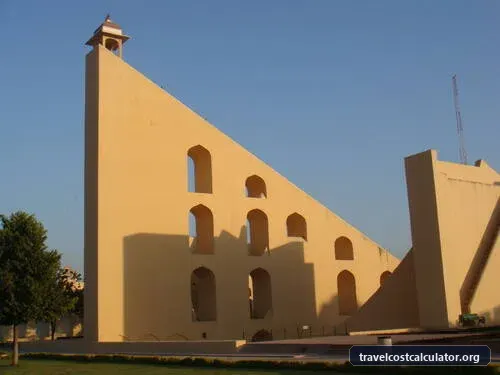
The Jantar Mantar, in Jaipur, is an astronomical observation site built in the early 18th century.
The Jantar Mantar, Jaipur
🏛️ Overview & Historical Significance
Standing in the heart of the "Pink City" of Jaipur Travel Budget, Rajasthan, The Jantar Mantar is an astonishing open-air astronomical observatory that blurs the lines between architectural art and scientific precision. Built between 1728 and 1734 by Maharaja Sawai Jai Singh II—the founder of Jaipur and a visionary astronomer-king—this extraordinary site houses 19 monumental, fixed stone and brass instruments designed to measure time, track celestial bodies, and predict eclipses with breathtaking accuracy.
Sawai Jai Singh II was dissatisfied with the inaccuracies of small brass instruments of his era. To eliminate vibration and optical distortion, he commissioned massive masonry structures using local marble and stone. Among these is the famous Vrihat Samrat Yantra, which stands 27 meters (88 feet) tall and remains the world's largest stone sundial, capable of measuring local Jaipur time to an accuracy of two seconds.
In 2010, UNESCO officially inscribed The Jantar Mantar, Jaipur as a World Heritage Site. UNESCO recognized it as an exceptional testimony to the astronomical skills and cosmological concepts of the early 18th-century royal court. It represents a masterwork of scientific ingenuity, synthesizing astronomical traditions from Hindu (Vedic), Islamic (Ptolemaic), and European scholars into an unprecedented physical canvas.
🎟️ Entrance Fees, Opening Hours & Ticket Booking Tips
Navigating monument ticketing in India is straightforward, but opting for multi-attraction passes can save you significant time and money. Below are the updated 2026 entry rates and logistics for visiting Jantar Mantar.
-
✦
Opening Hours: 9:00 AM to 5:00 PM daily (Last entry typically at 4:30 PM). Evening Light & Sound Shows run seasonally after sunset (around 6:30 PM – 7:30 PM).
-
✦
Foreign Tourists: ₹500 INR (~$6.00 USD)
-
✦
Foreign Students (with valid ID): ₹200 INR (~$2.40 USD)
-
✦
Indian Citizens: ₹50 INR (~$0.60 USD)
-
✦
Indian Students: ₹20 INR (~$0.25 USD)
-
✦
Jaipur Composite Ticket (Best Value): ₹1,000 INR (~$12.00 USD) for foreigners / ₹300 INR (~$3.60 USD) for Indians. Valid for 2 consecutive days, covering Jantar Mantar, Amber Fort, Hawa Mahal, Nahargarh Fort, and Albert Hall Museum.
Pro Tips for Buying Tickets & Hiring Guides:
1. Skip the Lines Online: Purchase tickets in advance via the official Rajasthan Department of Archaeology and Museums booking portal (or the official Rajasthan Tourism SSO app). This bypasses the queue at the main entrance counter, especially during peak season.
2. Hire an Official Licensed Guide: Without context, Jantar Mantar can look like a park of abstract concrete structures. Hiring an official guide at the entrance costs approximately ₹300 – ₹500 INR ($3.60 – $6.00 USD). Confirm they hold an official government badge. Audio guides are also available at the ticket window for ₹200 INR (~$2.40 USD).
🚌 How to Get There & Local Transit Costs
Jantar Mantar is centrally located in Jaipur's Old City (Walled City), directly adjacent to the City Palace and just a 5-minute walk from the iconic Hawa Mahal.
Arriving from Major Transit Hubs in Jaipur:
-
✦
From Jaipur International Airport (JAI - ~12 km away):
- Prepaid Taxi / App Cabs (Uber/Ola): ₹350 – ₹500 INR ($4.20 – $6.00 USD); takes about 35–45 minutes depending on central traffic.
-
✦
Auto-Rickshaw: ₹250 – ₹350 INR ($3.00 – $4.20 USD). Negotiate before getting in.
- Jaipur Metro (Fastest & Cheapest): Take the Pink Line from Railway Station Metro Stop directly to Badi Chaupar Station. Ticket cost is ₹15 – ₹20 INR ($0.20 USD). From Badi Chaupar, Jantar Mantar is an easy 5-minute walk.
Connecting from New Delhi Travel Budget (2026 Transit Costs):
If traveling from Delhi (~270 km away), the fastest transit option is the Vande Bharat Express Train (3.5 hours, seats cost ₹1,000 – ₹1,800 INR / $12 – $22 USD). Express Volvo buses operated by RSRTC run hourly from Delhi's ISBT Kashmiri Gate to Jaipur (5–6 hours, ₹500 – ₹800 INR / $6 – $10 USD).
📸 Best Photography Spots & Insider Visit Hacks
Because Jantar Mantar consists of open geometric masonry set against wide courtyards, capturing the best architectural shots requires a mix of good timing and proper angles.
Top 3 Photography Vantage Points:
-
✦
Vrihat Samrat Yantra (The Giant Sundial): Position yourself near the eastern side of the 27-meter central ramp. Using a wide-angle lens allows you to frame the colossal diagonal staircase against the deep blue Rajasthani sky.
-
✦
Jai Prakash Yantra: Photograph these two sunken hemispherical bowl instruments from the raised walking paths surrounding them. The shadows cast across the inner marble grid lines create dramatic geometric geometric patterns.
-
✦
Rashivalaya Yantra: A collection of 12 distinct instruments, each aligned to a sign of the zodiac. Frame your individual astrological sign's instrument for a personalized travel snapshot.
Insider Hacks for a Smooth Visit:
-
✦
The Ideal Visit Window: Visit around 11:30 AM to 1:30 PM if your goal is to see the sundials in action. Midday sun projects precise, crisp shadows across the calibrated marble scales. However, for photography without harsh shadows or crowds, arrive right at 9:00 AM opening time.
-
✦
Weather Protection: The entire complex is outdoors with virtually no shade. Bring a wide-brim hat, high-SPF sunscreen, sunglasses, and a refillable water bottle—especially if visiting between April and July when temperatures frequently top 40°C (104°F).
-
✦
Optimal Season: The best travel window is during the winter months from November to March, when daily temperatures range between a pleasant 15°C and 25°C.
🏨 Nearby Accommodation & Daily Budget Allocation
Jaipur caters exceptionally well to every budget tier, from vibrant heritage backpacker hostels to opulent royal palaces converted into luxury hotels.
Recommended Accommodations Near the Old City:
-
✦
Budget (Hostels & Guesthouses): Zostel Jaipur or Joey's Hostel Jaipur (Located within walking distance or a short rickshaw ride). Dorm beds: ₹600 – ₹1,000 INR ($7 – $12 USD)/night; Private rooms: ₹1,800 – ₹2,800 INR ($21 – $34 USD)/night.
-
✦
Mid-Range (Heritage Haveli Hotels): Hotel Royal Heritage Haveli, Umaid Bhawan Heritage House, or Shahpura House. Atmospheric rooms featuring traditional Rajasthani architecture: ₹4,500 – ₹8,500 INR ($54 – $100 USD)/night.
-
✦
Luxury (Royal Palaces): Samode Haveli, Taj Jai Mahal Palace, or Rambagh Palace. Exceptional luxury and royal hospitality: ₹20,000 – ₹60,000+ INR ($240 – $720+ USD)/night.
Nearby Dining Recommendations:
After exploring, head to the iconic LMB (Laxmi Misthan Bhandar) in Johari Bazaar (a 7-minute walk) for authentic Rajasthani vegetarian delicacies like Dal Baati Churma and Pyaz Kachori (Budget ₹300 – ₹600 INR / $3.60 – $7.20 USD per person). Alternatively, stop by the Tattoo Cafe & Lounge or Wind View Cafe opposite Hawa Mahal for cold beverages and rooftop photos.
Estimated Daily Budget Breakdown for Jaipur (Per Person, 2026):
-
✦
Backpacker Budget Planner: $20 – $35 USD (₹1,650 – ₹2,900 INR) per day covering hostel, street food, metro/rickshaw transport, and composite monument passes.
-
✦
Mid-Range Traveller: $65 – $120 USD (₹5,400 – ₹10,000 INR) per day covering a private heritage room, sit-down meals, guided tours, and private app taxis.
-
✦
Luxury Traveller: $300+ USD (₹25,000+ INR) per day covering 5-star palace hotels, fine dining, private chauffeur transport, and exclusive experience packages.
Frequently Asked Questions
Essential visitor FAQs for The Jantar Mantar, Jaipur
What is the entrance fee for The Jantar Mantar, Jaipur?
How much time do you need to explore The Jantar Mantar, Jaipur?
How do I get to The Jantar Mantar, Jaipur from the nearest city?
📊 Heritage Quick Specs
Visiting India on a Budget?
Calculate your full daily travel budget for India — including hotel costs, local transport, food, and sightseeing expenses.
View India Daily Travel Costs →Explore more UNESCO World Heritage Sites
🏛️ All 1,200+ Heritage Sites →