
 Spain
Spain
Talayotic Menorca
Located on the island of Menorca in the western Mediterranean Sea, these archaeological sites are situated in agro-pastoral landscapes.
Talayotic Menorca
🏛️ Overview & Historical Significance
Inscribed as a UNESCO World Heritage site in late 2023, Talayotic Menorca represents one of the Mediterranean's most extraordinary, dense, and remarkably preserved open-air prehistoric landscapes. Spread across the serene Balearic island of Menorca, Spain, this ancient cultural territory comprises over 1,500 recorded archaeological sites dating from the Bronze Age (circa 1600 BCE) through the Iron Age until the Roman conquest in 123 BCE. In 2026, traveling across Menorca feels like navigating a giant, living museum where megalithic stone monuments rise seamlessly out of olive groves, limestone pastures, and coastal bluffs.
The UNESCO designation recognizes nine distinct territorial components that capture the island’s unique prehistoric evolutionary trajectory. What makes Talayotic Menorca internationally significant is its distinct Cyclopean architecture—massive structures constructed by fitting giant dry stones together without mortar or mortar paste. The island’s unique culture produced three primary architectural typologies found nowhere else on Earth in this specific form:
-
✦
Talayots: Massive, conical or truncated stone towers serving as territorial landmarks, watchtowers, and ceremonial focal points. Some extend up to 12 meters in height, offering commanding views of the sea and neighboring settlements.
-
✦
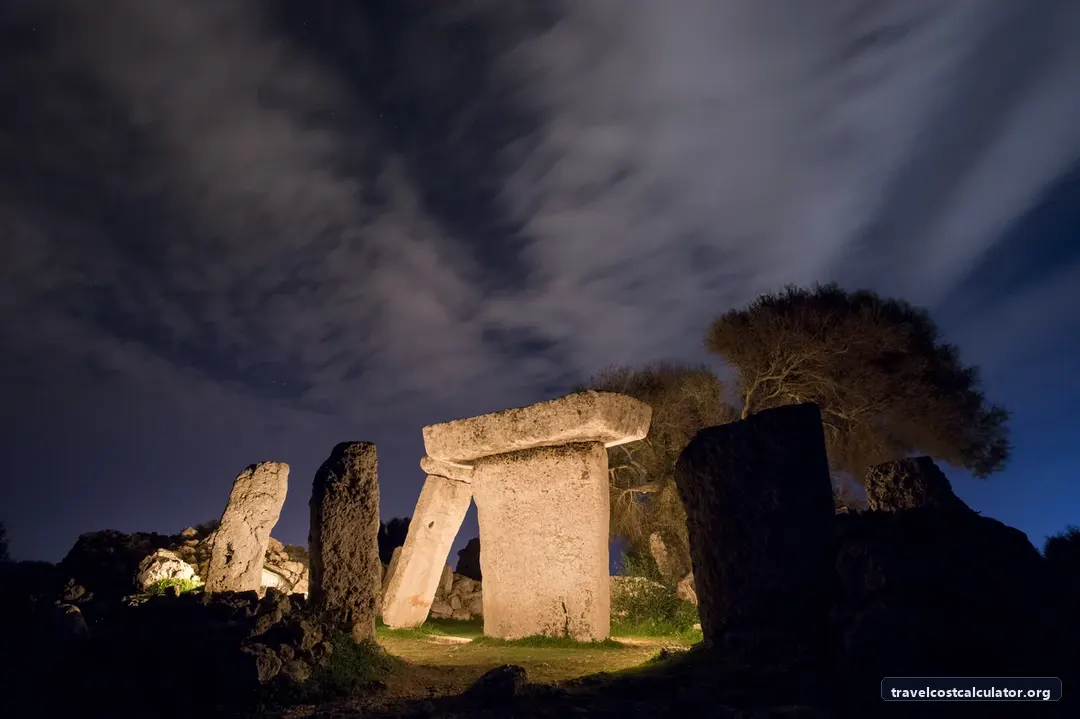
Taulas: T-shaped megaliths consisting of a huge vertical rectangular stone topped by a flat horizontal lintel. Housed inside horseshoe-shaped open-air sanctuaries, these mysterious structures served as religious centers dedicated to astronomical phenomena and fertility rituals.
-
✦
Navetas: Upright, shoe-sole-shaped stone collective tombs built exclusively on Menorca. The most famous example, Naveta d'Es Tudons, resembles an overturned boat and housed communal burials alongside bronze grave goods.
As you explore Menorca in 2026, you will witness how these prehistoric communities developed sophisticated water collection systems, defense networks, and astronomical alignments. The island's geography preserved these stone sentinels for thousands of years, offering an intimate window into prehistoric island life in the Western Mediterranean.
🎟️ Entrance Fees, Opening Hours & Ticket Booking Tips
Visiting Talayotic Menorca requires navigating a hybrid system: many smaller monuments located alongside rural roads or integrated into public hiking routes are completely free to access year-round, while major managed archaeological parks charge modest maintenance fees.
2026 Pricing Breakdown
-
✦
Naveta d'Es Tudons: Adult ticket is €6.00 ($6.50 USD); Seniors (65+) and Students are €3.50 ($3.80 USD); Children under 12 enter free. Tip: Entry is free on Mondays!
-
✦
Torre d'en Galmés (Largest Settlement): Adult ticket is €7.00 ($7.60 USD); Reduced admission is €4.00 ($4.35 USD). Includes access to the modern interpretation center and digital interactive displays.
-
✦
Torralba d'en Salort: Adult ticket is €6.00 ($6.50 USD); Children (8–15) pay €3.00 ($3.25 USD).
-
✦
Talatí de Dalt: Adult ticket is €5.00 ($5.45 USD); Youth/Seniors are €3.00 ($3.25 USD).
-
✦
Son Catlar, Trepucó, & Cornia Nou: Free access / Unattended open-air entry.
Opening Hours & Seasonal Timetables
Opening schedules vary significantly based on the season:
-
✦
Peak Season (May to October): Managed sites are open daily from 9:00 AM to 8:00 PM (last entry 30 minutes before closing). Interpretive centers close during peak afternoon heat at smaller sites, usually between 1:30 PM and 4:30 PM.
-
✦
Shoulder & Winter Season (November to April): Managed sites run shortened hours, typically 10:00 AM to 3:00 PM Wednesday through Sunday, with open gate self-guided access on Mondays and Tuesdays. Unattended open-air sites remain accessible daily from sunrise to sunset.
Booking Tips & Discount Passes
In 2026, the Menorca Cultural Pass (Passaport Cultural) can be purchased online through the official Fundació Menorca Talaiòtica portal or at the Maó Tourist Office for €18.00 ($19.50 USD). This digital pass provides entry to four top managed sites (Naveta d'Es Tudons, Torre d'en Galmés, Torralba d'en Salort, and Trepucó) while saving you nearly 30% compared to individual tickets. During summer months, booking ticket slots online in advance is highly recommended for Naveta d'Es Tudons to avoid peak shuttle bus overcrowding.
🚌 How to Get There & Local Transit Costs
Menorca is located in the Balearic archipelago. Your entry point will be Menorca Airport (MAH) near the island's capital, Maó (Mahón), or the ferry ports at Maó and Ciutadella. Because Talayotic sites are spread across rural farmland and coastal plateaus, choosing your mode of transit directly impacts your travel budget.
1. Renting a Car (Most Recommended Strategy)
To access distant sites efficiently, renting a vehicle is the superior option. Major car rental providers (such as OK Mobility, Enterprise, and Autos Menorca) operate directly out of MAH airport.
-
✦
Compact Car Rental (2026 Rates): €25 – €45 per day ($27 – $49 USD) in shoulder seasons (May/September); €55 – €90 per day ($60 – $98 USD) in July/August.
-
✦
Fuel Costs: Expect to spend around €15 – €25 ($16 – $27 USD) total on fuel for a 3-day island exploration due to short driving distances across the island (the main Me-1 highway is only 45 km long).
2. Public Bus System
Public transport on Menorca is managed by TMSA and Autocares Torres. Bus routes run regularly along the central backbone highway (Me-1) connecting Maó, Alaior, Es Mercadal, Ferreries, and Ciutadella.
-
✦
Inter-City Bus Fare (Maó to Ciutadella): Single ride costs €5.40 ($5.85 USD). Contactless credit cards are accepted directly on board.
-
✦
Reaching Sites by Bus: Take the L01 bus from Maó or Ciutadella to Alaior or Es Mercadal (€2.60 / $2.80 USD). From Alaior, you can hike 20 minutes (1.8 km) down paved rural roads to reach Torralba d'en Salort or hire a short local taxi.
3. Scooter & E-Bike Rentals
For eco-conscious travelers, renting an electric scooter or mountain bike provides an immersive way to navigate the rural stone-walled lanes (camins).
-
✦
125cc Scooter Rental: €25 – €40 per day ($27 – $43 USD).
-
✦
E-Bike Rental: €30 – €45 per day ($32 – $49 USD). Perfect for pedaling from Ciutadella along the flat country lanes straight to Naveta d'Es Tudons (approx. 5 km / 15-minute ride).
4. Taxi Transfers
Taxis operate on metered rates throughout Menorca. A taxi ride from downtown Maó to Torre d'en Galmés costs approximately €22.00 – €28.00 ($24 – $30 USD) one way. Taxis from Ciutadella to Naveta d'Es Tudons average €12.00 – €16.00 ($13 – $17 USD).
📸 Best Photography Spots & Insider Visit Hacks
Prime Photography Locations
-
✦
Naveta d'Es Tudons (Golden Hour): Arrive approximately 45 minutes before sunset. The warm evening light strikes the west facade of the ancient stone tomb, turning the grey limestone into deep bronze and amber tones. Frame your shot low to emphasize the vessel-like curvature of the stone blocks.
-
✦
Torralba d'en Salort (Morning Light): Photograph the magnificent 5-meter-tall Taula early in the morning when soft sunlight illuminates the central pillar, casting dramatic geometric shadows across the surrounding sanctuary walls.
-
✦
Talatí de Dalt (The Leaning Pillar): Capture the rare structural phenomenon where a rogue column rests horizontally against the T-shaped Taula lintel. Step back into the olive grove to frame the stone megalith with twisting wild olive trees in the foreground.
-
✦
Torre d'en Galmés Summit: Climb to the top of the northernmost Talayot at mid-day for sweeping panoramic shots showing the full scope of the prehistoric town, stretching out toward the shimmering blue waters of the Mediterranean coast.
Insider Travel Hacks for 2026
-
✦
Wear Heavy-Duty Footwear: The terrain around Talayotic ruins consists of sharp, exposed natural limestone, loose gravel, and dense Mediterranean scrubland. Flip-flops or thin canvas sneakers are unsafe; wear trail runners or supportive hiking boots.
-
✦
Beat the Heat & Avoid Crowds: Between June and September, inland ruins heat up dramatically by midday with zero natural shade. Plan your archaeological explorations between 8:30 AM – 10:30 AM or after 5:30 PM. Dedicate the hot afternoon hours to Menorca's famous beaches (calas).
-
✦
Combine Sites with the Camí de Cavalls (GR 223): Combine your historical site visits with hikes along the historic coastal trail encircling the island. For instance, walk section 15 of the Camí de Cavalls from Son Bou to coastal cave dwellings and up to Torre d'en Galmés.
-
✦
Pack Sun Protection & Hydration: Facilities at rural sites are minimal. Carry at least 1.5 liters of water per person, high-SPF sunblock, and a wide-brimmed hat, as most settlements have no shade trees directly over the ruin fields.
🏨 Nearby Accommodation & Daily Budget Allocation
Staying near Talayotic sites gives you easy access to rural tranquility. Accommodation on Menorca ranges from rustic countryside farmhouses (agroturismes) near ancient sites to boutique hotels in historic town centers.
Accommodation Options (2026 Pricing)
-
✦
Budget Pick (Hostels / Guesthouses): Base yourself in Maó or Ciutadella at places like Hostal La Isla or Hostal Ciutadella. Dorm beds and private basic rooms range from €35 – €70 per night ($38 – $76 USD).
-
✦
Mid-Range Pick (Boutique & Rural Hotels): Stay in restored historic properties or mid-scale country hotels in Alaior or Es Mercadal (e.g., Hotel Rural Biniarroca or Agroturismo Menorca San Caules). Prices average €110 – €210 per night ($120 – $228 USD), often including breakfast made with local products.
-
✦
Luxury Pick (Historic Agriturismo Estates): High-end luxury farmsteads like Torralbenc or Fontenille Menorca (Santa Ponsa) sit directly adjacent to Talayotic sites. Expect rates from €320 – €650+ per night ($348 – $706 USD).
Dining Costs Around Archaeological Sites
Food expenses on Menorca fit a range of travel budgets. Traditional rural taverns (casinos and cellers) in villages like Alaior and Ferreries serve authentic Balearic dishes at affordable prices.
-
✦
Budget Meal: Local bakery breakfast with a traditional ensaimada pastry and coffee costs €3.50 – €5.00 ($3.80 – $5.45 USD). A hearty lunch menu of the day (Menú del Día) at a local café costs €12.50 – €16.00 ($13.60 – $17.40 USD).
-
✦
Mid-Range Dining: Enjoying Menorcan Mahón cheese plates, local *sobrassada* sausage tapas, grilled Mediterranean fish, and a glass of local wine runs €28.00 – €45.00 ($30.00 – $49.00 USD) per person.
-
✦
Iconic Local Drink: Try a Pomada (Menorcan Xoriguer gin mixed with cloudy lemonade) at a roadside tavern for around €4.50 – €6.00 ($4.90 – $6.50 USD).
Estimated Daily Budget Allocations for 2026
Here is what you can expect to spend per day when exploring Talayotic Menorca:
| Traveler Style | Daily Accommodation | Daily Meals & Drinks | Transit & Sightseeing | Total Estimated Daily Cost |
|---|---|---|---|---|
| Shoestring / Backpacker | €40 ($43.50 USD) | €22 ($24.00 USD) | €12 ($13.00 USD) | €74 ($80.50 USD) |
| Mid-Range Explorer | €130 ($141.00 USD) | €55 ($60.00 USD) | €35 ($38.00 USD) | €220 ($239.00 USD) |
| Luxury / Agriturismo | €420 ($456.00 USD) | €120 ($130.00 USD) | €85 ($92.00 USD) | €625 ($678.00 USD) |
Frequently Asked Questions
Essential visitor FAQs for Talayotic Menorca
What is the entrance fee for Talayotic Menorca?
How much time do you need to explore Talayotic Menorca?
How do I get to Talayotic Menorca from the nearest city?
📊 Heritage Quick Specs
Visiting Spain on a Budget?
Calculate your full daily travel budget for Spain — including hotel costs, local transport, food, and sightseeing expenses.
View Spain Daily Travel Costs →Explore more UNESCO World Heritage Sites
🏛️ All 1,200+ Heritage Sites →