
 South Africa
Robben Island
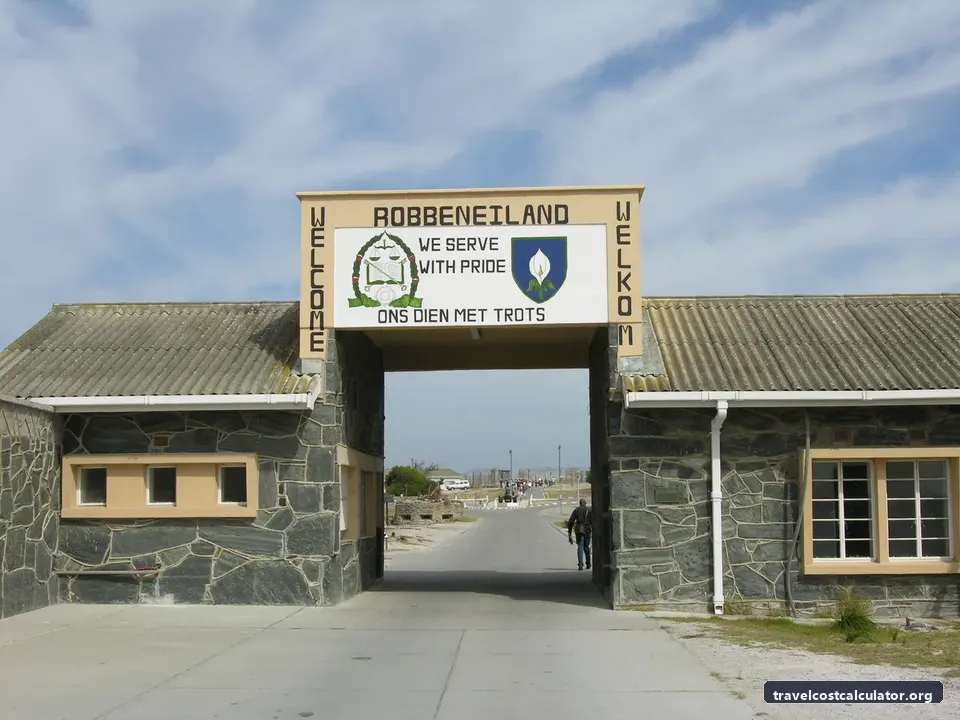
Robben Island was used at various times between the 17th and 20th centuries as a prison, a hospital for socially unacceptable groups and a military base.
Robben Island
🏛️ Overview & Historical Significance
Situated 6.9 kilometers off the coast of Bloubergstrand in Cape Town Travel Budget, South Africa, Robben Island stands as one of the world's most poignant symbols of human resilience, freedom, and the triumph of democracy over systemic oppression. Spanning roughly 5 square kilometers in Table Bay, this windswept landmass was inscribed as a UNESCO World Heritage Site in 1999 under Criteria (iii) and (vi).
The island's history is long and layered. From the 17th to the 20th century, Robben Island served variously as a Dutch East India Company penal settlement, a British military outpost, a leper colony, and a mental asylum. However, its global legacy was forged during South Africa’s Apartheid era. From 1961 until 1996, the island operated as a maximum-security prison for political dissidents fighting against racial segregation.
Most famously, Nelson Mandela spent 18 of his 27 years of imprisonment in Cell 7 of B-Section. Alongside Mandela, key anti-Apartheid leaders including Walter Sisulu, Ahmed Kathrada, Kgalema Motlanthe, and Robert Sobukwe were incarcerated here. Rather than breaking their spirit, the island became an informal university of political theory and human rights. UNESCO recognized Robben Island not merely for its sombre concrete structures, but because its buildings testify to the victory of the human spirit over injustice and racism.
Today, the museum offers a deeply moving narrative: standard island tours are led by former political prisoners. Hearing eyewitness accounts of life inside the maximum-security block from individuals who survived it creates an authentic, E-E-A-T-backed historical experience unmatched by conventional historical sites.
🎟️ Entrance Fees, Opening Hours & Ticket Booking Tips
Visiting Robben Island requires purchasing an all-inclusive ticket that covers the round-trip ferry across Table Bay, a guided bus tour of the island exterior, and a guided walking tour of the maximum-security prison led by a former political prisoner.
Official 2026 Ticket Pricing
-
✦
International Adults (Non-South African Citizens): R750 ZAR (~$41.00 USD)
-
✦
International Children (Under 18 Years): R400 ZAR (~$22.00 USD)
-
✦
South African Citizens & SADC Permanent Residents (Adults): R450 ZAR (~$24.50 USD)
-
✦
South African Children (Under 18 Years): R250 ZAR (~$13.50 USD)
Tour Schedule & Operating Hours
Ferries depart daily from the Nelson Mandela Gateway at the V&A Waterfront in Cape Town. Standard daily ferry departure times are scheduled for:
-
✦
Morning Tours: 09:00 AM and 11:00 AM
-
✦
Afternoon Tours: 01:00 PM and 03:00 PM
Note: Total tour duration is approximately 3.5 to 4 hours, including the 30–45 minute ferry ride each way depending on weather conditions.
Critical Ticket Booking Tips for 2026
-
✦
Book 2–4 Weeks in Advance: Tickets strictly cap visitor capacity to preserve the fragile site. During the peak summer travel season (December to February), tours sell out weeks ahead.
-
✦
Mandatory Identification: You must present a valid physical passport (for international tourists) or official South African Smart ID/Driver's License at the boarding gate. Scans or digital copies are frequently rejected.
-
✦
Official Booking Channel: Purchase tickets directly through the official Robben Island Museum web portal (robben-island.org.za) to avoid third-party markups and counterfeit tickets.
-
✦
Cancellation & Weather Refund Policy: Table Bay experiences high swells and strong wind gusts. If sea conditions force ferry cancellations, the museum will issue a full refund or allow rescheduling. Book your tour early in your Cape Town itinerary to leave buffer days in case of weather delays.
🚌 How to Get There & Local Transit Costs
All official visits to Robben Island depart exclusively via ferry from the Nelson Mandela Gateway to Robben Island, situated at the Clock Tower Precinct within Cape Town’s iconic Victoria Travel Budget & Alfred (V&A) Waterfront.
1. Travel from Cape Town International Airport (CPT) to V&A Waterfront
-
✦
Rideshare (Uber / Bolt): The most convenient option. Expect to pay between R220 – R350 ZAR ($12 – $19 USD) for a standard ride to the V&A Waterfront, taking 25–40 minutes depending on traffic.
-
✦
Private Airport Shuttle: Pre-booked hotel shuttles cost between R350 – R500 ZAR ($19 – $27 USD) per vehicle.
2. Travel from Cape Town City Center (CBD) / Surrounding Suburbs
-
✦
MyCiTi Bus Network (Public Transit): Cape Town's modern, safe, and efficient bus rapid transit system. Route 104 and Route T01 stop directly at the V&A Waterfront. A reusable MyCiTi card costs R35 ZAR (~$1.90 USD), and single fares from the CBD cost between R15 – R25 ZAR ($0.80 – $1.35 USD).
-
✦
Rideshare (Uber / Bolt): A direct ride from Cape Town CBD, Green Point, or Sea Point to the Nelson Mandela Gateway costs approximately R50 – R90 ZAR ($2.70 – $5.00 USD).
-
✦
City Sightseeing Hop-On Hop-Off Bus: The famous red double-decker bus stops directly in front of the Nelson Mandela Gateway. A 1-Day ticket costs approximately R330 ZAR ($18 USD).
📸 Best Photography Spots & Insider Visit Hacks
Top Photography Locations
-
✦
Ferry Deck Transit: Capture sweeping, wide-angle views of the Cape Town skyline backed by Table Mountain, Lion's Head, and Signal Hill as you sail across Table Bay.
-
✦
Nelson Mandela’s Cell (B-Section, Cell 7): A sober reflection spot. Photos are permitted inside the corridor, but photography must remain respectful. Turn off your camera flash to honor the museum rules.
-
✦
The Lime Quarry: Located on the island tour route, this stone quarry is where prisoners endured grueling manual labor. Look for the simple pile of stones in the center, placed by political veterans during a reunion in 1995.
-
✦
Murray's Bay Harbour & Lighthouse: Highlights coastal views against 19th-century colonial maritime structures.
-
✦
African Penguin Colony: Robben Island is home to a protected breeding colony of African Penguins near the coastline. Bring a telephoto lens to capture wildlife without disturbing their habitat.
Insider Hacks for an Optimal Visit
-
✦
Prepare for Seasickness: Table Bay swells can be notoriously rough, even on bright, sunny days. Take anti-motion sickness medication 30 minutes prior to boarding if you are sensitive to boat motion. Sit on the lower deck near the middle of the vessel for maximum stability.
-
✦
Dress in Smart Layers: Cape Town's weather changes rapidly. The coastal boat ride can feel freezing due to Atlantic wind-chill, even during summer. Bring a lightweight, windproof jacket, sun hat, and high-SPF sunscreen.
-
✦
Engage with Your Tour Guide: The prison interior tour is conducted by a former political prisoner. Ask respectful questions about their personal history; these first-hand stories offer profound educational value beyond text displays.
-
✦
Arrive Early: Arrive at the Nelson Mandela Gateway at least 45 minutes prior to your scheduled departure time to clear security checks and check-in queues smoothly.
🏨 Nearby Accommodation & Daily Budget Allocation
Because visitors cannot stay overnight on Robben Island itself, travelers stay in Cape Town. The neighborhoods closest to the ferry gateway include the V&A Waterfront, Green Point, De Waterkant, and Sea Point.
Recommended Nearby Accommodation (2026 Estimates)
-
✦
Budget Traveler: Never@Home Green Point or MOJO Hostel (Sea Point). Clean, highly rated dorms and private rooms located along direct MyCiTi bus lines. Dorm beds cost R350 – R550 ZAR ($19 – $30 USD) per night; private rooms cost R900 – R1,400 ZAR ($49 – $76 USD) per night.
-
✦
Mid-Range Traveler: Protea Hotel by Marriott Cape Town Waterfront Breakwater Lodge or Radisson RED V&A Waterfront. Situated within walking distance of the ferry terminal. Nightly rates range from R2,200 – R3,800 ZAR ($120 – $207 USD).
-
✦
Luxury Traveler: The Silo Hotel or One&Only Cape Town. World-class 5-star accommodations situated directly on the V&A Waterfront. Nightly rates range from R12,000 – R24,000+ ZAR ($650 – $1,300+ USD).
Daily Budget Allocation Breakdown
To help you plan your trip financial footprint, here is an estimated daily budget breakdown per person while visiting Robben Island and exploring Cape Town in 2026:
1. Budget Plan (~$55 – $75 USD / R1,000 – R1,350 ZAR per day)
-
✦
Hostel dorm bed: R400 ZAR ($22 USD)
-
✦
Meals (local cafes, supermarket, street food): R300 ZAR ($16 USD)
-
✦
Public Transport (MyCiTi bus): R50 ZAR ($2.70 USD)
-
✦
Robben Island Ticket (averaged into trip): R750 ZAR ($41 USD)
2. Mid-Range Plan (~$160 – $240 USD / R2,900 – R4,350 ZAR per day)
-
✦
3-Star Hotel / Boutique Airbnb: R2,200 ZAR ($120 USD)
-
✦
Sit-down dining at V&A Waterfront restaurants: R650 ZAR ($35 USD)
-
✦
Uber rides: R150 ZAR ($8 USD)
-
✦
Robben Island Ticket + minor museum entry fees: R900 ZAR ($49 USD)
3. Luxury Plan (~$550 – $1,200+ USD / R10,000 – R22,000+ ZAR per day)
-
✦
5-Star Luxury Waterfront Hotel: R14,000 ZAR ($760 USD)
-
✦
Fine dining & wine pairing: R2,500 ZAR ($135 USD)
-
✦
Private chauffeur transport: R1,200 ZAR ($65 USD)
-
✦
Robben Island Ticket & Private VIP city tours: R2,500 ZAR ($135 USD)
Frequently Asked Questions
Essential visitor FAQs for Robben Island
What is the entrance fee for Robben Island?
How much time do you need to explore Robben Island?
How do I get to Robben Island from the nearest city?
📊 Heritage Quick Specs
Visiting South Africa on a Budget?
Calculate your full daily travel budget for South Africa — including hotel costs, local transport, food, and sightseeing expenses.
View South Africa Daily Travel Costs →Explore more UNESCO World Heritage Sites
🏛️ All 1,200+ Heritage Sites →