
 Chile
Chile
Rapa Nui National Park
Rapa Nui, the indigenous name of Easter Island, bears witness to a unique cultural phenomenon.
Rapa Nui National Park
🏛️ Overview & Historical Significance
Located over 2,200 miles off the coast of continental Chile in the middle of the Pacific Ocean, Rapa Nui National Park (Parque Nacional Rapa Nui) encompasses one of the most isolated and captivating archaeological landscapes on Earth. Spanning nearly 40 percent of Easter Island (Isla de Pascua), the park was officially designated a UNESCO World Heritage site in 1995 for its extraordinary artistic and architectural achievements, executed by a Polynesian society that developed in complete isolation from the 10th to the 16th centuries.
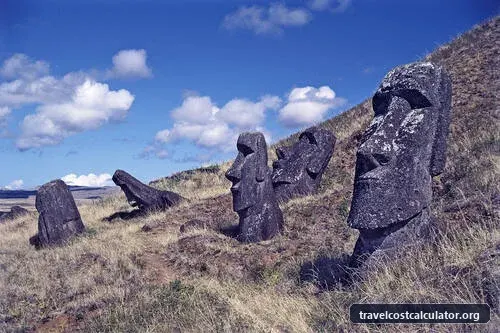
The defining cultural legacy of Rapa Nui is its world-famous moai—monolithic human figures carved from volcanic tuff, basalt, and scoria. Indigenous Rapa Nui artisans carved over 900 of these megaliths to represent the spirits of deified ancestors, positioning them atop stone ceremonial platforms known as ahu. These monuments face inward toward ancient villages to cast protection and mana (spiritual power) over the island's inhabitants.
Beyond the statues, the park preserves the dramatic quarry at Rano Raraku, where hundreds of moai remain unfinished in the volcanic hillside, and the dramatic ceremonial village of Orongo, perched on the rim of the Rano Kau crater. Orongo served as the focal point for the Tangata Manu (Birdman) cult, an intricate religious and political competition that emerged in the 18th century as environmental pressures and resource scarcity altered traditional island life. Exploring Rapa Nui National Park is not merely a sightseeing trip; it is an immersive journey through human resilience, artistic mastery, and sacred heritage.
🎟️ Entrance Fees, Opening Hours & Ticket Booking Tips
Managing logistics and park permits requires advance planning. The park is managed directly by Ma’u Henua, the indigenous indigenous community board, alongside CONAF (Chile’s National Forest Corporation).
2026 Estimated Entrance Ticket Prices
-
✦
Foreign Adult Visitor: $80 USD (~76,000 CLP)
-
✦
Foreign Child Visitor (Ages 7–12): $40 USD (~38,000 CLP)
-
✦
Chilean Adult Resident/National: ~20,000 CLP ($21 USD)
-
✦
Chilean Child / Senior: ~10,000 CLP ($10.50 USD)
-
✦
Children under 7: Free entry
Key Rules, Validity & Booking Logistics
Your ticket is valid for 10 consecutive calendar days starting from the date of first entry. However, strict conservation rules govern entry to the main archaeological zones:
-
✦
Single-Entry Restrictions: Sites like Rano Raraku (the moai quarry) and Orongo (the Birdman village) permit only one entry per ticket during your 10-day period. Make sure to visit these sites on clear days when you can spend ample time exploring.
-
✦
Multi-Entry Sites: Coastal locations such as Ahu Tongariki and Anakena Beach allow multiple visits within the 10-day validity window.
-
✦
Mandatory Local Guide Requirement: Visitors are required to be accompanied by an official registered local Rapa Nui guide or an island resident to enter all national park sites. Booking your guide or private tour in advance is highly recommended.
-
✦
Where to Purchase: Tickets can be purchased online prior to arrival via the official Ma'u Henua portal or upon landing at Mataveri International Airport (IPC). Payments at the airport ticket desk can be made in cash (USD or CLP) or via major credit cards.
Opening Hours
Standard operating hours across most park sites run daily from 9:00 AM to 6:00 PM. Special exceptions apply for Ahu Tongariki, which opens at 6:00 AM to accommodate sunrise viewing.
🚌 How to Get There & Local Transit Costs
Reaching Easter Island is an epic journey in itself, requiring long-haul flight connections before navigating local island transportation.
1. Flights to Easter Island (Mataveri International Airport)
The sole commercial airline operating flights to Rapa Nui is LATAM Airlines, flying out of Santiago Travel Budget’s Arturo Merino Benítez International Airport (SCL). Flight time is approximately 5.5 to 6 hours outgoing, and around 4.5 to 5 hours returning due to tailwinds.
-
✦
Economy Roundtrip Flight Fares (2026 estimates): $450 – $1,100 USD (depending on season and advance booking).
-
✦
Booking Strategy: Book at least 4 to 6 months in advance. Flight frequencies typically range from 4 to 7 flights per week.
2. Local Transportation Costs in Hanga Roa & Park Routes
Once on the island, all travelers land in Hanga Roa, the island's single town. To access park sites distributed across the island's 64 square miles, you have several transport options:
-
✦
Rental SUV / 4x4 (Suzuki Jimny or similar): $75 – $110 USD per day. This is the most flexible choice for couples or groups traveling together.
-
✦
Rental Motorbike / Scooter: $40 – $60 USD per day. Ideal for solo travelers navigating paved island roads.
-
✦
Bicycle / Mountain Bike Rental: $25 – $35 USD per day. Great for active travelers visiting nearby sites like Ahu Akivi or Ana Kakenga.
-
✦
Guided Small-Group Day Tours: $70 – $140 USD per person per day (includes certified local guide, transport, and hotel pick-up).
-
✦
Local Taxis (within Hanga Roa): $5 – $8 USD per flat-rate trip inside town limits. Taxis to distant park sites must be chartered privately for $60–$100 USD return.
📸 Best Photography Spots & Insider Visit Hacks
Capturing the dramatic juxtaposition of ancient stone statues, lush volcanic turf, and crashing Pacific waves requires strategic timing and lighting.
Top Photography Locations
-
✦
Ahu Tongariki (Sunrise): The iconic vista of 15 massive moai standing in a line along the eastern coast. Arrive by 6:15 AM to photograph the sun rising directly behind or beside the monoliths.
-
✦
Rano Raraku (Mid-Morning): Positioned on the slopes of an extinct volcano, this quarry contains hundreds of partially carved moai sticking out of the hillside. Mid-morning light illuminates the delicate facial details carved into the volcanic tuff.
-
✦
Ahu Akivi (Golden Hour / Late Afternoon): The only inland site where the 7 moai face directly toward the ocean. Afternoon sunlight paints the stone in warm golden tones.
-
✦
Rano Kau & Orongo (Late Afternoon): Look down into a massive 1-kilometer-wide crater lake filled with freshwater wetlands, bordered by sheer ocean cliffs. The stone dwellings of Orongo look breathtaking under late afternoon skies.
-
✦
Anakena Beach (Midday to Afternoon): White coral sand, turquoise waters, and coconut palms frame Ahu Nau Nau, featuring some of the best-preserved moai with intact topknots (pukao).
Insider Hacks & Environmental Protocol
-
✦
Respect Sacred Boundaries (Tapu): Never step on an ahu (stone platform) or touch a moai. Fines for stepping onto sacred areas are severe and strictly enforced by park guards.
-
✦
Pack High-SPF Sunscreen & Rain Gear: The island's subtropical climate means sudden cloudbursts and high UV exposure are common year-round. Bring ocean-safe sunscreen and a lightweight waterproof jacket.
-
✦
Beat the Tour Buses: Coordinate with your local guide to visit popular spots like Rano Raraku and Orongo around midday or early afternoon when group tour buses return to Hanga Roa for lunch.
-
✦
Observe Weather Windows for Ahu Tongariki: Check morning cloud cover forecasts. If the east coast is clear, prioritize your sunrise trip to Tongariki early in your itinerary to allow extra attempts if morning rain occurs.
🏨 Nearby Accommodation & Daily Budget Allocation
Because Rapa Nui is an isolated island, goods and electricity carry a premium. However, smart financial planning can keep your trip well within budget.
Accommodation Options in Hanga Roa (2026 Rates)
-
✦
Budget (Hostels & Eco-Campsites): $35 – $65 USD per night for dorm beds or private rooms with shared bathrooms (e.g., Camping Mihinoa, Hostal Vaianny).
-
✦
Mid-Range (Boutique Hotels & Guesthouses): $130 – $280 USD per night including breakfast (e.g., Hotel Hare Nua, Hotel Taha Tai, Hotel Sunset).
-
✦
Luxury (All-Inclusive Eco-Resorts): $650 – $1,300+ USD per night including private guides, customized tours, and gourmet meals (e.g., Nayara Hangaroa, Explora Rapa Nui).
Dining & Food Costs
Fresh seafood is exceptional on the island, particularly yellowfin tuna (ahi). Lower your daily food expenditure by mixing self-catering with local eateries.
-
✦
Budget Dining: Fresh tuna empanadas from local street kiosks or bakeries cost $6 – $9 USD each. Self-catering groceries from town mini-markets average $20 – $30 USD per day.
-
✦
Mid-Range Dining: Plate of fresh ocean tuna ceviche or grilled fish at a coastal restaurant runs $22 – $38 USD per main course.
-
✦
Local Beverage Costs: Local Mahina craft beer or a Pisco Sour costs $7 – $12 USD.
Estimated Daily Budget Allocations (2026 Projections)
-
✦
Budget Traveler: $90 – $130 USD / day (Hostel/campsite stay, rental bicycle/scooter Split Travel Budget, street food/empanadas, amortized park entrance fee).
-
✦
Mid-Range Traveler: $240 – $420 USD / day (3-star hotel stay, shared 4x4 rental or group guided tours, restaurant meals, amortized entrance fee).
-
✦
Luxury Traveler: $800 – $1,500+ USD / day (5-star eco-lodge, private guide/vehicle, high-end culinary experiences).
Frequently Asked Questions
Essential visitor FAQs for Rapa Nui National Park
What is the entrance fee for Rapa Nui National Park?
How much time do you need to explore Rapa Nui National Park?
How do I get to Rapa Nui National Park from the nearest city?
📊 Heritage Quick Specs
Visiting Chile on a Budget?
Calculate your full daily travel budget for Chile — including hotel costs, local transport, food, and sightseeing expenses.
View Chile Daily Travel Costs →Explore more UNESCO World Heritage Sites
🏛️ All 1,200+ Heritage Sites →