
 India
India
Qutb Minar and its Monuments, Delhi
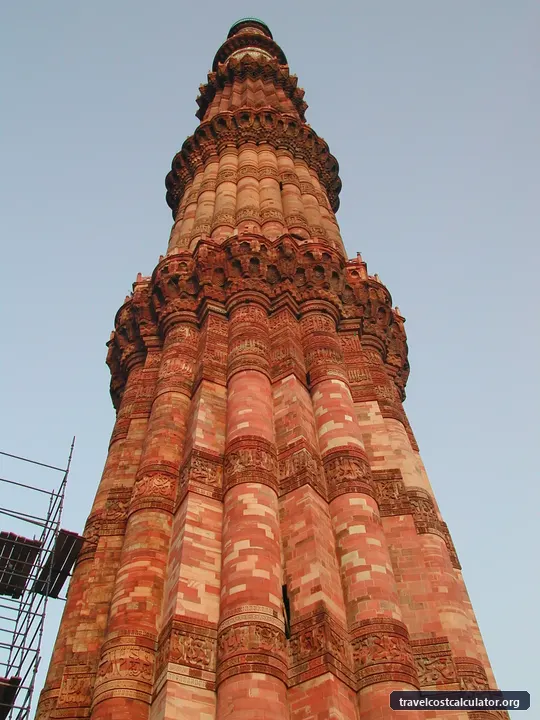
Built in the early 13th century a few kilometres south of Delhi, the red sandstone tower of Qutb Minar is 72.5 m high, tapering from 2.75 m in diameter at its peak to 14.32 m at its base, and alternating angular and rounded flutings.
Qutb Minar and its Monuments, Delhi
🏛️ Overview & Historical Significance
Rising 72.5 meters (238 feet) into the South Delhi sky, the Qutb Minar and its Monuments stand as an enduring testament to the dawn of Islamic rule in Northern India. Inscribed as a UNESCO World Heritage Site in 1993, this extraordinary architectural complex encapsulates the synthesis of Central Asian Islamic design with traditional Indian craftsmanship, a stylistic fusion known as Indo-Islamic architecture.
The story of the complex began in 1192 CE, following the defeat of Delhi's last Hindu king, Prithviraj Chauhan, by Mu'izz ad-Din Muhammad Ghori. Ghori's viceroy, Qutb-ud-din Aibak (who later became the first Sultan of Delhi and founder of the Mamluk/Slave Dynasty), initiated the construction of the minaret around 1199 CE to commemorate his victory and function as a muezzin's tower for the adjacent mosque. Subsequent rulers added to its grandeur:
-
✦
Shams-ud-din Iltutmish: Added three more sandstone storeys to the tower in the 1220s.
-
✦
Alauddin Khalji: Constructed the magnificent Alai Darwaza gatehouse (1311 CE) and commissioned the Alai Minar, an ambitious tower intended to double the height of Qutb Minar (remains unfinished at 24 meters).
-
✦
Firoz Shah Tughlaq: Repaired damage caused by lightning in 1368 CE, replacing the top storey with two distinct levels made of white marble and red sandstone.
Beyond the soaring tower, the UNESCO precinct houses several world-class historical treasures:
-
✦
Quwwat-ul-Islam Mosque: The earliest surviving mosque built by the Delhi Sultans, constructed using architectural elements carved from 27 dismantled Hindu and Jain temples, creating an evocative visual blending of religions and eras.
-
✦
The Iron Pillar of Delhi: Standing in the mosque courtyard, this 7.2-meter metallurgical marvel dates back to the 4th century CE Gupta period under King Chandragupta II. Made of 98% wrought iron, it has resisted atmospheric corrosion for over 1,600 years, baffling modern materials scientists.
-
✦
Tomb of Iltutmish (1235 CE): A square sandstone mausoleum featuring intricate Quranic calligraphy and geometric carvings, showcasing the transition from Hindu stone-masonry techniques to Islamic structural forms.
🎟️ Entrance Fees, Opening Hours & Ticket Booking Tips
Visiting the Qutb Minar complex in 2026 requires an entrance ticket administered by the Archaeological Survey of India (ASI). Pricing operates on a dual-tier structure based on citizenship, with digital booking incentives offered to minimize wait times.
2026 Ticket Pricing Structure
-
✦
Foreign Tourists: ₹600 INR (approx. $7.20 USD) via online portal; ₹650 INR (approx. $7.80 USD) at physical cash/POS ticket counters.
-
✦
SAARC & BIMSTEC Citizens: ₹300 INR (approx. $3.60 USD) online; ₹350 INR (approx. $4.20 USD) on-site.
-
✦
Indian Citizens & OCI Cardholders: ₹50 INR (approx. $0.60 USD) online; ₹80 INR (approx. $0.95 USD) on-site.
-
✦
Children (Under 15 Years): Free entry for all nationalities (valid photo ID required).
-
✦
Still Camera & Smartphone: Included with standard entry ticket.
-
✦
Commercial Video / Tripods: Requires prior written authorization from the ASI regional office; unauthorized tripods will be confiscated at the security gate.
Opening Hours & Night Entry
around sunrise and closes around sunset for standard exploration: 6:00 AM to 6:00 PM daily. The ASI continues its popular night lighting program, allowing visitors to walk through illuminated outdoor pathways between 7:00 PM and 10:00 PM (night entry tickets cost ₹100 INR for domestic and ₹500 INR for foreign tourists).
Insider Booking Tips for 2026
-
✦
Book Online via ASI Web Portal: Skip the long ticketing lines by purchasing tickets ahead of time on the official ASI booking website or scanning the QR codes posted outside the main plaza. Online tickets are roughly 10% cheaper.
-
✦
Security Screenings: Security is strict. Large backpacks, food items, tobacco, metal tripods, and dangerous objects are prohibited. Small daypacks, sealed water bottles, and smartphones/cameras are allowed. Free baggage lockers are available near the main gate.
🚌 How to Get There & Local Transit Costs
Located in Mehrauli, South Delhi, Qutb Minar is easily accessible from any part of the National Capital Region (NCR) via Delhi’s modern transit network.
1. By Delhi Metro (Fastest & Cheapest)
The most efficient way to reach the site is via the Delhi Metro Yellow Line (Samaypur Badli to Millennium City Centre Gurugram):
-
✦
Nearest Metro Station: Qutub Minar Station (Yellow Line).
-
✦
Transit Time: Approximately 35 minutes from Connaught Place (Rajiv Chowk Station) or New Delhi Travel Budget Railway Station (NDLS).
-
✦
Cost: ₹40 – ₹60 INR (approx. $0.50 – $0.72 USD) per person using a single-journey token or Delhi Metro National Common Mobility Card (NCMC).
-
✦
Last Mile Connection: From Qutub Minar Metro Station to the monuments (approx. 1.5 km), take an electric rickshaw (e-rickshaw) for ₹20 INR ($0.25 USD) per shared seat, or a private auto-rickshaw for ₹50 – ₹80 INR ($0.60 – $0.95 USD).
2. By App-Based Taxi & Rideshare
Rideshare services operate extensively throughout Delhi NCR and offer door-to-door comfort with fixed upfront pricing:
-
✦
Uber / Ola / BluSmart (Electric Cabs): From Central Delhi (Connaught Place) or New Delhi Railway Station, expect to pay ₹300 – ₹500 INR ($3.60 – $6.00 USD) depending on vehicle size and demand surges.
-
✦
From Indira Gandhi International Airport (DEL): The complex is roughly 12–14 km away. A metered taxi or rideshare cab from Airport Terminal 3 to Qutb Minar costs ₹350 – ₹600 INR ($4.20 – $7.20 USD) and takes 25–45 minutes depending on traffic.
3. By Public Bus
Delhi Transport Corporation (DTC) operates red AC and green non-AC buses serving the Mehrauli route. Key bus numbers reaching the Qutb Minar Bus Stop include 505, 516, 525, and 715. Fares range between ₹10 and ₹25 INR ($0.12 – $0.30 USD). Buses can be crowded during peak morning and evening commute hours.
📸 Best Photography Spots & Insider Visit Hacks
To capture stunning photographs of this red sandstone icon and avoid Delhi's intense heat and tour groups, strategic planning is essential.
Top 5 Photography Locations inside the Complex
-
✦
The Archway Framed View (Quwwat-ul-Islam Mosque): Stand within the central archway of the mosque ruins looking south. The ruined arches create a dramatic natural stone frame around the soaring Qutb Minar.
-
✦
The Iron Pillar & Minaret Alignment: Capture the famous 4th-century Iron Pillar in the foreground with the full vertical length of the minaret towering in the background. Use a wide-angle lens (16-24mm equivalent).
-
✦
Alai Darwaza Inscriptions: Frame the intricate white marble inlay work and geometric sandstone latticework (jalis) of Alauddin Khalji's gateway during mid-morning when side lighting emphasizes detail.
-
✦
The Unfinished Alai Minar Lawns: Position yourself near the massive rubble base of the Alai Minar. Looking back toward Qutb Minar across the manicured green lawns offers a sense of architectural scale.
-
✦
Tomb of Iltutmish Roofless Sky Shot: Point your camera upward from inside the open-roof mausoleum. The intricate carving along the interior walls frames the blue sky perfectly.
Insider Visit Hacks
-
✦
Ideal Time of Day: Arrive right when gates open at 6:00 AM – 6:30 AM. You will enjoy crisp morning light, pleasant temperatures, minimal crowds, and bird calls amidst the ruins.
-
✦
Seasonal Timing: The optimal travel window for Delhi is October through March. Winter months (November to February) feature mild temperatures (10°C to 23°C / 50°F to 73°F), though morning fog can occasionally linger until 8:30 AM. Avoid May and June when afternoon temperatures routinely exceed 40°C (104°F).
-
✦
Footwear Caution: You will walk over cobblestones, gravel, uneven stone pavers, and grass. Wear sturdy, comfortable walking shoes.
-
✦
Hydration: Carry a reusable water bottle. Filtered water refill stations are available inside the complex grounds near the exit facilities.
🏨 Nearby Accommodation & Daily Budget Allocation
South Delhi features excellent neighborhood hubs near Qutb Minar, including Mehrauli, Saket, Hauz Khas, and Green Park. Staying in South Delhi offers a greener, quieter environment with easy access to modern shopping malls and historic parks.
Accommodation Recommendations in 2026
-
✦
Budget / Hostels ($10 – $25 USD / night): Trendy hostels in Hauz Khas Village or Saket (e.g., Zostel Delhi, Joey's Hostel, or local boutique backpacker lodges). Dorm beds range from ₹800 – ₹1,400 INR ($10 – $17 USD); private budget rooms start around ₹2,000 INR ($24 USD).
-
✦
Mid-Range Boutique Hotels ($45 – $95 USD / night): Quality properties like Qutub Residency, Olive Service Apartments Saket, or Bloomrooms @ Link Road. Double rooms cost ₹3,800 – ₹7,800 INR ($45 – $93 USD) with breakfast included.
-
✦
Luxury Stays ($180 – $400+ USD / night): Five-star luxury near the diplomatic enclave and South Delhi, such as The Claridges Delhi, ITC Maurya, or Sheraton New Delhi (Saket). Rooms range from ₹15,000 – ₹33,000 INR ($180 – $395 USD).
Dining Near Qutb Minar
-
✦
Fine Dining with Views: The adjacent Style Mile in Mehrauli offers chic rooftop dining facing the illuminated minaret. Notable choices include Olive Bar & Kitchen, Rooh (modern Indian gastronomy), and The Grammar Room. Expect to spend ₹2,000 – ₹4,500 INR ($24 – $54 USD) per person.
-
✦
Local & Casual Options: Explore Saket's DLF Avenue food courts or authentic local eateries in Mehrauli market for kathi rolls, butter chicken, and chole bhature costing ₹200 – ₹600 INR ($2.40 – $7.20 USD) per meal.
Sample Daily Budget Allocations for Delhi (2026)
To help plan your itinerary, here is a financial overview per person per day when visiting Qutb Minar and exploring Delhi:
-
✦
Backpacker / Budget Traveler: $25 – $35 USD (₹2,100 – ₹2,900 INR) / day
- Hostel Dorm Bed: $12 USD
-
✦
Metro Transit & E-Rickshaws: $3 USD
-
✦
Street Food & Local Dhaba Meals: $8 USD
-
✦
Qutb Minar Ticket (Online): $7.20 USD
- 3-Star Hotel / Serviced Apartment (Shared): $45 USD
- 5-Star Heritage Hotel Room: $220 USD
Frequently Asked Questions
Essential visitor FAQs for Qutb Minar and its Monuments, Delhi
What is the entrance fee for Qutb Minar and its Monuments, Delhi?
How much time do you need to explore Qutb Minar and its Monuments, Delhi?
How do I get to Qutb Minar and its Monuments, Delhi from the nearest city?
📊 Heritage Quick Specs
Visiting India on a Budget?
Calculate your full daily travel budget for India — including hotel costs, local transport, food, and sightseeing expenses.
View India Daily Travel Costs →Explore more UNESCO World Heritage Sites
🏛️ All 1,200+ Heritage Sites →