
 Russia
Petroglyphs of Lake Onega and the White Sea
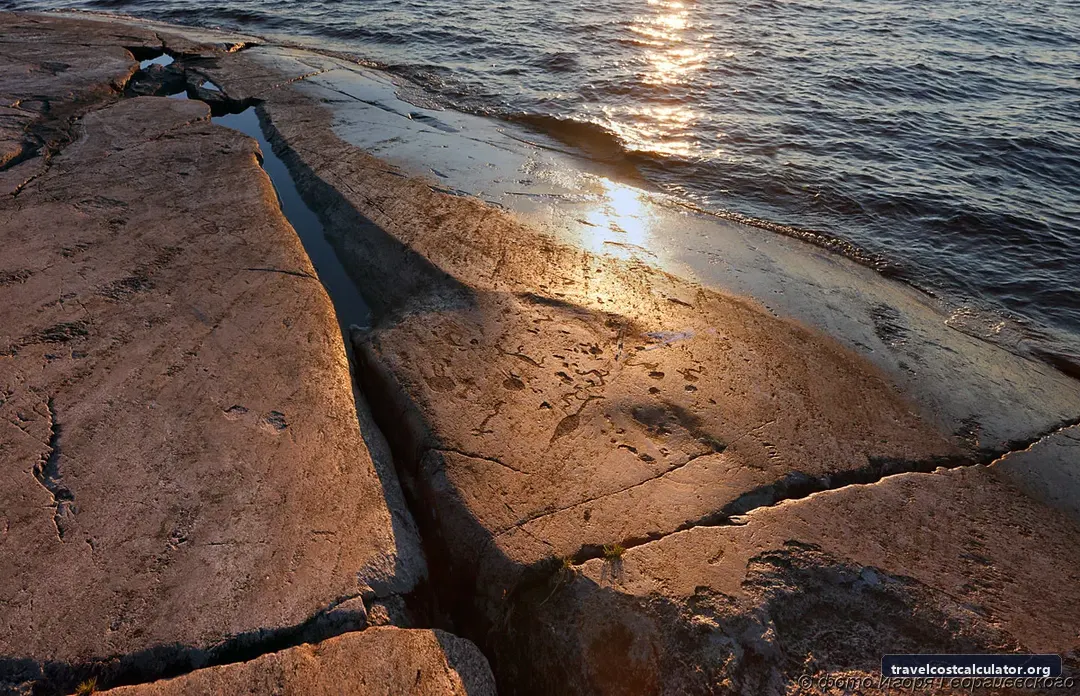
The site contains 4,500 petroglyphs carved in the rocks during the Neolithic period dated about 6-7 thousand years ago and located in the Republic of Karelia in the Russian Federation.
Petroglyphs of Lake Onega and the White Sea
🏛️ Overview & Historical Significance
Inscribed as a UNESCO World Heritage Site in 2021, the Petroglyphs of Lake Onega and the White Sea represent one of the most extensive and visually captivating rock art complexes in Northern Europe. Spanning two distinct geographic clusters separated by roughly 300 kilometers across the Republic of Karelia in northwestern Russia, this ancient treasure trove comprises over 4,500 individual rock carvings created during the Neolithic era between 6,000 and 7,000 years ago (5th to 3rd millennium BCE).
What sets these petroglyphs apart is their extraordinary graphic diversity and preservation on smooth, ice-scoured granite bedrock. The site is divided into two primary geographic groups:
-
✦
Lake Onega Cluster (Pudozh District): Located along the eastern shore of Lake Onega, featuring 22 distinct petroglyph sites with over 1,200 figures. Key sites include Cape Besov Nos ("Devil's Nose"), Peri Nos, and Kladovets. This area is world-famous for its depiction of waterfowl (swans with elongated necks), solar and lunar symbols, and the iconic 2.5-meter-tall anthropomorphic figure known as the "Demon of Besov Nos." Intriguingly, 15th-century Orthodox monks from the nearby Muromsky Monastery carved a Christian cross directly over the figure's hand to "neutralize" its pagan spirits.
-
✦
White Sea Cluster (Belomorsk District): Situated near the mouth of the Vyg River close to the White Sea, this complex includes 11 sites containing over 3,400 carved images. The central hub is Zalavruga and the protective museum structure at Besovy Sledki. Here, visitors can see vivid narrative scenes depicting multi-man whale hunting expeditions in dugout boats, sea battles, forest fauna (elks, bears), and the world's oldest known depictions of humans skiing.
UNESCO awarded these petroglyphs World Heritage status due to their outstanding universal value as a testament to the spiritual, artistic, and socio-economic life of prehistoric Fennoscandian hunter-fisher-gatherers. The carvings served not just as art, but as sacred ceremonial sanctuaries and astronomical mapping grounds during the post-glacial settlement of Northern Europe.
🎟️ Entrance Fees, Opening Hours & Ticket Booking Tips
Visiting the petroglyphs requires navigating two separate locations with different access frameworks. While the White Sea cluster offers developed museum infrastructure, the Lake Onega cluster remains a wild, open-air expedition site.
1. White Sea Petroglyphs (Belomorsk / Zalavruga Complex)
The main visitor hub for the White Sea site is the Besovy Sledki Protective Pavilion & Archaeological Center, located 7 km outside Belomorsk. The outdoor open-air site at New Zalavruga is accessible via a forest footbridge path.
-
✦
Opening Hours: Pavilion and Visitor Center open Tuesday – Sunday, 10:00 AM – 6:00 PM (Closed Mondays). Outdoor Zalavruga trails are open daily during daylight hours.
-
✦
Standard Adult Entrance Fee (2026): 400 RUB (~$4.30 USD) for the Besovy Sledki Pavilion; entry to the open-air Zalavruga archaeological park costs 200 RUB (~$2.15 USD).
-
✦
Guided Tours: Official guided tours in Russian cost 1,500 RUB (~$16.00 USD) per group (up to 5 people). English-speaking archaeological tours must be requested at least 7 days in advance via the Museum of Belomorsk Petroglyphs for approximately 2,800 RUB (~$30.00 USD).
-
✦
Concessions: Students, seniors, and children under 16 pay 200 RUB (~$2.15 USD).
2. Lake Onega Petroglyphs (Cape Besov Nos)
Cape Besov Nos is located inside an open-air regional nature reserve on the remote eastern shore of Lake Onega.
-
✦
Opening Hours: Accessible 24/7, year-round (best visited from late spring to early autumn).
-
✦
Entrance Fee: Free public access (0 RUB), though local environmental conservation fees for camping or boat landing may apply through the Pudozh forestry board (~200 RUB / $2.15 USD per tent site).
Pro Booking & Financial Tips for 2026
-
✦
Payment Logistics: Foreign Visa and Mastercard credit cards do not operate within Russia. International visitors must carry sufficient cash in Russian Rubles (RUB) or use a locally issued Russian MIR debit card obtained upon arrival in major transit hubs like St. Petersburg Travel Budget or Moscow Travel Budget.
-
✦
Advance Registration: If planning to visit the White Sea site in peak summer (July–August), reserve guided tours directly via the official Belomorsk Museum web portal or through accredited Petrozavodsk tour agencies at least two weeks in advance.
🚌 How to Get There & Local Transit Costs
Reaching these remote northern locations requires traveling via regional transit hubs. The primary gateway to Karelia is Petrozavodsk (accessible from St. Petersburg or Moscow via daily high-speed Lastochka or sleeper trains).
Reaching the White Sea Petroglyphs (Belomorsk Cluster)
Belomorsk is situated along the main railway line running northward to Murmansk.
-
✦
Train from St. Petersburg / Petrozavodsk: Take the overnight train from St. Petersburg (10–12 hours) or Petrozavodsk (approx. 5 hours) to Belomorsk Station. A second-class sleeper ticket (Kupe) costs approximately 3,200 – 4,500 RUB ($35 – $48 USD) one way.
-
✦
Belomorsk Town to Zalavruga: From Belomorsk train station, take local Bus #1 or a local taxi to the village of Vygostrov / Zalavruga site (approx. 7 km). Taxi fare: 450 – 600 RUB ($5.00 – $6.50 USD) one way.
-
✦
Final Hike: From the parking area near Vygostrov, follow the marked 1.3 km wooden boardwalk through the pine forest across the Vyg River to the main petroglyph rock surfaces.
Reaching the Lake Onega Petroglyphs (Cape Besov Nos Cluster)
Accessing Besov Nos requires an off-road or water expedition from the town of Pudozh or the coastal village of Shalsky.
-
✦
Step 1: Petrozavodsk to Pudozh: Take an intercity express bus from Petrozavodsk Bus Station to Pudozh (approx. 6–7 hours, 1,400 RUB / $15.00 USD) or drive along the eastern shore highway (A119).
-
✦
Step 2: Pudozh to Shalsky: Take a local bus or private taxi 35 km west to Shalsky village at the mouth of the Chyornaya (Black) River (Taxi: ~1,200 RUB / $13.00 USD).
-
✦
Step 3: Transfer to Cape Besov Nos (18 km):
- By Motorboat (Summer): Rent a motorboat with a local captain from Shalsky down the Black River and along Lake Onega's shore directly to Besov Nos. Cost: 5,000 – 8,000 RUB ($54 – $86 USD) per boat round-trip (holds up to 4 passengers).
-
✦
By Off-Road 4x4 / UAZ (Year-round dry ground): Hire a modified 4x4 vehicle to navigate the treacherous sand dunes and forest trails. Cost: 7,000 – 11,000 RUB ($75 – $118 USD) per vehicle round-trip.
📸 Best Photography Spots & Insider Visit Hacks
Photographing rock art thousands of years old carved into dark granite requires specialized techniques and timing. Because the shallow incisions (often only 1 to 3 millimeters deep) blend into the rock face under flat mid-day light, understanding lighting dynamics is vital.
Ideal Photography Spots & Must-See Panels
-
✦
The "Demon" of Cape Besov Nos (Lake Onega): Located right at the water's edge on the tip of the cape. Capture the 2.5-meter figure alongside the adjacent catfish, otter, and the 15th-century Christian cross overlay.
-
✦
The Skiers of Zalavruga (White Sea): Found in New Zalavruga (Panel 1). This is the world-renowned scene depicting three hunters on curved skis tracking an elk.
-
✦
Beluga Whale Hunt (Zalavruga): A dynamic multi-figure panel showing hunters in traditional sea craft casting harpoons at beluga whales.
Insider Hacks for Photography & Comfort
-
✦
Master Raking Light (Grazing Sunlight): The best time to photograph petroglyphs is during early morning (6:00 AM – 9:00 AM) or late afternoon/sunset (5:00 PM – 8:30 PM). Low-angled sunlight creates shadow contrast inside the grooves, making details stand out vividly.
-
✦
The Water Spraying Technique: Bring a spray bottle filled with clean water (or splash water gently using a sponge). Dampening the weathered granite surface momentarily deepens the natural rock color, causing the lighter petroglyph incisions to contrast sharply for crisp photographs. Never use chemical treatments, chalk, or paint, as this damages the protected stone.
-
✦
Flashlight Night Photography: If camping near Besov Nos, inspect the petroglyphs after dark using an LED flashlight held at a sharp 15-degree angle parallel to the rock surface. This reveals hidden petroglyphs invisible during daylight!
-
✦
Mosquito & Midge Survival (Crucial): Northern Karelia during June and July experiences intense swarms of midges, mosquitoes, and horseflies. Pack heavy-duty insect repellent containing DEET or Icaridin, a protective head net, and light-colored, long-sleeved Permethrin-treated clothing.
-
✦
Best Visiting Season: Late August to mid-September offers the best balance: fewer biting insects, lower rainfall, clear autumn skies, and comfortable daytime temperatures (12°C to 18°C / 54°F to 64°F).
🏨 Nearby Accommodation & Daily Budget Allocation
Due to the remote locations of both petroglyph clusters, travelers should carefully choose their base camp based on comfort preference and daily travel budgets.
Where to Stay
-
✦
Belomorsk (White Sea Base):
- Mid-Range: Hotel Gandvik (Belomorsk town center). Comfortable, clean, with on-site restaurant serving Karelian cuisine. ($50 – $75 USD / 4,600 – 6,900 RUB per night).
-
✦
Budget: Local guesthouses and apartment rentals booked via Russian booking engines ($25 – $40 USD / 2,300 – 3,700 RUB per night).
- Eco-Lodges & Guesthouses: Tourist bases along the Chyornaya River in Shalsky (e.g., Turbaza Black River) offer cozy wooden cabins and traditional Russian banya saunas ($40 – $70 USD / 3,700 – 6,500 RUB per night).
Estimated Daily Travel Budgets (2026 Pricing)
| Budget Tier | Daily Budget (USD) | Daily Budget (RUB) | Inclusions |
|---|---|---|---|
| Backpacker / Low-Budget | $40 – $65 USD | 3,700 – 6,000 RUB | Guesthouse/Hostel stay, public train/bus transit, self-guided walking tours, self-catering or local bakery meals (trying Karelian kalitki rye pastries). |
| Mid-Range Traveler | $110 – $180 USD | 10,000 – 16,500 RUB | 3-star hotel or private river cabin, shared 4x4 or motorboat charter to Besov Nos, museum entry with official local guide, dining at local fish restaurants. |
| Luxury / Expeditions | $290 – $450+ USD | 26,800 – 41,500+ RUB | Private fast-boat expedition across Lake Onega from Petrozavodsk, private archaeologist guide, top boutique accommodation, customized multi-day Karelia itinerary. |
Frequently Asked Questions
Essential visitor FAQs for Petroglyphs of Lake Onega and the White Sea
What is the entrance fee for Petroglyphs of Lake Onega and the White Sea?
How much time do you need to explore Petroglyphs of Lake Onega and the White Sea?
How do I get to Petroglyphs of Lake Onega and the White Sea from the nearest city?
📊 Heritage Quick Specs
Visiting Russia on a Budget?
Calculate your full daily travel budget for Russia — including hotel costs, local transport, food, and sightseeing expenses.
View Russia Daily Travel Costs →Explore more UNESCO World Heritage Sites
🏛️ All 1,200+ Heritage Sites →