
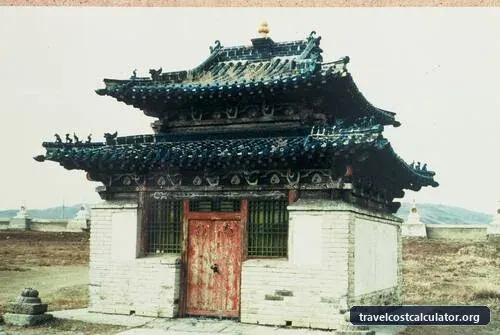
 Mongolia
Orkhon Valley Cultural Landscape
The 121,967-ha Orkhon Valley Cultural Landscape encompasses an extensive area of pastureland on both banks of the Orkhon River and includes numerous archaeological remains dating back to the 6th century.
Orkhon Valley Cultural Landscape
🏛️ Overview & Historical Significance
Stretching across 121,967 hectares of lush steppe, volcanic gorges, and meandering river basins in central Mongolia, the Orkhon Valley Cultural Landscape was designated a UNESCO World Heritage Site in 2004. Recognized for its exceptional illustration of nomadic pastoral traditions that have evolved continuously for over two millennia, this sacred river valley served as the political, spiritual, and economic heartland of successive Central Asian empires.
The strategic importance of the Orkhon Valley stems from its fertile soils, abundant water supply, and sheltered position along ancient trade routes. For centuries, controlling the valley meant controlling the Eurasian steppe. Key historical highlights include:
-
✦
The Imperial Capitals: The valley housed Ordu-Baliq (the 8th-century capital of the Uyghur Khaganate) and Karakorum (Kharkhorin Travel Budget), established in 1220 by Genghis Khan and expanded by his son Ögedei Khan as the grand capital of the Mongol Empire.
-
✦
Göktürks Era Inscriptions: The 8th-century Khoshoo Tsaidam memorial monuments featuring runic Turkic inscriptions dedicated to Bilge Khan and Kul Tigin represent some of the oldest surviving written Turkic texts.
-
✦
Spiritual Evolution: The region tracks the spiritual transition of steppe nomads from ancient shamanism and Tengrism to Tibetan Buddhism. This heritage is anchored by Erdene Zuu Monastery (built in 1586 using stones from the ruins of Karakorum) and the mountain retreat of Tuvkhun Monastery (Tövkhön Khiid), founded high on a forest ridge by Zanabazar in 1648.
Visiting the Orkhon Valley offers an immersive encounter with an active cultural landscape where traditional nomadic pastoralism remains the primary way of life, virtually unchanged since the reign of the Great Khans.
🎟️ Entrance Fees, Opening Hours & Ticket Booking Tips
The Orkhon Valley Cultural Landscape operates as a combination of national park land, sacred open territory, and individually managed historical monuments. While the natural landscape itself is open 24/7 with minimal access fees, specific historic sites inside the valley operate under designated hours and ticket policies.
Key Site Entrance Fees & Costs
-
✦
Orkhon Valley National Park Conservation Fee: ~5,000 MNT ($1.45 USD) per person, collected at ranger checkpoints near Bat-Ölzi or Karakorum.
-
✦
Erdene Zuu Monastery Grounds (Kharkhorin): Free entry to the main walled courtyard.
- Museum & Central Temples Entry: 15,000 MNT (~$4.35 USD) for adults; 8,000 MNT (~$2.30 USD) for students.
-
✦
Photography Permit (Inside Museum Temples): 20,000 MNT (~$5.80 USD).
Opening Hours & Insider Booking Advice
Monasteries and indoor museums generally operate from 9:00 AM to 6:00 PM daily between May and October, with shortened hours (10:00 AM to 4:00 PM) during winter months. Open-air monuments and natural sites remain accessible from sunrise to sunset.
Crucial Booking Tip: Advance online ticket systems do not exist for most sites in the Orkhon Valley. All entrance fees must be paid on-site in physical cash (Mongolian Tögrög - MNT). Credit card readers are nonexistent off-grid in the steppe. Ensure you withdraw sufficient paper cash in Ulaanbaatar Travel Budget or at an ATM in Kharkhorin before driving deep into the valley.
🚌 How to Get There & Local Transit Costs
The primary transit gateway to the Orkhon Valley is Kharkhorin (Karakorum), located roughly 360 kilometers (223 miles) west of Mongolia’s capital city, Ulaanbaatar (UB).
Step 1: Ulaanbaatar to Kharkhorin
-
✦
Public Express Bus (Budget Choice): Daily long-distance buses depart from Ulaanbaatar’s Dragon Bus Terminal (Songinokhairkhan) at 8:00 AM and 2:00 PM.
- Travel Time: 6 to 7 hours along a fully paved highway.
-
✦
One-Way Fare: ~40,000 MNT (~$11.60 USD). Tickets can be purchased at the terminal or via local agent apps.
Step 2: Navigating the Valley (Kharkhorin into the Orkhon Steppe)
Beyond Kharkhorin, paved roads disappear completely. Reaching interior sites like the Orkhon Waterfall (Ulaan Tsutgalan, ~120 km south of Kharkhorin) or Tuvkhun Monastery requires specialized off-road vehicles due to deep volcanic rock trails, river crossings, and mud tracks.
-
✦
Hiring a 4WD Russian Van (UAZ Bukhanka) or 4x4 SUV: The standard mode of transport. Daily rental rates (including driver and fuel) range from $110 USD to $160 USD per day. When split among a group of 4 to 6 travelers, this averages $20 to $35 USD per person per day.
-
✦
Guided Multi-Day Tours from UB: Inclusive 4x4 overland tours (driver, English guide, meals, and ger camps) generally range from $120 USD to $220 USD per person/day depending on group size and luxury tier.
📸 Best Photography Spots & Insider Visit Hacks
The dramatic geological contrasts of the Orkhon Valley—where pine-forested mountains give way to basalt canyons and sweeping pastureland—offer world-class landscape and documentary photography opportunities.
Prime Photography Locations
-
✦
Erdene Zuu Outer Wall at Sunset: Capture the golden hour light hitting the 108 stupas surrounding the compound against the vast steppe horizon.
-
✦
Orkhon River Bend near Bat-Ölzi: High vantage points above the river bend yield iconic images of grazing yak herds, wild horses (takhi), and white ger tents set against curving blue waterways.
-
✦
Tuvkhun Monastery Peak: Hike to the rocky lookout above the monastery early in the morning to shoot sweeping 360-degree panoramas of the larch forests and mist-filled valleys below.
-
✦
Ulaan Tsutgalan (Orkhon Waterfall): Formed by volcanic eruptions and earthquakes, this 20-meter drop into a black basalt gorge is best photographed around noon when sunlight penetrates the deep canyon.
Essential Insider Hacks
-
✦
Power & Charging Management: Traditional ger camps run on limited solar battery power or generators that shut down around 10:00 PM. Bring heavy-duty power banks (20,000+ mAh) and extra camera batteries, as cold nights quickly drain battery life.
-
✦
Dust & Water Protection: Driving across the unpaved steppe inside Russian vans creates heavy dust inside and outside the vehicle. Keep camera bodies and lenses sealed in airtight dry bags or dust-proof cases during transit.
-
✦
Best Seasonal Window: Visit between mid-June and early September for lush green pasturelands, pleasant temperatures (18°C to 26°C / 64°F to 78°F), and active nomadic herding life. Mid-September offers spectacular yellow larch foliage with fewer tourists, though night temperatures drop rapidly below freezing.
🏨 Nearby Accommodation & Daily Budget Allocation
Accommodation in the Orkhon Valley ranges from basic family-run guesthouses in Kharkhorin to authentic nomadic ger stays and high-end eco-resorts scattered along the riverbanks.
Accommodation Options
-
✦
Budget Guesthouses & Homestays (Kharkhorin & Valley): Options like Gaya’s Guest House in Kharkhorin or nomadic family ger stays along the Orkhon River. Expect simple beds, communal longdrop or shared facilities, and rich home-cooked hospitality.
- Cost: $15 to $30 USD per night per person (often includes home-cooked breakfast and dinner).
- Cost: $60 to $110 USD per person per night (full board / 3 meals included).
- Cost: $220 to $400+ USD per night per room (full board included).
Daily Budget Allocation Breakdown
Below is a realistic projection of daily travel expenses for exploring the Orkhon Valley:
-
✦
Backpacker / Low-Budget Tier: $35 – $55 USD / day
- Public bus to Kharkhorin, shared driver hire, family ger homestays, eating at local roadside canteens (tsaayn gazar) offering buuz (dumplings) or tsuivan (noodle stew) for $3–$5 USD per meal.
- Shared private 4WD hire with driver, staying in standard tourist ger camps with full board, combined site entrance fees, and horse rental.
- Private Toyota Land Cruiser rental with dedicated English guide, high-end luxury ger lodge stays, private cultural experiences, and open photo permits.
Frequently Asked Questions
Essential visitor FAQs for Orkhon Valley Cultural Landscape
What is the entrance fee for Orkhon Valley Cultural Landscape?
How much time do you need to explore Orkhon Valley Cultural Landscape?
How do I get to Orkhon Valley Cultural Landscape from the nearest city?
📊 Heritage Quick Specs
Visiting Mongolia on a Budget?
Calculate your full daily travel budget for Mongolia — including hotel costs, local transport, food, and sightseeing expenses.
View Mongolia Daily Travel Costs →Explore more UNESCO World Heritage Sites
🏛️ All 1,200+ Heritage Sites →