
 Spain
Mudejar Architecture of Aragon
The development in the 12th century of Mudejar art in Aragon resulted from the particular political, social and cultural conditions that prevailed in Spain after the Reconquista.
Mudejar Architecture of Aragon
🏛️ Overview & Historical Significance
The Mudéjar Architecture of Aragon stands as one of Europe’s most distinctive architectural phenomena: a breathtaking synthesis of Islamic artistic traditions and Western European Christian architectural styles. Recognized by UNESCO as a World Heritage site in 1986 (originally encompassing four key monuments in Teruel) and expanded in 2001 to include six additional masterpieces across the province of Zaragoza, this collection showcases the extraordinary cultural cross-pollination that occurred in the Iberian Peninsula between the 12th and 17th centuries.
Following the Christian Reconquista of Aragon, Islamic craftsmen—known as mudéjares—remained in the region. Retaining their specialized skills in bricklaying, tilework, woodcarving, and plaster decoration, these artisans were commissioned by Christian kings, nobles, and religious orders to construct churches, palaces, and civic bell towers. Rather than replacing Islamic aesthetics, the Christian patrons integrated them into Romanesque, Gothic, and later Renaissance structures.
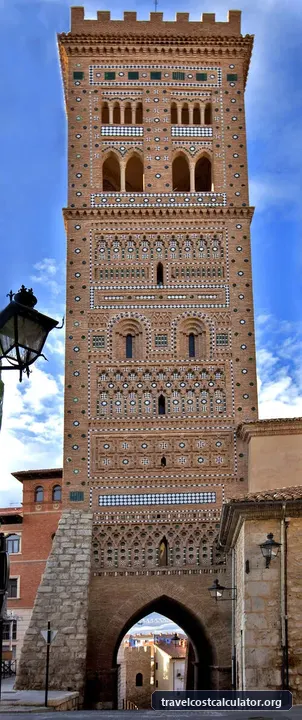
What makes Aragonese Mudéjar architecture globally unique is its refined use of accessible regional materials. In a region lacking abundant stone, master builders transformed humble red clay brick and glazed ceramic tiles (azulejos) into intricate geometric tapestries on building facades. Indoors, they created spectacular wooden coffered ceilings (artesonado) and delicate carved stucco work (yesería). The bell towers of Aragon—most notably in Teruel and Zaragoza—were consciously modeled after Islamic minarets, featuring hollow double-tower structures with interior staircases wrapping around an inner core.
The ten core monuments inscribed on the UNESCO list span both urban hubs and serene rural villages:
-
✦
Teruel: Cathedral of Santa María de Mediavilla (famed for its "Sistine Chapel of Mudéjar art" painted ceiling), Church of San Pedro Travel Budget, Tower of San Martín, and Tower of El Salvador.
-
✦
Zaragoza City: Aljafería Palace (an 11th-century Islamic fortress with exquisite 14th-century Mudéjar additions), Cathedral of San Salvador Travel Budget (La Seo), and the Church of San Pablo.
-
✦
Province of Zaragoza: Apse, cloister, and tower of the Colegiata de Santa María (Calatayud), Church of Santa Tecla (Cervera de la Cañada), and Church of Santa María (Tobed).
🎟️ Entrance Fees, Opening Hours & Ticket Booking Tips
Because the UNESCO site comprises ten distinct buildings across multiple municipalities, there is no single "all-inclusive" ticket. Instead, admission is paid per site or through regional combo passes. Estimated ticket prices, opening hours, and booking logistics updated for 2026 are detailed below:
Zaragoza City Highlights
-
✦
Aljafería Palace:
- 2026 Ticket Price: €5.00 (~$5.50 USD) for adults; €1.00 (~$1.10 USD) for seniors and students; free for children under 12. Free admission on Sundays (reservation still mandatory).
-
✦
Hours: Daily 10:00 AM – 2:00 PM & 4:30 PM – 8:00 PM (April to October); 10:00 AM – 2:00 PM & 4:30 PM – 6:30 PM (November to March).
-
✦
Booking Tip: Time-slot entry capacity is strictly controlled because the palace also houses the Regional Parliament of Aragon. Book online at least 3 to 5 days in advance during peak season.
- 2026 Ticket Price: €7.00 (~$7.70 USD), which includes admission to the cathedral, the Mudéjar exterior wall (Parroquieta), and the Tapestry Museum.
- 2026 Ticket Price: €4.00 (~$4.40 USD) for church access; €6.00 (~$6.60 USD) for guided access including the tower climb.
Teruel City Highlights
-
✦
Teruel Cathedral (Santa María de Mediavilla):
- 2026 Ticket Price: €6.00 (~$6.60 USD) full price; includes access to the cathedral interior, the nave's artesonado wooden roof walkway, and the Diocesan Museum.
-
✦
Hours: Daily 10:00 AM – 2:00 PM & 4:00 PM – 8:00 PM.
- 2026 Ticket Price: €10.00 (~$11.00 USD) combined ticket (includes Church, Mudéjar Tower, Gothic Cloister, and the adjoining Mausoleum of the Lovers of Teruel).
- 2026 Ticket Price: €3.50 (~$3.85 USD); covers entry to the internal Mudéjar Interpretation Center and belfry lookout.
Provincial Sites (Calatayud, Tobed, Cervera de la Cañada)
-
✦
Entry Fees: €2.00 – €4.00 (~$2.20 – $4.40 USD) or voluntary parish donation per site.
-
✦
Access Hack: Rural Mudéjar churches in Tobed and Cervera de la Cañada are occasionally locked outside of scheduled religious services. Contact the local tourist offices in Calatayud or Daroca 24–48 hours in advance to arrange keys or a local guide.
🚌 How to Get There & Local Transit Costs
Aragon’s capital city, Zaragoza, serves as the ideal hub for exploring the northern Mudéjar sites. The southern hub of Teruel connects smoothly via train or express bus.
Step 1: Reaching the Base Cities (Zaragoza & Teruel)
-
✦
From Madrid to Zaragoza: High-speed AVE, Avlo, or Iryo trains run hourly from Madrid-Atocha to Zaragoza-Delicias station. Journey time is approximately 1 hour 15 minutes. One-way fares in 2026 range from €18.00 to €65.00 (~$20.00 – $71.50 USD), depending on how early you book.
-
✦
From Barcelona Travel Budget to Zaragoza: AVE and Ouigo high-speed rail connections take 1 hour 30 minutes from Barcelona-Sants. Fares range from €15.00 to €55.00 (~$16.50 – $60.50 USD).
-
✦
From Zaragoza to Teruel: RENFE Regional/Media Distancia trains connect Zaragoza-Delicias to Teruel station twice daily (2 hours 25 minutes, ~€16.50 / $18.15 USD single). Alternatively, the Samar express bus line operates multiple daily runs (2 hours, ~€14.00 / $15.40 USD single).
Step 2: Local & Inter-Site Transportation Costs
-
✦
Zaragoza Local Transit: The Zaragoza Tram line and urban buses operated by Avanza cost €1.40 (~$1.55 USD) per single ride. Travelers staying 2–3 days should purchase a rechargeable Tarjeta Lazo or Tarjeta Ciudadana (€7.00 / $7.70 USD deposit), which reduces per-ride fares to ~€0.82 (~$0.90 USD) with free transfers within 60 minutes.
-
✦
Reaching Calatayud from Zaragoza: Take an AVANT or AVE train from Zaragoza-Delicias to Calatayud (25 minutes, ~€10.50 – €18.00 / $11.55 – $19.80 USD).
-
✦
Reaching Rural Sites (Tobed & Cervera de la Cañada): Public transit to small villages is sparse (often only 1 regional bus daily). The most efficient approach is renting a car from Zaragoza Delicias station or Calatayud train station.
- Rental Car Rates: Economy car rentals in 2026 cost approximately €35.00 – €60.00 (~$38.50 – $66.00 USD) per day, plus ~€15.00 ($16.50 USD) for fuel on a typical day trip circuit around the Jalón and Jiloca valleys.
📸 Best Photography Spots & Insider Visit Hacks
Capturing the detail of Mudéjar craftsmanship requires precise timing, sharp lenses, and strategic positioning to bring out the textures of the brickwork and vibrant green-and-white glazed ceramics.
Top Photography Angles
-
✦
Parroquieta de San Miguel (La Seo Cathedral, Zaragoza): Position yourself along Calle Pabostría during late afternoon. As the sun drops, warm light catches the exterior wall, highlighting the geometric blue and white azulejo tiles set within deep brick lacework (sebka).
-
✦
Tower of San Martín (Teruel): Stand at the base of the tower on Plaza de Pérez Prado, looking up through the vaulted archway that spans over the street. Use a wide-angle lens (16mm–24mm) to capture the street passing underneath the tower.
-
✦
Tower of El Salvador (Teruel): Walk down Calle El Salvador during the morning golden hour. The sunlight strikes the ceramic green star accents without casting heavy shadows across the narrow alley.
-
✦
Courtyard of Saint Isabel (Aljafería Palace, Zaragoza): Shoot from under the delicate mixed-arch arcades looking across the courtyard pool toward the Troubadour Tower. Mid-morning offers clear reflections in the water.
-
✦
Santa María de Tobed Interior: The painted timber ceiling features vibrant red and turquoise Mudéjar motifs. Use a wide-aperture lens (f/1.8 or f/2.8) and high ISO settings, as tripod usage and flash photography are strictly prohibited inside religious sites.
Insider Visit & Weather Hacks
-
✦
Ideal Seasons: Spring (April – May) and Autumn (September – October) are optimal. Summer temperatures in the Ebro River basin (Zaragoza) regularly exceed 38°C (100°F), while winter in high-altitude Teruel frequently drops below freezing with icy winds.
-
✦
Mastering the Aragonese Siesta: Most churches and provincial monuments close tightly between 2:00 PM and 4:30 PM (or 5:00 PM). Use this mid-day window for dining on regional food or traveling between cities.
-
✦
The "Free Day" Strategy: If visiting Zaragoza on a budget, plan your schedule around free entry windows: Aljafería Palace is free on Sundays (must reserve online in advance), and select church access is complimentary during early morning mass hours (though photography during services is prohibited).
🏨 Nearby Accommodation & Daily Budget Allocation
To experience the full breadth of Aragonese Mudéjar architecture, divide your stay between dynamic Zaragoza (2 nights) and historic Teruel (1 to 2 nights).
Recommended Accommodations
-
✦
Budget Tier ($35 – $65 / €32 – €59 USD per night):
- Zaragoza: Hostal París or Zentral Ave — Clean, centrally located options within walking distance of Old Town and transport hubs.
-
✦
Teruel: Hostal Tío Jorge — Charming budget rooms near the Plaza del Torico.
- Zaragoza: Hotel Catalana or Silken Reino de Zaragoza — Modern, comfortable hotel rooms located near La Seo Cathedral and El Tubo tapas district.
- Zaragoza: Hotel Palafox — Elegant 5-star lodging featuring refined service, rooftop pool views, and high-end Aragonese dining.
Food & Local Dining Costs
Aragonese cuisine is robust and savory. Expect the following typical food costs in 2026:
-
✦
Breakfast (Coffee & Toast/Churros): €3.00 – €5.00 (~$3.30 – $5.50 USD).
-
✦
Menu del Día (3-Course Lunch with Wine): €14.00 – €22.00 (~$15.40 – $24.20 USD). Exceptional value in small towns like Calatayud or Tobed.
-
✦
Tapas Dinner in El Tubo (Zaragoza): €16.00 – €30.00 (~$17.60 – $33.00 USD) for wine and multiple small plates.
-
✦
Must-Try Regional Specialties: Ternasco de Aragón (slow-roasted PDO suckling lamb), Jamón de Teruel (cured mountain ham), Migas aragonesas (sautéed breadcrumbs served with chorizo and grapes), paired with local Cariñena or Somontano red wines.
Estimated Daily Travel Budgets (2026 Pricing)
-
✦
Backpacker / Low-Budget: ~$65.00 – $90.00 USD (€60 – €82) per day (using hostals, public buses, combo tickets, menu del día lunches).
-
✦
Flashpacker / Mid-Range: ~$170.00 – $250.00 USD (€155 – €228) per day (3-star hotels/Parador, rental car for rural sites, dynamic dining, full sight admissions).
-
✦
Luxury Travel: ~$350.00+ USD (€320+) per day (5-star hotels, high-speed rail first-class, private guided art history tours, fine dining).
Frequently Asked Questions
Essential visitor FAQs for Mudejar Architecture of Aragon
What is the entrance fee for Mudejar Architecture of Aragon?
How much time do you need to explore Mudejar Architecture of Aragon?
How do I get to Mudejar Architecture of Aragon from the nearest city?
📊 Heritage Quick Specs
Visiting Spain on a Budget?
Calculate your full daily travel budget for Spain — including hotel costs, local transport, food, and sightseeing expenses.
View Spain Daily Travel Costs →Explore more UNESCO World Heritage Sites
🏛️ All 1,200+ Heritage Sites →