
 Canada
Miguasha National Park
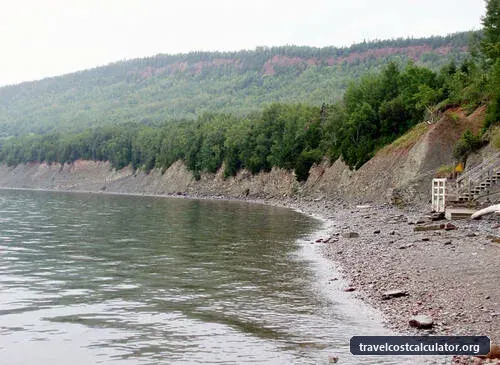
The palaeontological site of Miguasha National Park, in south-eastern Quebec on the southern coast of the Gaspé peninsula, is considered to be the world's most outstanding illustration of the Devonian Period known as the 'Age of Fishes'.
Miguasha National Park
🏛️ Overview & Historical Significance
In the quiet southwestern corner of Quebec’s Gaspé Peninsula, along the scenic shores of the Baie des Chaleurs, lies Miguasha National Park (Parc national de Miguasha). Inscribed as a UNESCO World Heritage site in 1999, this compact 87-hectare reserve is celebrated by paleontologists worldwide as the single most outstanding record of the Devonian Period—often called the "Age of Fishes"—dating back roughly 380 million years.
What makes Miguasha globally unique is the extraordinary quality of its Escuminac Formation, a layer of grey and red coastal siltstones and sandstones. Unlike most fossil beds across the globe where specimens are flattened or fragmented, Miguasha’s ancient estuarine ecosystem preserved prehistoric aquatic creatures in three-dimensional perfection. Complete skeletons, delicate fin structures, scale arrangements, and even fossilized soft tissues and micro-organs have been unearthed here.
Miguasha’s scientific crown jewel is its role in explaining one of the greatest evolutionary leaps in Earth's history: the transition from aquatic fish to four-legged land vertebrates (tetrapods). It is home to the world-renowned Elpistostege watsoni ("Elpi"), an iconic lobe-finned fish specimen discovered here that represents the closest evolutionary bridge between fish and early tetrapods. The park is also famous for Eusthenopteron foordi, a fish that already possessed early humerus, radius, and ulna bone structures inside its fins. When UNESCO listed Miguasha in 1999, it declared the site an irreplaceable evolutionary archive where the story of how our own distant ancestors left the water to walk on land is permanently etched into stone.
🎟️ Entrance Fees, Opening Hours & Ticket Booking Tips
Miguasha National Park is operated by SéPAQ (Société des établissements de plein air du Québec). Access requires a combined pass covering both the national park territory and the state-of-the-art Natural History Museum.
Estimated 2026 Ticket Prices
-
✦
Adults (18+): ~$14.50 CAD (~$10.75 USD)
-
✦
Seniors (65+): ~$13.00 CAD (~$9.60 USD)
-
✦
Youth & Children (Ages 0–17): FREE (Under Quebec provincial park policy, all youth 17 and under receive free entry to SéPAQ parks).
-
✦
Family Day Pass (2 Adults + dependent kids): ~$32.00 CAD (~$23.70 USD)
-
✦
SéPAQ Annual Pass (Card Explore Québec): ~$88.50 CAD (~$65.50 USD) — ideal if you plan to visit other Quebec national parks like Gaspésie or Forillon during your trip.
Operating Hours & Seasonality
Because of severe maritime winters on the Gaspé Peninsula, Miguasha is a seasonal destination:
-
✦
Peak Season (Late May to Labour Day in September): Open daily from 9:00 AM to 5:00 PM (extended to 6:00 PM in July and August). Full access to museum, fossil exhibits, interactive labs, and guided cliff walks.
-
✦
Shoulder Season (September to Mid-October): Open daily from 9:00 AM to 4:00 PM. Reduced guided programming, but self-guided exhibits and trails remain fully accessible.
-
✦
Winter Season (Late October to Mid-May): The museum and official park facilities are closed to the public.
Booking Tips & Hacks
To avoid queuing during peak summer months (especially July and August when Quebec holidaygoers travel the Gaspésie circuit), buy your day pass online in advance through the official SéPAQ website. Online purchase reserves your entry slot for the museum exhibition hall. If traveling with a group, check for bilingual (French/English) ranger-led lab demonstrations during morning hours, which offer hands-on fossil scanning under high-powered microscopes.
🚌 How to Get There & Local Transit Costs
Miguasha National Park is situated in the municipality of Nouvelle on the southern coast of the Gaspé Peninsula. While remote, it is accessible via major highway routes and regional transportation links.
1. By Car (Recommended)
Driving is by far the most convenient way to reach Miguasha, allowing you to incorporate the park into a broader Gaspésie road trip.
-
✦
From Québec City (550 km / 340 miles): Approximately 6 to 6.5 hours via Highway 20 East to Route 132 East, following the scenic South Shore and Matapédia Valley. Rental cars in Québec City cost approximately $55–$90 CAD ($40–$65 USD) per day in 2026.
-
✦
From Campbellton, New Brunswick (30 km / 18 miles): Just a 30-minute drive across the J.C. Van Horne Bridge spanning the Restigouche River, connecting into Route 132 West toward Nouvelle.
2. By Long-Distance Bus
Orléans Express operates daily coach service across Quebec. You can take a bus from Québec City or Rimouski to the village of Nouvelle or Carleton-Sur Travel Budget-Mer.
-
✦
Bus Fare (Québec City to Nouvelle): ~$85–$115 CAD (~$63–$85 USD) one-way.
-
✦
Local Taxi/Rideshare from Nouvelle Depot to Park (8 km): ~$20–$30 CAD (~$15–$22 USD). Local taxis should be arranged in advance through your lodging host.
3. By Train & Regional Airports
VIA Rail’s Ocean train line connects Montreal/Québec City to Campbellton, New Brunswick. A one-way economy ticket costs ~$120–$210 CAD ($88–$155 USD). From Campbellton, travelers can rent a car at the rail terminal or book a regional taxi across the provincial border to Miguasha (approx. $55–$75 CAD / $40–$55 USD one-way).
📸 Best Photography Spots & Insider Visit Hacks
Capturing the ancient atmosphere of Miguasha requires combining dramatic coastal landscapes with close-up paleontological marvels. Here are the top photography locations and expert visit tactics:
Prime Photography Spots
-
✦
The Escuminac Cliff Trail Lookout: Located along the 3.5 km Sentier Évolution (Evolution Trail), this elevated vantage point captures the contrast between the dark grey fossil-bearing sedimentary layers, the lush green boreal forest, and the deep blue expanse of Chaleur Bay.
-
✦
The Shoreline Base (Low Tide): Walk down to the beach level beneath the sea cliffs. The macro textures of layer upon layer of Devonian shale and siltstone make stunning architectural nature shots. Note: Always shoot photos facing east in late afternoon for warm, golden light reflecting on the cliff face.
-
✦
The "Elpi" Fossil Display: Inside the Natural History Museum, head to the climate-controlled display case containing Elpistostege watsoni. Specialized fiber-optic lighting highlights the tiny hand-like digit bones within its pectoral fins—a breathtaking subject for close-up photography (no flash allowed).
Insider Visitor Hacks
-
✦
Check Tide Tables: Accessing the cliff beach trail is safest and most enjoyable at low tide. Consult the local Chaleur Bay tide charts at the reception desk before heading down.
-
✦
Strict "No Collection" Law: Miguasha is a protected scientific site. It is strictly illegal to collect, pick up, or remove any rocks or fossils from the park grounds or beach. Conservation officers patrol regularly, and structural fines start at $5,000 CAD. Enjoy fossils with your camera lens only!
-
✦
Interactive Fossil Sorting: Ask at the front desk for access to the public paleontology lab, where kids and adults can sift through actual matrix under a microscope with park scientists.
🏨 Nearby Accommodation & Daily Budget Allocation
While Miguasha National Park is a day-use sanctuary without on-site hotel towers, excellent lodging options exist in neighboring coastal towns such as Nouvelle, Carleton-sur-Mer (20 minutes east), and Campbellton, NB (30 minutes west).
Recommended Accommodation Options
-
✦
Budget / Camping: Camping Carleton-sur-Mer (Located on a scenic spit in Chaleur Bay) — Campsites from ~$38–$52 CAD ($28–$38 USD)/night. Hostels in the area offer dorm beds around ~$45 CAD ($33 USD)/night.
-
✦
Mid-Range: Manoir Belle Plage or Hostellerie Baie Bleue (Carleton-sur-Mer) — Charming waterfront hotels offering maritime views, private balconies, and on-site dining from ~$160–$240 CAD ($118–$177 USD)/night. Local Gîtes (B&Bs) in Nouvelle run ~$110–$150 CAD ($80–$110 USD)/night.
-
✦
Luxury / Boutique: Hôtel Le Francis (Bonaventure area) or private coastal chalets — Upscale rooms, refined seafood dining, and spa amenities starting from ~$290–$420 CAD ($214–$310 USD)/night.
Sample Daily Budget Allocation (2026 Estimates)
To help you plan your trip financial logistics effectively, here are estimated daily costs per person depending on your travel style:
| Category | Backpacker (Budget) | Flashpacker (Mid-Range) | Luxury Traveler |
|---|---|---|---|
| Lodging | $45 CAD ($33 USD) | $110 CAD ($81 USD) | $250 CAD ($185 USD) |
| Food & Drinks | $30 CAD ($22 USD) | $65 CAD ($48 USD) | $140 CAD ($103 USD) |
| Transport (Pro-rated) | $20 CAD ($15 USD) | $45 CAD ($33 USD) | $95 CAD ($70 USD) |
| Park Entry & Activities | $14.50 CAD ($10.75 USD) | $25 CAD ($18.50 USD) | $60 CAD ($44 USD) |
| TOTAL (Per Person/Day) | ~$109.50 CAD (~$80.75 USD) | ~$245 CAD (~$180.50 USD) | ~$545 CAD (~$402 USD) |
Dining Tip: Don't miss sampling fresh Gaspésie seafood in Carleton-sur-Mer. Stop by the local microbrewery Le Naufrageur for craft ales brewed with local herbs, paired with fresh lobster rolls or maritime fish and chips!
Frequently Asked Questions
Essential visitor FAQs for Miguasha National Park
What is the entrance fee for Miguasha National Park in 2026?
How much time do you need to explore Miguasha National Park?
How do I get to Miguasha National Park from Québec City or Montreal?
📊 Heritage Quick Specs
Visiting Canada on a Budget?
Calculate your full daily travel budget for Canada — including hotel costs, local transport, food, and sightseeing expenses.
View Canada Daily Travel Costs →Explore more UNESCO World Heritage Sites
🏛️ All 1,200+ Heritage Sites →