
 South Africa
Mapungubwe Cultural Landscape
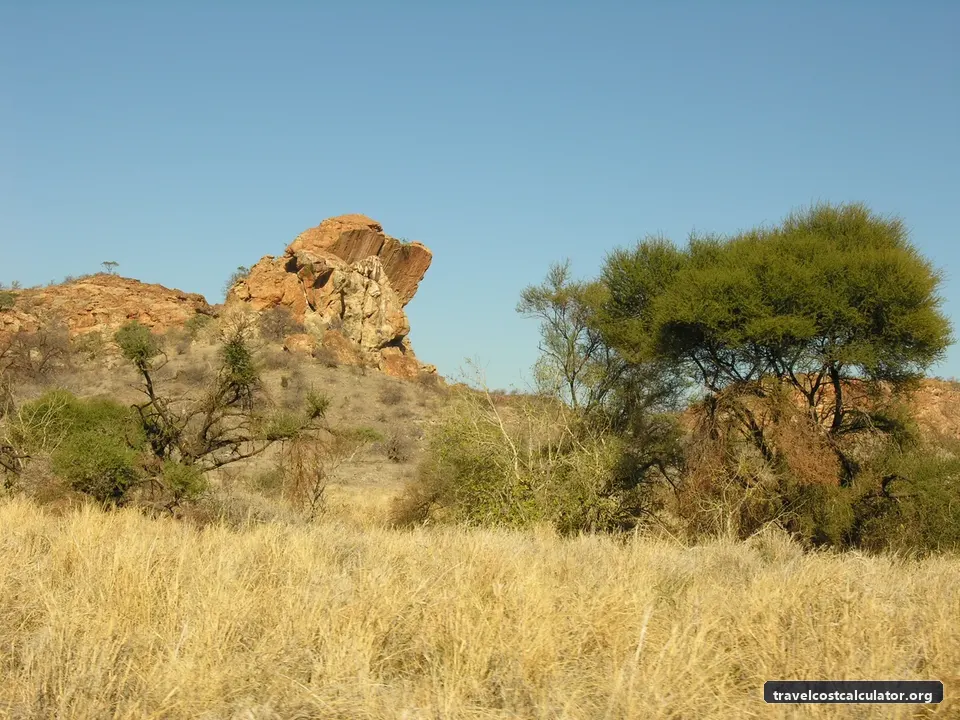
Mapungubwe is set hard against the northern border of South Africa, joining Zimbabwe and Botswana.
Mapungubwe Cultural Landscape
🏛️ Overview & Historical Significance
Inscribed as a UNESCO World Heritage Site in 2003, the Mapungubwe Cultural Landscape represents one of the most vital historical and archaeological treasures in Southern Africa. Situated at the northern edge of South Africa along the borders of Botswana and Zimbabwe, this dramatic landscape of sandstone formations, baobab trees, and riverine woodlands was the cradle of Southern Africa’s first indigenous kingdom.
Between 900 and 1300 AD, Mapungubwe flourished as a sophisticated, class-based society—predating Great Zimbabwe. It was here that a powerful African state first developed an elite ruling class, residing atop the steep, sandstone Mapungubwe Hill, physically elevated above the commoners living in the valleys below. This social stratification marked a pivotal evolution from agrarian farming communities to an urbanized empire.
At its peak in the 13th century, Mapungubwe was a major node in a global trade network stretching across the Indian Ocean. Local leaders exchanged native gold and elephant ivory for exotic luxury goods, including Chinese porcelain from the Song and Yuan dynasties, glass trade beads from India and Egypt, and Persian glazed ceramics. The site’s most iconic artifact—the Golden Rhino of Mapungubwe, a finely crafted foil rhino wrapped around a wooden core—symbolizes the wealth, craftsmanship, and royal authority of this ancient civilization.
By 1300 AD, climate shifts caused rainfall to diminish, making agriculture unsustainable. The kingdom fragmented, and the regional power center migrated north to Great Zimbabwe. Today, UNESCO recognizes Mapungubwe under Criteria (iii), (iv), and (v) as an exceptional testament to the rise and fall of Southern Africa's earliest complex state system, set within an unchanged natural landscape where the Limpopo and Shashe rivers meet.
🎟️ Entrance Fees, Opening Hours & Ticket Booking Tips
Mapungubwe National Park is managed by South African National Parks (SANParks). Visitors must pay a daily conservation fee upon entry, with distinct pricing tiers based on nationality.
2026 Daily Conservation Fees
-
✦
International Visitors: R320 ZAR (~$17.50 USD) per adult per day; R160 ZAR (~$8.75 USD) per child per day.
-
✦
SADC Nationals (with valid passport): R160 ZAR (~$8.75 USD) per adult per day; R80 ZAR (~$4.40 USD) per child per day.
-
✦
South African Citizens & Residents (with valid ID): R80 ZAR (~$4.40 USD) per adult per day; R40 ZAR (~$2.20 USD) per child per day.
-
✦
Wild Card Holders: Free daily entry (SANParks loyalty program).
Guided Tour & Museum Fees
-
✦
Mapungubwe Hill Heritage Tour: R280 ZAR (~$15.50 USD) per person. Note: Access to Mapungubwe Hill is strictly prohibited without an official SANParks heritage guide to protect sacred sites.
-
✦
Interpretive Centre & Museum Entry: Included in the daily conservation fee (museum exhibits showcase original artifacts and interactive historical displays).
-
✦
Guided Game Drives & Night Drives: R300 – R450 ZAR (~$16.50 – $25.00 USD) per person.
Opening Hours & Logistics
Main Gate Hours:
-
✦
Summer (October – March): 06:00 to 18:30
-
✦
Winter (April – September): 06:30 to 18:00
Interpretive Centre & Museum Hours: Daily from 08:00 to 16:00.
Booking Tips: Heritage Hill Tours fill up quickly because group sizes are capped to minimize footprint. Book your tour online via the official SANParks portal at least 4 to 6 weeks in advance if visiting during school holidays or peak winter months (June–August). Always carry physical identification (passport or SA ID card) for entry validation at the gate.
🚌 How to Get There & Local Transit Costs
Mapungubwe Cultural Landscape is located in Limpopo Province, roughly 520 km (323 miles) north of Johannesburg and 80 km (50 miles) west of the border town of Musina.
Self-Drive Routes (Recommended)
Self-driving is the most flexible and reliable way to explore Mapungubwe, as inside public transit does not exist within the national park.
-
✦
From Johannesburg (OR Tambo International Airport): Take the N1 North past Polokwane. From Polokwane, you can take the R521 north through Alldays straight to the park gate (approx. 5.5 to 6 hours total drive time). Alternatively, continue on the N1 to Musina and head west on the R572.
-
✦
Vehicle Rental Costs (2026 Estimates): Standard 2WD Sedans cost around $30 – $55 USD (R550 – R1,000 ZAR) per day. While main roads to rest camps and the Interpretive Centre are paved or well-maintained gravel accessible by 2WD, renting a compact SUV or 4x4 ($70 – $120 USD / day) is recommended if you wish to explore rugged eco-trails such as the Vhembe 4x4 track.
Long-Distance Bus & Local Shuttles
For budget travelers using public transportation:
-
✦
Intercity Coach (Johannesburg to Musina): Companies like Intercape and City-to-City run daily long-distance buses from Johannesburg Park Station to Musina. One-way tickets cost approximately R380 – R550 ZAR (~$21 – $30 USD) with a travel time of around 7 to 8 hours.
-
✦
Musina to Mapungubwe Transfer: From Musina, there are no scheduled public buses to the park gate. You must arrange a private taxi transfer or lodge shuttle in advance. Local private taxis charge between R650 – R950 ZAR (~$35 – $52 USD) one-way to the park main gate.
📸 Best Photography Spots & Insider Visit Hacks
Mapungubwe offers stark, dramatic landscapes where rich red sandstone cliffs meet sweeping views of ancient river valleys.
Top Photography Locations
-
✦
The Confluence Viewpoint: Elevated wooden platforms offer panorama views over the confluence of the Limpopo and Shashe Rivers—the precise geographic border where South Africa, Zimbabwe, and Botswana converge. The light at golden hour (late afternoon) illuminates the riverbanks and baobabs brilliantly.
-
✦
Mapungubwe Hill Plateau: Accessible only via the guided heritage climb up wooden stairways embedded in the rock crevices. Capture the hand-carved stone board games (Mbao) on the rock surface and dramatic sandstone drop-offs.
-
✦
Limpopo Treetop Walkway: A raised timber boardwalk suspended in the canopy of riverine forest along the Limpopo River. Excellent for wildlife photography, including elephants, bushbucks, and rare bird species like the Pel’s Fishing Owl.
-
✦
Mapungubwe Interpretive Centre: An architectural masterpiece designed by Peter Rich Architects. Built using ancient structural earth vaulted techniques and local stone, it won the World Building of the Year award. Photograph the dramatic stone vaults against the blue African sky.
Insider Visit Hacks
-
✦
Beat the Heat: Summer (November to March) temperatures regularly exceed 40°C (104°F). Plan active excursions like the Hill Climb or Treetop Walkway for the first morning slot (06:30 AM).
-
✦
Bring a Telephoto Lens: While famous for archaeology, Mapungubwe is home to white rhinos, lions, leopards, giraffes, and vast elephant herds. A 300mm+ lens is ideal for both birding and game viewing.
-
✦
Malaria & Health Awareness: Mapungubwe is located in a low-to-moderate risk malaria zone, particularly during the rainy summer months. Bring insect repellent containing DEET and consult a medical professional regarding prophylactic medication.
🏨 Nearby Accommodation & Daily Budget Allocation
Accommodations range from official SANParks rest camps inside the park to private game lodges in the surrounding Venetia and Limpopo valley reserves.
Accommodation Options
-
✦
Budget / Camping: Mazhou Camping Site (inside park) – Nestled under giant Nyala trees near the Limpopo River. Powered and unpowered campsites range from R450 – R700 ZAR (~$25 – $38 USD) per night.
-
✦
Mid-Range / Rest Camps: Leokwe Rest Camp or Limpopo Forest Tents – Leokwe offers comfortable self-catering chalets set among sandstone hills (R1,900 – R3,200 ZAR / ~$105 – $175 USD per night). Limpopo Forest Tents provide permanent canvas cabins on stilts (R1,400 – R2,100 ZAR / ~$77 – $115 USD per night).
-
✦
Luxury Game Lodges: Off-site private safari lodges nearby offer all-inclusive game drives and fine dining starting from R5,500 – R12,000 ZAR (~$300 – $650+ USD) per night per room.
Daily Budget Allocation (Estimated 2026 Prices)
-
✦
Budget Traveler ($45 – $75 USD / day): Shared rental vehicle fuel, camping site fee, self-catering meals from Musina supermarkets, and basic daily conservation fee.
-
✦
Mid-Range Traveler ($140 – $250 USD / day): SANParks chalet accommodation (Leokwe), car rental, guided Mapungubwe Hill tour, self-catering braais, and park conservation fees.
-
✦
Luxury Safari Traveler ($450 – $800+ USD / day): Private luxury lodge stay, fully guided safari activities, private transport/flights, and premium dining.
Frequently Asked Questions
Essential visitor FAQs for Mapungubwe Cultural Landscape
What is the entrance fee for Mapungubwe Cultural Landscape?
How much time do you need to explore Mapungubwe Cultural Landscape?
How do I get to Mapungubwe Cultural Landscape from the nearest city?
📊 Heritage Quick Specs
Visiting South Africa on a Budget?
Calculate your full daily travel budget for South Africa — including hotel costs, local transport, food, and sightseeing expenses.
View South Africa Daily Travel Costs →Explore more UNESCO World Heritage Sites
🏛️ All 1,200+ Heritage Sites →