
 Ethiopia
Lower Valley of the Awash
The Awash valley contains one of the most important groupings of palaeontological sites on the African continent.
Lower Valley of the Awash
🏛️ Overview & Historical Significance
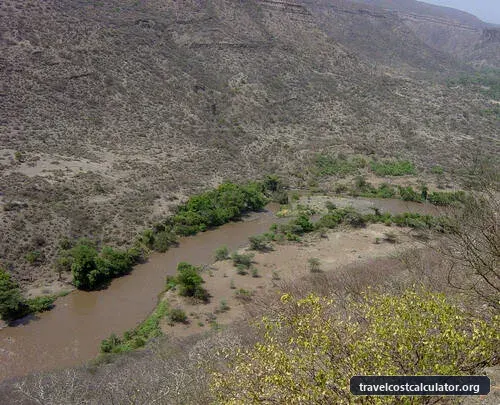
Inscribed as a UNESCO World Heritage site in 1980, the Lower Valley of the Awash in Ethiopia stands as one of the most crucial paleoanthropological sites on Planet Earth. Spanning the arid badlands of the Afar Depression where the East African Rift system tears the continent apart, this prehistoric landscape has preserved over four million years of human evolutionary history. Volcanic ash layers (tephra) interbedded with river sediments have allowed scientists to radiometrically date hominid fossils and early stone tools with unprecedented precision.
The site gained world renown in November 1974 when a team led by American paleoanthropologist Donald Johanson and French geologist Maurice Taieb discovered "Lucy" (AL 288-1)—known locally in Amharic as Dinkinesh ("you are marvelous"). Dating back 3.2 million years, this 40% complete fossilized skeleton of Australopithecus afarensis provided groundbreaking evidence of early hominid bipedalism, permanently altering our understanding of human origin lineages.
Beyond Lucy, the Lower Awash Valley has yielded extraordinary finds spanning multiple evolutionary epochs:
-
✦
Ardipithecus ramidus ("Ardi"): Dating to 4.4 million years ago, pushback on the timeline of hominid divergence and early upright walking.
-
✦
Australopithecus anamensis: Hominid remains filling critical evolutionary gaps between 4.2 and 3.9 million years ago.
-
✦
Early Homo & Stone Tools: Oldowan lithic artifacts dating back 2.5 to 2.6 million years, representing some of the oldest documented evidence of intentional toolmaking.
Today, visiting the Lower Valley of the Awash is not a conventional museum stroll; it is a pilgrimage to the cradle of mankind, where raw geological erosion continuously unearths the deep ancestral roots of species Homo sapiens.
🎟️ Entrance Fees, Opening Hours & Ticket Booking Tips
Unlike contained tourist monuments, the Lower Valley of the Awash encompasses a vast archaeological zone within the Afar Regional State. Accessing the key excavation zones—such as Hadar, Dikika, and Aramis—requires official clearance, local permits, and mandatory safety escorts.
Estimated 2026 Visitor Fees & Permits
-
✦
Afar Regional Site Clearance & Research Permit: $25 – $35 USD (~3,000 – 4,200 ETB) per person. Obtained via the Ethiopian Heritage Authority (formerly ARCCH) or through the regional tourism office in Semera.
-
✦
Mandatory Local Afar Scout / Escort Fee: $15 – $25 USD (~1,800 – 3,000 ETB) per day, paid directly to local community representatives in cash.
-
✦
Local Site Guide Fee: $20 – $30 USD (~2,400 – 3,600 ETB) per group per day.
-
✦
National Museum of Ethiopia (Addis Ababa Travel Budget - Pre-trip Site): 200 ETB (~$1.60 USD) per person. Crucial tip: The original bones of Lucy and primary field casts are housed here, not in the field.
Opening Hours & Access Logistics
The field site is technically accessible from sunrise to sunset (approx. 6:00 AM – 6:00 PM). However, due to severe extreme heat in the Afar region, fieldwork and site explorations are strictly recommended during early morning hours.
Essential Booking Tips for 2026
-
✦
Arrange Ahead in Addis Ababa or Semera: Independent, unannounced arrivals at excavation sites are strictly prohibited by regional Afar authorities. Permits should be organized through accredited tour outfitters or the Ethiopian Heritage Authority at least 2–3 weeks in advance.
-
✦
Carry Local Cash: Credit cards, mobile payments, and ATMs are non-existent in the excavation areas. Ensure you carry sufficient cash in Ethiopian Birr (ETB) in small denominations to pay local scouts, community elders, and site guides.
🚌 How to Get There & Local Transit Costs
The Lower Awash Valley is located approximately 300 to 400 kilometers northeast of Addis Ababa. Navigating to the remote archaeological hubs requires careful transit planning and robust off-road vehicles.
Step 1: Reaching the Regional Hub (Semera or Awash Town)
-
✦
By Air (Fastest & Recommended): Fly with Ethiopian Airlines from Addis Ababa (ADD) to Semera Airport (SZE). In 2026, one-way domestic airfares range between $70 and $130 USD (discounted rates apply if your international flight was booked on Ethiopian Airlines). Semera serves as the capital of the Afar Region and the primary logistics base.
-
✦
By Road from Addis Ababa: Overland journeys follow the asphalt N1 Highway (Addis-Adama Expressway continuing through Awash Sebat toward Gewane and Semera). Drive time is roughly 7 to 9 hours depending on traffic and checkpoints.
Step 2: Expedition Transport to Hadar / Awash Excavation Fields
Public transit (buses/minibuses) only operates along the main highway between Addis Ababa, Awash Sebat, Gewane, and Semera (costs approx. 600 – 1,000 ETB / $5 – $8 USD). Public transit cannot take you into the archaeological zones.
-
✦
4x4 Expedition Vehicle Rental (Mandatory): Reaching Hadar or nearby hominid site locations requires a heavy-duty 4WD vehicle (e.g., Toyota Land Cruiser) equipped for rugged terrain and river crossings.
-
✦
2026 Rental Rate: Expect to pay $160 to $250 USD per day, which includes a professional local driver, fuel, and vehicle insurance.
📸 Best Photography Spots & Insider Visit Hacks
Capturing the dramatic landscapes of the Awash Rift requires preparing for challenging lighting and harsh desert conditions. The contrast between deep red clay deposits, bleached badlands, and the green ribbon of the Awash River offers incredible visual storytelling potential.
Prime Photography Locations
-
✦
The Hadar Fossil Horizons: The famous erosion gullies where "Lucy" was discovered offer stark, dramatic badland topography carved out by millions of years of water runoff.
-
✦
Awash River Meanders: The lush riparian vegetation bordering the river contrasts sharply with the surrounding desert terrain, ideal for landscape panoramas during sunrise.
-
✦
Afar Pastoral Landscapes: Capturing traditional Afar homesteads (ari) and pastoralists moving livestock against the backdrop of the Rift Valley landscape (always obtain verbal consent before photographing individuals).
Insider Visit Hacks & Climate Survival
-
✦
Optimal Seasonal Window: Visit during the dry winter months between November and February. Temperatures are slightly milder, and dry track beds mean lower risk of getting stranded. Avoid July and August, when heavy rains cause severe flooding and transform soil into impassable mud.
-
✦
Beat the Extreme Heat: Daytime temperatures in the Afar Depression frequently exceed 40°C (104°F). Plan all field walks between 6:00 AM and 9:30 AM.
-
✦
Hydration & Power: Carry at least 4 to 5 liters of bottled water per person per day. Sand dust is prevalent—bring sealed camera bags, lens cleaning kits, and high-capacity portable power banks as off-grid charging is unavailable.
🏨 Nearby Accommodation & Daily Budget Allocation
Infrastructure immediately adjacent to the paleontological sites is minimal. Visitors base themselves in nearby towns, specialized eco-lodges along the Awash River, or set up self-contained mobile camps.
Accommodation Options (2026 Rates)
-
✦
Budget / Mobile Expedition Camping: Pitching tents near designated local communities or field basecamps ($25 – $40 USD per night, including scout oversight fees).
-
✦
Mid-Range (Awash Town / Gewane / Semera): Hotels in Semera (e.g., Agda Hotel or Semera International) or basic guesthouses in Gewane range from $45 to $85 USD per night.
-
✦
Comfort Lodges (Awash National Park Area): Establishments like Awash Falls Lodge or Doho Lodge & Hot Springs (located further south along the Awash basin) cost between $110 and $190 USD per night, featuring air conditioning and river views.
Estimated Daily Budget Breakdown (per person in 2026)
Because accessing the Lower Awash Valley requires shared 4x4 charter costs and local safety escorts, traveling with a small group (2–4 people) dramatically reduces individual expenses.
-
✦
Budget Expedition Shared Group (3-4 People): $80 – $130 USD / day (covers shared 4x4 rental, driver, local scout, camp meals, and entry permits).
-
✦
Private Mid-Range Tour: $230 – $380 USD / day (covers private 4x4, domestic flights, mid-range hotel/lodge, private guide, meals, and full permit clearance).
Frequently Asked Questions
Essential visitor FAQs for Lower Valley of the Awash
What is the entrance fee for Lower Valley of the Awash?
How much time do you need to explore Lower Valley of the Awash?
How do I get to Lower Valley of the Awash from the nearest city?
📊 Heritage Quick Specs
Visiting Ethiopia on a Budget?
Calculate your full daily travel budget for Ethiopia — including hotel costs, local transport, food, and sightseeing expenses.
View Ethiopia Daily Travel Costs →Explore more UNESCO World Heritage Sites
🏛️ All 1,200+ Heritage Sites →