
 Mongolia
Landscapes of Dauria
Shared between Mongolia and the Russian Federation, this site is an outstanding example of the Daurian Steppe eco-region, which extends from eastern Mongolia into Russian Siberia and northeastern China.
Landscapes of Dauria
🏛️ Overview & Historical Significance
Inscribed as a transboundary UNESCO World Heritage site in 2017, the Landscapes of Dauria represents one of the most ecologically intact and visually breathtaking temperate grassland ecosystems remaining on Earth. Spanning over 910,000 hectares across eastern Mongolia and Russia, this site encompasses the vast open steppes, expansive wetlands, and dynamic lake systems of the Daurian Steppe ecoregion. The Mongolian component—centered around the Mongol Daguur Strictly Protected Area in Dornod Province—protects an extraordinary transition zone between the taiga forests of Siberia and the arid grasslands of Central Asia.
What makes the Landscapes of Dauria globally unique is its cyclical climate transition model. Driven by multi-decadal climate fluctuations, the region alternates between dramatic wet and dry phases roughly every 25 to 30 years. These shifts drastically transform the landscape: lakes expand into vast inland seas during wet years and evaporate into alkaline salt pans during dry cycles. This extreme ecological dynamism has forced local flora and fauna to evolve astonishing adaptive strategies, creating a crucible of evolutionary biodiversity.
For conservationists and intrepid travelers alike, Dauria is a holy grail of wildlife viewing. It serves as a vital stopover on the East Asian-Australasian Flyway, hosting millions of migratory waterbirds annually. The region provides critical breeding grounds for globally endangered species, including the magnificent White-naped Crane (Antigone vipio), the Swan Goose, the Relict Gull, and the Great Bustard. Furthermore, the surrounding grasslands are the domain of the Mongolian Gazelle (Procapra gutturosa), which undertakes one of the world's last great terrestrial mammal migrations across these unfenced, horizon-filling plains.
🎟️ Entrance Fees, Opening Hours & Ticket Booking Tips
Visiting the Mongolian section of the Landscapes of Dauria requires navigating specific administrative protocols due to its status as a Strictly Protected Area (SPA) and its proximity to the Russian border. In 2026, entrance costs remain extremely affordable, though local logistics require advance planning.
-
✦
Individual Entry Permit Fee: 10,000 MNT – 15,000 MNT (~$3.00 – $4.50 USD) per person. Paid at the Protected Area Administration office in Choibalsan or at local ranger checkpoints (e.g., in Dashbalbar or Gurvanzagal sum).
-
✦
Vehicle Environmental Access Permit: 15,000 MNT – 25,000 MNT (~$4.50 – $7.50 USD) per 4x4 vehicle.
-
✦
Mandatory Border Zone Clearance: 20,000 MNT (~$6.00 USD) per person. Because the UNESCO zone borders Russia, a border permit issued by the General Authority for Border Protection of Mongolia is strictly required. This must be arranged in Ulaanbaatar Travel Budget or through your tour operator at least 5–7 business days prior to departure.
-
✦
Ranger Escort / Guided Conservation Fee: 105,000 MNT – 210,000 MNT (~$30.00 – $60.00 USD) per day per group. Hiring a local ranger guide is strongly recommended (and occasionally required) for navigating off-road buffer zones safely without disturbing nesting bird colonies.
Opening Hours & Best Access Times: The protected area itself is accessible 24/7 physically, but ranger headquarters and permit verification offices in Choibalsan and sum centers operate from 08:30 to 17:30, Monday through Friday. Wildlife viewing is best during peak dawn hours (05:30 – 08:30) and golden hour before dusk (17:30 – 20:00).
Booking Tips: Independent travelers cannot simply buy tickets online at a turnstile. You must secure your permits through the Dornod Environmental Department office in Choibalsan or contract a recognized Mongolian eco-tour agency in Ulaanbaatar to handle border clearances and permit filings on your behalf before arriving in the province.
🚌 How to Get There & Local Transit Costs
Reaching the remote steppes of Dauria in eastern Mongolia requires a multi-stage journey. The primary gateway city is Choibalsan, the capital of Dornod Province, located approximately 650 kilometers east of Ulaanbaatar.
Step 1: Ulaanbaatar to Choibalsan
-
✦
By Domestic Air (Fastest & Most Reliable): Hunnu Air operates domestic flights from Chinggis Khaan International Airport (UBN) to Choibalsan Airport (COQ). Flight duration is around 1 hour 30 minutes. 2026 roundtrip airfares average $180 – $280 USD (630,000 – 980,000 MNT). Flights generally run 2 to 3 times per week, so align your itinerary with flight schedules.
-
✦
By Overland Express Bus (Budget Option): Daily long-distance express buses depart from the Bayanzurkh Bus Terminal in eastern Ulaanbaatar to Choibalsan. The transit takes 10 to 12 hours along paved roads. One-way tickets cost approximately 50,000 MNT – 65,000 MNT (~$14.50 – $19.00 USD).
Step 2: Choibalsan to Mongol Daguur (Landscapes of Dauria)
There is no scheduled public transport into the protected wetlands or surrounding grasslands. Exploring the UNESCO site requires hiring a private 4WD vehicle with an experienced driver skilled in reading unpaved steppe tracks and mud paths.
-
✦
4x4 Vehicle Rental with Driver & Fuel: Renting a Russian UAZ Patriot, UAZ Bukhanka, or Toyota Land Cruiser in Choibalsan costs roughly $120 – $180 USD per day (420,000 – 630,000 MNT/day). Split Travel Budget among 3 to 4 travelers, this is remarkably cost-effective.
-
✦
Transit Distance: It takes roughly 4 to 6 hours to drive from Choibalsan to the edge of the Mongol Daguur reserve near Dashbalbar or Chuluunkhoroot (Ereentsav) across rough dirt trails, river crossings, and open grassland tracks.
📸 Best Photography Spots & Insider Visit Hacks
The vast landscapes of eastern Mongolia require strategic planning to photograph effectively. The scale of the horizon can overwhelm standard camera lenses, while wildlife requires specialized gear and patience.
Top Photography Spots
-
✦
Ulz River Basin & Wetland Marshes: Located inside the Mongol Daguur SPA, this river system creates lush, reflective meanders against golden grasses. It is the premier location for capturing White-naped Cranes standing gracefully in morning mist.
-
✦
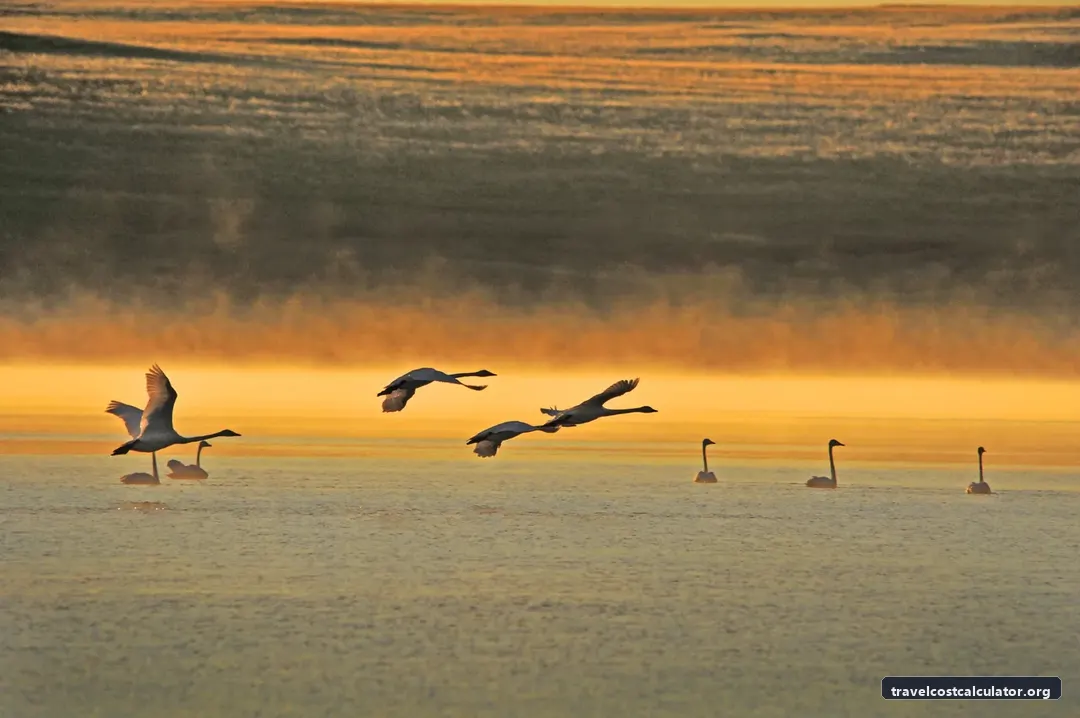
Tari Lake (Lake Tari Nuur): A crucial focal point during wet cycles. The lake edges draw tens of thousands of waterfowl, providing incredible Opportunities to photograph mass bird takeoff against wide-open Eurasian skies.
-
✦
The Endless Steppe Ridges near Dashbalbar: Position yourself on low granite crests along the northern sum borders late in the afternoon. This provides sweeping, unobstructed panoramas of rolling grassland trails, often with herds of Mongolian Gazelles sprinting across the horizon.
Insider Visit Hacks
-
✦
Seasonal Timing Matters: Visit between late May and mid-June for the peak spring bird migration and nesting season amidst lush green grasses. Alternatively, late August through September offers golden autumn hues, massive staging flocks of migratory birds, comfortable temperatures (15°C to 22°C), and significantly fewer insects.
-
✦
Telephoto Gear is Essential: Animals on the Daurian Steppe are wild and maintain a wide flight distance. A minimum lens focal length of 400mm (or 600mm equivalent) is critical for bird and mammal photography.
-
✦
Pack Insect Defense: Wetlands in July and early August harbour dense swarms of mosquitoes and midges. Bring high-concentration DEET or Picaridin spray, long-sleeved treated clothing, and a lightweight head net.
-
✦
Offline Navigation & Power: Mobile cellular service vanishes completely within 15 kilometers of leaving provincial sum centers. Download offline maps (such as Gaia GPS or Maps.me) and carry high-capacity solar power banks to recharge camera batteries in camp.
-
✦
Border Patrol Etiquette: Always carry your physical passport and border zone permit. Never photograph military watchtowers, border fences, or border patrol personnel near the Russian frontier.
🏨 Nearby Accommodation & Daily Budget Allocation
Accommodation within and around the Landscapes of Dauria ranges from comfortable urban hotels in Choibalsan to immersive rural ger (yurt) stays and wilderness expedition camping under pristine night skies.
Where to Stay
-
✦
Choibalsan City (Basecamp): Stay at mid-range options like the Kherlen Hotel or East Mongolia Hotel before heading into the wild. Rooms range from 140,000 MNT to 260,000 MNT (~$40 – $75 USD) per night including breakfast, hot showers, and Wi-Fi.
-
✦
Community Ger Camps & Nomadic Stays (Dashbalbar / Ereentsav): Basic ger camps or local nomadic family homestays near the reserve edge cost roughly 85,000 MNT – 150,000 MNT (~$25 – $45 USD) per person per night, which typically includes two wholesome home-cooked Mongolian meals (mutton, noodles, dairy products, hot tea).
-
✦
Wilderness Expedition Camping: Camping in tents is permitted in designated buffer zones of the protected area. You must bring your own cold-rated sleeping bags, tents, and cooking stoves. This offers zero accommodation cost beyond equipment rental.
Estimated Daily Budget Breakdowns (2026)
1. Budget / Independent Backpacker ($50 – $80 USD / day)
-
✦
Transit: Express overland bus from UB + shared local 4x4 costs (~$25/day)
-
✦
Lodging: Wild camping or budget nomadic family homestays (~$15 – $25/day)
-
✦
Food: Self-cooked camp meals or local sum canteens (~$10 – $15/day)
-
✦
Permits & Fees: Averaged daily (~$5/day)
2. Mid-Range Eco-Traveler ($170 – $280 USD / day)
-
✦
Transit: Domestic flights to Choibalsan + private 4x4 vehicle with driver (~$110 – $150/day split between 2 people)
-
✦
Lodging: Mix of Choibalsan hotels and community ger camps (~$40 – $60/day)
-
✦
Food: Dining at provincial restaurants and camp-cooked meals (~$20 – $30/day)
-
✦
Permits & Ranger Guide: Daily guide and border clearance fees (~$25/day)
3. High-End Wildlife Expedition ($450 – $700+ USD / day)
-
✦
Transit: Private chartered flights/expedition vehicles with dedicated logistics crew
-
✦
Lodging: Mobile luxury ger camp setups complete with private field chef
-
✦
Services: Expert ornithologist/wildlife guides, full permit handling, satellite security
Frequently Asked Questions
Essential visitor FAQs for Landscapes of Dauria
What is the entrance fee for Landscapes of Dauria in Mongolia?
How much time do you need to explore Landscapes of Dauria?
How do I get to Landscapes of Dauria from the nearest city?
📊 Heritage Quick Specs
Visiting Mongolia on a Budget?
Calculate your full daily travel budget for Mongolia — including hotel costs, local transport, food, and sightseeing expenses.
View Mongolia Daily Travel Costs →Explore more UNESCO World Heritage Sites
🏛️ All 1,200+ Heritage Sites →