
 Ethiopia
Konso Cultural Landscape
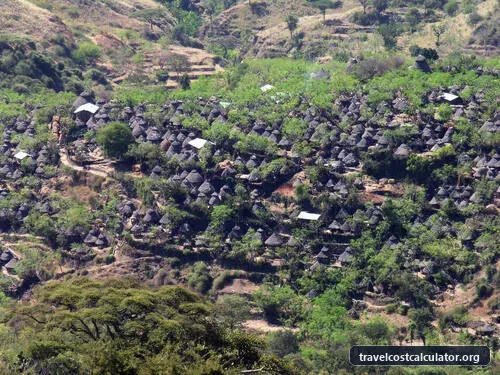
Konso Cultural Landscape is an arid property of stone walled terraces and fortified settlements in the Konso highlands of Ethiopia.
Konso Cultural Landscape
🏛️ Overview & Historical Significance
Inscribed as a UNESCO World Heritage site in 2011, the Konso Cultural Landscape is an extraordinary 55-square-kilometer realm of stone-walled terraces and fortified settlements tucked into the dry, rugged heights of the South Ethiopia Regional State. For over 400 years (spanning more than 21 generations), the Konso people have adapted to a harsh, drought-prone environment through groundbreaking stone engineering, socio-religious traditions, and sustainable land management.
What makes Konso globally unique is its seamless integration of living culture and agricultural architecture. The landscape is defined by massive dry-stone terracing that combats extreme soil erosion, retains precious rainwater, and creates fertile agricultural plots out of steep mountain slopes. Beyond agriculture, the Konso social fabric is visible throughout their walled towns, known locally as paletas. These fortified villages are protected by multiple rings of thick stone walls, accessible only through heavily guarded wooden gates.
Key cultural attributes recognized by UNESCO include:
-
✦
Waga Statues: Hand-carved wooden anthropomorphic grave markers erected to honor fallen heroes, kings, and great warriors. These statues offer a rare, living link to pre-Christian and pre-Islamic ancestral traditions in Horn of Africa history.
-
✦
Mora (Communal Pavilions): Large, stone-paved open squares at the center of each village featuring thatched-roof shelters where elders resolve disputes, public assemblies meet, and young men sleep to protect the village at night.
-
✦
Oliyta (Generation Poles): Massive wooden poles erected in the mora every 18 years to mark the initiation of a new generation (the Kella system), allowing visitors to literally count the age of a village by counting the standing poles.
🎟️ Entrance Fees, Opening Hours & Ticket Booking Tips
Visiting the Konso Cultural Landscape requires registering at the Konso Community Tourism Association Office located in the administrative capital of Karat Konso. As of 2026, self-guided tours inside the living traditional villages are strictly prohibited to respect community privacy and preserve heritage integrity. A certified local Konso guide must accompany all visitors.
Estimated 2026 Visitor Costs
-
✦
Site Entrance Ticket: ~450 ETB ($4.00 – $6.00 USD) per person.
-
✦
Mandatory Local Community Guide Fee: 1,200 – 1,800 ETB ($12.00 – $18.00 USD) per group (up to 4 visitors).
-
✦
Camera & Video Permit: 250 ETB (~$2.50 USD) for professional DSLR setups (mobile phone photography is usually included in the entrance fee).
-
✦
Gesergiyo Canyon Access Fee: ~300 ETB ($3.00 USD) per person (paid locally at the site entrance).
Opening Hours & Logistics
The Konso Tourism Office is open daily from 08:00 AM to 05:30 PM. Village access operates during daylight hours (roughly 07:00 AM to 06:00 PM). Advance online booking is not available; tickets must be purchased in cash on arrival at the Karat Konso tourism office.
Essential 2026 Ticket Tip: Cash is absolute king in Southern Ethiopia. While mobile money transfers (like Telebirr) are widely used by locals, foreign credit cards are not accepted at local tourism offices or village entrances. Withdraw sufficient Ethiopian Birr (ETB) in Arba Minch before traveling to Konso, as ATMs in Karat Konso frequently experience power outages or cash shortages.
🚌 How to Get There & Local Transit Costs
The primary transit hub for reaching Konso is Arba Minch, situated approximately 85 kilometers (53 miles) north of Karat Konso. Most travelers fly into Arba Minch Airport (AMH) via daily Ethiopian Airlines flights from Addis Ababa Travel Budget Bole International Airport (ADD).
Option 1: Private 4x4 Charter (Most Reliable)
Renting a private 4x4 vehicle (Toyota Land Cruiser or similar) with an experienced driver from Arba Minch is the most comfortable way to navigate the rough dirt roads connecting Konso’s outlying villages like Mecheke, Dokatu, and Gesergiyo.
-
✦
Cost (2026): $85 – $140 USD per day (including fuel and driver allowance).
-
✦
Travel Time: 1.5 to 2 hours from Arba Minch to Karat Konso on paved asphalt (A8 highway).
Option 2: Public Minibus (Budget Option)
For independent and budget travelers, public minibuses operate frequently between the main Arba Minch bus terminal and Karat Konso.
-
✦
Cost (2026): ~180 to 250 ETB ($1.80 – $2.50 USD) one-way.
-
✦
Travel Time: 2 to 2.5 hours depending on stops.
-
✦
Local Village Transit: Once in Karat Konso, hire a local Bajaj (three-wheeled auto-rickshaw) to reach nearby villages for 100 – 300 ETB ($1.00 – $3.00 USD) per trip.
📸 Best Photography Spots & Insider Visit Hacks
Top Photography Locations
-
✦
Gesergiyo Canyon ("New New York Travel Budget"): Famous for its dramatic, wind-and-water-eroded red clay pinnacles resembling skyscrapers. Local folklore claims the formation was caused by divine punishment after sacred village drums were stolen. Best Light: Late afternoon (3:30 PM – 5:30 PM) when the setting sun highlights the vibrant red sandstone colors.
-
✦
Dokatu Village Terraces: Positioned high on a ridge, Dokatu provides a panoramic view of hundreds of continuous dry-stone terraces cascading into the valley below. Best Light: Early morning (07:00 AM – 09:00 AM) before mid-day haze settles over the valley.
-
✦
Mecheke Village Fortified Gates & Mora: Photograph the intricate multi-layered stone walls, heavy timber entrance gates, and massive Oliyta generation poles.
Insider Travel Hacks for 2026
-
✦
Respect Village Etiquette: Always ask permission before photographing individuals, especially elders and children. Your mandatory community guide will help translate and navigate social customs smoothly.
-
✦
Wear Sturdy Footwear: Visiting the terraced fields and inner village alleys involves walking over uneven, steep stone pathways. Wear durable hiking shoes with solid ankle support.
-
✦
Combine with Market Days: Schedule your visit to coincide with local Konso market days (held on Mondays and Thursdays in Karat Konso). It offers an incredible window into local trade, where traditional sorghum beer (cheka) and handmade cotton textiles are exchanged.
-
✦
Hydration & Sun Protection: The Southern Rift Valley climate is warm and dry. Bring a reusable water bottle with a filtration system, a broad-brimmed hat, and high-SPF sunscreen.
🏨 Nearby Accommodation & Daily Budget Allocation
While some travelers visit Konso as a long day trip from Arba Minch, spending at least one night in Karat Konso allows for an immersive experience without rushing.
Where to Stay
-
✦
Eco-Lodge / Mid-Range: Kanta Lodge (Karat Konso) – Set on a hilltop overlooking the valley, featuring traditional stone-and-thatch bungalows designed in classic Konso architecture. Cost: $60 – $110 USD / night (includes breakfast).
-
✦
Community Lodge: Strawberry Fields Eco-Lodge & Permaculture Farm – Offers eco-friendly accommodation, organic garden dining, and permaculture walking tours. Cost: $35 – $65 USD / night.
-
✦
Budget Guesthouses: Various local guesthouses in downtown Karat Konso offer basic rooms with shared facilities. Cost: $12 – $25 USD / night (1,200 – 2,500 ETB).
Daily Budget Allocation (Estimated 2026 Prices per Person)
-
✦
Budget Traveler: $30 – $50 USD / day (Public minibus, basic local guesthouse, local street food/injera, shared guide).
-
✦
Mid-Range Traveler: $110 – $190 USD / day (Private 4x4 rental Split Travel Budget between 2 people, stay at Kanta Lodge, sit-down meals, full guide & entry fees).
Dining in Konso is affordable. A full plate of local Injera with vegetable or meat Wot ranges from $2.50 to $6.00 USD at local restaurants, while lodge meals average $8.00 to $15.00 USD.
Frequently Asked Questions
Essential visitor FAQs for Konso Cultural Landscape
What is the entrance fee for Konso Cultural Landscape?
How much time do you need to explore Konso Cultural Landscape?
How do I get to Konso Cultural Landscape from the nearest city?
📊 Heritage Quick Specs
Visiting Ethiopia on a Budget?
Calculate your full daily travel budget for Ethiopia — including hotel costs, local transport, food, and sightseeing expenses.
View Ethiopia Daily Travel Costs →Explore more UNESCO World Heritage Sites
🏛️ All 1,200+ Heritage Sites →