
 China
China
Kaiping Diaolou and Villages
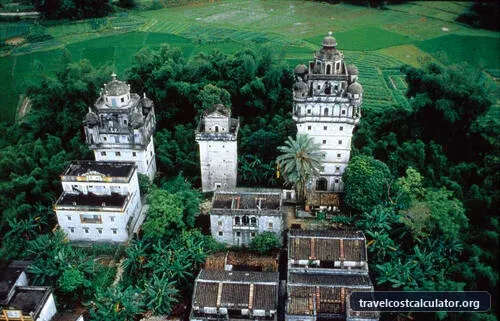
Kaiping Diaolou and Villages feature the Diaolou, multi-storeyed defensive village houses in Kaiping, which display a complex and flamboyant fusion of Chinese and Western structural and decorative forms.
Kaiping Diaolou and Villages
🏛️ Overview & Historical Significance of Kaiping Diaolou
Rising dramatically above the emerald rice paddies and subtropical bamboo groves of Guangdong Province, the Kaiping Diaolou and Villages (开平碉楼与村落) represent one of the world's most astonishing architectural blends. Inscribed as a UNESCO World Heritage Site in 2007, this collection of multi-story fortified tower houses stands as a testament to early trans-national migration, resilience, and artistic fusion.
Built primarily during the late 19th and early 20th centuries, these structures were constructed by returned overseas Chinese (known locally as Huaqiao) who had emigrated to North America, Southeast Asia, and Australia to work on railroads, in gold mines, or in trade. Upon sending their earnings back home to Kaiping, these families faced two major threats: endemic countryside banditry (tufei) and severe flooding along the Tanjiang River basin. The solution was the creation of the Diaolou—fortified watchtowers designed to withstand both armed siege and natural disaster.
What makes Kaiping’s Diaolou globally unique is their extravagant, hybrid aesthetic. Returning emigrants brought back pattern books, architectural sketches, and photographs from Western cities. Local artisans combined traditional Lingnan blue-brick masonry and tiled roofs with a breathtaking array of foreign styles, including Romanesque arches, Greco-Roman columns, Gothic turrets, Portuguese tilework, and Baroque pediments. At its peak in the 1920s and 1930s, more than 3,000 Diaolou dotted the countryside; today, roughly 1,833 towers remain preserved across four main village clusters: Zili, Li Garden, Majianglong, and Jinjiangli.
🎟️ Entrance Fees, Opening Hours & Ticket Booking Tips (2026 Rates)
Navigating ticket options for the Kaiping Diaolou clusters requires strategic planning, as the sites are spread across several square kilometers of countryside. Below are the updated 2026 estimated entrance fees and operating guidelines.
2026 Ticket Pricing Breakdown
-
✦
Unified 5-Site Combo Pass (Recommended): ~¥180 RMB ($25.00 USD) – Includes 2-day access to Zili Village, Li Garden, Majianglong, Jinjiangli, and Sanbing Tower. This offers the best overall value if you plan to explore for a day and a half.
-
✦
Single-Site Tickets:
- Li Garden (Li Yuan): ~¥100 RMB ($14.00 USD)
-
✦
Zili Village Cluster: ~¥78 RMB ($11.00 USD)
-
✦
Majianglong Village Cluster: ~¥60 RMB ($8.40 USD)
-
✦
Jinjiangli Village Cluster: ~¥50 RMB ($7.00 USD)
Opening Hours & Visitor Logistics
-
✦
Operating Hours: 08:30 – 17:30 daily (Last ticket sales at 17:00).
-
✦
Digital Ticket Booking: Domestic travelers typically book through the official WeChat Mini-Program ( search: 开平碉楼与村落 ). Foreign tourists can purchase tickets directly at any main visitor center window (such as Zili or Li Garden) by presenting a valid passport, or pre-book via Trip.com to receive an instant QR code.
-
✦
Payment Note: In 2026, cash is rarely accepted at smaller vendor kiosks around the villages. Ensure your Alipay or WeChat Pay accounts are linked to your international Visa or Mastercard prior to arriving in Guangdong.
🚌 How to Get There & Local Transit Costs
Kaiping is located in Jiangmen Prefecture, roughly 130 to 140 kilometers southwest of Guangzhou. Getting there in 2026 is seamless thanks to China's high-speed rail network.
Step 1: Traveling from Guangzhou or Hong Kong Travel Budget to Kaiping
-
✦
From Guangzhou (Fastest Option): Board a High-Speed Bullet Train from Guangzhou South Railway Station (Guangzhounan) directly to Kaipingnan Railway Station (开平南站).
- Travel Time: Approx. 50 to 60 minutes.
-
✦
Cost: ~¥45 – ¥65 RMB ($6.30 – $9.00 USD) each way for Second Class seats. Trains run frequently every 30 to 45 minutes.
Step 2: Local Transit from Kaipingnan Station to the Villages
-
✦
Private Charter Car / Didi Ride-Hailing (Highly Recommended): The most efficient way to hop between distant villages is booking a Didi ride-hailing vehicle or chartering a local taxi driver for the full day.
- Full-Day Private Driver Cost: ~¥350 – ¥480 RMB ($49.00 – $67.00 USD) for 8 hours.
-
✦
Point-to-Point Didi Fare: Kaipingnan Station to Zili Village costs around ¥45 – ¥65 RMB ($6.30 – $9.00 USD).
📸 Best Photography Spots & Insider Visit Hacks
Prime Photo Locations
-
✦
Mingshi Lou Rooftop (Zili Village): Famous as the filming location for the hit Chinese movie Let the Bullets Fly, the 6th-floor balcony of Mingshi Lou offers panoramic views over Zili’s interconnected footpaths, fishponds, and surrounding watchtowers.
-
✦
Ruishi Lou (Jinjiangli Village): Known as the "First Diaolou of Kaiping," this 9-story tower features magnificent Byzantine dome elements and complex rooftop crests. Shoot from the village lawn facing east during afternoon light.
-
✦
Li Garden Canal Bridges: Frame the Grand Villa and the Western-style pavilion against the reflections of the lily-covered waterways in Li Garden.
-
✦
Majianglong Bamboo Paths: Walk into the dense bamboo forest where towers like Tianlu Lou emerge dramatically through the green canopy—ideal for soft, moody morning light.
Seasonal Timing & Weather Considerations
-
✦
Spring Canola Bloom (March – April): The fields surrounding Zili Village burst into bright yellow rapeseed flowers, creating a vivid color contrast against the dark, weather-worn stone towers.
-
✦
Autumn Harvest (Late September – November): The golden rice paddies ripen under clear, dry skies, making autumn the absolute best season for comfortable weather and crisp photography.
-
✦
Summer Caution (June – August): High temperatures (33°C+/91°F+) and frequent monsoons/typhoons affect Guangdong. Pack lightweight clothing, sun protection, and a sturdy umbrella.
Crowd Avoidance Hacks
Large tour groups from Guangzhou usually arrive at Li Garden and Zili Village between 10:30 AM and 2:00 PM. To beat the crowds, arrive at Zili Village right at 08:30 AM to enjoy quiet morning photographic light, move to Majianglong around noon, and visit Jinjiangli or Chikan Old Town late in the afternoon.
🏨 Nearby Accommodation & Daily Budget Allocation
While Kaiping can be visited as a long day trip from Guangzhou, staying overnight allows you to experience the peaceful countryside after day-trippers depart.
Where to Stay
-
✦
Heritage & Boutique B&Bs (Tangkou Town / Near Zili): Renovated rural ancestral homes and retro-chic boutique hotels in Tangkou Town offer modern comforts alongside historic charm.
- Price Range: ~¥300 – ¥550 RMB ($42.00 – $77.00 USD) per night.
- Price Range: ~¥200 – ¥350 RMB ($28.00 – $49.00 USD) per night.
- Price Range: ~¥100 – ¥180 RMB ($14.00 – $25.00 USD) per night.
Local Culinary Highlights
Do not leave Kaiping without trying local Lingnan specialties! Be sure to order Kaiping Eel Rice (黄鳝饭 - Huanshan Fan) cooked in traditional clay pots with crispy rice bottoms, Chikan Tofu Rolls (赤坎豆腐角) pan-fried on flat griddles, and slow-simmered duck dishes flavored with aged dried tangerine peel (Chenpi).
Estimated Daily Travel Budgets (Per Person, 2026 Estimates)
-
✦
Budget Traveler (~$45 - $60 USD / ¥320 - ¥430 RMB per day):
- Accommodation: Shared room/budget guesthouse (~¥120 RMB)
-
✦
Transport: High-speed rail + local public buses (~¥80 RMB)
-
✦
Food: Local claypot eel rice & village eateries (~¥70 RMB)
-
✦
Sightseeing: Single site tickets or discounted combo (~¥90 RMB)
- Accommodation: Boutique heritage hotel in Tangkou (~¥400 RMB)
- Accommodation: Premium suite at a top heritage resort (~¥900+ RMB)
Frequently Asked Questions
Essential visitor FAQs for Kaiping Diaolou and Villages
What is the entrance fee for Kaiping Diaolou and Villages?
How much time do you need to explore Kaiping Diaolou and Villages?
How do I get to Kaiping Diaolou and Villages from the nearest city?
📊 Heritage Quick Specs
Visiting China on a Budget?
Calculate your full daily travel budget for China — including hotel costs, local transport, food, and sightseeing expenses.
View China Daily Travel Costs →Explore more UNESCO World Heritage Sites
🏛️ All 1,200+ Heritage Sites →