
 Chile
Chile
Humberstone and Santa Laura Saltpeter Works
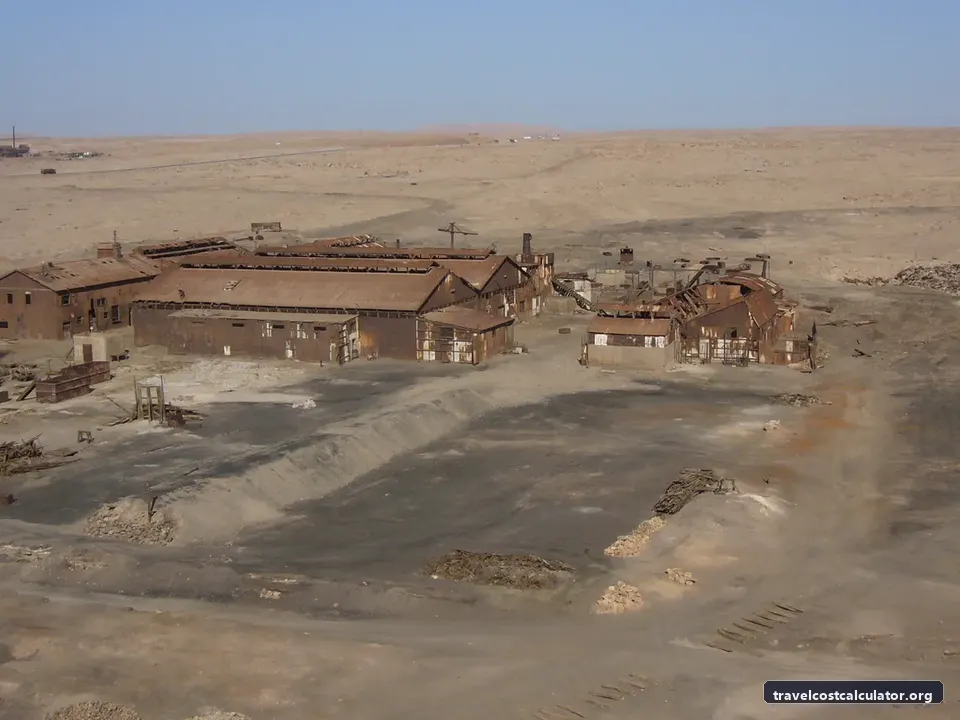
Humberstone and Santa Laura works contain over 200 former saltpeter works where workers from Chile, Peru and Bolivia lived in company towns and forged a distinctive communal pampinos culture.
Humberstone and Santa Laura Saltpeter Works
🏛️ Overview & Historical Significance
Rising like modern ruins from the bone-dry expanse of Chile’s Atacama Desert, the Humberstone and Santa Laura Saltpeter Works stand as haunting monuments to the Industrial Revolution’s global reach. Located in the Tarapacá Region roughly 47 kilometers east of the coastal city of Iquique, these two interconnected ghost towns were once the beating heart of the world’s nitrate boom. During the late 19th and early 20th centuries, the hyper-arid *Pampa del Tamarugal* contained the world's largest natural deposits of potassium nitrate (saltpeter, known locally as "oro blanco" or white gold). This precious mineral transformed global agriculture as a super-fertilizer and fueled military arsenals worldwide with high explosives.
Originally established in 1872—Santa Laura by Peruvian entrepreneur Guillermo Wendell and Humberstone (initially named *Office La Palma*) by English engineer James Thomas Humberstone—the sites grew into industrial behemoths. Following the War of the Pacific (1879–1883), Chile secured control over the nitrate fields, triggering a period of unprecedented wealth and intense immigration. Over 200 saltpeter works operated across the desert, but Humberstone and Santa Laura emerged as the definitive model of the company town (*oficina salitrera*).
Life in these isolated outposts created a distinct social ecosystem. Thousands of workers, known as pampinos, migrated from across South America and Europe to endure grueling physical labor in extreme desert weather. The company town system controlled every facet of daily existence: workers were paid not in national currency, but in company tokens (*fichas*) redeemable exclusively at the company store (*La Recova*). Despite—or perhaps because of—these harsh feudal conditions, the saltpeter works became the birthplace of the modern labor movement in Chile, sparking early strikes, solidarity networks, and a unique desert culture.
The golden era collapsed rapidly after German chemists Fritz Haber and Carl Bosch perfected the industrial synthesis of ammonia in the 1910s. Synthetic fertilizers undercut natural saltpeter, leading to a slow decline; Santa Laura ceased operations in 1960, and Humberstone shuttered its doors in 1960 as well. Abandoned to the blistering desert sun and dry winds, the towns frozen in time were declared Chilean National Monuments in 1970 and inscribed as a UNESCO World Heritage site in 2005 under criteria (ii), (iii), and (iv). UNESCO recognized the works as an exceptional testimony to the collective culture of the pampinos and the global industrial revolution that reshaped world agriculture. After years of restoration by the *Corporación Museo del Salitre*, the site was officially removed from UNESCO's List of World Heritage in Danger in 2019, securing its place as one of South America's premier open-air industrial museums.
🎟️ Entrance Fees, Opening Hours & Ticket Booking Tips
Visiting Humberstone and Santa Laura in 2026 is an straightforward and budget-friendly experience. A single admission ticket grants access to both site complexes (located less than 1.5 kilometers apart on opposite sides of Route 5).
2026 Estimated Entrance Fees
-
✦
Adult General Admission (Foreign Tourists & Locals): ~6,000 CLP ($6.50 USD / €6.00)
-
✦
Seniors (Ages 60+ with ID): ~3,000 CLP ($3.25 USD / €3.00)
-
✦
Students (with valid university/ISIC card): ~3,000 CLP ($3.25 USD / €3.00)
-
✦
Children (Under 7 years): Free entry
Opening Hours & Ticketing Realities
The complex is open 7 days a week, 365 days a year, including major holidays:
-
✦
Summer Hours (October – April): 9:00 AM to 7:00 PM (Last entry at 6:00 PM)
-
✦
Winter Hours (May – September): 9:00 AM to 6:00 PM (Last entry at 5:00 PM)
Ticket Booking Tips: Tickets are purchased directly at the main entrance visitor center in Humberstone. Pre-booking online is generally unnecessary as there are no strict cap limits on daily visitors. Payment can be made in Chilean Pesos (CLP) in cash or via major international credit/debit cards (Visa/Mastercard). However, because cellular and satellite card terminals in the high desert can occasionally suffer signal drops, carrying exact cash in CLP is strongly advised to prevent entry delays.
🚌 How to Get There & Local Transit Costs
The primary launchpad for visiting Humberstone and Santa Laura is the coastal city of Iquique, located 47 kilometers to the west. Iquique is easily reached via domestic flights from Santiago Travel Budget (SCL) to Diego Aracena International Airport (IQQ).
1. Public Bus / Micro (Most Budget-Friendly)
Budget travelers can take advantage of regular local transit connecting Iquique to the inland towns of Pozo Almonte and Pica.
-
✦
Departure Point: Terminal Agropecuario (located at the intersection of Av. Progresión and Manuel Rodríguez in Iquique).
-
✦
Route: Board any bus or shared minibus heading toward Pozo Almonte or Pica. Tell the driver you are getting off at "El Cruce de Humberstone".
-
✦
Travel Time: Approximately 45 to 55 minutes.
-
✦
Cost (2026): ~3,500 CLP to 4,500 CLP ($3.80 – $4.90 USD) one-way.
-
✦
Return Trip: Walk back out to the main highway junction (Route 5 / Route A-16) and flag down any inbound Iquique bus or *colectivo* returning from Pozo Almonte. Buses run until roughly 7:30 PM.
2. Shared Taxis / Colectivos
Shared taxis operate from designated stands near the Terminal Agropecuario. They depart as soon as all four passenger seats are filled.
-
✦
Cost (2026): ~5,000 CLP ($5.50 USD) per seat each way.
-
✦
Convenience: Faster than the local bus (~40 minutes), dropping you right at the highway turnoff.
3. Rental Car (Maximum Flexibility)
Renting a car in downtown Iquique or at Diego Aracena Airport is ideal if you plan to explore deeper into the Atacama Desert (e.g., the Pintados Geoglyphs or Pica Oasis).
-
✦
Drive Route: Take Route A-16 east out of Iquique, climbing up the coastal bluffs past Alto Hospicio, and continue straight until intersecting Route 5 (Pan-American Highway). The entrance to Humberstone is clearly signposted at the junction.
-
✦
Car Rental Rates (2026): Standard economy cars start at ~$35 – $55 USD per day. Roads are entirely paved and in excellent condition. On-site parking is free and secured.
4. Organized Guided Tours
Many travel agencies along Iquique's Baquedano Street offer half-day tours to Humberstone and Santa Laura.
-
✦
Cost (2026): ~30,000 CLP to 45,000 CLP ($32 – $50 USD) per person.
-
✦
Inclusions: Hotel pickup/drop-off, air-conditioned bus transport, site entrance fee, and a bilingual guide who provides deep historical context on nitrate extraction.
📸 Best Photography Spots & Insider Visit Hacks
Humberstone and Santa Laura offer an unparalleled retro-industrial visual experience. The high-altitude desert sunlight creates stark shadows against rusted iron, sun-bleached wood, and crumbling adobe. To capture the best frames while staying safe in the harsh climate, keep these key spots and strategies in mind.
Must-Snap Photography Locations
-
✦
The Humberstone Theatre (Teatro): An extraordinary 1930s Art Deco wooden theatre. Step inside to photograph light rays piercing through high window slats onto rows of original wooden seats and the silent stage.
-
✦
The Cast-Iron Swimming Pool: A surreal landmark in Humberstone made from the iron hull of a decommissioned 19th-century sailing vessel, complete with a rusted multi-tiered diving board framed by desert sand dunes.
-
✦
The Company Store (La Recova): The vast central market hall featuring cavernous arched roof structures and empty vendor stalls that once stored imported luxury goods and daily provisions.
-
✦
Santa Laura Industrial Complex (Shanks System): Located 1.5 km across the highway, Santa Laura features the massive, multi-level wooden processing plant (the *Planta Shanks*) dominated by an iconic iron smokestack and gigantic machinery gears.
-
✦
The Hotel and Ballrooms: Walk through the dilapidated guest rooms, interior courtyards, and grand ballrooms that hosted visiting executives during the nitrate glory days.
Insider Visit Hacks for 2026
-
✦
Optimal Lighting & Timing: Arrive right when the gates open at 9:00 AM. Morning light illuminates the structural detail of the buildings without the blinding glare of noon. Alternatively, 4:00 PM to sunset provides rich golden-hour tones against the orange desert soil.
-
✦
Beat the Heat & UV Exposure: The Atacama Desert boasts some of the highest UV radiation indices on Earth. Wear a wide-brim hat, long-sleeve light clothing, high-SPF sunscreen, and UV-blocking sunglasses. Bring at least 2 liters of drinking water per person—there are limited vending facilities on site.
-
✦
Pacing Your Visit: Allow a minimum of 3 to 4 hours total. Allocate 2.5 hours to Humberstone (which contains the living quarters, schools, theatre, and public buildings) and 1 to 1.5 hours to Santa Laura (the heavy industrial, refining, and machine plant).
-
✦
Dust Protection: High winds (*camanchaca* wind shifts) often kick up fine particulate dust containing trace nitrate minerals. Keep camera lenses capped when moving between buildings, and carry a microfiber cloth or dust cover for electronics.
🏨 Nearby Accommodation & Daily Budget Allocation
Because there are no hotels or overnight lodgings inside the protected UNESCO site itself, almost all travelers base themselves in the vibrant coastal port city of Iquique, located just 40 minutes away. Iquique features excellent Pacific beaches, duty-free shopping (ZOFRI), and a rich culinary scene focused on fresh seafood.
Accommodation Options in Iquique (2026 Price Estimates)
-
✦
Budget Pick (Hostels & Guesthouses): Hostels near Cavancha Beach or the historic Baquedano district offer dormitory beds for ~$18 – $28 USD/night and private rooms for ~$40 – $55 USD/night. Perfect for backpackers using public transit.
-
✦
Mid-Range Pick (3-Star & Coastal Hotels): Comfortable hotels along Avenida Costanera or downtown (such as Hotel Gran Cavancha or NH Iquique) range from ~$75 – $125 USD/night, including breakfast and ocean views.
-
✦
Luxury / High-End Pick (Resorts & Boutique Stays): High-end oceanfront properties like the Terrado Cavancha Hotel or Hilton Garden Inn Iquique cost between ~$150 – $240 USD/night.
Daily Budget Allocation (Per Person in USD)
To help plan your 2026 trip to Humberstone and Iquique, consider these three representative daily expenditure models:
| Expense Category | Shoestring Backpacker | Mid-Range Explorer | Luxury Traveler |
|---|---|---|---|
| Lodging | $22 (Hostel Dorm) | $50 (Shared Mid-Range Room) | $120 (4-Star Suite) |
| Transport | $8 (Public Bus / Micro) | $25 (Rental Car share / Shared Taxi) | $60 (Private Tour / Driver) |
| Meals & Drinks | $15 (Empanadas / Local Markets) | $35 (Seafood Restaurants / Cafes) | $80 (Fine Dining & Cocktails) |
| Sightseeing / Entry Fees | $6.50 (Humberstone Ticket) | $6.50 (Humberstone Ticket) | $35 (Guided Private Excursion) |
| Total Estimated Daily Budget | ~$51.50 USD | ~$116.50 USD | ~$295.00 USD |
Pro Tip: Combine your morning trip to Humberstone and Santa Laura with an afternoon visit to the nearby Reserva Nacional Pampa del Tamarugal or the spectacular Geoglyphs of Pintados (located 45 minutes further south along Route 5) to maximize your transport costs for the day!
Frequently Asked Questions
Essential visitor FAQs for Humberstone and Santa Laura Saltpeter Works
What is the entrance fee for Humberstone and Santa Laura Saltpeter Works?
How much time do you need to explore Humberstone and Santa Laura Saltpeter Works?
How do I get to Humberstone and Santa Laura Saltpeter Works from the nearest city?
📊 Heritage Quick Specs
Visiting Chile on a Budget?
Calculate your full daily travel budget for Chile — including hotel costs, local transport, food, and sightseeing expenses.
View Chile Daily Travel Costs →Explore more UNESCO World Heritage Sites
🏛️ All 1,200+ Heritage Sites →