
 India
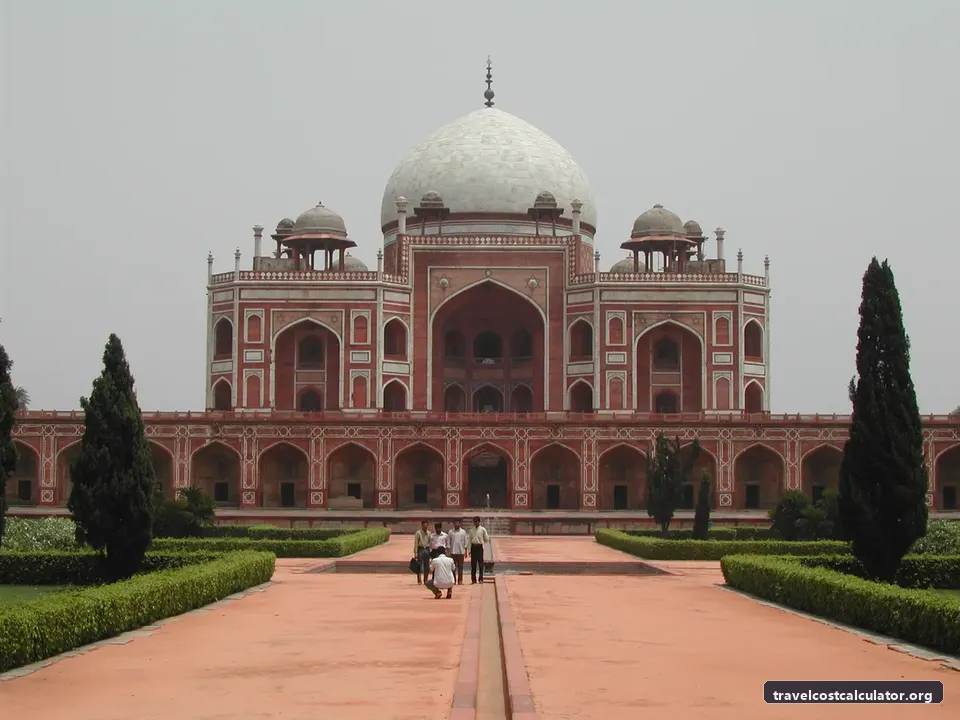
Humayun's Tomb, Delhi
This tomb, built in 1570, is of particular cultural significance as it was the first garden-tomb on the Indian subcontinent. It inspired several major architectural innovations, culminating in the construction of the Taj Mahal.
Humayun's Tomb, Delhi
🏛️ Overview & Historical Significance
Standing as a monumental masterpiece of Mughal architectural genius in the heart of India's capital, Humayun's Tomb is one of the most culturally significant monuments on the Indian subcontinent. Commissioned in 1565 by Empress Bega Begum (also known as Haji Begum), the chief consort of the second Mughal Emperor Humayun, and designed by Persian architect Mirak Mirza Ghiyas, this majestic red sandstone complex introduced an unprecedented architectural vocabulary to India.
In 1993, UNESCO designated Humayun's Tomb a World Heritage Site due to its exceptional cultural value, architectural innovation, and immense historical impact. It stands as the very first garden-tomb on the Indian subcontinent, pioneering the iconic Charbagh (a quadrilateral four-fold garden design based on the four rivers of Paradise described in the Qur'an). Crucially, Humayun's Tomb served as the direct architectural prototype for later Mughal masterpieces, most notably the world-famous Taj Mahal in Agra built nearly a century later.
Beyond its striking double dome—the first of its kind constructed in India—and elegant red sandstone highlighted with white marble inlays, the complex is a vast royal necropolis. It houses over 150 graves of Mughal royal family members, earning it the nickname "the Dormitory of the Mughals." In recent decades, painstaking urban conservation efforts by the Aga Khan Trust for Culture (AKTC) in partnership with the Archaeological Survey of India (ASI) have fully restored its historic water channels, botanical layouts, and surrounding monuments to their 16th-century grandeur.
🎟️ Entrance Fees, Opening Hours & Ticket Booking Tips
Visiting Humayun's Tomb requires entry tickets managed by the Archaeological Survey of India (ASI). Prices have been updated for 2026, offering discounted rates for visitors who pay via digital/cashless channels.
2026 Standard Admission Prices
-
✦
Foreign Tourists (Non-SAARC / Non-BIMSTEC): ₹550 INR (approx. $6.60 USD) via online cashless portal | ₹600 INR (approx. $7.20 USD) via cash ticket counter.
-
✦
SAARC & BIMSTEC Country Citizens: ₹35 INR (cashless) | ₹50 INR (cash).
-
✦
Indian Citizens: ₹35 INR (cashless) | ₹50 INR (cash).
-
✦
Children (Under 15 years, all nationalities): Free entry (valid photo ID required).
Opening Hours & Schedule
-
✦
Daily Operating Hours: Sunrise to Sunset (typically 6:00 AM to 6:00 PM, open 365 days a year, including national holidays).
-
✦
Best Visit Duration: Plan for 2 to 3 hours to explore the main mausoleum, the surrounding gardens, and adjacent structures like Isa Khan’s Tomb.
Pro Booking Tips for 2026
-
✦
Book Online to Skip Lines: Skip the long queues at the physical ticket booth by scanning the official ASI QR codes placed near the gate entrance or purchasing tickets ahead of time on the official ASI Monument Booking Portal. Online tickets grant an immediate discount and priority entrance lanes.
-
✦
Payment Methods: The physical cash counter accepts Indian Rupees (INR). However, foreign credit cards can occasionally face payment gateway friction on local government sites; carrying local currency or using UPI payments (now widely enabled for international tourists via travel fintech apps) is highly recommended.
-
✦
Combinations & Photography: Standard handheld digital photography and mobile phone filming are included in entry. Professional videography equipment, tripods, and commercial shoots require prior written permits from the ASI head office.
🚌 How to Get There & Local Transit Costs
Situated in Nizamuddin East, New Delhi Travel Budget, Humayun's Tomb is exceptionally well-connected by Delhi's modern public transportation network and private transit options.
1. By Delhi Metro (Fastest & Most Economical)
The Delhi Metro is the cleanest, most efficient way to reach the monument while avoiding city traffic jams:
-
✦
Nearest Metro Station: Jawaharlal Nehru Stadium (JLN Stadium) Station on the Violet Line (approx. 1.5 km away).
-
✦
Alternative Metro Station: Supreme Court Station (Blue Line) or Khan Market Station (Violet Line), both a short auto-rickshaw ride away.
-
✦
Cost: Metro fares range between ₹20 – ₹50 INR ($0.24 – $0.60 USD) depending on your starting point in New Delhi. From JLN Stadium Station, take a short electric-rickshaw or auto-rickshaw to the main entrance for ₹40 – ₹70 INR ($0.50 – $0.85 USD).
2. By Rideshare App & Taxi
Rideshare services operate 24/7 across the National Capital Region (NCR) and offer door-to-door convenience:
-
✦
Uber / Ola / InDrive: A private ride from Connaught Place (Central Delhi) costs roughly ₹180 – ₹280 INR ($2.15 – $3.35 USD).
-
✦
From Indira Gandhi International Airport (DEL): A rideshare cab or prepaid airport taxi covers the ~18 km distance in 35–50 minutes (depending on traffic) for ₹450 – ₹700 INR ($5.40 – $8.40 USD).
3. By Train & Local Bus
-
✦
Train: The Hazrat Nizamuddin Railway Station (NZM) is located less than 2 km from the tomb complex. If arriving by intercity train, you can reach the site via a 10-minute auto-rickshaw ride costing around ₹60 INR ($0.70 USD).
-
✦
City Bus (DTC): Buses stopping at Nizamuddin / Humayun's Tomb stop include routes 419, 423, and 433. Fares cost ₹10 – ₹25 INR ($0.12 – $0.30 USD).
📸 Best Photography Spots & Insider Visit Hacks
Top Photography Angles
-
✦
The Central Water Channel Mirror Shot: Position yourself at the foot of the western approach channel. On calm days, the water channel reflects the magnificent red sandstone facade and white double dome perfectly.
-
✦
Isa Khan's Octagonal Tomb Archways: Located just inside the entrance complex, this pre-Mughal octagonal tomb offers incredible framing opportunities through its arched walkways and intricate stone lattice work (jalis).
-
✦
The Upper Terrace & West Gate: Climb the steep stone steps to the main mausoleum platform. Looking back toward the West Gate frames the lush green gardens against the ancient entry portal.
-
✦
Sunder Nursery Panorama: From the northern edge of the upper platform, capture sweeping vistas looking toward the newly restored heritage structures of Sunder Nursery.
Insider Visit Hacks & Timing Strategies
-
✦
The Golden Hour Advantage: Visit right at opening (6:00 AM – 7:30 AM) or during late afternoon (4:00 PM – 5:30 PM). Morning light creates soft golden tones on the red sandstone with virtually zero crowds, while sunset yields spectacular warm light for photography.
-
✦
Best Season to Visit: The ideal travel window is during Delhi's winter months from October to March when temperatures range between a comfortable 10°C and 23°C. Avoid peak summer (May–June) when daytime heat often exceeds 42°C (107°F).
-
✦
Combine with Sunder Nursery: Right adjacent to Humayun's Tomb lies Sunder Nursery, a 90-acre UNESCO-awarded heritage park featuring micro-gardens, restored Mughal monuments, and serene lakefront cafes. Plan a combined half-day itinerary.
-
✦
Footwear Note: You will be required to remove your shoes or wear provided shoe covers when entering the main upper indoor chamber housing the royal cenotaphs. Wear easily removable slip-on shoes and bring socks for walking on sun-heated stone.
🏨 Nearby Accommodation & Daily Budget Allocation
The area surrounding Humayun's Tomb, extending from Nizamuddin East to Khan Market and Central Delhi, features diverse lodging and dining choices for every travel style.
Recommended Accommodations Near the Site
-
✦
Budget Hostels ($10 – $22 USD / night | ₹800 – ₹1,800 INR): Excellent boutique backpacker spots like GoStops Delhi or Zostel Delhi (located a short metro ride away in South/Central Delhi) offer clean dorms, vibrant social spaces, and air-conditioned private rooms.
-
✦
Mid-Range Hotels ($45 – $95 USD / night | ₹3,700 – ₹7,900 INR): Boutique heritage bed & breakfasts in Nizamuddin East or modern mid-range stays like Bloomrooms @ Link Road and Hotel City Star offer great comfort, free Wi-Fi, and quick access to the monument.
-
✦
Luxury Hotels ($220 – $480+ USD / night | ₹18,000 – ₹40,000+ INR): World-class 5-star properties such as The Oberoi New Delhi (just 3 minutes away), Taj Mahal Hotel (Mansingh Road), and The Imperial New Delhi provide unparalleled luxury, Michelin-caliber dining, and spa wellness options.
Dining Options Near Nizamuddin
-
✦
Street & Local Culinary Heritage: Walk into the historic Nizamuddin Basti neighborhood to sample authentic Mughlai cuisine. Try the famous seekh kebabs and mutton korma at Karim's or Ghalib Kebab Corner (₹250 – ₹500 INR / $3 – $6 USD per person).
-
✦
Boutique Dining & Cafes: Head inside the neighboring Sunder Nursery to dine at Fabcafe by the Lake, offering healthy regional Indian dishes with panoramic garden views (₹700 – ₹1,400 INR / $8 – $17 USD per person).
Estimated Daily Budget Breakdowns (2026)
To help you budget your Delhi itinerary effectively, here are daily expense projections (covering food, local transit, sights, and lodging):
-
✦
Backpacker / Low-Budget: $25 – $40 USD / day (₹2,100 – ₹3,300 INR) — Hostels, street food/local eateries, metro transit, standard monuments.
-
✦
Flashpacker / Mid-Range: $85 – $160 USD / day (₹7,000 – ₹13,300 INR) — 3-star boutique hotel/B&B, mid-range dining/cafes, Uber/app cabs, museum passes.
-
✦
Luxury Travel: $350 – $650+ USD / day (₹29,000 – ₹54,000+ INR) — 5-star luxury hotel, fine dining, private chauffeur service, private guided heritage tours.
Frequently Asked Questions
Essential visitor FAQs for Humayun's Tomb, Delhi
What is the entrance fee for Humayun's Tomb, Delhi?
How much time do you need to explore Humayun's Tomb, Delhi?
How do I get to Humayun's Tomb, Delhi from the nearest city?
📊 Heritage Quick Specs
Visiting India on a Budget?
Calculate your full daily travel budget for India — including hotel costs, local transport, food, and sightseeing expenses.
View India Daily Travel Costs →Explore more UNESCO World Heritage Sites
🏛️ All 1,200+ Heritage Sites →