
 France
Historic Fortified City of Carcassonne
Since the pre-Roman period, a fortified settlement has existed on the hill where Carcassonne now stands.
Historic Fortified City of Carcassonne
🏛️ Overview & Historical Significance
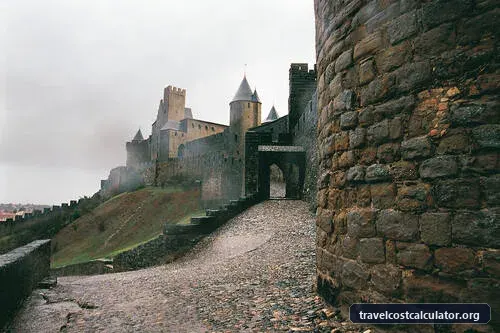
Rising dramatically above the Aude Valley in southwestern France's Occitanie region, the Historic Fortified City of Carcassonne (known locally as La Cité de Carcassonne) represents one of Europe's largest, most impeccably preserved medieval fortresses. Enclosed within a dual circuit of defensive walls stretching nearly 3 kilometers and punctuated by 52 massive towers, this architectural wonder has stood watch over trade routes connecting the Atlantic Ocean to the Mediterranean Sea for more than two millennia.
In 1997, UNESCO designated Carcassonne a World Heritage site under Criteria (ii) and (iv). The official citation highlights the citadel as an extraordinary example of a medieval fortified town, featuring concentric defense systems that showcase evolutionary military architecture spanning the Gallo-Roman period through the late Middle Ages. Furthermore, UNESCO recognized Carcassonne's monumental 19th-century restoration directed by architect Eugène Viollet-le-Duc. Viollet-le-Duc's pioneering—and at times controversial—work laid the foundation for modern architectural conservation and historical preservation philosophy worldwide.
Carcassonne's history is steeped in strategic warfare and regional intrigue:
-
✦
Gallo-Roman Foundations (6th Century BC – 4th Century AD): Originally a fortified Proto-Celtic oppidum, Carcassonne was fortified by the Romans in the late 3rd century AD. The characteristic red-brick banding and horse-shoe-shaped towers of this original wall layer remain visible today along the inner rampart.
-
✦
Visigoth & Saracen Eras (5th – 8th Century): Following the decline of Rome Travel Budget, the Visigoths expanded the defenses. Legend has it that Dame Carcas saved the city from a siege by Charlemagne's forces through clever psychological tactics, prompting the ringing of city bells ("Carcas te sonne"), giving the city its legendary name.
-
✦
The Cathar Crusade & Trencavel Dynasty (12th – 13th Century): Governed by the powerful Trencavel family, Carcassonne became a sanctuary for Cathar heretics. In 1209, Simon de Montfort led a brutal siege during the Albigensian Crusade, capturing the citadel and forcing the Trencavels to cede power.
-
✦
Royal Fortress of the French Crown: Annexed into the royal estate of King Louis IX (St. Louis) and later expanded by Philip III (Philip the Bold), Carcassonne was transformed into an impenetrable royal fortress along the border between France and the Crown of Aragon. The outer wall and deep moat were added during this era.
🎟️ Entrance Fees, Opening Hours & Ticket Booking Tips
When planning your trip in 2026, it is critical to understand the distinction between accessing the overall citadel and entering the paid historical monument inside.
1. Accessing La Cité (Medieval Walled Town): Accessing the medieval streets, public squares, shops, and residential alleys within the outer ramparts is 100% free of charge 24 hours a day, 365 days a year.
2. Château Comtal et Remparts (The Castle & Upper Ramparts Walk): To explore the inner 12th-century fortress, access the wooden hoardings, and walk along the elevated rampart walls with panoramic views, you must purchase an official entry ticket managed by the Centre des Monuments Nationaux (CMN).
2026 Estimated Ticket Prices
-
✦
Adult General Admission: €11.50 – €13.00 (~$12.50 – $14.50 USD)
-
✦
EU Residents (Under 26) & Minors (Under 18 worldwide): FREE (Valid photo ID required at the gate)
-
✦
Audio Guide Rental: €4.50 – €6.00 (~$5.00 – $6.50 USD) available in 11 languages.
-
✦
Guided Historical Tours (French/English): €16.00 – €19.00 (~$17.50 – $21.00 USD) including castle entry.
-
✦
Night Lighting & Sound Spectacles (Summer Season): €15.00 – €18.00 (~$16.50 – $20.00 USD) per person.
Opening Hours (2026 Operating Schedule)
-
✦
High Season (April 1 – September 30): 10:00 AM – 6:15 PM (Last entry at 5:15 PM).
-
✦
Low Season (October 1 – March 31): 9:30 AM – 5:00 PM (Last entry at 4:00 PM).
-
✦
Closed Days: January 1, May 1, and December 25.
Pro Booking Hacks for 2026
During peak months (June through August), physical ticket lines at the entrance of Château Comtal can exceed 60 minutes. Book a timed-entry electronic ticket online through the official CMN portal weeks in advance to skip the main queue. If traveling broadly across France, Carcassonne accepts the regional Occitanie Heritage Pass, providing discounted entrance fees. Additionally, visiting on the first Sunday of the month between November and March offers free entry for all visitors.
🚌 How to Get There & Local Transit Costs
Carcassonne is strategically situated in Southern France along the main rail and highway artery linking Toulouse to the Mediterranean coast. Toulouse is the primary international transit hub for travelers visiting the fortress.
Step-by-Step Transit from Toulouse (Nearest Major City)
-
✦
By Regional Train (SNCF TER): The fastest and most eco-friendly option. Board a direct TER train from Toulouse-Matabiau Station to Carcassonne Gare. Trains run every 30 to 60 minutes throughout the day.
- Travel Time: 45 to 55 minutes.
-
✦
Cost (2026): €10.00 – €22.00 (~$11.00 – $24.00 USD) one-way depending on advance booking.
- Travel Time: 1 hour 10 minutes.
- Drive Time: 1 hour.
Reaching the Citadel from Carcassonne Train Station
Once you arrive at the Carcassonne train station (located in the lower town, or Bastide Saint-Louis Travel Budget), you have three easy choices to reach the medieval fortress on the hill:
-
✦
On Foot (Recommended): Walk 20 to 25 minutes (approx. 1.6 km) south along Rue Georges Clemenceau, crossing the historic 14th-century Pont Vieux (Old Bridge). The uphill walk offers classic photo ops.
-
✦
City Shuttle Bus (RTCA Line 4 / "La Cité" Shuttle): Departs directly outside the train station every 25 minutes during peak season. Ticket price is €1.20 – €1.50 (~$1.30 – $1.65 USD) per single trip.
-
✦
Taxi / Rideshare: Taxis and Uber operate throughout the city. A one-way ride from the train station to Porte Narbonnaise costs roughly €10.00 – €15.00 (~$11.00 – $16.50 USD).
📸 Best Photography Spots & Insider Visit Hacks
To capture Carcassonne's fairy-tale architecture without battling dense tourist crowds, timing and positioning are everything.
Top Photography Angles
-
✦
Pont Vieux (The Old Bridge): Standing on this pedestrian stone bridge over the Aude River gives you an iconic wide shot of the medieval skyline perched above the treetops. Best at sunset or twilight when the walls light up.
-
✦
Porte Narbonnaise & Drawbridge: The monumental double-towered eastern entrance. Frame your shot looking straight through the drawbridge to highlight the sheer height of the fortifications. Best at early morning light (8:00 AM – 9:00 AM) before crowds assemble.
-
✦
Les Lices (The Outer Lists): The open green space between the inner and outer defense walls. Walking this 3-kilometer corridor yields dramatic, low-angle perspective photos of battlements against the open sky.
-
✦
Belvédère de la Cité (Avenue Général Leclerc): Located west of the citadel, this elevated roadside viewpoint offers a sweeping postcard panorama of the entire fortress against the backdrop of the Pyrenees mountains.
Insider Travel Hacks
-
✦
The Twilight Advantage: Day-trip buses unload thousands of tourists between 10:30 AM and 4:00 PM. Arrive before 9:00 AM to enjoy empty cobblestone streets, or stay past 6:00 PM when the crowd disappears. The citadel is lit up by night until midnight, offering a serene, medieval ambience.
-
✦
Seasonal Strategy: Summer (July–August) brings extreme heat exceeding 35°C (95°F) and over 3 million visitors annually. Plan your trip during the shoulder seasons of April–May or September–October. You will enjoy mild temperatures (18°C–24°C / 64°F–75°F) and significantly lower accommodation rates.
-
✦
St. Nazaire Basilica Secret: Located inside the walls, entry to the Romanesque-Gothic Basilique Saint-Nazaire is free. Step inside around mid-afternoon on a sunny day to witness light filtering through some of the finest 13th-century stained-glass rose windows in Southern France.
🏨 Nearby Accommodation & Daily Budget Allocation
Choosing where to stay depends on whether you prefer historic immersion inside the walls or cost-effective convenience down in the lower town (Bastide Saint-Louis).
Accommodation Tiers (2026 Price Estimates)
-
✦
Budget Options (€35 – €70 / $38 – $76 USD per night):
- Hostel/Gîte: SOWELL Residences les Lauriers Roses or local budget guesthouses located near the train station in Bastide Saint-Louis. Camping sites along the Canal du Midi offer tent spaces and cabin rentals from €25 per night.
- Hôtel Donjon Coeur de la Cité: Located directly inside the medieval walls, offering authentic stone-walled rooms and courtyard gardens.
- Hôtel de la Cité Carcassonne - MGallery: A world-class luxury hotel nestled between the Basilica and the Castle ramparts. Features private gardens, a swimming pool overlooking the battlements, and fine dining.
Local Gastronomy & Dining Costs
No trip to Carcassonne is complete without tasting authentic regional Cassoulet—a rich, slow-cooked casserole made of white Haricot beans, duck confit, pork belly, and regional Toulouse sausage. Expect to pay €18.00 – €28.00 (~$20.00 – $30.00 USD) for a single traditional serving at recommended spots like Le Maison du Cassoulet or Restaurant L'Auberge de Dames. Pair your meal with a glass of local AOP Corbières or Minervois red wine for €4.00 – €7.00 (~$4.50 – $7.50 USD).
Estimated Daily Travel Budget Breakdown (Per Person, 2026)
-
✦
Backpacker / Low-Budget: €55 – €85 / $60 – $92 USD per day (Hostel/camp stay, bakery breakfast, self-made lunch, 1 paid castle entry ticket, regional train travel).
-
✦
Mid-Range Traveler: €140 – €240 / $150 – $260 USD per day (3-star hotel stay in town/Cité, sit-down bistro meals including Cassoulet, full castle audio-guided entry, local transport).
-
✦
Luxury Traveler: €450 – €850+ / $490 – $920+ USD per day (5-star stay inside La Cité, gourmet fine dining, private guided tours, private vehicle transfers).
Frequently Asked Questions
Essential visitor FAQs for Historic Fortified City of Carcassonne
What is the entrance fee for Historic Fortified City of Carcassonne?
How much time do you need to explore Historic Fortified City of Carcassonne?
How do I get to Historic Fortified City of Carcassonne from the nearest city?
📊 Heritage Quick Specs
Visiting France on a Budget?
Calculate your full daily travel budget for France — including hotel costs, local transport, food, and sightseeing expenses.
View France Daily Travel Costs →Explore more UNESCO World Heritage Sites
🏛️ All 1,200+ Heritage Sites →