
 Ecuador
Historic Centre of Santa Ana de los Ríos de Cuenca
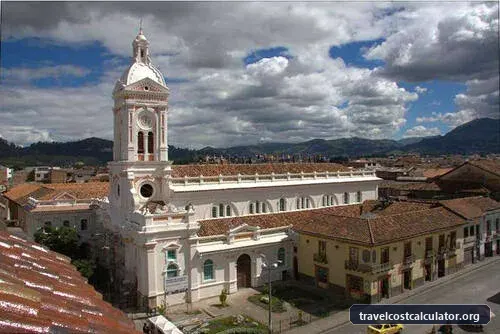
Santa Ana de los Ríos de Cuenca is set in a valley surrounded by the Andean mountains in the south of Ecuador.
Historic Centre of Santa Ana de los Ríos de Cuenca
🏛️ Overview & Historical Significance
Inscribed as a UNESCO World Heritage site in 1999, the Historic Centre of Santa Ana de los Ríos de Cuenca represents one of the finest surviving examples of an inland Spanish colonial city planned according to the Renaissance urban guidelines established by King Charles V. Founded on April 12, 1557, by Spanish conquistador Gil Ramírez Dávalos under the direction of Viceroy Andrés Hurtado de Mendoza Travel Budget, Cuenca was laid out on a rigid orthogonal grid (the traza) that remains remarkably intact to this day.
However, Cuenca’s historical tapestry runs far deeper than its Spanish colonial facade. The city was built directly atop the layers of two major pre-Columbian civilizations: the indigenous Cañari settlement of Guapondelig ("plain as wide as the sky") and the later Inca royal city of Tomebamba, constructed under Emperor Huayna Capac. Remnants of these pre-Hispanic cities, particularly at the Pumapungo Archaeological Park, anchor the southern edge of the UNESCO zone, showcasing a unique historical continuity where indigenous stone foundations support colonial brick and Republican plaster.
The site earned its UNESCO status due to three core criteria:
-
✦
Harmonious Urban Grid: The preservation of its original 16th-century Spanish colonial street layout, seamlessly adapted to the geography of four converging rivers (Tomebamba, Yanuncay, Tarqui, and Machángara).
-
✦
Architectural Fusion: A rare architectural evolution blending 16th-century colonial masonry with late 19th-century and early 20th-century French Republican style, characterized by whitewashed adobe facades, ornate wrought-iron balconies, marble trim, and red-tiled roofs.
-
✦
Cultural Continuity: A living historical center where traditional artisans, indigenous flower merchants, Panama hat weavers, and local markets thrive inside historic structures rather than acting as a static museum.
🎟️ Entrance Fees, Opening Hours & Ticket Booking Tips
Exploring the historic streets, public plazas, and river promenades of Cuenca's UNESCO core is completely free 24/7. However, entering specific historic monuments, cathedral towers, and museums involves small entry fees. Because Ecuador uses the U.S. Dollar (USD) as its official currency, all transaction prices are quoted in USD.
Key Monument & Museum Fees (2026 Rates)
-
✦
Catedral de la Inmaculada Concepción (New Cathedral): Access to the main interior nave is free. Access to the Terrace / Blue Dome Lookout (climbing 155 spiral steps) costs $3.00 USD. Access to the Underground Crypt costs $2.00 USD. Open Monday–Friday 8:00 AM – 4:00 PM, Saturday–Sunday 8:00 AM – 1:30 PM.
-
✦
Catedral Vieja / El Sagrario (Old Cathedral Museum): $2.50 USD for adults, $1.50 USD for seniors/students. Open Tuesday–Sunday 9:00 AM – 5:00 PM.
-
✦
Pumapungo Archaeological Park & Ethnographic Museum: Free entry (sponsored by the Ministry of Culture). Open Tuesday–Friday 8:00 AM – 5:00 PM, Saturday–Sunday 10:00 AM – 4:00 PM.
-
✦
Museo de las Conceptas (Convent Museum of Religious Art): $4.00 USD adults, $2.00 USD students. Open Monday–Friday 9:00 AM – 5:00 PM, Saturday 9:00 AM – 1:00 PM.
-
✦
Museo Municipal de Arte Moderno: Free entry. Open Monday–Friday 8:45 AM – 4:30 PM, Saturday–Sunday 9:00 AM – 2:00 PM.
Pro Booking & Financial Tips for 2026
Advance online booking is generally unnecessary for Cuenca’s historical sites; tickets are purchased at the entrance of each site. However, cash is absolute king. Most small museum desks, cathedral towers, and street vendors do not accept credit cards. Always carry small bill denominations ($1, $5, and $10 bills). Merchants routinely reject $20 bills for small purchases, and $50 or $100 bills are virtually impossible to spend in the historic district.
🚌 How to Get There & Local Transit Costs
Cuenca is located in the southern highlands of Ecuador (Azuay Province). The primary international gateway into Ecuador is Guayaquil Travel Budget (GYE - Jose Joaquín de Olmedo International Airport), which is the closest major transit hub to Cuenca, followed by Quito Travel Budget (UIO).
1. Travel from Guayaquil to Cuenca (Nearest Major Hub)
-
✦
By Executive Shared Shuttle / Shared Van (Recommended): Direct door-to-door or terminal-to-terminal minivan services (such as Operazuaytur or Alianza Transit) run frequently every 30 minutes between Guayaquil and Cuenca. The journey takes 3.5 to 4 hours, passing through the scenic Cajas National Park. Fare: $15.00 – $18.00 USD per seat.
-
✦
By Interprovincial Bus: Buses depart continuously from Guayaquil's Terminal Terrestre to Cuenca’s Terminal Terrestre. Duration: 4 hours. Fare: $10.00 – $12.00 USD.
-
✦
By Domestic Flight: Avianca and LATAM operate direct 40-minute flights from Quito (UIO) and Guayaquil (GYE) into Cuenca's Mariscal La Mar Airport (CUE). One-way fares typically range between $50.00 and $110.00 USD when booked a few weeks in advance.
2. Local Transit within Cuenca
The historic center is exceptionally walkable, but getting across town or arriving from the airport/bus station is easy and inexpensive via the modern light rail system or local taxis:
-
✦
Tranvía de Cuenca (Light Rail): The single cleanest transit option in Ecuador. The route connects the Airport (Aeropuerto station) and the Bus Terminal directly through the edge of the UNESCO historic core along Calle Gran Colombia and Calle Sangurima. Individual rechargeable cards or paper single-ride QR tickets cost $0.35 to $0.50 USD per ride.
-
✦
Official Yellow Taxis: Taxis in Cuenca use meters during the day (minimum fare is $1.75 USD). A taxi ride from Mariscal La Mar Airport directly to Parque Calderón costs between $3.00 and $4.00 USD.
📸 Best Photography Spots & Insider Visit Hacks
Capturing the architectural elegance of Cuenca requires an understanding of its unique light, high altitude (2,560 meters / 8,400 feet), and daily cloud patterns in the Andes.
Top 5 Photography Locations
-
✦
The Dome Terrace of the New Cathedral: Pay the $3 entrance fee to climb the blue-tiled dome tower. From the upper balcony, you get a postcard-perfect view over Parque Calderón framing the sky-blue Czech tile domes against the red roofs of the city.
-
✦
Plaza de las Flores (Flower Market): Located beside the whitewashed El Carmen de la Asunción Church, this market was rated by National Geographic as one of the world's top open-air flower markets. Shoot wide to capture indigenous Cholita vendors surrounded by thousands of vibrant roses.
-
✦
El Barranco & Escalinatas (Tomebamba Riverfront): Stand on the Puente Roto (Broken Bridge) looking back toward the colonial houses perched directly over the cliffside along Calle Larga and the rushing Tomebamba River.
-
✦
Calle Santa Ana: A narrow, atmospheric cobblestone alleyway sandwiched between the New Cathedral and the old Bishop's Palace, lit by wrought-iron streetlamps.
-
✦
Mirador de Turi: Located on a hill south of the city center, reachable by a $3 taxi or local bus. Provides a sweeping panoramic skyline shot of the entire UNESCO historic core, best captured at dusk when the cathedral domes illuminate.
Insider Visit Hacks
-
✦
Ideal Season & Weather: The dry season runs from June through September, featuring crisp blue skies and comfortable daytime temperatures averaging 18°C–21°C (64°F–70°F). However, mountain weather changes rapidly—always pack a lightweight raincoat and dress in layers.
-
✦
Avoiding Crowds at Plaza de las Flores: Arrive between 7:30 AM and 8:30 AM. You will experience the market as local merchants unpack fresh mountain roses before daytime tourist crowds arrive.
-
✦
High Altitude Sun Protection: Due to equatorial proximity and altitude, UV exposure is extreme. Sunscreen (SPF 50+), sunglasses, and a wide-brimmed hat are mandatory, even on overcast days.
🏨 Nearby Accommodation & Daily Budget Allocation
Cuenca is widely considered one of the best value-for-money UNESCO destinations in South America. Visitors can experience restored 19th-century boutique mansions for a fraction of European or North American prices.
2026 Daily Travel Budget Breakdowns
1. Backpacker / Backpacker Budget Planner: $35 – $50 USD per day
-
✦
Lodging: $12 – $18 USD for a dorm bed in a restored colonial hostel (e.g., Selina Cuenca or Hostal La Cigale).
-
✦
Meals: $3.50 – $5.00 USD for a traditional 2-course Almuerzo Ejecutivo (set lunch: soup, main plate, fresh juice) at traditional spots like Mercado 10 de Agosto.
-
✦
Transit & Sights: $1.50 USD for Tranvía rides and self-guided walking tours; visiting free sites like Pumapungo and Parque Calderón.
2. Flashpacker / Mid-Range Budget: $85 – $150 USD per day
-
✦
Lodging: $55 – $95 USD for a private room in a charm-filled boutique hotel housed inside a 19th-century Republican estate (e.g., Hotel San Juan, Posada del Ángel, or Hotel Forum).
-
✦
Meals: $15 – $25 USD per lunch/dinner enjoying contemporary Ecuadorian Andean fusion, artisanal coffee, and local craft breweries along Calle Larga.
-
✦
Transit & Sights: $15 – $25 USD covering paid museum admissions, cathedral dome climbs, and taxis/shuttles.
3. Luxury Heritage Experience: $220 – $450+ USD per day
-
✦
Lodging: $160 – $320 USD per night in top-tier luxury historic properties like Mansión Alcázar Boutique Hotel or Hotel Cruz del Vado.
-
✦
Meals: $40 – $75 USD per person for fine dining experiences (e.g., fine dining Andean tasting menus, wine pairings).
-
✦
Transit & Sights: Private bilingual guided walking tours of the historic center ($80 – $120 USD half-day) and private transport to nearby sights like Cajas National Park.
Frequently Asked Questions
Essential visitor FAQs for Historic Centre of Santa Ana de los Ríos de Cuenca
What is the entrance fee for Historic Centre of Santa Ana de los Ríos de Cuenca?
How much time do you need to explore Historic Centre of Santa Ana de los Ríos de Cuenca?
How do I get to Historic Centre of Santa Ana de los Ríos de Cuenca from the nearest city?
📊 Heritage Quick Specs
Visiting Ecuador on a Budget?
Calculate your full daily travel budget for Ecuador — including hotel costs, local transport, food, and sightseeing expenses.
View Ecuador Daily Travel Costs →Explore more UNESCO World Heritage Sites
🏛️ All 1,200+ Heritage Sites →