
 Bolivia
Fuerte de Samaipata
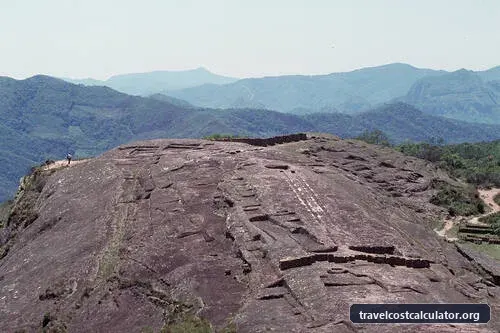
The archaeological site of Samaipata consists of two parts: the hill with its many carvings, believed to have been the ceremonial centre of the old town (14th–16th centuries), and the area to the south of the h...
Fuerte de Samaipata
🏛️ Overview & Historical Significance
Perched high in the misty sub-Andean foothills of Bolivia at an altitude of 1,950 meters (6,400 feet), El Fuerte de Samaipata is one of the most enigmatic archaeological treasures in South America. Recognized as a UNESCO World Heritage site in 1998, this extraordinary complex marks the unique meeting point of three distinct cultural spheres: the Amazonian lowlands, the Andean highlands, and the Gran Chaco.
Contrary to what its Spanish name ("The Fort") suggests, Samaipata was not primarily a military fortress. Instead, it was a major ceremonial, religious, and administrative center. The monument consists of two distinct components:
-
✦
The Ceremonial Hill: A massive red sandstone outcrop measuring roughly 250 meters long by 60 meters wide. It stands as the largest carved rock on Earth. Pre-Incan craftsmen sculpted intricate geometrical patterns, feline figures (jaguars and pumas), serpents, water channels, and ceremonial basins directly into the living rock face.
-
✦
The Administrative and Residential Zone: Located south of the sacred rock, this area contains the structural remnants of an ancient city, featuring stone walls, rectangular dwellings, and a large central plaza (kancha) built during Inca dominance.
The site's history spans over a millennium. Originally established around 300 AD by the Chané people (an Arawak-speaking group), it served as a sacred ritual venue long before the expansion of the Inca Empire. In the late 15th century, the Incas annexed the territory, establishing Samaipata as a crucial provincial capital and frontier outpost to defend against raids from the aggressive Chiriguano (Guaraní) warriors. Later, in the 16th century, Spanish conquistadors briefly occupied the site before moving down into the valley to establish the modern town of Samaipata.
UNESCO granted World Heritage status to Fuerte de Samaipata because it provides exceptional, tangible testimony to pre-Hispanic traditions and spiritual beliefs that have no parallel elsewhere in the Americas. The seamless integration of architectural art into natural rock makes it an irreplaceable monument to human ingenuity.
🎟️ Entrance Fees, Opening Hours & Ticket Booking Tips
Visiting Fuerte de Samaipata in 2026 remains accessible and budget-friendly for international travelers. However, navigating the logistics requires knowing a few key details regarding payments and ticket validation.
2026 Entrance Pricing
-
✦
Foreign Tourists: 50 BOB (~$7.25 USD / €6.70)
-
✦
Bolivian Residents: 25 BOB (~$3.60 USD)
-
✦
Students & Children (with valid ID): 10 BOB (~$1.45 USD)
Opening Hours & Logistics
The archaeological site is open daily from 8:30 AM to 4:30 PM. Note that entry to the trail closes at 4:00 PM to allow visitors to finish the loop before park rangers clear the area.
Essential Ticket Booking & Visit Tips for 2026
-
✦
Dual-Access Ticket: Your entrance ticket to El Fuerte also grants entry to the Centro de Investigaciones Arqueológicas y Antropológicas de Samaipata (the Archaeological Museum) located near the main plaza in Samaipata town. Pro-tip: Visit the museum first. It houses preserved pottery, copper artifacts, and scale models that provide essential context before you step onto the mountain.
-
✦
Cash is Mandatory: There are no working card terminals or cellular network connections reliable enough for electronic payments at the hilltop ticket kiosk. Bring physical cash in Bolivian Bolivianos (BOB), preferably in small denominations (10, 20, and 50 BOB notes), as change for large bills (100 or 200 BOB) is rarely available.
-
✦
No Advance Online Booking Needed: Tickets are purchased in person on the day of your visit at the site entrance kiosk or at the museum in town. There is no risk of tickets selling out.
🚌 How to Get There & Local Transit Costs
The gateway to El Fuerte is the city of Santa Cruz Travel Budget de la Sierra, home to Viru Viru International Airport (VVI). From Santa Cruz, you will first travel to the charming mountain town of Samaipata, located about 120 kilometers (75 miles) to the southwest.
Step 1: Santa Cruz to Samaipata Village
The most popular, reliable, and cost-effective way to travel between Santa Cruz de la Sierra and Samaipata is by shared minivans, locally known as trufis.
-
✦
Departure Point: Trufi terminals are concentrated in Santa Cruz along Avenida Grigotá near the 2nd and 3rd rings (e.g., Transportes Samaipata or El Paisana).
-
✦
Transit Time: 2.5 to 3 hours along the scenic Highway 7, which winds dramatically up into the cloud forests of the Andes.
-
✦
Fare (2026): 35 to 40 BOB (~$5.00 to $5.80 USD) per seat each way. Trufis leave continuously as soon as all 4 to 6 passenger seats fill up.
Step 2: Samaipata Village to El Fuerte
El Fuerte is situated about 10 kilometers (6.2 miles) outside of Samaipata town, up a steep, winding paved road.
-
✦
Local Taxi (Recommended): You can hire a private taxi from the central plaza in Samaipata. Standard round-trip pricing in 2026 ranges from 80 to 120 BOB ($11.50 to $17.00 USD) total per vehicle. This fare includes the driver taking you up, waiting at the parking lot for 2 hours while you explore, and driving you back down. Negotiate the waiting time and price before departing.
-
✦
Shared Taxi: If you are solo, you can often form a group with other travelers at the main square to Split Travel Budget the vehicle cost.
-
✦
On Foot / Trekking: For avid hikers, walking from town takes about 2.5 to 3 hours uphill. Be warned: the trail has minimal shade, intense heat during midday, and steep inclines. Carrying at least 2 liters of water per person is essential.
📸 Best Photography Spots & Insider Visit Hacks
To preserve the delicate red sandstone from erosion caused by foot traffic, walking directly on the carved rock face was permanently prohibited. Today, visitors navigate the site along an elevated wooden boardwalk loop. This infrastructure actually offers elevated vantage points for photography.
Top Photography Spots
-
✦
El Cascabel Viewing Platform: Located on the north side of the monolith, this spot captures the famous parallel zig-zag channels cut into the stone. The geometric lines lead the viewer's eyes down the slope toward the valley below.
-
✦
El Coro de los Sacerdotes (The Choir of Priests): A circular carving located near the top summit featuring deep niche seats carved into the stone perimeter. Photograph this from the higher western overlook for maximum perspective.
-
✦
Southern Valley Panoramic Lookout: At the highest point of the elevated boardwalk, turn around to shoot back toward the mountain range. The contrast between the ancient Inca foundation stones in the foreground and the green sub-Andean mountains in the background creates dramatic, professional-grade compositions.
Insider Travel Hacks & Timing
-
✦
Best Time of Day: Arrive right when the gates open at 8:30 AM or in the late afternoon around 3:00 PM. Morning visits ensure cool temperatures, minimal wind, and complete solitude before tour buses from Santa Cruz arrive around 11:00 AM. Late afternoon offers warm, golden-hour light that highlights the deep red iron oxide in the sandstone carvings.
-
✦
Seasonal Weather (Dry vs. Wet Season): The ideal visiting season runs during the dry winter months from May to October. Days are sunny, skies are clear blue, and humidity is low (daytime temperatures linger around 20°C–24°C / 68°F–75°F). The wet season (November to April) brings heavy downpours that can make boardwalks slippery and cloud cover that hides landscape views.
-
✦
Sun & Wind Gear: High elevation means intense UV exposure. Bring a wide-brim hat, high-SPF sunscreen, polarized sunglasses, and a windbreaker jacket, as the exposed ridge often experiences strong mountain winds.
🏨 Nearby Accommodation & Daily Budget Allocation
Samaipata town offers a laid-back, bohemian atmosphere filled with organic cafes, craft breweries, and eco-lodges. Staying at least one or two nights allows you to comfortably visit El Fuerte and nearby attractions like Amboró National Park.
Recommended Accommodations in Samaipata (2026 Rates)
-
✦
Budget Backpacker: Hostal La Víspera or Jaguar House Hostel. Dorm beds start around 50 – 75 BOB ($7 – $11 USD) per night, featuring communal kitchens, lush gardens, and cozy social areas.
-
✦
Mid-Range Charm: Hotel Plaza Samaipata or La Posada del Sol. Comfortable private double rooms with hot showers, high-speed Wi-Fi, and included breakfast range from 220 – 380 BOB ($32 – $55 USD) per night.
-
✦
Boutique & Eco-Luxury: El Pueblito Resort. Designed like a traditional colonial village overlooking the valley, private stone cottages run from 450 – 700 BOB ($65 – $100 USD) per night.
Dining & Local Food Costs
Food in Samaipata is fresh, delicious, and surprisingly international due to an expat community living alongside local Bolivian families.
-
✦
Budget Local Meals: 15 – 25 BOB ($2.20 – $3.60 USD) for a daily set lunch menu (almuerzo ejecutivo) including soup, main dish, and juice near the central market.
-
✦
Mid-Range / Expat Cafes: 45 – 80 BOB ($6.50 – $11.50 USD) for artisanal pizzas, farm-to-table salads, and local craft beers at popular spots around the main plaza.
Estimated Daily Travel Budgets for 2026
| Travel Style | Daily Budget (USD) | Includes |
|---|---|---|
| Budget Backpacker | $25 – $35 USD | Hostel dorm bed, public trufi transit, street food/market meals, site entrance ticket. |
| Mid-Range Traveler | $65 – $110 USD | 3-star hotel/guesthouse, private round-trip taxi to site, dining at top sit-down cafes, museum entrance. |
| Comfort / Eco-Luxury | $150 – $220 USD | Boutique eco-resort cottage, private driver from Santa Cruz, private English-guided site tour, gourmet dining. |
Frequently Asked Questions
Essential visitor FAQs for Fuerte de Samaipata
What is the entrance fee for Fuerte de Samaipata in 2026?
How much time do you need to explore Fuerte de Samaipata?
How do I get to Fuerte de Samaipata from the nearest city?
📊 Heritage Quick Specs
Visiting Bolivia on a Budget?
Calculate your full daily travel budget for Bolivia — including hotel costs, local transport, food, and sightseeing expenses.
View Bolivia Daily Travel Costs →Explore more UNESCO World Heritage Sites
🏛️ All 1,200+ Heritage Sites →