
 France
Episcopal City of Albi
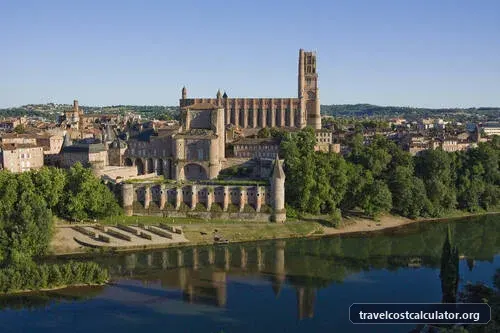
On the banks of the Tarn river in south-west France, the old city of Albi reflects the culmination of a medieval architectural and urban ensemble.
Episcopal City of Albi
🏛️ Overview & Historical Significance
Rising dramatically above the banks of the Tarn River in southern France’s Occitanie region, the Episcopal City of Albi stands as one of the world's most visually striking and historically complex medieval urban landscapes. Recognized as a UNESCO World Heritage site in 2010, Albi’s historic core is an architectural masterpiece constructed almost entirely from local red clay brick (brique albigoise). This signature red-and-pink masonry gives the city its famous moniker, La Cité Pourpre (The Purple City).
The historical weight of Albi is deeply intertwined with the bloody turmoil of the 13th-century Albigensian Crusade. Spearheaded by the Roman Catholic Church and the French Crown, this military campaign sought to eradicate Catharism—a dualist Christian movement widespread throughout the Languedoc region. Following the brutal suppression of the Cathars, the powerful Catholic prince-bishops of Albi reasserted their spiritual and temporal dominance by transforming the urban landscape into an impenetrable ecclesiastical fortress.
At the epicenter of the UNESCO perimeter sits the monolithic Cathédrale Sainte-Cécile, built between 1282 and 1480. Recognized as the largest brick cathedral in the world, its towering, bunker-like exterior was deliberately designed to convey absolute papal authority and deter future heresy. Inside, however, the cathedral presents a stark contrast: a breathtaking Renaissance visual spectacle featuring over 18,500 square meters of intricate vaults, a monumental wall painting of the Last Judgment, and a sculpted white-limestone rood screen.
Adjacent to the cathedral sits the Palais de la Berbie, an 13th-century fortified bishop's palace turned modern museum. Together with the 11th-century Pont Vieux (Old Bridge) and the historic quarter of Saint-Salvi, the Episcopal City represents a extraordinarily preserved example of medieval defensive urban planning and monumental brick Gothic architecture.
🎟️ Entrance Fees, Opening Hours & Ticket Booking Tips
Exploring the open-air streets and public spaces of the Episcopal City is entirely free, but accessing key internal monuments and collections requires individual or combination tickets. Below are the updated estimated rates and opening schedules for 2026:
Cathédrale Sainte-Cécile
-
✦
Main Nave Access: Free for all visitors.
-
✦
Choir Screen & Treasury Ticket: €7.00 EUR (~$7.60 USD) per adult; free for children under 12. Audio guide available for €3.00 EUR (~$3.25 USD).
-
✦
Opening Hours (2026): Open year-round. Summer (June–September): Daily 9:00 AM – 6:30 PM. Winter (October–May): Daily 10:00 AM – 5:40 PM. Sunday morning visits are restricted during mass services.
Musée Toulouse-Lautrec (Palais de la Berbie)
Housed inside the former Bishop's Palace, this museum showcases the world's largest collection of works by Albi-born post-Impressionist painter Henri de Toulouse-Lautrec, alongside modern art and historic palace interiors.
-
✦
Adult Ticket: €12.50 EUR (~$13.50 USD)
-
✦
Reduced Ticket (Students/Seniors): €8.00 EUR (~$8.65 USD)
-
✦
Children (Under 12): Free
-
✦
Opening Hours (2026): May to September: Daily 10:00 AM – 6:00 PM. October to April: Wednesday through Monday 10:00 AM – 12:30 PM and 2:00 PM – 5:30 PM (Closed Tuesdays).
Albi City Pass (Pass Albi Cité)
If you plan to visit both the Cathedral Choir and the Toulouse-Lautrec Museum, purchasing the Albi City Pass is the most economical strategy in 2026. Priced at €16.00 EUR (~$17.30 USD), the pass grants priority entry to both major sites, plus discounts on local guided walking tours, river barge cruises (gabarres), and select artisanal boutiques.
Pro Booking Hacks for 2026
-
✦
Book Online in Peak Season: During July and August, line waits at the Musée Toulouse-Lautrec can exceed 45 minutes. Secure e-tickets via the official destination portal ahead of time to skip ticket desk queues.
-
✦
Sunday Mornings: Entry inside the cathedral nave is prohibited during formal mass services (typically 10:00 AM to 11:30 AM). Plan your interior walkthrough for early afternoon.
-
✦
Palais Gardens Access: The manicured French gardens of the Palais de la Berbie (Jardins de la Berbie) are free to access without entering the museum, offering sweeping views of the Tarn River.
🚌 How to Get There & Local Transit Costs
Albi is situated in the Tarn department of Occitanie, approximately 75 kilometers (46 miles) northeast of Toulouse, the nearest major international transport hub and gateway city.
1. Train Travel from Toulouse (Recommended)
The standard and most convenient way to reach Albi is via SNCF TER regional trains running directly from Toulouse-Matabiau Station to Albi-Ville Station.
-
✦
Frequency: Trains depart roughly every 30 to 60 minutes throughout the day.
-
✦
Journey Time: Approximately 60 to 70 minutes.
-
✦
Cost (2026): One-way adult fare costs approximately €15.00 – €18.00 EUR (~$16.20 – $19.50 USD). Booking 2–3 weeks early via the SNCF Connect app often yields discounted regional promo fares starting at €10.00 EUR.
-
✦
Station Walk: From Albi-Ville station, the Episcopal City center is an easy 12-minute flat walk down Avenue Maréchal Joffre.
2. By Car
Driving from Toulouse to Albi takes approximately 50 to 60 minutes via the A68 autoroute (toll-free motorway section). Parking inside the narrow medieval core is strictly restricted to residents.
-
✦
Recommended Parking: Park at Parking Cathédrale (underground, paid, ~€12.00 EUR / $13.00 USD for a full day) or Parking du Bondidou (surface lot, 10-minute walk, reasonable daily maximums).
-
✦
Free Parking Option: Parking du Séquoia on the north bank of the Tarn provides free parking; walk across the historic Pont Vieux directly into the UNESCO district.
3. Local Transit within Albi
The historic center of Albi is compact and entirely pedestrianized. No public transport is required within the Episcopal zone. However, local buses operated by LibéA service the outer city neighborhoods at €1.20 EUR (~$1.30 USD) per single ride ticket.
📸 Best Photography Spots & Insider Visit Hacks
The contrast between red-brick Gothic architecture and the emerald waters of the Tarn River offers spectacular photographic compositions. To capture Albi like a professional, target these primary viewpoints:
Top Photography Locations
-
✦
Pont Vieux (Old Bridge): Standing on this 11th-century bridge provides the iconic postcard panoramic angle looking up at the towering bulk of Sainte-Cécile Cathedral and the fortified walls of Palais de la Berbie.
-
✦
Jardins du Palais de la Berbie: Position yourself along the upper terrace of these classic 17th-century formal gardens. Capture the contrast between geometric boxwood hedges, the brick bastions, and the Tarn River below.
-
✦
Place Sainte-Cécile: Use a wide-angle lens (16–24mm equivalent) from the open plaza to capture the imposing 78-meter tall bell tower (clocher-donjon) framed against dramatic cloudscapes.
-
✦
Rives du Tarn (Right Bank Walkway): Cross to the northern bank along the Passerelle de la Madeleine or Pont Neuf during sunset to photograph the red brick core glowing under golden-hour light.
Insider Hacks & Timing
-
✦
Optimal Seasons: The ideal months to visit are May to June and September to October. Summer heat (July–August) in southwestern France regularly pushes past 35°C (95°F), making brick streets uncomfortable during mid-day.
-
✦
Beat the Crowds: Tour buses originating from Toulouse usually arrive between 10:30 AM and 11:30 AM. Arrive by 8:30 AM to explore the empty cobblestone lanes of the Castelviel neighborhood before the crowds swell.
-
✦
Summer Night Light Shows: In July and August, Albi hosts night illumination events where historic facades across the Episcopal City are lit with colorful projection mapping.
🏨 Nearby Accommodation & Daily Budget Allocation
Staying overnight in Albi allows travelers to experience the calm, illuminated atmosphere after day-tripping crowds depart. Options range from converted historic townhouses to modern riverside stays.
Accommodation Options (2026 Estimated Rates)
-
✦
Budget / Hostels: Gîte d'étape or Budget B&B – Shared or basic private rooms within 15 minutes of the center. €45 – €70 EUR (~$48 – $75 USD) per night.
-
✦
Mid-Range Hotels: Hotel Mercure Albi Bastides (housed in an old 18th-century mill along the river with Cathedral views) or charming boutique options like Hôtel Renaissance. €110 – €180 EUR (~$120 – $195 USD) per night.
-
✦
Luxury / Heritage: La Réserve Table & Châteaux or historic Hôtels Particuliers offering high-end amenities, private pools, and fine dining. €260 – €450+ EUR (~$280 – $485+ USD) per night.
Local Gastronomy & Dining Costs
Albi’s regional cuisine is rich and hearty, heavily influenced by Occitan tradition. Don't leave without sampling local specialties such as Cassoulet albigois (slow-cooked bean and meat stew), dishes seasoned with Pink Garlic of Lautrec, and wines from the nearby ancient Gaillac wine region.
-
✦
Casual Lunch (Prix Fixe Menu du Jour): €16.00 – €22.00 EUR (~$17.30 – $23.80 USD) per person for 2–3 courses.
-
✦
Mid-Range Dinner with Local Gaillac Wine: €35.00 – €55.00 EUR (~$38.00 – $60.00 USD) per person.
-
✦
Espresso / Bakery Snack: €2.50 – €5.00 EUR (~$2.70 – $5.40 USD).
Daily Budget Allocation Summary (Per Person, 2026 Estimates)
-
✦
Backpacker / Budget Traveler: €65 – €90 EUR (~$70 – $98 USD) per day (hostel/gîte, street food/lunch deals, walk/public transit, Albi City Pass).
-
✦
Mid-Range Traveler: €160 – €240 EUR (~$173 – $260 USD) per day (3-star hotel, full-service dining, regional train, museum fees & guided tour).
-
✦
Luxury Traveler: €400+ EUR (~$435+ USD) per day (4/5-star boutique stay, fine dining with wine pairings, private transport, private guide).
Frequently Asked Questions
Essential visitor FAQs for Episcopal City of Albi
What is the entrance fee for Episcopal City of Albi?
How much time do you need to explore Episcopal City of Albi?
How do I get to Episcopal City of Albi from the nearest city?
📊 Heritage Quick Specs
Visiting France on a Budget?
Calculate your full daily travel budget for France — including hotel costs, local transport, food, and sightseeing expenses.
View France Daily Travel Costs →Explore more UNESCO World Heritage Sites
🏛️ All 1,200+ Heritage Sites →