
 Mongolia
Deer Stone Monuments and Related Bronze Age Sites
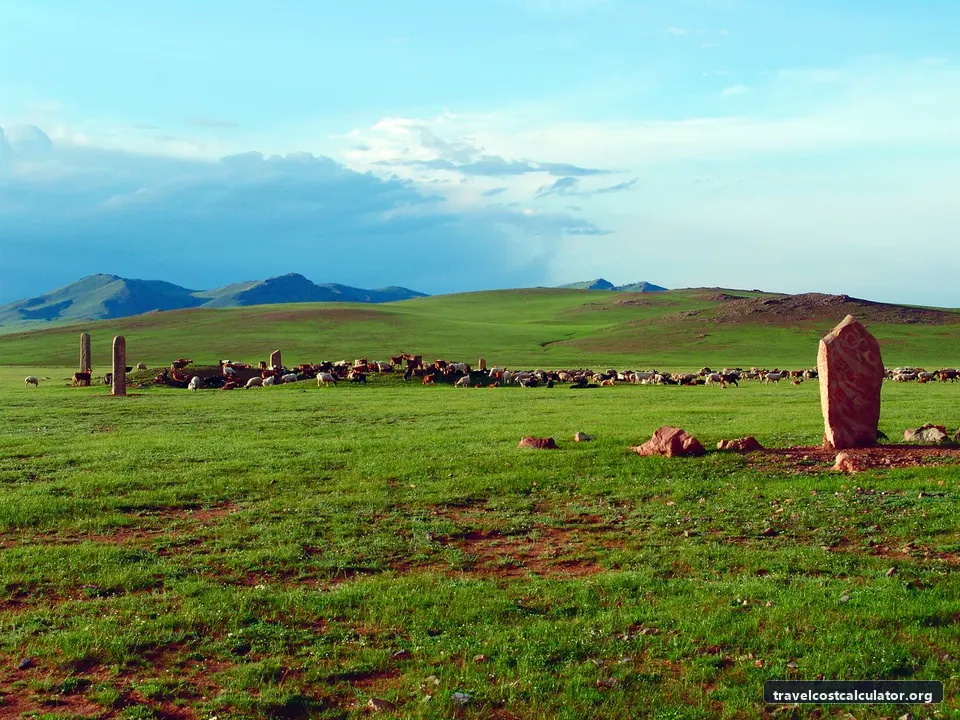
Located on the slopes of the Khangai Ridge in central Mongolia, these deer stones were used for ceremonial and funerary practices.
Deer Stone Monuments and Related Bronze Age Sites
🏛️ Overview & Historical Significance
Standing as silent sentinels across the wind-swept steppes of northern and central Mongolia, the Deer Stone Monuments and Related Bronze Age Sites represent one of the most mysterious and visually arresting cultural landscapes in Inner Asia. Inscribed as a UNESCO World Heritage Site in September 2023, this serial property encompasses four primary locations: Uushgiin Uver, Jargalantyn Am, Urtyn Bulag, and Khoid Tsenkher Gol. Dating predominantly from the late Bronze Age to early Iron Age (c. 1200 to 700 BCE), these ancient monuments offer an unparallelled glimpse into the spiritual rituals, social structures, and artistic prowess of prehistoric nomadic pastoralists.
The term "deer stones" (known locally as bugan khallo) derives from the exquisite, highly stylized carvings of flying stags engraved into massive megalithic granite and sandstone blocks. Reaching heights of up to 4 meters, these standing stones feature intricate motifs divided into three distinct vertical zones: an upper section showing sun-disks, moons, and human faces; a central body populated by graceful, long-snouted deer soaring skyward; and a lower belt section adorned with detailed weaponry, including daggers, bows, shields, and mirrors.
UNESCO elevated these monuments to World Heritage status due to their outstanding universal value as central components of late Bronze Age burial and sacrificial complexes (known as khirigsuurs). Surrounded by hundreds of satellite stone cairns containing horse sacrifices, the deer stones were not graves themselves, but rather sacred conduits bridging the earthly realm with the sky deity. For modern travelers exploring Mongolia in 2026, visiting these megaliths provides a profound connection to the origin story of Eurasian steppe culture.
🎟️ Entrance Fees, Opening Hours & Ticket Booking Tips
Unlike tightly controlled urban museums, Mongolia’s deer stone complexes are set within open, living cultural landscapes. However, key managed sites—most notably Uushgiin Uver—have introduced environmental preservation infrastructure and ranger ticket gates to protect the delicate rock art.
Estimated 2026 Entrance Costs
-
✦
Uushgiin Uver Visitor Site Entrance: 15,000 MNT – 20,000 MNT (~$4.30 – $5.80 USD) per adult.
-
✦
Child / Student Ticket (with ID): 5,000 MNT (~$1.45 USD).
-
✦
Camera / Professional Photography Fee: Included with general admission (drone permits must be arranged via the Mongolian Civil Aviation Authority in advance).
-
✦
Remote Sites (Jargalantyn Am & Khanui Valley): Free admission, though local soum (district) environmental protection fees of ~10,000 MNT (~$2.90 USD) per vehicle may occasionally apply.
Opening Hours & Access Logistics
-
✦
Operating Hours: Managed sites like Uushgiin Uver operate daily from 08:00 to 20:00 between May 1 and October 15. Unfenced open-steppe sites are accessible 24/7 year-round.
-
✦
Ticket Booking Tips: There is no online ticketing system for deer stone sites. All tickets must be purchased on-site in cash using local Mongolian Tögrög (MNT). Credit card readers are unreliable or nonexistent in rural provinces. Always carry small bills (1,000, 5,000, and 10,000 MNT notes).
🚌 How to Get There & Local Transit Costs
The primary launchpad for exploring Mongolia’s finest deer stones (specifically Uushgiin Uver, located just 20 km west of town) is Mörön, the capital city of Khövsgöl Aimag in northern Mongolia.
Step 1: Transport from Ulaanbaatar Travel Budget to Mörön
-
✦
By Domestic Flight (Fastest): Aero Mongolia and Hunnu Air operate daily 1.5-hour domestic flights from Ulaanbaatar’s Chinggis Khaan International Airport (UBN) to Mörön Airport (MRN) during peak season (June–September). 2026 Estimated Return Fare: $240 – $340 USD (830,000 – 1,180,000 MNT).
-
✦
By Long-Distance Bus (Budget Option): Comfortable public overland buses depart daily from Ulaanbaatar’s Dragon Bus Terminal to Mörön. The trip covers roughly 670 km on paved roads and takes 12 to 14 hours. 2026 Ticket Price: ~60,000 MNT (~$17.50 USD) one way.
Step 2: Reaching the Deer Stones from Mörön
-
✦
Private 4x4 / Driver Hire (Recommended): Renting a Russian UAZ Furgon van or a Land Cruiser with a local driver in Mörön is the standard method. A half-day trip to Uushgiin Uver costs approximately 120,000 – 180,000 MNT (~$35 – $52 USD) per vehicle total, making it very economical for groups.
-
✦
Taxi Transfer: Local taxis in Mörön can be negotiated for the short 20 km round-trip out to Uushgiin Uver. Expect to pay around 80,000 – 100,000 MNT (~$23 – $29 USD) including driver wait time while you explore.
📸 Best Photography Spots & Insider Visit Hacks
Prime Photography Spots & Angles
-
✦
The Human-Faced Deer Stone (Uushgiin Uver): Among the 14 megaliths standing in a row at Uushgiin Uver, stone #14 is world-famous. It is the only deer stone in existence featuring a fully carved human head crowned with a cap and ear rings at the top. Frame your photo facing east toward the rising sun.
-
✦
Low-Angle Relief Shots: Position yourself at a 45-degree angle to the carvings during side-lighting hours. This brings out the deep relief of the flying deer and curved daggers that vanish under high midday overhead sun.
-
✦
Wide-Angle Steppe Vistas: Use a wide lens (16-35mm) to capture the linear arrangement of the stone sentinels against the backdrop of the rugged Khövsgöl mountain ranges and sweeping grassland.
Lighting & Seasonal Timing Hacks
-
✦
The Golden Hour Advantage: Visit during sunrise (06:00 – 08:00) or late afternoon (17:30 – 19:30). Direct midday sunlight flattens the shallow petroglyph engravings, making them difficult to see or photograph. Low-angle morning and evening light creates crisp shadows within the carvings.
-
✦
Optimal Visit Window: The travel season runs from late May through mid-September. July is ideal as lush green grass contrasts brilliantly with the red-granite stones, coincided with the regional Naadam Festival events in Mörön.
-
✦
Etiquette & Conservation Rules: Never touch or lean against the stones. Oils from human skin accelerate lichen growth and degrade the ancient surface. Do not climb on surrounding stone cairns (khirigsuurs), as these remain sacred ancestral sites for local herders. Walk clockwise around any sacred ovoo (shamanic stone mounds nearby).
🏨 Nearby Accommodation & Daily Budget Allocation
Travelers visiting the deer stones typically base themselves in Mörön or stay in seasonal Tourist Ger Camps dotting the countryside toward Lake Khövsgöl.
Accommodation Options
-
✦
Budget Hostels & Guesthouses (Mörön): Local guesthouses like MS Guesthouse offer basic private rooms and dormitory beds with shared bathrooms. Cost: 45,000 – 90,000 MNT (~$13 – $26 USD) per night.
-
✦
Mid-Range Hotels (Mörön City): Properties like 50°100° Hotel or Tumen Hotel offer modern amenities, ensuite bathrooms, Wi-Fi, and breakfast. Cost: 180,000 – 300,000 MNT (~$52 – $87 USD) per night.
-
✦
Authentic Tourist Ger Camps (Countryside): Traditional felt tent accommodations featuring hot showers, local meals, and campfire evenings near the Delgermörön River. Cost: 220,000 – 400,000 MNT (~$64 – $116 USD) per person, per night (includes 3 daily meals).
Estimated Daily Travel Budget (2026 Rates)
| Traveler Style | Estimated Daily Cost (USD) | Cost Breakdown & Details |
|---|---|---|
| Backpacker / DIY Budget | $35 – $55 USD | Public bus travel, shared guesthouse room, dining at local canteen (tsainy gazar), Split Travel Budget taxi fare to sites. |
| Mid-Range Explorer | $120 – $210 USD | Domestic flight allocation, mid-range city hotel or Ger camp, private 4x4 vehicle rental with driver, site entrance fees. |
| Luxury / Tailored Private Tour | $350 – $550+ USD | Private guided expedition in a premium 4x4, luxury Ger camp suites, private chef, flight transfers, all-inclusive tour logistics. |
Frequently Asked Questions
Essential visitor FAQs for Deer Stone Monuments and Related Bronze Age Sites
What is the entrance fee for Deer Stone Monuments and Related Bronze Age Sites?
How much time do you need to explore Deer Stone Monuments and Related Bronze Age Sites?
How do I get to Deer Stone Monuments and Related Bronze Age Sites from the nearest city?
📊 Heritage Quick Specs
Visiting Mongolia on a Budget?
Calculate your full daily travel budget for Mongolia — including hotel costs, local transport, food, and sightseeing expenses.
View Mongolia Daily Travel Costs →Explore more UNESCO World Heritage Sites
🏛️ All 1,200+ Heritage Sites →