
 Spain
Cultural Landscape of the Serra de Tramuntana
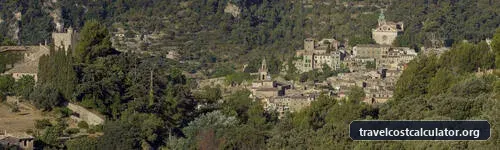
The Cultural Landscape of the Serra de Tramuntana located on a sheer-sided mountain range parallel to the north-western coast of the island of Mallorca.
Cultural Landscape of the Serra de Tramuntana
🏛️ Overview & Historical Significance
Inscribed as a UNESCO World Heritage site in 2011 under the Cultural Landscape category, the Cultural Landscape of the Serra de Tramuntana forms the majestic, mountainous backbone of northwestern Mallorca. Spanning nearly 90 kilometers (56 miles) from Andratx in the southwest to Cap de Formentor in the northeast, this dramatic range covers approximately 30% of the island's total land area (over 1,000 square kilometers). Rather than being merely a natural wonder, the Tramuntana was awarded World Heritage status as an extraordinary testimonial to the interaction between human ingenuity and a challenging, water-scarce Mediterranean environment over more than two millennia.
The core of the site's historical significance lies in its transformative agricultural engineering, perfected during the period of Islamic rule (between the 10th and 13th centuries) and maintained through post-Reconquest feudal traditions. To cultivate the sheer, rocky mountain slopes, historical farmers engineered an intricate network of dry stone terraces (known locally as marjades). Constructed completely without mortar, these dry stone walls created arable agricultural plots out of steep mountain faces, preventing soil erosion and maximizing rainfall retention. UNESCO also recognized the range's historic dry stone masonry technique (pedra en sec) on its Representative List of the Intangible Cultural Heritage of Humanity.
Complementing these terraces is a sophisticated hydraulic system designed to capture, store, and distribute scarce mountain water. Arab engineers introduced advanced irrigation infrastructure, including underground water channels (qanats), stone aqueducts, storage basins (safareigs), and waterwheels. This system turned arid valleys into verdant orchards of olive trees—some over a thousand years old—along with citrus, almond, and fig groves.
Beyond its agricultural architecture, the Serra de Tramuntana boasts a profound cultural and artistic legacy. For centuries, its isolated monasteries, defense towers (talaies built against Barbary pirate raids), and stone-built villages like Valldemossa, Deià, Sóller, and Fornalutx have served as sanctuaries for international writers, artists, and musicians. Most notably, composer Frédéric Chopin and writer George Sand spent a famous winter in the Royal Charterhouse of Valldemossa in 1838–1839, while poet Robert Graves made Deià his lifelong home, solidifying the region's place in global cultural history.
🎟️ Entrance Fees, Opening Hours & Ticket Booking Tips
Because the Serra de Tramuntana is a living, vast regional mountain range and cultural landscape, there is no single overarching entrance fee or main gate to access the landscape itself. Visitors are free to drive the scenic MA-10 mountain highway, hike the celebrated GR221 trail (The Dry Stone Route), and explore the mountain villages without paying a site-wide entry pass. However, key historical landmarks, historic estates, gardens, and heritage transport lines located within the landscape charge individual admission fees.
Key Heritage Sites & Attraction Costs (Estimated 2026 Rates)
-
✦
Real Cartuja de Valldemossa (Valldemossa Charterhouse & Chopin Cell): Ticket Price: €13.50 – €15.00 (~$14.50 – $16.50 USD). Opening Hours: Daily 10:00 AM – 5:00 PM (Winter 10:00 AM – 4:00 PM). Includes access to the monastery cells, Chopin museum, old pharmacy, and palace.
-
✦
Jardines de Alfabia (Bunyola): Ticket Price: €10.00 – €11.50 (~$11.00 – $12.50 USD). Opening Hours: 10:00 AM – 6:30 PM (Open March through November). A classic estate featuring historic Moorish-inspired water gardens and period architecture.
-
✦
Son Marroig Estate & Sa Foradada Viewpoint (Deià): Ticket Price: €5.00 (~$5.50 USD). Opening Hours: Monday to Saturday 9:30 AM – 6:00 PM (Closed Sundays). Former residence of Archduke Ludwig Salvator offering museum access and cliffside garden walks.
-
✦
Santuari de Lluc (Lluc Monastery, Escorca): Ticket Price: Basilica entry is free; Sanctuary Museum pass is €5.00 (~$5.50 USD). Vehicle Parking: €6.00 (~$6.50 USD) flat daily fee for cars. Sanctuary open daily 8:30 AM – 7:00 PM.
-
✦
Ferrocarril de Sóller (Historic Palma to Sóller Wooden Train): Ticket Price: Train one-way €20.00 (~$21.50 USD); Combined Train + Sóller Tram Round-Trip €38.00 (~$41.00 USD). Schedules: Departs Palma multiple times daily between 10:10 AM and 6:40 PM.
-
✦
GR221 Network Refuges (Public Mountain Huts): Dorm Bed Rate: €15.00 – €19.00 (~$16.00 – $20.50 USD) per night per person. Breakfast/dinner options available for an additional €8 – €18.
Insider Booking & Financial Savings Tips
-
✦
Pre-Book Vintage Train Passes: The historic Tren de Sóller sells out quickly during peak months (April–October). Purchase your combined train-and-tram ticket online via the official Ferrocarril de Sóller portal at least 48 hours in advance.
-
✦
Use Contactless Payment for Public Transit: If exploring by public TIB bus, pay directly on the bus using your contactless credit/debit card. TIB offers tiered discounts for using contactless cards (up to 40% cheaper than buying paper tickets from the driver). Up to 5 passengers can tap in on a single credit card for group discounts.
-
✦
Reserve GR221 Refuges Early: Hikers walking the Dry Stone Route should reserve overnight beds via the Consell de Mallorca official mountain refuge portal 2 to 3 months prior to arrival, as capacity is strictly limited to preserve the natural surroundings.
🚌 How to Get There & Local Transit Costs
The primary transit gateway to the Serra de Tramuntana is Palma de Mallorca, the capital city located on the south side of the island. Palma's Palma de Mallorca Airport (PMI) is well-connected globally and sits roughly 20 to 45 minutes by road from the southern edge of the mountain range.
1. Public Bus Network (TIB - Transport de les Illes Balears)
Mallorca operates an efficient, air-conditioned regional bus system departing directly from Palma's subterranean transit station, Estació Intermodal at Plaça d'Espanya. This is the most cost-effective way to travel into the Tramuntana.
-
✦
Line 203 (Palma – Valldemossa – Deià – Sóller): The quintessential scenic route through the heart of the Tramuntana. Cost (Contactless Card): ~€3.60 – €5.40 (~$3.90 – $5.80 USD). Travel Time: 30 mins to Valldemossa, 45 mins to Deià, 70 mins to Sóller.
-
✦
Line 204 (Palma – Port de Sóller Express): Travels through the mountain tunnel directly to Sóller. Cost (Contactless Card): ~€3.60 (~$3.90 USD). Travel Time: 35 minutes.
-
✦
Line 302 & 334 (Palma/Alcúdia – Pollença – Formentor): Accesses the northern Tramuntana peak and cape. Cost: ~€3.00 – €4.50 (~$3.25 – $4.90 USD). Note: Seasonal shuttle buses strictly operate between Port de Pollença and Cap de Formentor during summer months.
2. Historic Wooden Train (Ferrocarril de Sóller)
For a romantic travel experience, take the narrow-gauge wooden train dating back to 1912. It departs from its dedicated station next to Plaça d'Espanya in Palma, winding through olive groves, pine forests, and thirteen mountain tunnels before descending into the Sóller valley.
-
✦
Fare: €28.00 one-way (~$30.00 USD) or €38.00 (~$41.00 USD) for a combined round-trip train ticket that includes the open-air wooden tram from Sóller down to Port de Sóller.
3. Car Rental (Self-Drive via MA-10 Highway)
Renting a car offers the ultimate flexibility to stop at hidden mountain lookouts and remote trailheads. The main artery is the spectacular MA-10 highway, which traverses the full length of the mountain range.
-
✦
Rental Costs (2026 rates): Expect to pay €30 – €65 (~$32 – $70 USD) per day for a compact manual car in high season; winter rates can drop to €15 – €30 per day.
-
✦
Driving Conditions & Parking: The MA-10 is filled with hairpin turns, narrow passages, cyclists, and mountain goats. Rent a compact car to easily navigate tight village streets. Paid parking lots in Valldemossa, Deià, and Fornalutx cost roughly €2.00 – €3.50 per hour (€10 – €18 for a full day).
4. Taxis & Private Transfers
-
✦
Palma to Valldemossa Taxi: ~€35.00 – €45.00 (~$38 – $48 USD).
-
✦
Palma to Deià Taxi: ~€55.00 – €70.00 (~$60 – $76 USD).
-
✦
Palma Airport to Sóller Transfer: ~€65.00 – €85.00 (~$70 – $92 USD).
📸 Best Photography Spots & Insider Visit Hacks
Top Photography Spots
-
✦
Mirador de Sa Foradada (Deià): Located along the MA-10 between Valldemossa and Deià, this famous lookout overlooks a dramatic rocky peninsula pierced by a massive 18-meter natural hole. It is renowned as the single best sunset photography location on Mallorca.
-
✦
Torrent de Pareis & Sa Calobra: A world-famous coastal canyon featuring sheer 200-meter limestone cliffs framing a hidden pebble beach. Access requires driving the breathtaking MA-2141 road—complete with the 270-degree hairpin loop known as the Nus de Sa Corbat ("Tie Knot")—or arriving via passenger ferry from Port de Sóller.
-
✦
Mirador des Colomer & Cap de Formentor: Perched on the northernmost tip of the island, this spot offers dizzying vertical drop-offs straight down into the turquoise waters of the Mediterranean. Photograph the dramatic lighthouse set against jagged sea stacks.
-
✦
The Citrus Orchards of Fornalutx: Often voted Spain’s most beautiful village, Fornalutx provides picture-perfect vistas of cobblestone staircases, stone houses adorned with colorful pots, and sweeping backdrops of citrus-laden mountain terraces.
-
✦
Gorg Blau and Cúber Reservoirs: High-altitude artificial lakes lying beneath the shadow of Puig Major (Mallorca's highest peak at 1,445m). The contrast of still mountain waters against rugged limestone cliffs is striking during early morning light.
Insider Hacks & Crowd Avoidance Strategies
-
✦
Respect Summer Traffic Restrictions at Cap de Formentor: To protect the ecosystem and prevent gridlock, private cars are strictly restricted on the road between Port de Pollença and Cap de Formentor daily between 10:00 AM and 7:00 PM from mid-June to September. Take the official shuttle bus (TIB Line 334) from Port de Pollença instead.
-
✦
Beat the Tour Buses at Sa Calobra: Large tour buses arrive at Torrent de Pareis around 11:30 AM and stay until 3:00 PM. Arrive before 9:30 AM to photograph the canyon and gorge in peaceful solitude, or visit late in the afternoon when light cascades directly down into the canyon walls.
-
✦
Optimal Seasons: The ideal time to visit the Tramuntana is during the shoulder seasons of April to May and September to October. Spring brings blooming orange trees and lush green terraces, while autumn offers warm sea temperatures and pleasant hiking conditions (averaging 18°C to 24°C / 64°F to 75°F). Summer (July–August) brings heavy heat and crowded mountain roads.
-
✦
Trail Etiquette & Intangible Heritage: Many dry stone terraces are located on private farmland. Always stay on marked trails (especially along the GR221), close all wooden gates behind you to keep livestock contained, and refrain from climbing on historic dry stone walls, which take master craftsmen (margers) days to repair.
🏨 Nearby Accommodation & Daily Budget Allocation
Accommodation in the Serra de Tramuntana spans a wide spectrum, from rustic mountain refuges designed for long-distance hikers to world-famous luxury retreats built inside converted 16th-century country estates (possessions).
Accommodation Recommendations
-
✦
Budget Level ($20 – $80 USD / €18 – €75 per night): Stay in the public GR221 mountain refuges (such as Refugi de Muleta in Port de Sóller or Refugi de Tossals Verds) for ~$20 USD/night. Alternatively, look for budget guesthouses or private rooms in larger hubs like Pollença town or central Sóller.
-
✦
Mid-Range Level ($140 – $280 USD / €130 – €260 per night): Opt for boutique stone hotels in Valldemossa or historic townhouses in Fornalutx and Sóller. Examples include charming bed-and-breakfasts offering localized terrace breakfasts and central access to hiking paths.
-
✦
Luxury Level ($500 – $1,300+ USD / €460 – €1,200+ per night): Experience iconic luxury agroturismo retreats such as Belmond La Residencia in Deià or restored mountain estates like Gran Hotel Sóller and Son Brull Hotel & Spa near Pollença.
Daily Food & Dining Budget Estimates
-
✦
Budget Meals (€10 – €18 / ~$11 – $20 USD per meal): Enjoy classic local dishes like pa amb oli (rustic bread rubbed with ramallet tomatoes, olive oil, and topped with Serrano ham or local cheeses), empanadas (savory meat pies), or an ensaimada pastry with coffee at village bakeries. Look for daily lunch specials (menú del día) in local mountain taverns.
-
✦
Mid-Range Dining (€30 – €60 / ~$33 – $65 USD per person): Dine on local mountain lamb, fresh red prawns from Sóller (gambas de Sóller), and local Mediterranean rice dishes paired with Mallorcan wines from the nearby Binissalem region.
-
✦
High-End Dining (€90 – €200+ / ~$98 – $215+ USD per person): Indulge in Michelin-starred and fine-dining establishments in Deià or luxury estate restaurants offering multi-course tasting menus focused on hyper-local olive oil, mountain herbs, and seafood.
Daily Budget Allocation Breakdown
| Traveler Profile | Daily Budget (EUR) | Daily Budget (USD) | Typical Breakdown |
|---|---|---|---|
| Budget Backpacker / Hiker | €50 – €85 | $55 – $92 | GR221 refuge dorm bed (€18), public TIB bus transit (€8), bakery lunch & market supplies (€20), museum entry (€9). |
| Mid-Range Explorer | €170 – €320 | $185 – $350 | Boutique village hotel (€150/night shared), rental car Split Travel Budget + parking (€40), mid-range lunches/dinners (€70), museum & historic train entries (€40). |
| Luxury Traveler | €600 – €1,400+ | $650 – $1,520+ | Luxury estate resort (€500–€1000+), private SUV rental/transfers (€120), high-end seafood dining & wine tasting (€180), private guided mountain tour (€150). |
Frequently Asked Questions
Essential visitor FAQs for Cultural Landscape of the Serra de Tramuntana
What is the entrance fee for Cultural Landscape of the Serra de Tramuntana?
How much time do you need to explore Cultural Landscape of the Serra de Tramuntana?
How do I get to Cultural Landscape of the Serra de Tramuntana from the nearest city?
📊 Heritage Quick Specs
Visiting Spain on a Budget?
Calculate your full daily travel budget for Spain — including hotel costs, local transport, food, and sightseeing expenses.
View Spain Daily Travel Costs →Explore more UNESCO World Heritage Sites
🏛️ All 1,200+ Heritage Sites →