
 Israel
Caves of Maresha and Bet-Guvrin in the Judean Lowlands as a Microcosm of the Land of the Caves
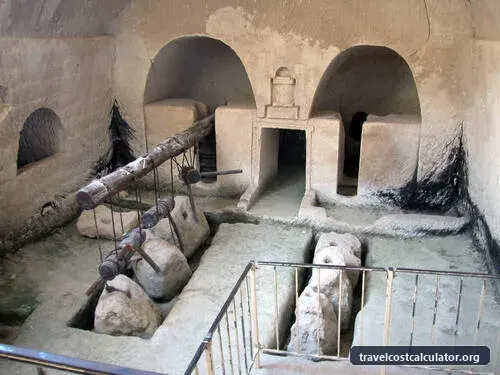
The archaeological site contains some 3,500 underground chambers distributed among distinct complexes carved in the thick and homogenous soft chalk of Lower Judea under the former towns of Maresha and Bet Guvrin.
Caves of Maresha and Bet-Guvrin in the Judean Lowlands as a Microcosm of the Land of the Caves
🏛️ Overview & Historical Significance
Inscribed as a UNESCO World Heritage site in 2014, the Caves of Maresha and Bet-Guvrin in the Judean Lowlands as a Microcosm of the Land of the Caves represents one of the most astonishing subterranean architectural landscapes in the Mediterranean basin. Located in the rolling chalk hills of the Shephelah (Judean Lowlands), this site encompasses a vast underground city carved beneath the twin ancient towns of Maresha and Bet-Guvrin.
For over two millennia—from the 8th century BCE through the Crusader period—human societies exploited the unique geology of the soft, homogeneous chalk rock beneath a hard outer crust ("nari"). Rather than building exclusively above ground, inhabitants dug downward to create over 3,500 subterranean chambers interconnected by an intricate network of passageways. These man-made caverns served virtually every function of civil life:
-
✦
Columbaria (Dovecotes): Underground halls lined with thousands of small niches designed for raising pigeons for meat, fertilizer, and ritual sacrifice.
-
✦
Industrial Olive Oil Presses: Massive subterranean complexes where olive oil was processed at stable temperatures away from summer heat.
-
✦
Water Cisterns & Aqueducts: Immense underground reservoirs that collected seasonal rainwater, ensuring survival during dry sieges.
-
✦
Necropolises & Hellenistic Tombs: Painted burial chambers cut into the rock, notably the Sidonian tombs featuring vivid frescoes of mythical beasts and animals.
-
✦
Bell Caves & Quarries: Colossal cathedral-like bell-shaped caves excavated during the Early Islamic period to harvest building stone for coastal cities like Ashkelon.
As a UNESCO World Heritage site, Maresha-Bet Guvrin stands out as an unparalleled example of human adaptation to physical geography. It offers visitors a rare window into the Hellenistic, Roman, Byzantine, and Crusader eras, earning its nickname as the ultimate "Land of the Caves."
🎟️ Entrance Fees, Opening Hours & Ticket Booking Tips
The site is managed by the Israel Nature and Parks Authority (INPA). Visitors are strongly advised to check entry conditions in advance, as time-slot reservations are often required during peak travel periods.
2026 Admission Prices
-
✦
Adult Ticket: 38 Nis Travel Budget (approx. $10.50 USD)
-
✦
Child Ticket (Ages 5–17): 20 NIS (approx. $5.50 USD)
-
✦
Senior Citizen (Israeli Resident): 19 NIS (approx. $5.20 USD)
-
✦
Students (with valid ID): 33 NIS (approx. $9.00 USD)
The Israel Pass & Multi-Park Saver Cards
If your 2026 Israel itinerary includes multiple heritage sites (such as Masada, En Gedi, or Caesarea), purchase an official Israel Pass or an INPA Multi-Site Pass. A 3-site pass costs roughly 85 NIS ($23 USD), saving you up to 25% on combined entry fees.
Operating Hours
-
✦
Summer Hours (April – September): Sunday to Thursday & Saturday: 8:00 AM – 5:00 PM. Fridays and Holiday Eves: 8:00 AM – 4:00 PM.
-
✦
Winter Hours (October – March): Sunday to Thursday & Saturday: 8:00 AM – 4:00 PM. Fridays and Holiday Eves: 8:00 AM – 3:00 PM.
Note: Entrance closes one hour before the park closing time.
Booking Tips
Reserve your entry window on the official INPA online portal prior to arrival, particularly if visiting on weekends (Friday/Saturday) or during Jewish holidays (Passover in April, Sukkot in October). Online booking guarantees access even if the park reaches daily capacity limits.
🚌 How to Get There & Local Transit Costs
Maresha-Bet Guvrin National Park is located in south-central Israel, roughly 50 km (31 miles) southwest of Jerusalem Travel Budget and 60 km (37 miles) southeast of Tel Aviv Travel Budget.
Option 1: By Rental Car (Recommended)
Driving is by far the most convenient option, allowing you to easily cross between the Southern Section (Maresha / Bell Caves) and the Northern Section (Roman Amphitheater / Crusader Fortress) across Route 35.
-
✦
From Tel Aviv: Take Highway 6 South to Route 35 East at the Kiryat Gat Interchange. Follow signs for Bet Guvrin. Drive time: ~50–60 minutes.
-
✦
From Jerusalem: Take Highway 1 West to Route 38 South through Beit Shemesh, connecting to Route 35 West. Drive time: ~50 minutes.
-
✦
Rental Cost (2026): Compact car rentals in Tel Aviv/Jerusalem average $35 – $55 USD per day plus gas (approx. 7.20 NIS per liter / $7.40 USD per gallon). Parking inside the national park is free.
Option 2: By Public Transit (Train + Bus)
Public transportation in Israel requires a rechargeable Rav-Kav card or an authorized transit app (such as HopOn or Moovit).
-
✦
Take the Israel Railways train from Tel Aviv (Savidor/HaShalom) or Jerusalem (Navon) to Kiryat Gat Station. (Train fare: approx. 16–22 NIS / $4.40–$6.00 USD; 40–50 mins).
-
✦
At the Kiryat Gat Central Bus Station (adjacent to the train terminal), take Bus 240 or Bus 250 operated by Afikim/Metropoline heading toward Bet Guvrin.
-
✦
Disembark at the Bet Guvrin Junction / Maresha Park entrance stop. (Bus fare: approx. 6–8 NIS / $1.65–$2.20 USD; 20 mins).
Option 3: Taxi / Private Transfer
A direct taxi ride from Kiryat Gat station to the park entry costs roughly 75–95 NIS ($20–$26 USD) one way. Confirm meter activation or pre-arrange the fare using the Gett app.
📸 Best Photography Spots & Insider Visit Hacks
Top Photography Locations
-
✦
The Bell Caves (Cathedral Caves): The quintessential postcard shot of the park. Shoot looking upward into the roof apertures where sunbeams pierce through circular openings, illuminating the chalk dust and soaring 15-meter beige walls.
-
✦
The Sidonian Tomb of Apollophanes: Capture the striking reconstructed wall paintings featuring wild animals, mythical creatures, and funerary motifs carved directly into subterranean niches. Use a wide-angle lens.
-
✦
The Columbarium Cave (Pigeon House): Position yourself at the end of the cross-shaped cavern to frame hundreds of uniform carved square niches stretching into the shadowed corridor.
-
✦
The Roman Amphitheater (Northern Complex): Capture the stone arches of the 2nd-century Roman gladiatorial arena against the backdrop of the rolling Judean countryside.
Insider Visit Hacks
-
✦
Lighting Window: The absolute best time for sunbeam photos inside the Bell Caves is mid-morning to noon (between 10:30 AM and 1:30 PM), when the sun overhead shines straight through the ceiling shafts.
-
✦
Wear Sturdy Footwear: Underground trails consist of crushed limestone dust and damp rock steps. Rubber-soled hiking shoes or grip-heavy sneakers are strongly recommended to prevent slipping.
-
✦
Temperature Control: Underground caves maintain a natural year-round temperature of roughly 20°C (68°F). In the summer heat (which often exceeds 35°C / 95°F above ground), the caves provide instant relief. Carry a light windbreaker in winter as caverns can feel cool.
-
✦
Two Park Zones: Remember that the park has two distinct physical sections divided by Route 35. Start at the southern section (Maresha, Columbarium, Bell Caves) for 2.5–3 hours, then drive or walk 1 km north to visit the Roman Amphitheater and Crusader Church.
🏨 Nearby Accommodation & Daily Budget Allocation
While many visitors tour Maresha-Bet Guvrin as a day trip from Jerusalem or Tel Aviv, staying locally in the Yoav/Shephelah region offers a tranquil rural escape near local boutique wineries and olive groves.
Recommended Accommodations
-
✦
Budget / Hostel Options: Jerusalem Hostels (Abraham Hostel / Post Hostel) – Base yourself in Jerusalem (45 mins away) with dorm beds from $30–$45 USD/night, commuting via public bus/train.
-
✦
Mid-Range / Rural B&Bs ("Zimmerim"): Kibbutz Beit Guvrin Country Lodging or Yoav Region Guesthouses – Cozy air-conditioned cabins and guest suites located minutes from the park entrance. Prices range from $110 – $180 USD/night including breakfast.
-
✦
Boutique & Luxury: Hotel Cramim (Kiryat Anavim) or Luxury Boutique Hotels in Jerusalem/Tel Aviv – Premium resort experiences with spa treatments and vineyard views, averaging $320 – $550 USD/night.
Estimated Daily Budget Allocation (2026 Prices)
| Traveler Type | Budget Tier | Mid-Range Tier | Luxury Tier |
|---|---|---|---|
| Accommodation | $35 USD (Dorm bed) | $140 USD (Kibbutz Guesthouse) | $400 USD (Luxury Resort/Boutique) |
| Transportation | $12 USD (Bus/Train) | $45 USD (Car rental share + gas) | $200+ USD (Private driver/tour) |
| Food & Dining | $20 USD (Falafel, Hummus, Supermarket) | $50 USD (Casual sit-down cafe & winery lunch) | $130 USD (High-end fine dining) |
| Park Entry & Fees | $10.50 USD (Park entry ticket) | $10.50 USD (Park entry ticket) | $25 USD (Multi-site pass / Guided tour) |
| Total Est. Daily Cost | ~$77.50 USD | ~$245.50 USD | ~$755.00+ USD |
Frequently Asked Questions
Essential visitor FAQs for Caves of Maresha and Bet-Guvrin in the Judean Lowlands as a Microcosm of the Land of the Caves
What is the entrance fee for Caves of Maresha and Bet-Guvrin in the Judean Lowlands as a Microcosm of the Land of the Caves?
How much time do you need to explore Caves of Maresha and Bet-Guvrin in the Judean Lowlands as a Microcosm of the Land of the Caves?
How do I get to Caves of Maresha and Bet-Guvrin in the Judean Lowlands as a Microcosm of the Land of the Caves from the nearest city?
📊 Heritage Quick Specs
Visiting Israel on a Budget?
Calculate your full daily travel budget for Israel — including hotel costs, local transport, food, and sightseeing expenses.
View Israel Daily Travel Costs →Explore more UNESCO World Heritage Sites
🏛️ All 1,200+ Heritage Sites →