
 Ethiopia
Bale Mountains National Park
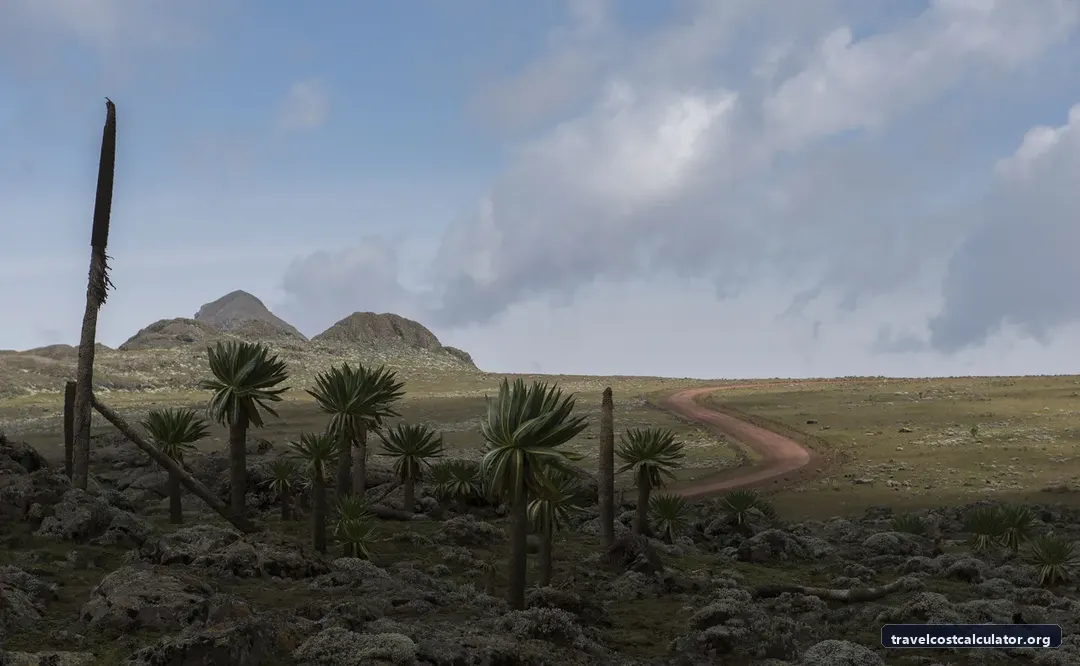
This property protects a landscape mosaic of extraordinary beauty that is shaped by the combined forces of ancient lava outpourings, glaciation and the dissection by the Great Rift Valley.
Bale Mountains National Park
🏛️ Overview & Historical Significance
Rising above the southern highlands of Ethiopia, Bale Mountains National Park protects the largest contiguous expanse of Afroalpine habitat on the African continent. Spanning over 2,200 square kilometers, this dramatic wilderness ranges from wind-swept high-altitude plateaus and glacial lakes to dense tropical cloud forests. In 2023, UNESCO officially inscribed Bale Mountains National Park as a World Heritage site, citing its exceptional natural beauty, extraordinary biodiversity, and unmatched rate of endemic species.
Often referred to as the "Roof of Africa," the park acts as a critical evolutionary island. Over 50% of the world's remaining population of the endangered Ethiopian wolf (Canis simensis)—the rarest canid on Earth— roams the Afroalpine tundra of the Sanetti Plateau. Alongside the wolf, the park safeguards the rare Mountain Nyala, the elusive Bale monkey, the Giant Mole-rat, and over 300 avian species, many of which are found nowhere else on the globe. Furthermore, the Bale Massif functions as Ethiopia’s most vital water tower, feeding major rivers that supply fresh water to millions across southern Ethiopia and neighboring Somalia.
🎟️ Entrance Fees, Opening Hours & Ticket Booking Tips
Visiting Bale Mountains National Park requires registering and paying daily conservation and service fees at the park headquarters in Dinsho. In 2026, entry fees for international visitors remain remarkably affordable, though total costs depend on mandatory local guide and scout services.
2026 Estimated Fee Structure
-
✦
Foreign Adult Park Entrance Fee: ~$15 – $20 USD (approx. 1,800 – 2,500 ETB) per person, per day.
-
✦
Ethiopian National Entrance Fee: ~$2 – $4 USD (approx. 250 – 500 ETB) per day.
-
✦
Mandatory Park Scout (Ranger): ~$10 – $15 USD (approx. 1,200 – 1,800 ETB) per group per day. An armed scout is compulsory for all treks and multi-day drives inside the park boundaries.
-
✦
Official Local Guide Fee: ~$20 – $35 USD (approx. 2,500 – 4,500 ETB) per group per day depending on circuit complexity (trekking vs. vehicle safari).
-
✦
Private Vehicle Entry Permit: ~$10 – $15 USD (approx. 1,200 – 1,800 ETB) per vehicle per day.
-
✦
Wilderness Camping Permit: ~$10 – $15 USD (approx. 1,200 – 1,800 ETB) per tent per night.
Opening Hours & Logistics
The park gate and Dinsho Administrative Headquarters are open daily from 6:00 AM to 6:00 PM. Official park fee transactions are conducted in person at Dinsho HQ. Cash is strictly required; carry sufficient Ethiopian Birr (ETB) calculated for your total stay, as credit card terminals at the park entry are non-operational due to remote network conditions.
🚌 How to Get There & Local Transit Costs
Bale Mountains National Park is located in the Oromia Region of southeastern Ethiopia, roughly 400 kilometers south of the capital city, Addis Ababa Travel Budget.
Option 1: Domestic Flight to Robe (Fastest)
Ethiopian Airlines operates regular daily domestic flights from Addis Ababa (ADD) to Bale Robe Airport (GOB). Flight duration is approximately 1 hour, costing between $70 and $130 USD one-way in 2026. From Robe Airport, you can charter a 4x4 taxi or arrange a pickup through your lodge/guide to cover the 30 km journey to Dinsho Park Headquarters (approx. $25 – $40 USD / 3,000 – 5,000 ETB).
Option 2: Private 4x4 Tour / Rental from Addis Ababa
For flexible exploration, hiring a private 4x4 vehicle with an experienced driver from Addis Ababa is recommended. The overland drive takes about 7 to 9 hours via the scenic Rift Valley route (Batu/Ziway and Asella). 2026 rental rates range from $120 to $180 USD per day including driver allowance, though fuel costs are typically calculated based on distance covered.
Option 3: Public Transport (Budget Travelers)
Long-distance public buses depart daily from the Kaliti Bus Terminal in Addis Ababa bound for Robe or Goba. Bus fares cost approximately 1,000 – 1,500 ETB ($8 – $12 USD) per seat and take 9 to 11 hours. From the main transit hubs of Robe or Goba, shared public minibuses run regularly to Dinsho for around 100 – 150 ETB ($1 USD).
📸 Best Photography Spots & Insider Visit Hacks
Prime Photography Locations
-
✦
Sanetti Plateau: Cruising along Africa’s highest continuous driveable road (over 4,000 meters altitude), this eerie tundra landscape of giant lobelias (Lobelia rhynchopetalum) and glacial lakes offers prime opportunities to photograph foraging Ethiopian wolves.
-
✦
Mount Tullu Demtu: The second-highest peak in Ethiopia (4,377m) is reachable via vehicle. The summit offers breathtaking 360-degree panoramas of the surrounding mountain ranges.
-
✦
Harenna Cloud Forest: Descending south off the plateau, the road plunges down a dramatic escarpment into an enchanted, moss-draped jungle home to wild coffee trees, rare Bale monkeys, and waterfalls.
-
✦
Web Valley (Gaysay Plains): Located near Dinsho, these open grasslands are the best place to photograph herds of Mountain Nyala, Menelik's bushbuck, and endemic raptors against a mountain backdrop.
Insider Hacks & Altitude Safety
-
✦
Golden Hour Wolf Tracking: Ethiopian wolves hunt giant mole-rats primarily in the early morning (7:00 AM – 9:30 AM) and late afternoon (4:00 PM – 5:30 PM). Start your Sanetti drive at dawn for maximum sighting opportunities.
-
✦
Dress in Layers: Temperatures on the Sanetti Plateau drop below freezing (0°C to -5°C) overnight and early morning, while midday sun can heat the air to 20°C. Heavy thermal wear, windproof jackets, gloves, and sunscreen are absolute essentials.
-
✦
Altitude Acclimatization: Dinsho sits at 3,000 meters above sea level, and the plateau exceeds 4,000 meters. Spend your first day resting in Dinsho or Robe to prevent Acute Mountain Sickness (AMS), and stay hydrated.
-
✦
Optimal Season: Visit between November and March (the dry season) for clear skies, optimal road conditions on the plateau, and ideal trekking weather. October offers lush green scenery and blooming wildflowers right after the rainy season.
🏨 Nearby Accommodation & Daily Budget Allocation
Accommodations near Bale Mountains National Park range from rustic park lodges and mountain campsites to mid-range city hotels in nearby Robe and Goba, plus a luxury eco-lodge in the forest.
Accommodation Options
-
✦
Luxury Eco-Lodge: Bale Mountain Lodge (located deep in the Harenna Forest near Kirimiro). Offers world-class luxury eco-cabins, gourmet dining, and guided activities. Costs range from $350 to $600 USD per night (full board).
-
✦
Mid-Range Hotels: Located in Goba or Robe towns (e.g., Wabe Shebelle Hotel or Tokuma Hotel). Clean rooms with private bathrooms, hot water, and Wi-Fi. Rates average $35 to $75 USD per night.
-
✦
Budget Lodging & Trekking Camps: Dinsho Lodge / HQ Guesthouse offers basic dormitory style or simple private rooms near the entrance for $15 – $30 USD per night. Designated wilderness campsites (e.g., Sodota, Keyrensa, Wassama) cost around $10 – $15 USD for camping permits per night (bring your own gear).
Estimated Daily Budget Allocations (2026 Rates)
-
✦
Backpacker / Budget Trekker: ~$45 – $70 USD per day (public transit, camping/Dinsho HQ rooms, local food, shared guide/scout fees).
-
✦
Mid-Range Traveler: ~$140 – $240 USD per day (hotel in Robe/Goba, shared private 4x4 rental, entry fees, private guide, dining at local spots).
-
✦
Luxury / All-Inclusive Safari: ~$500 – $800 USD per day (staying at Bale Mountain Lodge, private 4x4 charter, domestic flights, high-end guiding services).
Frequently Asked Questions
Essential visitor FAQs for Bale Mountains National Park
What is the entrance fee for Bale Mountains National Park?
How much time do you need to explore Bale Mountains National Park?
How do I get to Bale Mountains National Park from the nearest city?
📊 Heritage Quick Specs
Visiting Ethiopia on a Budget?
Calculate your full daily travel budget for Ethiopia — including hotel costs, local transport, food, and sightseeing expenses.
View Ethiopia Daily Travel Costs →Explore more UNESCO World Heritage Sites
🏛️ All 1,200+ Heritage Sites →