
 Ghana
Asante Traditional Buildings
To the north-east of Kumasi, these are the last material remains of the great Asante civilization, which reached its high point in the 18th century.
Asante Traditional Buildings
🏛️ Overview & Historical Significance
Inscribed as a UNESCO World Heritage site in 1980, the Asante Traditional Buildings represent the final surviving physical vestiges of the legendary Ashanti (Asante) Empire's architectural legacy. Situated northeast of Kumasi Travel Budget in the lush Ashanti Region of central Ghana, this collective heritage site comprises ten distinct shrine complexes (known locally as Abosomfie). Key preserved locations include Ejisu Besease, Abirim, Asawase, Kentinkrono, and Saaman, with Ejisu Besease standing out as the most easily accessible and fully restored site for visitors.
During the height of the Ashanti Kingdom in the 18th and 19th centuries, complex royal palaces, public meeting halls, and spiritual shrines covered the realm. However, imperial British campaigns during the 19th-century Anglo-Asante Wars—most notably the 1874 sacking of Kumasi—and rapid 20th-century modernization destroyed nearly all non-religious structures. The shrines survived primarily because they were regarded with deep spiritual reverence by local communities and feared as seats of deity power by foreign soldiers.
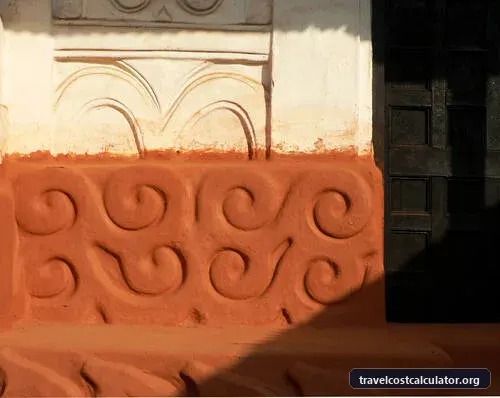
Architecturally, these structures are masterful expressions of West African earthen design. Each building layout follows a traditional four-quadrangle plan centered around an open courtyard (Nkyiraa). Built using an intricate wattle-and-daub technique, wooden timber frameworks and woven Split Travel Budget-bamboo lattices are plastered over with local red earth and clay, topped by steep roofs made of traditional thatch or protective corrugated sheeting. What truly elevates these buildings to world-heritage status are the striking bas-relief clay decorations adorning the lower and upper wall panels. These intricate geometric and animal motifs incorporate sacred Adinkra symbols—such as Sankofa (learning from the past) and Gye Nyame (the supremacy of God)—which encode Ashanti philosophy, proverbs, and spiritual cosmology directly into the architecture.
As of 2026, these structures remain active places of traditional worship and cultural consultation rather than empty museum shells. Local custodians, priests (Komfo), and traditional councils maintain spiritual oversight, offering visitors an authentic connection to living West African heritage.
🎟️ Entrance Fees, Opening Hours & Ticket Booking Tips
Visiting the Asante Traditional Buildings is straightforward, though payment processes remain rooted in traditional, cash-based local reception. Because the sites are spread across rural villages, the primary designated visitor center with official tour infrastructure is located at the Ejisu Besease Shrine.
Estimated 2026 Ticket Prices
-
✦
International Adult Visitors: 120 GHS – 150 GHS (~$8.00 – $10.00 USD)
-
✦
International Student (with valid ID): 80 GHS (~$5.25 USD)
-
✦
Ghanaian Citizens / ECOWAS Nationals: 30 GHS – 50 GHS (~$2.00 – $3.30 USD)
-
✦
Photography / Media Fee: Included with regular admission for personal smartphones; commercial equipment or tripods require a custom permit of 100 GHS (~$6.50 USD).
-
✦
Custodian & Guide Gratuity: 50 GHS – 100 GHS (~$3.30 – $6.50 USD) is customary and deeply appreciated by the site's local traditional caretakers.
Opening Hours & Visit Planning
-
✦
Standard Hours: Daily from 8:30 AM to 5:00 PM.
-
✦
Akwasidae & Ceremony Days: Visits during the traditional Akwasidae festival (held every 42 days according to the Akan calendar) offer incredible cultural insight, but access inside sacred rooms may be restricted during active ritual libations.
Pro Tips for Buying Tickets & Entry
-
✦
Cash is King: Online advance booking does not exist for this heritage site. Bring exact physical currency in Ghanaian Cedi (GHS). Digital mobile money (MTN MoMo) is occasionally accepted by individual local guides, but physical bills remain essential.
-
✦
Seek Out the On-Site Caretaker: Upon arrival in Ejisu Besease or Abirim, report directly to the visitor reception cottage or ask for the local shrine custodian. Never explore inner shrines unaccompanied.
🚌 How to Get There & Local Transit Costs
The Asante Traditional Buildings are located in villages surrounding Kumasi, the historic capital of the Ashanti Region. Most travelers base themselves in Kumasi and make a half-day or full-day excursion out to the shrines.
Step 1: Reaching Kumasi
If arriving from Ghana's capital, Accra Travel Budget (~250 km south):
-
✦
By Air (Fastest): Take a 45-minute domestic flight from Accra (ACC) to Kumasi Airport (KMS) via PassionAir or Africa World Airlines. Standard 2026 one-way fares range from $55 to $90 USD (850 GHS – 1,400 GHS).
-
✦
By Intercity Bus (Budget): VIP Jeoun or STC buses depart regularly from Accra's Circle or Kaneshie terminals to Kumasi (Asafo Station). Travel time is approximately 4.5 to 6 hours depending on traffic, costing 130 GHS – 180 GHS (~$8.50 – $12.00 USD).
Step 2: Transit from Kumasi to Ejisu Besease
Ejisu Besease lies approximately 20 kilometers east of Kumasi's city center along the N6 highway towards Accra.
-
✦
Option A: Shared Tro-Tro (Local Minibus - Best Budget Value)
Head to the Kejetia Market Terminal or Asafo Station in Kumasi. Board any shared tro-tro bound for Ejisu or Konongo. Tell the driver's mate you are getting off at Ejisu Besease Junction.
Cost: ~15 GHS – 25 GHS (~$1.00 – $1.60 USD) per person each way.
Travel Time: 35 to 50 minutes.
Final Stretch: From Ejisu Junction, take a 5-minute shared taxi or a short 15-minute walk down the marked side road to the shrine entrance. -
✦
Option B: Ride-Hailing & Private Taxis (Best Comfort)
Ride-hailing apps like Bolt and Yango operate reliably within Greater Kumasi. You can hire a driver directly to Ejisu Besease.
One-Way Fare: ~90 GHS – 140 GHS (~$6.00 – $9.00 USD).
Pro Tip: Negotiate with your taxi driver to wait for 1.5 hours and provide return transport to Kumasi for a total round-trip price of 250 GHS – 350 GHS (~$16.00 – $23.00 USD). -
✦
Option C: Private Driver Charter (Full Craft & Heritage Circuit)
Hiring a private vehicle with a driver for the full day allows you to combine Ejisu Besease with nearby UNESCO craft villages like Bonwire (Kente cloth) and Ntonso (Adinkra printing).
Daily Charter Rate (2026): 650 GHS – 950 GHS (~$42.00 – $62.00 USD) including fuel.
📸 Best Photography Spots & Insider Visit Hacks
Prime Photography Spots
-
✦
The Central Courtyard (Nkyiraa): Stand in the middle of the courtyard at Ejisu Besease to capture the classic four-building quadrangle architecture with its dramatic high-pitched roof lines against the sky.
-
✦
Adinkra Wall Reliefs: Frame close-up, angled shots of the lower earthen relief panels showing intricate geometric patterns, spiral symbols, and sacred proverbs molded out of red clay.
-
✦
Carved Wooden Pillars & Screen Doors: Capture the intricate openwork screen panels (openwork screens designed for air flow) that light up when light streams through from the courtyard.
Insider Visit Hacks & Etiquette Rules
-
✦
Respect Sacred Rules: These buildings house traditional deities. Always remove your shoes before entering internal shrine chambers if requested by the priest or custodian. Women on their menstrual cycle are traditionally requested to refrain from entering active inner ritual rooms.
-
✦
Lighting Considerations: Early morning (8:30 AM – 10:30 AM) or late afternoon (3:30 PM – 5:00 PM) offers soft, golden lighting that enhances the texture of the relief plasterwork. The midday equatorial sun casts harsh shadows inside the covered arcades.
-
✦
Weather & Dry Season Timing: The Best Time to Visit Planner is during Ghana's main dry season from November to March. Rain can render unpaved village access roads muddy, and humidity during the rainy months (May to July) makes rural walking uncomfortable.
-
✦
Combine Cultural Attractions: Maximize your day trip by creating a 3-in-1 cultural loop: visit Ejisu Besease Shrine in the morning, continue to Bonwire Kente Village (15 km away), and finish at Ntonso Adinkra Village.
🏨 Nearby Accommodation & Daily Budget Allocation
While basic guesthouses exist near Ejisu, most international travelers choose to stay in Kumasi, which offers a wide range of modern accommodation, reliable electricity, and diverse dining options.
Recommended 2026 Accommodation
-
✦
Budget Option (Kumasi / Ejisu): Tano Hideaway Guesthouse or Sir Max Hotel
Clean, simple rooms with air conditioning and private bathrooms.
Price Range: 250 GHS – 450 GHS (~$16.00 – $30.00 USD) per night. -
✦
Mid-Range Option (Kumasi): Sweet Garden Hotel or Royal Basin Resort (located convenient to Ejisu side of town)
Landscaped gardens, swimming pool, on-site restaurant, and excellent security.
Price Range: 850 GHS – 1,450 GHS (~$55.00 – $95.00 USD) per night. -
✦
Upmarket Option (Kumasi Central): Lancaster Kumasi (formerly Golden Tulip)
Full 4-star international hotel amenities, business center, expansive pool, and fine dining.
Price Range: 2,100 GHS – 3,200 GHS (~$135.00 – $210.00 USD) per night.
Food & Dining Costs
-
✦
Local Chop Bars (Ejisu/Kumasi): Enjoy traditional staples like Fufu with Goat Light Soup, Banku with Tilapia, or Jollof Rice.
Cost: 35 GHS – 70 GHS (~$2.30 – $4.50 USD) per meal. -
✦
Mid-Range Restaurants in Kumasi: International, Lebanese, and modern Ghanaian fusion restaurants.
Cost: 130 GHS – 280 GHS (~$8.50 – $18.00 USD) per main dish.
Daily Budget Allocation Breakdown (per person, 2026 estimates)
-
✦
Backpacker Budget Planner (~$35 USD / 530 GHS daily):
- Accommodation (shared budget room): $18 USD
-
✦
Transport (Tro-tros & walking): $4 USD
-
✦
Food & Water (Chop bars & street food): $7 USD
-
✦
Site Entry & Tips: $6 USD
- Accommodation (3-star hotel with breakfast): $75 USD
Frequently Asked Questions
Essential visitor FAQs for Asante Traditional Buildings
What is the entrance fee for Asante Traditional Buildings?
How much time do you need to explore Asante Traditional Buildings?
How do I get to Asante Traditional Buildings from the nearest city?
📊 Heritage Quick Specs
Visiting Ghana on a Budget?
Calculate your full daily travel budget for Ghana — including hotel costs, local transport, food, and sightseeing expenses.
View Ghana Daily Travel Costs →Explore more UNESCO World Heritage Sites
🏛️ All 1,200+ Heritage Sites →