
 Greece
Archaeological Site of Philippi
The remains of this walled city lie at the foot of an acropolis in north-eastern Greece, on the ancient route linking Europe and Asia, the Via Egnatia.
Archaeological Site of Philippi
🏛️ Overview & Historical Significance
Nestled in the lush plains of Eastern Macedonia at the foot of Mount Symbolon, the Archaeological Site of Philippi stands as one of the most multi-layered historic landscapes in the Mediterranean. In 2016, UNESCO inscribed Philippi onto the World Heritage list, recognizing it as an exceptional architectural monument that captures three defining epochs of Western civilization: the Hellenistic kingdom of Macedon, the imperial Roman Republic and Empire, and the dawn of European Christianity.
The city's extraordinary journey began in 356 BC when King Philip II of Macedon (father of Alexander the Great) conquered the Thracian settlement of Krenides. Recognizing its strategic location along trade routes and its proximity to the gold-rich Mount Pangaion mines, Philip fortified the city, expanded its walls, and renamed it after himself. However, Philippi's path to global prominence shifted dramatically in 42 BC during the legendary Battle of Philippi. In the immediate wake of Julius Caesar’s assassination, the Roman forces of Mark Antony and Octavian (later Emperor Augustus) defeated the Republican armies of Brutus and Cassius on the plain just outside the city walls. Victors established Philippi as a miniature Rome Travel Budget—a Colonia Augusta Julia Philippensis—settled by Roman military veterans and laid out with grand forum complexes, latrines, and judicial basilicas.
A century later, in 49–50 AD, the Apostle Paul stepped ashore at the nearby port of Neapolis (modern-day Kavala) and walked along the Via Egnatia to Philippi. Here, Paul preached the Gospel for the first time on European soil, baptizing Saint Lydia in the Zygaktis River and establishing the first Christian community in Europe. Following Paul’s imprisonment and miraculous release (recorded in the Biblical Book of Acts), Philippi evolved into a major metropolis of the early Byzantine world. Monumental early Christian basilicas—including the magnificent Basilica A, the imposing 6th-century Basilica B, and the complex Octagon Church—were erected directly over former Roman public buildings.
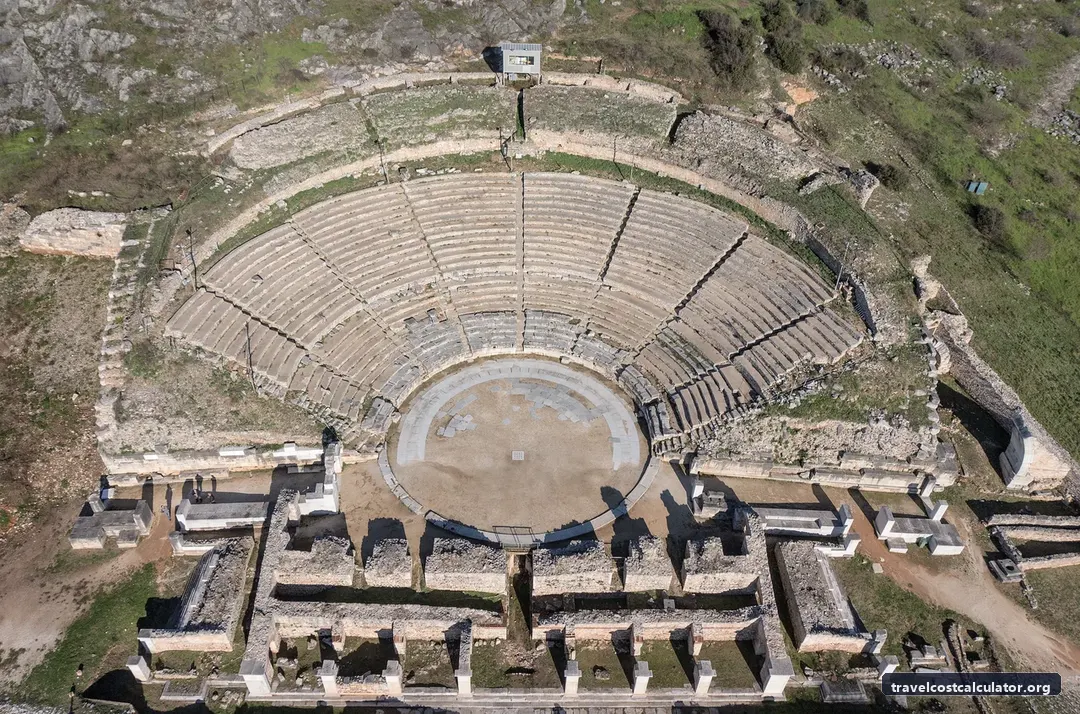
Today, walking through Philippi allows visitors to tread on the original stone slabs of the Via Egnatia, gaze up at the towering brick arches of Justinianic architecture, and step inside the ancient theater where ancient Greek tragedy gave way to Roman gladiatorial spectacles.
🎟️ Entrance Fees, Opening Hours & Ticket Booking Tips
Visiting Philippi in 2026 is remarkably affordable compared to southern Greek sites like the Acropolis or Delphi, offering world-class archaeological exposure at a fraction of the cost.
2026 Ticket Pricing
-
✦
Full Price Adult Ticket (April 1 – October 31): €12.00 (approx. $13.20 USD). This full-price combined ticket grants single entry to both the expansive outdoor archaeological site and the onsite Archaeological Museum of Philippi.
-
✦
Reduced Ticket (EU Seniors 65+ & Non-EU Students with valid ID): €6.00 (approx. $6.60 USD).
-
✦
Winter Season Rate (November 1 – March 31): €6.00 (approx. $6.60 USD) flat rate for all visitors.
-
✦
Free Admission Categories: Free entry applies to EU citizens under 25 years of age, non-EU children under 18 (with passport proof), journalists, and visitors with registered disabilities plus one escort.
Free Admission Days (2026)
Plan your visit on these dates to enjoy complimentary entry:
-
✦
First Sunday of every month between November 1st and March 31st
-
✦
March 25th (Greek National Holiday)
-
✦
May 18th (International Museum Day)
-
✦
September 27th (World Tourism Day)
-
✦
October 28th (Ohi Day)
Operating Hours (2026 Schedule)
-
✦
Summer Peak Season (April to October): 08:00 AM – 08:00 PM daily (Last entry 07:30 PM; Museum closes at 07:30 PM).
-
✦
Winter Off-Peak Season (November to March): 08:30 AM – 03:30 PM daily (Tuesdays may feature adjusted afternoon hours for museum cleaning).
Insider Booking Tips
While long lines are rarely an issue at Philippi compared to Athens Travel Budget, peak summer season (July–August) brings tour groups from regional cruise ships docking in Kavala. To streamline entry, purchase digital tickets ahead of time via the official Hellenic Heritage e-ticketing portal (hhticket.gr). Choose the "Northern Greece / Philippi" region option. Always carry physical cash (Euros) as backup, as rural card terminal satellite signals can occasionally drop during summer thunderstorms.
🚌 How to Get There & Local Transit Costs
The Archaeological Site of Philippi is located in the regional unit of Kavala in Northern Greece. The gateway city is Kavala (15 km to the south), while the nearest major international transport hub is Thessaloniki (160 km to the west).
Option 1: From Kavala (Fastest & Most Convenient)
Kavala is the ideal base for visiting Philippi. Transport options from Kavala city center include:
-
✦
Local Bus (KTEL Kavalas): Buses depart from the main Kavala Central Bus Station (KTEL Kavalas) bound for Krinides or Drama every 30 to 45 minutes on weekdays (hourly on weekends). Ask the driver for the "Archaia Philippi" stop.
Duration: 20–25 minutes.
Cost: Approximately **€2.30 / $2.50 USD** one-way. -
✦
Taxi: A direct taxi ride from Kavala port or hotel to the site entrance costs roughly **€20.00 – €25.00 ($22.00 – $27.50 USD)** one-way. It is recommended to arrange a return pickup time with your driver, as taxis are not always idling outside the site exit during off-peak months.
Option 2: From Thessaloniki (Day Trip or Car Rental)
-
✦
By Rental Car: Drive east on the modern Egnatia Odos / A2 motor highway towards Kavala, take the exit toward Drama/Krinides, and follow the well-marked signs for the archaeological site.
Duration: ~1 hour 45 minutes.
Toll Costs: Approx. **€6.50 / $7.15 USD** each way. Car rentals in Thessaloniki average **€25.00 – €45.00 ($27.50 – $49.50 USD)** per day in 2026. -
✦
By Express Bus (KTEL): Take an intercity bus from Thessaloniki’s Macedonia Intercity Bus Terminal to Kavala Central Station (departs hourly; ~2 hours; **€16.50 / $18.15 USD** one-way), then transfer to the local Krinides bus.
📸 Best Photography Spots & Insider Visit Hacks
Prime Photography Locations
-
✦
Basilica B (The Diribitan): The iconic image of Philippi. Shoot early in the morning when warm sunlight hits the remaining soaring brick piers of this 6th-century masterpiece, framed dramatically by the distant ridge of Mount Pangaion.
-
✦
The Ancient Theater & Cavea: Climb to the top tiers of the Hellenistic-Roman theater for an expansive panorama of the ancient city grid cutting across the agricultural valley.
-
✦
The Via Egnatia Pavement: Get a low-angle ground shot showing the deep rut marks worn into the original Roman marble slabs by centuries of chariot wheels and trade wagons.
-
✦
The Octagon Complex Mosaics: Capture the remarkably preserved geometric floor mosaics inside the bishop's basilica complex. Use a polarizing filter to eliminate glare on the protective glass walkways.
Insider Travel Hacks for 2026
-
✦
Beat the Heat & Cruise Crowds: The open plain of Philippi has virtually no shade. Visit right at 08:00 AM opening or after 04:30 PM. Tour buses from Kavala port usually hit the site between 10:00 AM and 01:30 PM.
-
✦
Footwear Caution: Wear sturdy, closed-toe walking shoes. The ancient Roman marble paving stones are polished glass-smooth by centuries of foot traffic and can become treacherous when wet or dusty.
-
✦
Don't Miss the Baptistery of St. Lydia: Located just 1 km west of the main site along the stream of Zygaktis, this modern Orthodox chapel and open-air riverside baptistery marks the exact spot where Europe's first Christian was baptized. Entry is free.
-
✦
Hydration & Supplies: There is a small café near the site museum entrance, but prices are inflated. Pack your own water bottle and snacks; refill stations are limited inside the ruins.
🏨 Nearby Accommodation & Daily Budget Allocation
While the small town of Krinides offers a few cozy guesthouses adjacent to the ruins, staying in the vibrant coastal city of Kavala offers superior dining, nightlife, and sea views.
Recommended Accommodations near Philippi & Kavala (2026 Rates)
-
✦
Budget Option (Krinides / Kavala): Old Town Guesthouses or Kavala City Center Hostels — Clean private rooms or modern boutique dorms.
Price: **€35.00 – €60.00 ($38.50 – $66.00 USD)** per night. -
✦
Mid-Range Option (Kavala Old Town / Panagia Quarter): Charming restored Ottoman-era mansions or waterfront 3-star hotels overlooking the Byzantine Aqueduct.
Price: **€80.00 – €130.00 ($88.00 – $143.00 USD)** per night. -
✦
Luxury Option (Kavala): Imaret Hotel — A world-class 5-star luxury hotel set within a meticulously restored 1817 Ottoman monument built by Muhammad Ali Pasha.
Price: **€280.00 – €500.00 ($308.00 – $550.00 USD)** per night.
Daily Travel Budget Breakdown (Per Person)
To help plan your 2026 trip expenses, consider these realistic daily budget profiles when staying in Kavala/Philippi:
| Category | Budget Traveler | Mid-Range Traveler | Luxury Traveler |
|---|---|---|---|
| Accommodation | €25 ($27.50) (Hostel / Shared) | €55 ($60.50) (3-Star Hotel) | €180 ($198.00) (Luxury / Boutique) |
| Food & Dining | €18 ($19.80) (Gyros / Bakery) | €40 ($44.00) (Taverna Seafood) | €90 ($99.00) (Fine Dining) |
| Transit & Entry | €10 ($11.00) (Local Bus + Ticket) | €25 ($27.50) (Rental Car Share) | €60 ($66.00) (Private Taxi/Tour) |
| Daily Total | ~€53 / $58 USD | ~€120 / $132 USD | ~€330 / $363 USD |
Local Culinary Highlights
When taking a break from sightseeing, sample regional specialties in nearby Kavala tafernas: order fresh Aegean octopus grilled over charcoal, kavourmas (slow-cooked seasoned beef), local Drama region wines (notably Assyrtiko and Malagousia), and wrap up your day with traditional Kavala Kourabiedes (rich almond shortbread dusted with powdered sugar).
Frequently Asked Questions
Essential visitor FAQs for Archaeological Site of Philippi
What is the entrance fee for Archaeological Site of Philippi?
How much time do you need to explore Archaeological Site of Philippi?
How do I get to Archaeological Site of Philippi from the nearest city?
📊 Heritage Quick Specs
Visiting Greece on a Budget?
Calculate your full daily travel budget for Greece — including hotel costs, local transport, food, and sightseeing expenses.
View Greece Daily Travel Costs →Explore more UNESCO World Heritage Sites
🏛️ All 1,200+ Heritage Sites →