
 Greece
Archaeological Site of Delphi
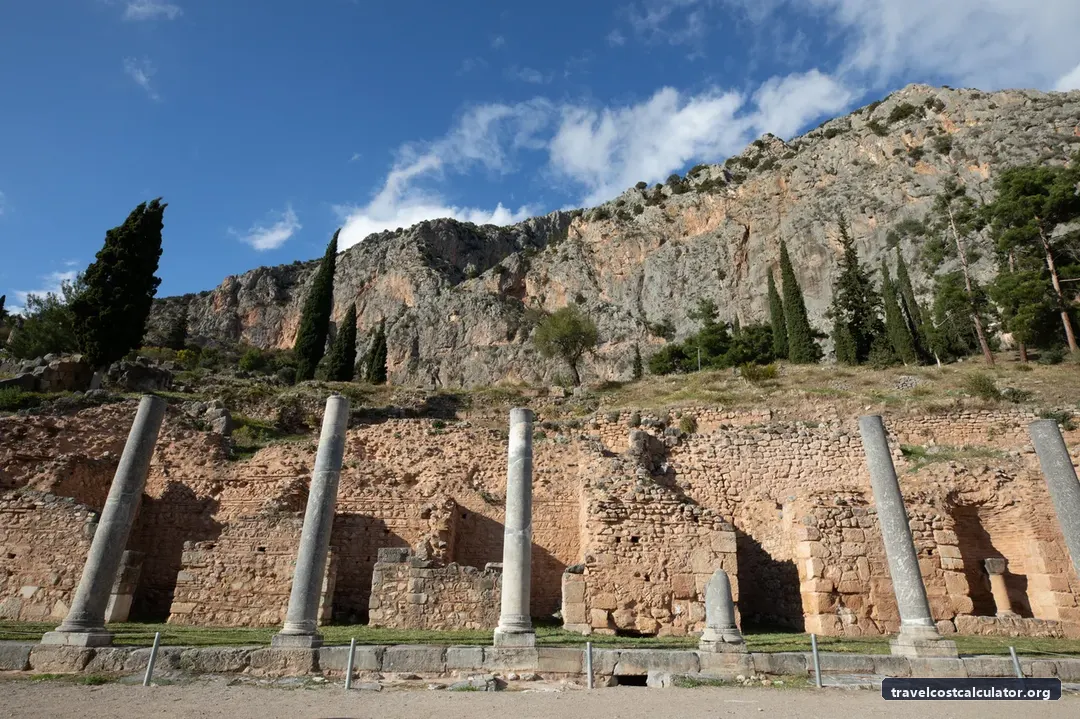
The pan-Hellenic sanctuary of Delphi, where the oracle of Apollo spoke, was the site of the omphalos, the 'navel of the world'.
Archaeological Site of Delphi
1. 🏛️ Overview & Historical Significance
Perched high on the rugged southwestern slopes of Mount Parnassus in central Greece, the Archaeological Site of Delphi stands as one of the most powerful and mystical locations in human history. In antiquity, Delphi was revered not merely as a sanctuary, but as the Omphalos—the literal "navel of the world." According to Greek mythology, Zeus released two eagles from opposite ends of the earth, and their paths intersected directly over the dramatic limestone cliffs of the Phaidriades, marking Delphi as the central axis of the cosmos.
For over a millennium, from the 8th century BCE until its closure under Christian Byzantine Rule in 393 CE, Delphi exerted an unmatched influence over the ancient Mediterranean world. At its heart was the Oracle of Delphi, through whom the god Apollo delivered cryptic, divine prophecies via his high priestess, the Pythia. Kings, generals, statesmen, and common citizens traveled thousands of miles across hazardous seas to consult the Pythia before declaring war, founding colonies, enacting laws, or embarking on personal endeavors. The sanctuary was also home to the Pythian Games, one of the four Panhellenic Games, which featured prestigious athletic competitions and artistic contests celebrating music, poetry, and theater.
In 1987, UNESCO inscribed Delphi as a World Heritage Site under criteria (i), (ii), (iii), (iv), and (vi). UNESCO recognized Delphi as a masterpiece of human creative genius, where ancient Greek sacred architecture harmoniously integrates into a dramatic natural landscape of awe-inspiring beauty. The site remains a profound physical testimony to the religious, political, and cultural unity of the ancient Greek world.
2. 🎟️ Entrance Fees, Opening Hours & Ticket Booking Tips
Visiting Delphi requires planning around seasonal operational hours and regional ticketing updates managed by the Hellenic Ministry of Culture.
2026 Estimated Entrance Fees
Ticket pricing at Delphi operates under a dual-season tariff structure. The combined ticket provides access to both the Archaeological Site of Delphi and the adjacent Archaeological Museum of Delphi.
-
✦
Full Price Single Ticket (Peak Season: April 1 – October 31): €20.00 (~$21.60 USD)
-
✦
Reduced Price Single Ticket (Off-Peak Season: November 1 – March 31): €10.00 (~$10.80 USD)
-
✦
Reduced Rate Eligibility: €10.00 (~$10.80 USD) during summer for EU citizens aged 65+, as well as non-EU students presenting valid higher education photo identification.
-
✦
Free Entry: Available for EU citizens aged 25 and under (with valid passport/ID), non-EU youth up to age 5, and visitors with certified disabilities alongside one companion.
Free Admission Days
If your travel schedule is flexible, you can take advantage of statutory free admission days across Greek state sites:
-
✦
Every first Sunday of the month between November 1 and March 31
-
✦
March 25th (Greek National Day)
-
✦
May 18th (International Museum Day)
-
✦
The final weekend of September (European Heritage Days)
-
✦
October 28th (Oxi Day)
Operating Hours (2026 Schedule)
-
✦
Summer Hours (April – October): 08:00 to 20:00 daily (Last admission to the upper site at 19:30).
-
✦
Winter Hours (November – March): 08:30 to 15:30 daily (Last admission at 15:00).
Ticket Booking Tips
During the peak summer months (May through September), ticket lines at the central kiosk can exceed 45 minutes by late morning. To skip the entry queue, purchase digital e-tickets in advance via the official Hellenic Heritage portal (hhticket.gr). Select the Sterea Ellada / Delphi region and opt for a morning time slot. Ensure you save your digital PDF ticket offline on your mobile device, as cellular network connectivity on Mount Parnassus can be spotty.
3. 🚌 How to Get There & Local Transit Costs
Delphi is located approximately 180 kilometers (112 miles) northwest of Athens Travel Budget. Depending on your budget and preferred level of independence, several transportation options connect the Greek capital to the sanctuary.
1. Express KTEL Bus (Best Value / Public Transit)
Intercity buses operated by KTEL Fokidas offer comfortable, direct transport from Athens to the modern town of Delphi (which sits just a 10-minute walk from the ruins).
-
✦
Departure Point: Athens Liosion Bus Terminal (Terminal B). Take Metro Line 1 (Green) to Kato Patisia station, followed by a 10-minute walk or brief taxi ride to the terminal.
-
✦
Frequency: 4 to 5 departures daily starting around 07:30 AM.
-
✦
Travel Time: Approximately 3 hours to 3 hours and 15 minutes each way.
-
✦
Cost: €16.40 one-way / €33.00 round-trip (~$17.70 / ~$35.60 USD).
2. Rental Car (Best for Speed & Flexibility)
Driving from Athens allows you to visit Delphi at your own pace and explore neighboring mountain villages like Arachova or the seaside port of Galaxidi.
-
✦
Route: Take National Road A1/E75 north out of Athens toward Kastro, exit onto Route 48 toward Livadeia, and continue through Arachova to Delphi.
-
✦
Travel Time: 2 hours and 15 minutes each way.
-
✦
Cost Breakdowns: Rental car rates average €35.00 – €65.00 ($38 – $70 USD) per day. Toll fees total approximately €16.00 ($17.30 USD) round-trip. Fuel costs average €35.00 – €45.00 ($38 – $48 USD) based on standard European fuel prices.
3. Organized Day Tours from Athens
If you prefer hassle-free logistics, numerous tour operators offer full-day guided excursions from central Athens hotels. Packages typically include round-trip air-conditioned coach transportation, an official licensed archaeological guide, entry tickets, and sometimes a traditional Greek lunch.
-
✦
Cost: €75.00 – €120.00 ($81 – $130 USD) per person depending on seasonal inclusions.
4. 📸 Best Photography Spots & Insider Visit Hacks
Delphi is built into a steep, terraced mountainside, providing dramatic angles that blend ancient stonework with sweeping Mediterranean valleys. To maximize your visit and capture stunning photographs, prioritize these key locations and strategic hacks.
Must-Snap Photography Locations
-
✦
The Tholos at the Sanctuary of Athena Pronaia (Marmaria): Located 500 meters downhill from the main site entrance, this iconic circular structure with its three re-erected Doric columns is the defining image of Delphi. Shoot early in the morning when golden light illuminates the marble against the deep green Pleistos River Valley below.
-
✦
The Ancient Theatre of Delphi: Climb to the upper tiers of the 4th-century BCE theater. Looking down from the top seats captures the theater in the foreground, the majestic columns of the Temple of Apollo below, and the olive-filled valley stretching out toward the Gulf of Corinth.
-
✦
The Polygonal Wall & Temple of Apollo: Frame the grand podium of Apollo’s temple by shooting through the intricate, curved jointing of the 6th-century BCE retaining wall.
-
✦
The Ancient Stadium: Located at the highest point of the sanctuary, surrounded by lush pine trees, this exceptionally well-preserved stadium offers serene, wide-angle views away from the crowded central paths.
-
✦
The Bronze Charioteer (Inside the Museum): One of the world's finest surviving bronze statues from antiquity. Photograph this masterpiece from a side angle to capture the realistic glass inlaid eyes and crisp folds of his tunic.
Insider Visit Hacks
-
✦
The "Reverse Route" Timing Trick: Large tour buses arriving from Athens reach Delphi between 10:30 AM and 1:30 PM. To avoid shoulder-to-shoulder crowds, enter the site precisely at opening (08:00 AM) and head straight to the top of the ruins (the Stadium and Theatre). Work your way down as the crowds climb up. Alternatively, visit the ruins after 15:30 in summer when day-trippers have departed.
-
✦
Don't Miss Marmaria (Athena Pronaia): Many travelers mistake the upper ticketed complex for the entirety of Delphi and completely miss the lower Sanctuary of Athena Pronaia across the main road. Entry to Marmaria is free and easily accessible via a marked pedestrian pathway.
-
✦
Footwear Caution: The site consists of steep marble staircases, uneven stone ramps, and loose gravel. Marble steps become slick over years of wear. Wear sturdy hiking shoes or trail sneakers with high-traction rubber soles—leave sandals and smooth dress shoes at your hotel.
-
✦
Hydration & Sun Protection: Shade is virtually non-existent along the upper ruins. Bring a reusable water bottle (refill stations are located near the museum and main entrance), high-SPF sunscreen, and a wide-brimmed hat.
5. 🏨 Nearby Accommodation & Daily Budget Allocation
While many travelers visit Delphi as a day trip from Athens, staying overnight in modern Delphi village or neighboring Arachova allows you to experience the site in the peaceful early morning hours before day-trippers arrive.
Where to Stay: Delphi Village vs. Arachova
-
✦
Modern Delphi Village (10-Minute Walk): Ideal for budget travelers and those relying on public transit. The village clings to the cliff edge, offering affordable hotels, traditional tavernas, and uninterrupted views of the Gulf of Corinth.
-
✦
Arachova (10 km / 15-Minute Drive): A cosmopolitan mountain resort town known for its traditional stone architecture, high-end boutiques, active nightlife, and regional culinary specialties like Formaella cheese.
2026 Accommodation Pricing Tiers
-
✦
Budget (Hostels & Family Guesthouses): €45.00 – €75.00 ($48 – $81 USD) / night. Examples include clean, family-run pensions in Delphi town with balcony views.
-
✦
Mid-Range (3-Star & 4-Star Boutique Hotels): €85.00 – €145.00 ($92 – $156 USD) / night. Offers updated amenities, panoramic valley-view terraces, and included buffet breakfasts.
-
✦
Luxury & Chalet Resorts (Arachova Resorts): €175.00 – €320.00+ ($189 – $345+ USD) / night. Includes high-end spa facilities, indoor heated pools, and alpine-style suites.
Dining & Food Costs
Dining near Delphi is surprisingly affordable. A traditional Greek meal featuring wild greens (horta), grilled lamb chops or mossaka, local olives, and house wine costs around €18.00 – €28.00 ($19.50 – $30.00 USD) per person at a local taverna. Quick gyro wraps or souvlaki pita on the go cost just €3.80 – €5.00 ($4.10 – $5.40 USD).
Estimated Daily Budget Breakdowns (Per Person)
-
✦
Budget Backpacker: €55.00 – €80.00 ($60 – $87 USD) per day (using KTEL buses, staying in budget guesthouses, eating pita/taverna meals, combined site ticket).
-
✦
Mid-Range Traveler: €125.00 – €195.00 ($135 – $210 USD) per day (rental car Split Travel Budget, mid-range hotel, lunch and dinner at scenic tavernas, museum/site fees).
-
✦
Luxury Traveler: €290.00 – €480.00+ ($313 – $518+ USD) per day (private chauffeur transfer, 5-star mountain resort in Arachova, fine dining, private guided tour of site).
Frequently Asked Questions
Essential visitor FAQs for Archaeological Site of Delphi
What is the entrance fee for Archaeological Site of Delphi?
How much time do you need to explore Archaeological Site of Delphi?
How do I get to Archaeological Site of Delphi from the nearest city?
📊 Heritage Quick Specs
Visiting Greece on a Budget?
Calculate your full daily travel budget for Greece — including hotel costs, local transport, food, and sightseeing expenses.
View Greece Daily Travel Costs →Explore more UNESCO World Heritage Sites
🏛️ All 1,200+ Heritage Sites →