
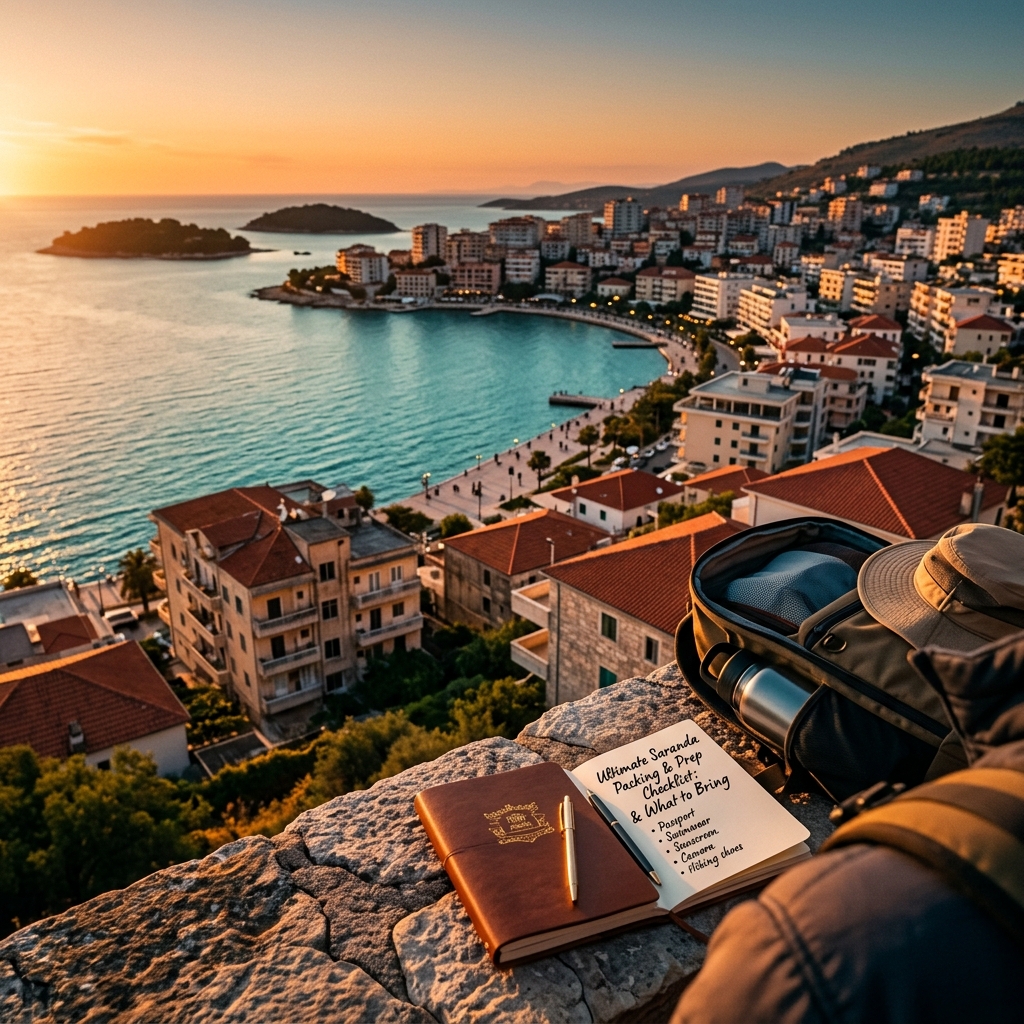
Nestled along the turquoise expanse of the Ionian Sea, Saranda Travel Budget (Sarandë) has solidified its reputation as the vibrant capital of the Albanian Riviera. As we navigate travel in 2026, this sun-drenched coastal town continues to attract everyone from frugal backpackers to luxury yacht-hoppers. However, Saranda's unique terrain—defined by steep limestone hills, rocky pebble coves, scorching summer sun, and a cash-centric local economy—demands deliberate, intelligent packing and financial planning.
Arriving unprepared in Saranda can lead to unnecessary spending, blown flip-flops on vertical cobblestone alleys, and painful encounters with sea urchins. This comprehensive 2026 packing and pre-trip planning guide breaks down daily spending benchmarks, strategic luggage selections, and crucial prep items so you can explore the Riviera with complete peace of mind.
2026 Travel Budget Benchmarks for Saranda
Understanding your daily baseline expenses dictates what you should pack versus what you should buy upon arrival. While Albania remains one of Europe’s most affordable seaside escapes, inflation and rising seasonal demand have adjusted baseline rates for 2026. Here is what you should budget per day based on your travel style:
- Backpacker Tier (Total: ~$49/day): Accommodation at $27/night (hostel dorm or simple private room outside the center), Food at $15/day (burek bakeries, local qofte grill houses, and self-catering), Transport at $7/day (local municipal buses to Ksamil and Butrint).
- Standard/Mid-Range Tier (Total: ~$142/day): Accommodation at $91/night (modern sea-view apartment or 3-star boutique hotel), Food at $36/day (fresh seafood dinners, beachside tavernas, and daily coffee/gelato), Transport at $15/day (occasional taxis, regional furgon shuttles, or scooter rental share).
- Luxury Tier (Total: ~$411/day): Accommodation at $272/night (high-end beachfront resort or luxury panoramic suite on Rruga Butrinti), Food at $91/day (fine dining seafood, wine pairings, and upscale beach club cocktail service), Transport at $48/day (private airport transfers, full-day car hire, or private boat charters).
Beyond these day-to-day figures, anticipate key activity expenses in 2026: entry to the UNESCO World Heritage site of Butrint runs approximately $12 (1,100 ALL), a round-trip ferry ticket from Corfu to Saranda costs around $25–$38 depending on the vessel speed, and renting a pair of sun loungers and an umbrella in Saranda or neighboring Ksamil typically ranges between $12 and $35 per day depending on the beach tier.
Pre-Trip Documentation & Financial Preparation
Proper logistical prep before boarding your flight or ferry is just as crucial as the physical items inside your suitcase. Complete these essential administrative tasks before departure:
1. Cross-Border & Visa Logistics
Most travelers enter Saranda either via the direct passenger ferry from Corfu, Greece, or by landing at Tirana Travel Budget International Airport and driving south. If crossing from Corfu in 2026, be prepared for international border control. Albania is not in the EU or the Schengen Area, meaning your passport will be stamped when exiting Greece and entering Albania. Ensure your passport has at least three months of validity beyond your planned departure date. Review your home country’s bilateral agreements; passport holders from the US, UK, EU, and Canada can generally stay visa-free for up to 90 days within a 180-day period (US citizens enjoy up to a full year visa-free).
2. The Cash Strategy (Albanian Lek)
While high-end hotels and modern supermarkets in Saranda accept major credit cards, the town remains heavily reliant on cash (Albanian Lek, ALL). Family-run tavernas, local buses, beach umbrella vendors, and bakeries rarely process cards. Pack a multi-currency debit card that offers mid-market exchange rates, but plan to withdraw cash upon arrival. Keep in mind that many local bank ATMs charge a foreign transaction fee (often 500 to 800 ALL per withdrawal). Bank crediting policies change frequently, so look for fee-free or low-fee ATMs such as Credins Bank or OTP when possible, and always decline the ATM's dynamic currency conversion (DCC).
3. Digital Connectivity & Navigation
Because Albania is outside the EU roaming zone, standard European SIM roaming packages do not apply. Avoid excessive roaming fees by downloading an Albanian eSIM prior to departure or picking up a local tourist SIM card (Vodafone or ONE Albania) at Saranda port or in the town center. Expect to pay roughly $20–$25 for a 30-day tourist data bundle (30GB–100GB). Download offline maps for Saranda, Ksamil, and the wider Vlorë/Gjirokastër county on Google Maps or Maps.me, as mobile signals can dip along remote coastal stretches.
The Essential Saranda Packing & Budget Checklist for 2026
1. Specialized Footwear: Non-Negotiable Essentials
Saranda’s geography puts footwear to the ultimate test. The town is built into steep limestone cliffs rising from the bay, and the local beaches are predominantly pebble, coarse grit, or rocky slabs.
- Hard-Soled Water Shoes (Aqua Socks): This is the single most important item you will pack. Walking on pebble beaches like Mango Beach or navigating rocky coves in Ksamil without water shoes is painful. More importantly, sea urchins dwell on underwater rock shelves along the Ionian coast.
- Supportive Walking Shoes with Grip: Navigating the vertical streets (such as climbing from the seaside promenade up to Rruga Flamurit) requires breathable sneakers or athletic sandals with aggressive traction. Avoid slippery flip-flops on dusty, polished stone pavements.
- Casual Evening Footwear: The nightly xhiro (evening promenade stroll) along the pedestrian boulevard is a dressy, social affair. Bring leather slides, stylish flats, or clean lifestyle sneakers.
2. Clothing & Sun Protection
Summer temperatures in Saranda frequently surpass 35°C (95°F) with intense UV reflection off the limestone and sea. Pack lightweight, moisture-wicking fabrics that handle heat while maintaining respect for local customs when away from the sand.
- Breathable Fabrics: Pack linen shirts, rayon sundresses, and loose cotton shorts. Light colors are best for deflecting midday heat.
- Modest Layers for Cultural Sites: When visiting historic monasteries (such as the 40 Saints Monastery) or venturing into nearby traditional villages like Gjirokastër, shoulders and knees should be covered. Pack a lightweight linen scarf or sarong.
- Multiple Swimsuits: High humidity along the bay means swimsuits dry slower than expected. Having at least two or three rotation options prevents putting on damp swimwear.
- UV Defense: Pack a wide-brimmed packable hat, polarized sunglasses (UV400 rated to cut coastal glare), and a lightweight long-sleeve rash guard if you plan to rent a kayak or stand-up paddleboard.
3. Electronics & Beach Tech
Keep your electronics protected from sand, saltwater, and the Mediterranean sun:
- Type C / Type F Travel Adapter: Albania uses standard European two-pin plugs operating on 230V.
- High-Capacity Power Bank: Taking photos of Butrint's ruins, running offline navigation apps, and spending full days at remote beaches will drain your phone battery quickly.
- Waterproof Dry Bag (10L–20L): Vital if you plan to swim to the Ksamil Islands, take speedboats to Kroreza Beach, or rent a sea kayak.
- Waterproof Phone Pouch: Protects your device from saltwater spray and allows you to capture underwater footage of the crystal-clear Ionian Sea.
4. Health, Toiletries & First Aid
While Saranda has numerous pharmacies (Farmaci), bringing a curated kit saves money and hassle, particularly during peak summer when tourist prices surge:
- Reef-Safe Sunscreen: Sunscreen in Saranda's seaside mini-markets is imported and expensive, often costing $18–$25 per bottle. Pack enough high-SPF, water-resistant sunscreen from home.
- Mosquito & Insect Repellent: Proximity to Lake Butrint and coastal wetlands means mosquitoes can be active during calm summer twilights.
- Electrolyte Tablets: Intense heat coupled with hilly walking makes heat exhaustion a real risk. Adding hydration salts to your water keeps your energy stable.
- Motion Sickness Medication: Crucial if you are prone to seasickness on the Corfu-Saranda hydrofoil or during boat excursions along the dramatic cliffs of the Karaburun peninsula.
Luggage Selection: Backpack vs. Rolling Suitcase
One of the biggest mistakes travelers make when visiting Saranda is packing large, rigid, four-wheeled hard-shell suitcases. Saranda’s urban layout consists of multi-tiered streets connected by steep inclines, uneven pavements, and long flights of public concrete stairs. Unless you are staying at a luxury beachfront hotel with valet services directly on the main lower boulevard, carrying a heavy rolling suitcase up four tiers of broken sidewalks is grueling.
For mid-range travelers and backpackers, an ergonomic travel pack (40L to 55L) with a hip belt is by far the most practical option. If you must bring rolling luggage, opt for a duffel with large, rugged all-terrain wheels that can handle cracked pavement and curb edges without snapping.
Packing Mistakes to Avoid in Saranda
To keep your holiday friction-free and your budget intact, steer clear of these common packing blunders:
- Packing Only Beachwear: Saranda is a living town, not an enclosed resort. Walking through city streets or entering shops in just swimwear is frowned upon by locals. Always have a lightweight cover-up ready.
- Assuming Tap Water is Preferred for Drinking: While tap water in Saranda is generally chlorinated and safe for brushing teeth, most locals and travelers avoid drinking it in large quantities due to mineral content and old municipal piping. Bring an insulated stainless steel water bottle paired with a portable filtration system, or plan to buy larger 5-liter jugs to refill your bottle at your accommodation.
- Overpacking Heavy Jackets: Even in May or late September, Saranda remains warm. A single light windbreaker or denim jacket is plenty for windy evenings on boat decks or hilltops.