
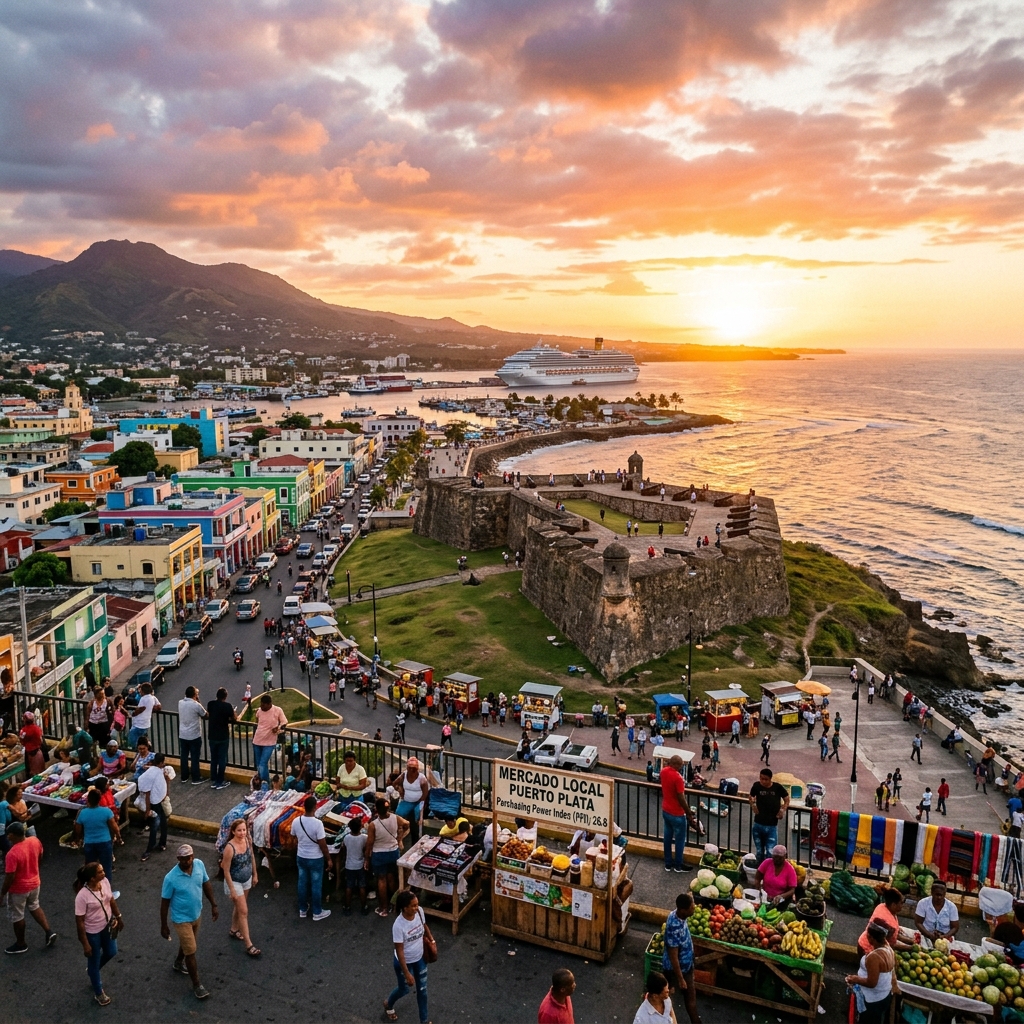
Understanding Puerto Plata’s Purchasing Power Index in 2026
As international travel expenses continue to fluctuate worldwide in 2026, the Dominican Republic's historic northern hub, Puerto Plata, stands out as one of the Caribbean's most resilient value destinations. While resort enclaves like Punta Cana Travel Budget operate on an insular, dollarized economy with Western European price points, Puerto Plata retains deep roots as a working Dominican provincial capital. This unique dual identity creates a compelling Purchasing Power Index (PPI) advantage for travelers spending US Dollars, Euros, or British Pounds.
Purchasing power parity measures how much physical goods, accommodation, local transportation, and labor services your home currency can acquire relative to domestic pricing. In Puerto Plata, foreign currencies command immense leverage. The local currency, the Dominican Peso (DOP), allows travelers who step outside the walled resort gates to capture domestic pricing on food, transportation, and regional excursions. In 2026, the baseline cost of living in Puerto Plata remains roughly 45% to 60% lower than major North American and European cities, offering visitors extraordinary financial efficiency without sacrificing authentic Caribbean culture.
However, extracting maximum purchasing power in Puerto Plata requires understanding the local financial landscape. The city features a multi-tiered pricing architecture: cruise-port inflated rates at Taino Bay and Amber Cove, conventional mid-tier resort rates around Playa Dorada, and authentic Dominican street-level prices in downtown Puerto Plata, Costámbar, and the Malecón. Navigating these layers strategically is the secret to unlocking tremendous travel value in 2026.
Daily Travel Cost Benchmarks in Puerto Plata for 2026
To establish realistic expectations for your travel budget, our 2026 financial benchmarks evaluate Puerto Plata across three distinct travel tiers. These benchmarks factor in baseline inflation, tourist consumption patterns, and real local market rates.
- Backpacker Tier: Accommodation at $37 per night, Food at $21 per day, and Transport at $10 per day. Total Daily Run Rate: approximately $68 per day.
- Standard / Mid-Range Tier: Accommodation at $124 per night, Food at $50 per day, and Transport at $21 per day. Total Daily Run Rate: approximately $195 per day.
- Luxury Tier: Accommodation at $371 per night, Food at $124 per day, and Transport at $66 per day. Total Daily Run Rate: approximately $561 per day.
Analyzing these tiers through the lens of purchasing power demonstrates the steep curve between local consumption and tourist-targeted services. An expenditure of $50 per day on food in the mid-range tier affords full sit-down meals featuring locally caught red snapper, craft cocktails along the Malecón, and artisanal espresso. In contrast, that same $50 in Miami, San Juan, or Grand Cayman would barely cover an entrée and a drink after taxes and automatic gratuities.
Accommodation Costs and Purchasing Power Arbitrage
Accommodation represents the largest absolute expense of any itinerary, yet it is also where your purchasing power produces the highest dividend in Puerto Plata. Unlike smaller Caribbean islands constrained by supply bottlenecks and sky-high utility imports, Puerto Plata features an expansive inventory of boutique hotels, colonial guesthouses, converted plantation homes, and beachfront vacation rentals.
Budget Stays: $37 per Night
At the $37 benchmark, budget travelers are not relegated to grim, shared-dormitory hostels. In 2026, $37 per night secures a clean, private, air-conditioned room with an en-suite bathroom in downtown Puerto Plata near the historic Parque Central or in quiet residential developments like Costámbar. These properties frequently include high-speed Wi-Fi, shared kitchen access, and communal courtyards. This rate delivers roughly three times the physical living space and comfort that the equivalent budget would secure in Western Europe or the United States.
Mid-Range Comfort: $124 per Night
At the $124 benchmark, purchasing power shifts into upscale comfort. Travelers in this tier can book stylish beachfront condominiums in Playa Dorada, historic boutique Victorian hotels, or modern apartments with ocean-view balconies and private pool access in Cofresí. In many cases, this budget level includes daily housekeeping, gated security, and proximity to private beach clubs. For couples or small families sharing expenses, the per-person rate drops low enough to rival baseline hostel costs in North America.
Luxury Estates: $371 per Night
At $371 per night, Puerto Plata enters true luxury territory. While a luxury budget of this size in St. Barth or Turks and Caicos commands only entry-level, standard resort rooms, in Puerto Plata it secures expansive private villas complete with multi-bedroom layouts, infinity pools, and panoramic views of Mount Isabel de Torres and the Atlantic Ocean. In many instances, this price point allows for the inclusion of a dedicated private villa host or on-demand private culinary services.
Dining and Food: Capitalizing on Local Agricultural Abundance
The Dominican Republic is one of the few Caribbean nations with a self-sustaining agricultural sector. Puerto Plata sits immediately north of the fertile Cibao Valley, which produces an abundance of tropical fruits, vegetables, coffee, cacao, beef, and poultry. Because fresh food is grown domestically rather than imported via expensive container ships, your food purchasing power in Puerto Plata is remarkably robust.
Street Food & Meal Cost Index and Local Comedores ($21 per Day)
For budget-conscious travelers spending $21 daily, food is both inexpensive and flavorful. A traditional Dominican breakfast of mangú (mashed green plantains) served with fried cheese, salami, and eggs (known locally as los tres golpes) costs roughly $3 to $4 at a local cafeteria. For lunch, the staple la bandera dominicana—a generous plate of stewed chicken or beef, seasoned rice, red beans, and fried plantains—costs between $4 and $6 at neighborhood comedores. Dinner can easily consist of freshly made empanadas or street-side yaroas (layered plantain or potato casseroles topped with meat and cheese) for $3 to $5, leaving plenty of change for fresh tropical juices or a cold domestic Presidente beer.
Mid-Range Waterfront Dining ($50 per Day)
A $50 daily food budget affords a full-service culinary experience. You can begin the day with specialty espresso and tropical fruit bowls at a downtown café ($6 to $8), enjoy an oceanfront lunch along the Malecón consisting of whole grilled catch-of-the-day with tostones and garlic sauce ($15 to $18), and conclude with an upscale dinner featuring fresh seafood paella or grilled beef tenderloin paired with Dominican rum cocktails ($22 to $25). The purchasing power here is exceptional: you are eating ocean-to-table seafood at a fraction of standard international resort rates.
Fine Dining and Culinary Luxury ($124 per Day)
With $124 per day allocated to dining, you can experience the pinnacle of Dominican high-end gastronomy. This budget accommodates high-end dining at Puerto Plata's premier oceanfront steakhouses and upscale fusion bistros. It easily covers multiple-course tasting menus, imported vintage wines, fresh spiny lobster preparations, and private catering services delivered directly to your villa. Your purchasing power at this level commands white-glove service and culinary craftsmanship that would command $300 or more per person in metropolitan hubs.
Transportation: Navigating the Local vs. Tourist Infrastructure
Transportation in Puerto Plata highlights the stark divide between local purchasing power and tourist pricing. Travelers who understand how the local transit ecosystem functions in 2026 can move around the province for pennies, whereas those relying on unmetered resort taxis pay premium international rates.
Budget Transit: Guaguas and Carros Públicos ($10 per Day)
With a $10 daily transit budget, you can navigate the entire Puerto Plata coastline. Public minibuses known as guaguas run regularly along the main highway between Puerto Plata, Sosúa, and Cabarete for roughly $1.50 to $2.50 per journey. Within the city, fixed-route shared taxis called carros públicos run set lines for less than $1 per ride. While navigating them requires basic Spanish and a sense of adventure, they offer maximum purchasing power, letting you cover significant regional mileage for a nominal fee.
Mid-Range Mobility: Rideshares and Scheduled Transfers ($21 per Day)
In 2026, ridesharing platforms operate reliably within urban Puerto Plata and surrounding suburbs. A $21 daily transport budget allows for multiple on-demand rideshare trips between your accommodation, downtown museums, and the Malecón, bypassing traditional taxi haggling. For longer journeys, this daily allocation easily amortizes the cost of an economy rental car Split Travel Budget between two travelers, providing complete autonomy to explore hidden beaches like Playa Dorada and Playa Bergantín.
Luxury Travel: Private Chauffeur Services ($66 per Day)
At $66 per day, transport shifts from simple transit to curated convenience. This budget allows for a dedicated private driver for regional day trips or covers scheduled round-trip executive SUV transfers to and from Gregorio Luperón International Airport (POP) or Santiago Travel Budget’s Cibao International Airport (STI). It eliminates transit stress, guarantees bilingual assistance, and provides air-conditioned, reliable service tailored to your personal schedule.
Sightseeing, Excursions, and Value Arbitrage
Excursions in Puerto Plata demonstrate how geographical knowledge multiplies purchasing power. When you purchase tours through cruise ship concierges or resort booking desks, prices are inflated to reflect offshore retail levels. Booking directly with local operators or arranging self-guided excursions captures pure local pricing.
The 27 Waterfalls of Damajagua (27 Charcos)
This world-famous canyoning and waterfall experience is located just 30 minutes southwest of Puerto Plata. Cruise excursions often bill passengers upwards of $90 to $120 per person for an organized excursion to the lower falls. By taking a regional guagua or rideshare directly to the official park entrance and purchasing your ticket on-site, the standard park admission—including mandatory licensed guides, safety helmets, and life jackets—costs approximately $15 to $22 depending on how many cascades you choose to ascend. The experience is identical, but the direct purchasing power difference is nearly 500%.
Mount Isabel de Torres Teleférico (Cable Car)
Ascending the iconic cable car to the Christ the Redeemer replica and lush botanical gardens atop Mount Isabel de Torres is an essential Puerto Plata activity. In 2026, standard admission remains approximately $10 to $12 for international visitors. Once at the summit, walking through the cloud-forest botanical trails is free of charge, offering one of the most cost-effective panoramic views in the entire Caribbean basin.
Historic Fort San Felipe and Central Park
Immersing yourself in Dominican colonial history is virtually cost-free. Wandering the Victorian-era streets around Parque Central, visiting the pink-hued Paseo de Doña Blanca, and strolling the vibrant Umbrella Street cost nothing. Entry to the 16th-century fortress of San Felipe at the western end of the Malecón costs roughly $3 to $4 per person, complete with an audio guide. Comparing this to entry fees at historical monuments in North America or Europe highlights the sheer value of Puerto Plata's cultural assets.
Strategic Tips to Maximize Purchasing Power in 2026
To ensure every dollar, euro, or pound performs at peak efficiency during your stay in Puerto Plata, incorporate these financial strategies into your daily planning:
- Transact in Dominican Pesos (DOP): Always pay in the local currency for daily expenses. While tourist establishments happily accept US Dollars, their internal conversion rates are routinely marked down by 5% to 10% in their favor. Withdraw pesos directly from reputable bank ATMs (such as Banco Popular or Banreservas) to secure the true interbank exchange rate.
- Shop at National Supermarket Chains: For self-catering, avoid neighborhood tourist convenience marts. Visit large domestic supermarket chains such as La Sirena or Jumbo in Puerto Plata. You will pay standardized government-regulated prices for local rum, premium Dominican coffee beans, fresh produce, and baked goods.
- Bypass the Cruise Port Bubbles: If visiting during days when mega-ships dock at Taino Bay or Amber Cove, avoid shopping and dining within the immediate perimeter of the cruise village. Walk or ride 10 minutes into the central municipal district to see prices drop by more than half for identical goods, hand-rolled cigars, and handcrafted souvenirs.
- Negotiate Transport in Advance: If taking conventional taxis instead of rideshares, always agree on the fare in Dominican Pesos before setting foot inside the vehicle. Ask your hotel front desk or vacation rental host for the current standard benchmark fare to your destination to anchor your negotiations accurately.
Conclusion: The True Value of Puerto Plata in 2026
Puerto Plata proves that exceptional Caribbean travel does not require an inflated luxury budget. By leveraging the Dominican Republic’s domestic agricultural capacity, established regional transit network, and competitive local accommodation stock, travelers can enjoy an authentic, enriching, and comfortable escape while spending a fraction of what neighboring islands demand. Whether you are living comfortably on $68 a day as an independent budget explorer or indulging in private villa luxuries at $561 a day, Puerto Plata delivers an extraordinary return on every dollar spent.