
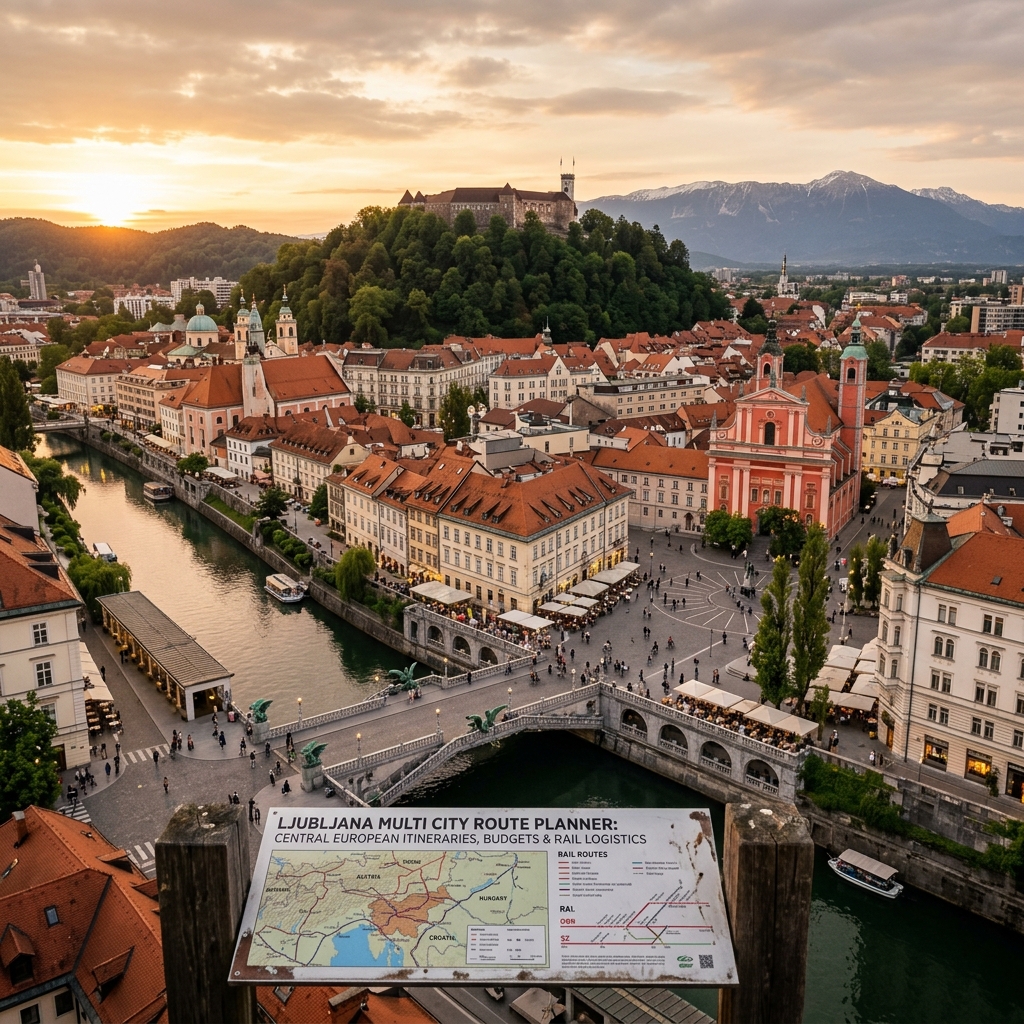
The Crossroads of Europe: Why Ljubljana Anchors the Ultimate Multi-City Route Planner
Nestled seamlessly between the snow-capped Julian Alps, the rolling vineyards of the Balkans, and the turquoise waters of the Adriatic, Ljubljana has firmly established itself in 2026 as one of the smartest transit hubs for multi-city travel across Europe. Slovenia’s compact, vibrant capital is pedestrianized, environmentally progressive, and geographically positioned at the meeting point of Italy, Austria, Hungary, and Croatia.
Planning a multi-city trip requires balancing high-speed rail connections, cross-border logistics, and accommodation budgets. While major hubs like Vienna Travel Budget or Venice command soaring travel costs, Ljubljana offers an authentic, central European experience with remarkably predictable pricing. Whether you are chaining a two-week Alpine-Balkan expedition or crafting a regional train-hopping itinerary, understanding Ljubljana’s cost baseline and transit architecture is the key to unlocking an efficient 2026 European vacation.
2026 Daily Travel Budget Breakdown for Ljubljana
To accurately build your multi-city spreadsheet, you must first establish Ljubljana’s daily baseline expenses. Prices in 2026 reflect the widespread adoption of contactless digital transit, modern boutique stays, and seasonal dining variations.
1. Backpacker Tier: ~$52 per day
- Accommodation: $28 per night (Boutique hostel dorm beds in Tabor, Metelkova, or near Ljubljana Main Station).
- Food & Drink: $16 per day (Burek for breakfast, lunch at central market stalls, and local seasonal set menus or malica lunches).
- Local Transport: $8 per day (Urbana card single-ride bus fares, city bike rentals, or regional station transfers).
- Target Traveler: Solo adventurers, student rail travelers, and backpackers using regional trains and bus networks.
2. Standard / Mid-Range Tier: ~$149 per day
- Accommodation: $95 per night (Character-rich 3-star or 4-star boutique hotels along the Ljubljanica River or modern apartments near Trnovo).
- Food & Drink: $38 per day (Sit-down riverside bistro lunches, traditional Slovenian dinners with local Kraški pršut and Refošk wine).
- Local Transport: $16 per day (Short taxi/rideshare hops, e-scooters, and intercity train supplements).
- Target Traveler: Couples, independent explorers, and families seeking comfort and central convenience.
3. Luxury Tier: ~$431 per day
- Accommodation: $285 per night (5-star heritage properties, luxury suites with castle views, or upscale eco-villas).
- Food & Drink: $95 per day (High-end tasting menus, Michelin-recognized fine dining such as Restavracija Strelec inside Ljubljana Castle, and curated wine pairings).
- Local Transport: $51 per day (Private chauffeured airport transfers, premium rental car allocations, and first-class rail travel).
- Target Traveler: Luxury vacationers seeking customized itineraries, private guides, and premium cross-border connections.
Top Multi-City Route Blueprints Featuring Ljubljana (2026 Edition)
Route 1: The Alpine-to-Adriatic Explorer (7 to 10 Days)
Path: Venice (Italy) → Ljubljana (Slovenia) → Lake Bled → Zagreb Travel Budget (Croatia)
This classic trans-European route connects the canals of Northern Italy with the dramatic green landscapes of Slovenia and the historic streets of Croatia. In 2026, seamless cross-border regional buses (such as Flixbus and Nomago) and direct international EuroCity trains make this connection fluid.
- Venice to Ljubljana: Cross border via high-speed train to Trieste, followed by the direct EuroCity rail or regional shuttle (approx. 3.5 hours, $22–$45).
- Ljubljana Base & Bled Excursion: Spend 2–3 days exploring central Ljubljana and take a day excursion to Lake Bled (45 minutes by train/bus, ~$8 each way).
- Ljubljana to Zagreb: Direct regional train from Ljubljana Main Station to Zagreb Glavni Kolodvor (approx. 2 hours 15 minutes, $15–$25).
Route 2: The Central European Grand Triangle (10 to 14 Days)
Path: Vienna (Austria) → Graz → Ljubljana (Slovenia) → Budapest Travel Budget (Hungary)
For travelers interested in grand architecture, rail-pass efficiency, and dynamic cultural shifts, this multi-city triangle offers unmatched variety.
- Vienna to Ljubljana: ÖBB EuroCity or daily Nightjet trains traverse the Semmering Pass directly into Slovenia (approx. 6 hours, $32–$65 advance fare).
- Ljubljana Exploration: Enjoy Jože Plečnik’s iconic UNESCO-listed architectural works, the Triple Bridge, and Tivoli Park over 3 days.
- Ljubljana to Budapest: Direct international train service via Lake Balaton into Budapest Déli station (approx. 7.5 hours, $28–$55).
Route 3: The Slovenian Emerald & Istrian Coast Loop (5 to 7 Days)
Path: Ljubljana → Postojna / Škocjan Caves → Piran → Rovinj (Croatia)
Ideal for road-trippers and regional bus travelers, this multi-city itinerary combines natural subterranean wonders with Mediterranean coastal towns.
- Ljubljana to Postojna: 1 hour via frequent regional bus or train ($7–$12).
- Postojna to Piran: 1.5 hours scenic coastal transfer down to Slovenia’s Venetian Gothic gem ($10–$15).
- Piran to Rovinj: Cross the Istrian peninsula via seasonal catamarans or regional cross-border coach ($18–$30).
Multi-City Transit Logistics & Cost Optimization for 2026
Cross-Border Rail Networks vs. Point-to-Point Bookings
If your 2026 multi-city itinerary spans three or more countries, compare a Eurail Global Pass with individual point-to-point tickets. Slovenia’s national railway, Slovenske železnice (SŽ), offers heavily discounted fixed-rate international tickets (such as the Ljubljana-Zagreb Spezial or Wien Spezial) if booked at least 3 to 7 days in advance online. For local journeys, train tickets remain very economical, often cheaper than rail pass daily allocations.
Navigating Tolls, E-Vignettes, and Cross-Border Car Rentals
If you prefer driving your multi-city route, note that Slovenia enforces a mandatory digital toll system (e-vinjeta). In 2026, driving on Slovenian motorways requires purchasing an e-vignette online before crossing the border:
- Weekly Slovenian E-Vignette: ~$18 (€16) for standard passenger cars.
- Austrian E-Vignette: ~$13 (€11.50) for a 10-day pass if routing north into Austria.
- Cross-Border Rental Fees: Most car rental companies in Ljubljana or Venice charge a cross-border fee ($35–$65 total) to authorize driving across Italian, Slovenian, and Croatian territories. Always declare your full route upon booking to ensure valid insurance coverage.
Where to Stay in Ljubljana for Seamless Transit
When orchestrating a multi-city itinerary, strategic accommodation placement minimizes transit stress:
- Near the Main Railway Station (Železniška postaja Ljubljana): Best for early morning departures and late-night arrivals. The area around Kolodvorska and Trg OF is within a 10-minute walk of both the bus/train hubs and the edge of the historic Old Town.
- Old Town (Stari Trg & Mestni Trg): Ideal for mid-range and luxury travelers wanting atmosphere right on the riverbank. Note that this entire district is strictly pedestrianized; if traveling with heavy luggage, utilize the free Kavalir electric shuttle service.
- Krakovo and Trnovo: Quiet, green residential neighborhoods just a 12-minute walk south of the Triple Bridge, offering spacious boutique apartments with lower per-night rates for mid-range groups.
Strategic Sightseeing & Experience Costs in 2026
Incorporate these standard attraction costs into your multi-city activity budget:
- Ljubljana Castle Return Funicular + Castle Entry: $18–$20
- Ljubljanica River Tourist Boat Cruise (45 min): $15–$17
- Slovenian National Gallery & City Museum: $10–$12
- Postojna Cave + Predjama Castle Combined Ticket: $48–$54
- Plečnik House Guided Tour: $11–$13
Pro Tips for Multi-City Travelers Routing Through Ljubljana in 2026
- Verify ETIAS Status: In 2026, non-EU passport holders (including US, Canadian, and UK citizens) must hold an approved ETIAS travel authorization before entering the Schengen Area. Ensure your authorization covers your entire multi-city route.
- Utilize Luggage Lockers at Ljubljana Central: If you are treating Ljubljana as a 12-hour day stop between Vienna and Venice, use the modern electronic luggage lockers at the main train station (approx. $5–$9 for 24 hours depending on locker size).
- Dine During the "Malica" Window: For standard and backpacker travelers, look for signs offering malica (midday business lunches) between 11:00 AM and 2:00 PM on weekdays. You can secure a two-course warm meal for $9 to $13, cutting daily food costs substantially.
- Go Cashless but Carry Backup Euros: Ljubljana is nearly 100% cashless across restaurants, public transit, and ticket kiosks. However, smaller regional market stalls and rural mountain huts near Bled still appreciate small euro coin denominations.
Conclusion
Ljubljana is far more than a charming destination; it is one of Europe's most balanced, efficient multi-city hubs. By anchoring your 2026 route planning around Slovenia’s capital, you benefit from lower daily costs compared to neighboring Western European capitals, superior cross-border connectivity into the Alps and Balkans, and a relaxed, walkable stopover that enhances your entire journey.