
Navigating Guayaquil Travel Budget: Your 2026 Coastal Road Trip Hub
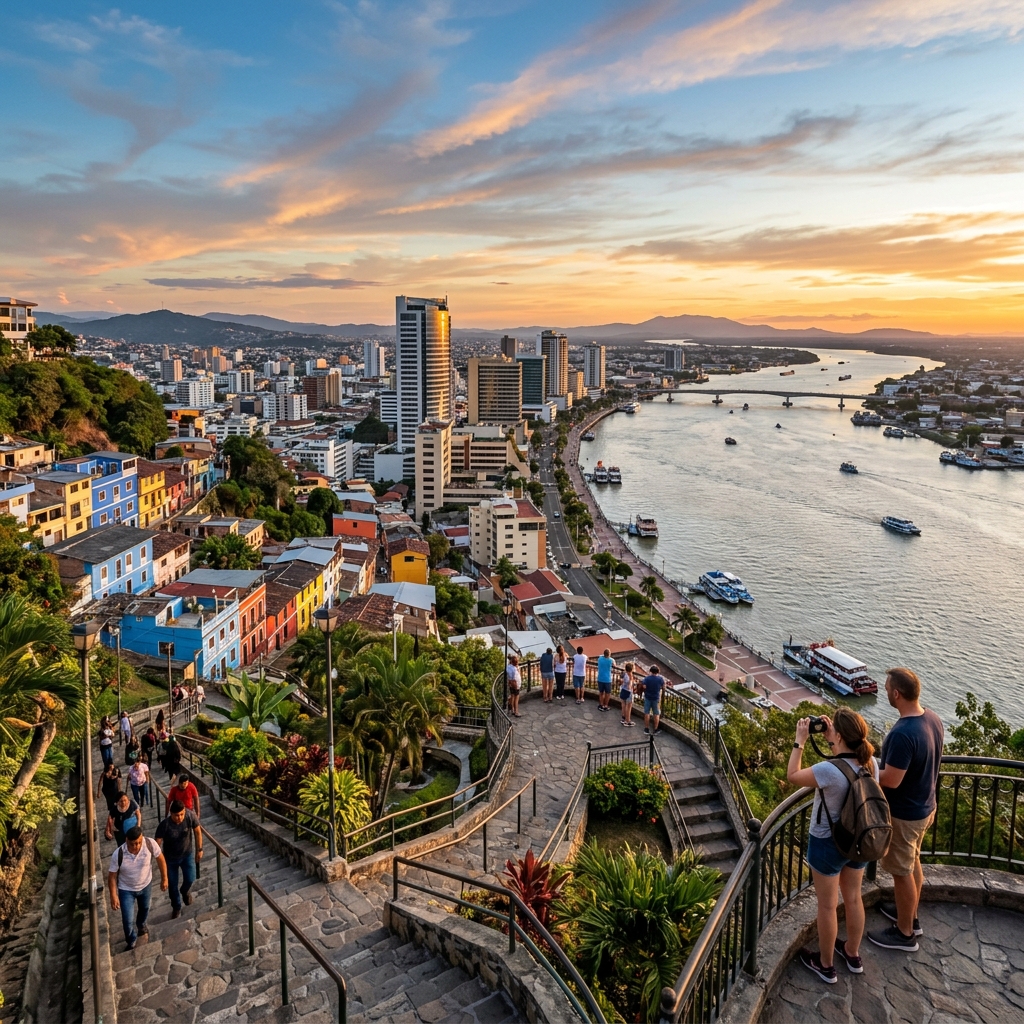
As Ecuador’s largest city and commercial powerhouse, Guayaquil serves as the ultimate gateway for road trip enthusiasts looking to explore the South American Pacific coastline and the nearby Andean highlands. Situated along the expansive Guayas River delta, Guayaquil offers modern highway networks connecting you directly to sun-drenched surf towns along the Ruta del Spondylus, dense cloud forests, and dramatic mountain ascents toward Cuenca Travel Budget.
While taking intercity buses is a popular low-cost transit method in South America, renting a car or embarking on a driving road trip from Guayaquil gives you total freedom over your itinerary. However, calculating true Driving Cost Calculator in Ecuador requires understanding local gas subsidies, toll booth systems, rental car insurance requirements, and urban parking fees. This comprehensive 2026 financial guide breaks down every dollar you need to plan a seamless, cost-effective driving adventure out of Guayaquil.
Guayaquil Travel Tiers: 2026 Daily Cost Benchmarks
To accurately plan your trip, it helps to understand baseline travel costs in Guayaquil. Ecuador utilizes the United States Dollar (USD) as its official currency, eliminating exchange-rate confusion for American travelers. Below are the standard daily benchmark budgets for staying in Guayaquil in 2026, excluding long-distance rental vehicle costs:
- Backpacker Tier: Approximately $40 per day
- Accommodation: $22/night (shared hostel dorm or basic private room in Centro)
- Food: $12/day (local almuerzos, street food, markets)
- Local Transit / Incidentals: $6/day (city buses, Metrovía, quick taxi rides)
- Standard / Mid-Range Tier: Approximately $116 per day
- Accommodation: $74/night (3-star boutique hotel in Urdesa or Puerto Santa Ana Travel Budget)
- Food: $30/day (sit-down seafood restaurants, casual dining, coffee shops)
- Local Transit / Incidentals: $12/day (short-distance rideshare, parking fees)
- Luxury Tier: Approximately $337 per day
- Accommodation: $223/night (5-star riverside hotel, executive suite)
- Food: $74/day (upscale gastronomy, fine dining near Malecón 2000, cocktails)
- Local Transit / Incidentals: $40/day (private chauffeur, premium SUV parking/valet)
Detailed Breakdown: Driving Costs in Ecuador (2026 Edition)
Driving in Ecuador is surprisingly economical compared to North America or Europe, largely due to regulated fuel prices and affordable toll infrastructure. Here is what you must budget for vehicle-related expenses when renting or operating a car in Guayaquil in 2026.
1. Gasoline and Fuel Prices
Ecuador sells fuel by the US gallon. Fuel prices are partially regulated by the government, though small market adjustments take place periodically. When fueling up at stations like Primax, Terpel, or Petroecuador, you will encounter three primary options:
- Ecopaís / Extra (85 Octane): Priced around $2.40 to $2.55 per gallon. This is the most common regular unleaded fuel used by everyday commuters and economy rental cars.
- Super Premium (95 Octane): Priced around $3.85 to $4.10 per gallon. Highly recommended for modern turbocharged rental vehicles, SUVs, and high-elevation driving to prevent engine knocking.
- Diesel: Priced around $1.75 to $1.90 per gallon, primarily used by heavy trucks and larger 4x4 diesels.
Budgeting Tip: A standard compact car getting 30 miles per gallon will cost only around $15 to fill up entirely with Ecopaís gas, making long-distance road trips exceptionally light on your wallet.
2. Car Rental Rates and Mandatory Insurance
Picking up a rental car in Guayaquil—either at José Joaquín de Olmedo International Airport (GYE) or downtown commercial districts—varies significantly depending on season and vehicle class:
- Economy / Compact Hatchback (e.g., Chevrolet Sail, Kia Picanto): $35 to $50 per day. Ideal for urban driving and paved coastal highways.
- Mid-Size Sedan or Small Crossover (e.g., Hyundai Creta): $55 to $75 per day. Offers better clearance for mountain routes.
- Full-Size 4x4 SUV (e.g., Toyota Fortuner, Chevrolet Trailblazer): $90 to $145 per day. Essential if driving unpaved backroads in cloud forests or steep dirt roads.
Insurance Requirements: Basic Collision Damage Waiver (CDW) and Third-Party Liability are mandatory in Ecuador and usually add $10 to $20 per day to the base rate. Always ensure your rental agreement includes emergency roadside assistance (asistencia en carretera).
3. Highway Tolls (Peajes)
Ecuador’s major highways (such as the E40 leading to the coast and the E25 northbound) feature well-maintained toll plazas called peajes operated by local provincial authorities (such as the Prefectura del Guayas). Tolls are uniformly cheap: $1.00 USD per toll booth for standard passenger cars. Most road trips out of Guayaquil pass through 1 to 3 toll booths each way. Cash is strictly required—keep a small stash of $1.00 coins or $5.00 bills ready in your console, as toll operators rarely accept credit cards or large $20 bills.
4. Urban Parking Rates in Guayaquil
Parking on the street in central Guayaquil is strictly monitored by municipal traffic authorities (ATM). For security and peace of mind, travelers should use covered public garages or private parking lots (parqueaderos):
- Malecón 2000 Garages: $1.20 to $1.50 per hour; maximum daily cap around $12.00.
- Puerto Santa Ana / Las Peñas Parking: $1.50 to $2.00 per hour.
- Overnight Hotel Parking: Mid-range and luxury hotels usually offer free secure parking for guests, while budget hotels may charge a nominal fee of $5.00 to $10.00 per night for an off-site partner garage.
3 Epic Road Trip Routes Starting from Guayaquil
Route 1: Guayaquil to Montañita & Olón (Ruta del Spondylus)
This classic coastal drive takes you west along the Vía a la Costa (Highway E40) toward Santa Elena, before turning north along the iconic Ruta del Spondylus (Highway E15). You will pass through dry coastal forests before hitting surf beaches, cliffside seafood stalls, and lively coastal villages.
- One-Way Distance: 175 km (108 miles)
- Driving Time: ~2.5 to 3 hours
- Estimated Toll Costs: $2.00 round trip
- Estimated Gas Cost (Compact Car): $12.00 round trip (Ecopaís)
- Route Highlights: Stopping for fresh ceviche in Chongón, catching waves in Montañita, enjoying sunset views at the Olón cliffside sanctuary.
Route 2: Guayaquil to Cuenca via El Cajas National Park
One of South America's most breathtaking drives, this route ascends rapidly from sea level in Guayaquil to over 4,100 meters (13,500 feet) in Parque Nacional Cajas, before descending into the UNESCO World Heritage colonial city of Cuenca.
- One-Way Distance: 195 km (121 miles)
- Driving Time: ~3.5 to 4 hours
- Estimated Toll Costs: $2.00 round trip
- Estimated Gas Cost (Mid-size SUV): $22.00 round trip (Super 95 suggested for high elevation)
- Route Highlights: Transitioning from tropical banana plantations to foggy paramo tundra, hiking around Laguna La Toreadora, colonial architecture in Cuenca.
Route 3: Guayaquil to Puerto López (Machalilla National Park)
Heading further north along the coast, this road trip brings you to the gateway of Machalilla National Park, home to humpback whale migration tours (June through October) and the famous white-sand beach of Los Frailes.
- One-Way Distance: 225 km (140 miles)
- Driving Time: ~3.5 hours via E24 and E15
- Estimated Toll Costs: $2.00 round trip
- Estimated Gas Cost (Compact Car): $16.00 round trip
- Route Highlights: Hiking to Los Frailes beach, exploring Agua Blanca sulfur lagoon, tasting local peanut-based coastal dishes in Manabí.
Financial Survival & Safety Guide for Driving in Guayaquil
While driving in Ecuador provides unparalleled freedom, navigating traffic around Guayaquil requires proactive safety measures and local know-how:
- Avoid Peak Commuter Hours: Traffic entering or leaving Guayaquil over the National Unity Bridge (Puente de la Unidad Nacional) or Vía a la Costa gets heavily congested between 7:00 AM–9:00 AM and 5:00 PM–7:00 PM. Schedule departure times for mid-morning to save gas and time.
- Use Offline Navigation Apps: Cellular data signals can drop when passing through high mountain passes like Cajas or rural coastal stretches. Download offline maps via Google Maps or Maps.me prior to leaving Guayaquil.
- Mind Speed Enforcement Cameras: Guayaquil and its surrounding highways employ automated speed radar systems (fotomultas). The highway limit along Vía a la Costa is generally 100 km/h (62 mph) for light passenger cars, dropping to 50 km/h inside urban zones. Speeding tickets are directly billed to car rental companies and added to your final credit card charge.
- Secure Nighttime Parking: Never leave valuables visible inside your vehicle when parked on the street. Always use guarded garages marked with a green Parqueadero Express or Parqueadero Privado sign.