
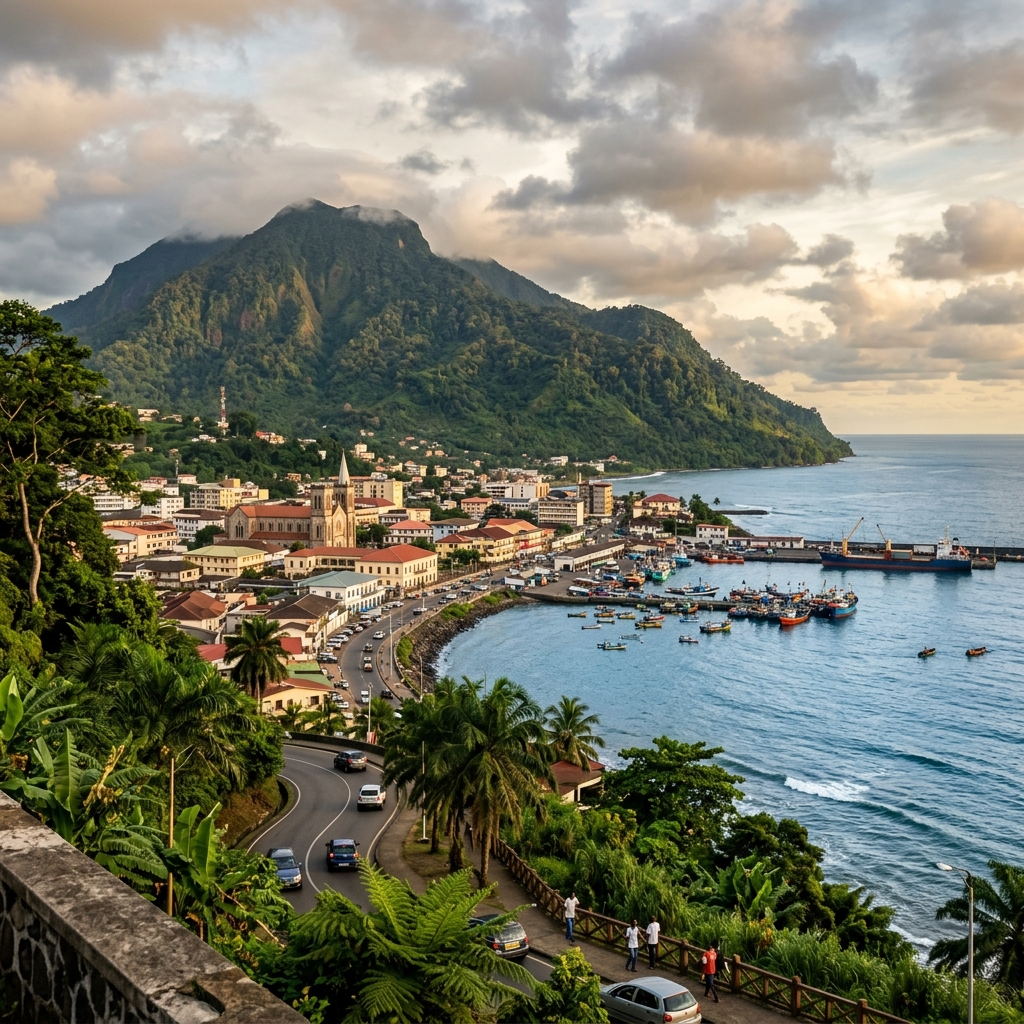
Perched on the volcanic rim of Bioko Island in Central Africa, Malabo Travel Budget presents one of the most intriguing, off-the-beaten-path frontiers for digital nomads in 2026. As the capital of Equatorial Guinea—the only Spanish-speaking nation in Sub-Saharan Africa—Malabo combines Spanish colonial architecture, lush tropical highlands, petroleum-backed urban developments, and a distinct West African coastal identity. While it historically lagged behind traditional remote work hubs, recent investments in telecom infrastructure, a streamlined electronic visa system, and expanded international air routes have made Malabo a compelling destination for adventurous location-independent professionals seeking an authentic, non-touristy remote work experience.
Working remotely from Malabo requires careful financial planning and realistic expectations regarding infrastructure. Unlike Digital Nomad Living Index hotbeds in Southeast Asia or Southern Europe, Equatorial Guinea's economy is heavily shaped by its energy sector, which can drive up costs for imported goods while keeping local experiences budget-friendly. This guide breaks down the true cost of living, workspace options, connectivity setups, and daily logistics for digital nomads navigating Malabo in 2026.
Visa & Entry Requirements for Remote Workers in 2026
Navigating visa entry into Equatorial Guinea used to be notoriously difficult, but the government's fully integrated eVisa system (launched online and continuously improved through 2026) has transformed accessibility for international visitors. While Equatorial Guinea does not yet offer a dedicated "Digital Nomad Visa," location-independent workers enter utilizing standard short-term tourist or business eVisas.
- Tourist eVisa Duration: Single-entry or multiple-entry valid for 30 to 90 days.
- Application Process: Submitted online prior to travel via the official government portal, requiring passport scans, accommodation proof, return flight confirmation, and proof of funds. Processing typically takes 3 to 7 business days.
- eVisa Cost: Approximately $75 USD to $150 USD depending on processing speed and nationality.
- Health Mandates: An official Yellow Fever vaccination certificate is mandatory upon arrival at Malabo International Airport (SSG).
- Visa Extensions: Extensions beyond 30 days must be handled locally through the national immigration headquarters (Dirección General de Extranjería) in central Malabo before your initial stay expires.
Digital Nomad Financial Benchmarks for Malabo (2026)
Living costs in Malabo vary significantly based on your lifestyle choices, long-term lease negotiations, and reliance on imported goods. To help you budget accurately, here are our calculated benchmark tiers for daily expenses in 2026:
1. Backpacker / Slow Nomad Tier
Ideal for budget-conscious remote workers staying in local guesthouses, cooking local produce, and relying on shared minibuses or walking.
- Accommodation: $18 / night (Local guesthouse room or basic long-term studio rental)
- Food & Dining: $10 / day (Eating at local markets, street stalls, and cooking local staples)
- Local Transport: $5 / day (Shared taxis colectivos and short urban hops)
- Estimated Daily Base Total: $33 / day (~$990 / month base living costs)
2. Standard / Mid-Range Tier
The standard baseline for comfortable digital nomads requiring reliable air conditioning, hot water, high-speed mobile data top-ups, private apartment rentals, and occasional meals at international restaurants.
- Accommodation: $60 / night (Private serviced apartment or mid-tier hotel in central Malabo)
- Food & Dining: $24 / day (Mix of local eateries, modern cafes, and imported groceries)
- Local Transport: $10 / day (Private taxi rides and local airport transfers)
- Estimated Daily Base Total: $94 / day (~$2,820 / month base living costs)
3. Luxury / Business Tier
Tailored for remote executives, corporate contractors, and high-budget travelers seeking full-service business amenities, continuous power backup, high-speed fiber internet, and upscale hotel suites.
- Accommodation: $181 / night (Luxury hotel room or premium expat apartment in Malabo II)
- Food & Dining: $60 / day (Dining at fine hotels, foreign bistro spots, and high-end imports)
- Local Transport: $32 / day (Dedicated private driver or premium car rental)
- Estimated Daily Base Total: $273 / day (~$8,190 / month base living costs)
Internet Speed, Mobile Data & Co-Working Space Realities
Infrastructure in Malabo has made major strides. However, maintaining stable internet connectivity requires a proactive setup, as residential Wi-Fi can suffer from unexpected line drops or localized power hiccups.
Mobile Networks & Data Bundles
The two main telecommunications providers operating in Malabo are GETESA (state-backed, broadest coverage) and Muni (competitive data pricing). Upon arriving in Malabo, head to an official service store with your passport to register a SIM card immediately.
- 4G/5G Speeds: Download speeds in central Malabo range between 25 Mbps and 75 Mbps on 4G/LTE lines, while 5G coverage around Malabo II business district yields speeds exceeding 120 Mbps.
- Data Package Costs: Expect to pay around 15,000 XAF to 25,000 XAF (~$25 to $40 USD) for 20GB–40GB of high-speed mobile data valid for 30 days.
- Portable MiFi Hotspots: Investing in a portable 4G/5G battery-powered MiFi router is highly recommended so you can switch between SIM cards if one network experiences downtime.
Co-Working Environments & Laptop-Friendly Workspots
Dedicated commercial co-working hubs (like WeWork or Regus) are virtually non-existent in Malabo. Digital nomads typically divide work hours between private apartment desks, upscale hotel lounges, and local business cafes:
- Luxury Hotel Lounges: Establishments such as the Hilton Malabo and Sofitel Malabo President Palace offer reliable fiber Wi-Fi, quiet work atmospheres, and back-up power generators. Purchasing coffee or lunch allows you to work comfortably for hours.
- Malabo II Cafes: The modern financial sector in Malabo II features contemporary espresso bars and executive cafes equipped with power outlets and moderate Wi-Fi speeds.
- Power Redundancy: City power outages occur periodically. Always ensure your laptop power bank and mobile hotspot devices remain fully charged overnight.
Top Neighborhoods for Digital Nomads in Malabo
Choosing where to base yourself in Malabo directly impacts your safety, noise levels, walkability, and internet reliability.
1. Malabo II (The Business & Diplomatic Quarter)
Located south of the historic center, Malabo II is the modern, master-planned administrative district. It houses modern glass high-rises, foreign embassies, high-end residential complexes, and wide paved boulevards.
- Pros: Superior security, continuous electrical grid priority, access to modern cafes, modern grocery stores, and premium internet fiber lines.
- Cons: Lacks historic charm; higher rental prices; less walkable (requires taxis to access old city markets).
2. Centro Histórico (Old Town / Cathedral District)
The historic heart of Malabo centers around independence squares, Spanish colonial architecture, colorful residential avenues, and the famous Santa Isabel Cathedral.
- Pros: High walkability, lively cultural street atmosphere, proximity to local eateries, and affordable long-term rooms ($18–$60/night).
- Cons: Traffic congestion during business hours; older electrical infrastructure with occasional outages; internet can be slower without mobile hotspots.
3. Sipopo (Resort & Coastal Zone)
Situated roughly 15-20 minutes east of central Malabo, Sipopo is an exclusive coastal enclave built for luxury conferences and quiet seaside living.
- Pros: Pristine beaches, quiet atmosphere, high-level security, excellent hotel workspace amenities.
- Cons: Expensive accommodation ($180+/night); isolated from daily Equatoguinean city life; high transportation costs to reach downtown.
Food, Daily Groceries & Expenses
The culinary landscape in Malabo is a fascinating blend of traditional Spanish, West African, and French influences. Food pricing depends heavily on whether you choose local products or imported European commodities.
- Local Dishes & Street Food: Local dishes like pepesup (spicy fresh fish soup), succotash, grilled plantains, and fresh fish cost between $3 and $7 USD at neighborhood eateries.
- Spanish Tapas & Mid-Tier Dining: Dining at a casual sit-down Spanish bistro in Centro Histórico costs approximately $15 to $30 USD per person including beverages.
- Supermarket Groceries: Imported European products (cheese, butter, wine, cured meats) sold at major supermarkets like Supermercado Casino carry premium pricing due to shipping import taxes. A routine weekly grocery shop for imported items can quickly reach $70–$120 USD. Purchasing fruits, vegetables, and fresh fish at local open-air markets like Mercado Semu drastically reduces your food expenses toward the $10/day mark.
Sightseeing, Work-Life Balance & Day Trips
When closing the laptop, Bioko Island offers stunning natural scenery and rich biodiversity within easy reach of Malabo city limits.
- Pico Basilé: The highest peak in Equatorial Guinea (3,011 meters) towers over Malabo. A day trip up the winding mountain road offers breathtaking views of the ocean and nearby Mount Cameroon on clear days.
- Ureka Waterfalls & Turtle Nesting Beaches: Located on the southern coast of Bioko Island, Ureka is famous for rainforest hikes, pristine waterfalls cascading into the ocean, and sea turtle nesting grounds (primarily active between November and February).
- Arena Blanca: Situated near Luba, this white sand beach is famous for its seasonal butterfly populations and tranquil swimming waters during the dry season.
Financial Safety, Money & Currency Logistics
Equatorial Guinea operates on the Central African CFA Franc (XAF), which is officially pegged to the Euro (1 EUR ≈ 655.957 XAF). Keep these financial realities in mind:
- Cash-Dominated Economy: Cash is king across Malabo. Credit card acceptance is primarily limited to international luxury hotels (Hilton, Sofitel) and a few upscale business venues. Always carry sufficient XAF cash for daily transactions.
- ATMs & Banking: International ATMs (BGFI Bank, EcoBank, Societe Generale) are located across central Malabo and Malabo II. However, daily withdrawal limits apply, and machines can occasionally run out of cash on weekends. Carry a backup VISA or Mastercard.
- Language Requirement: Basic fluency in Spanish is essential for negotiating rent, ordering food, conversing with local drivers, and navigating government offices. English is understood in major hotels and corporate settings but rarely spoken in daily civilian life.