
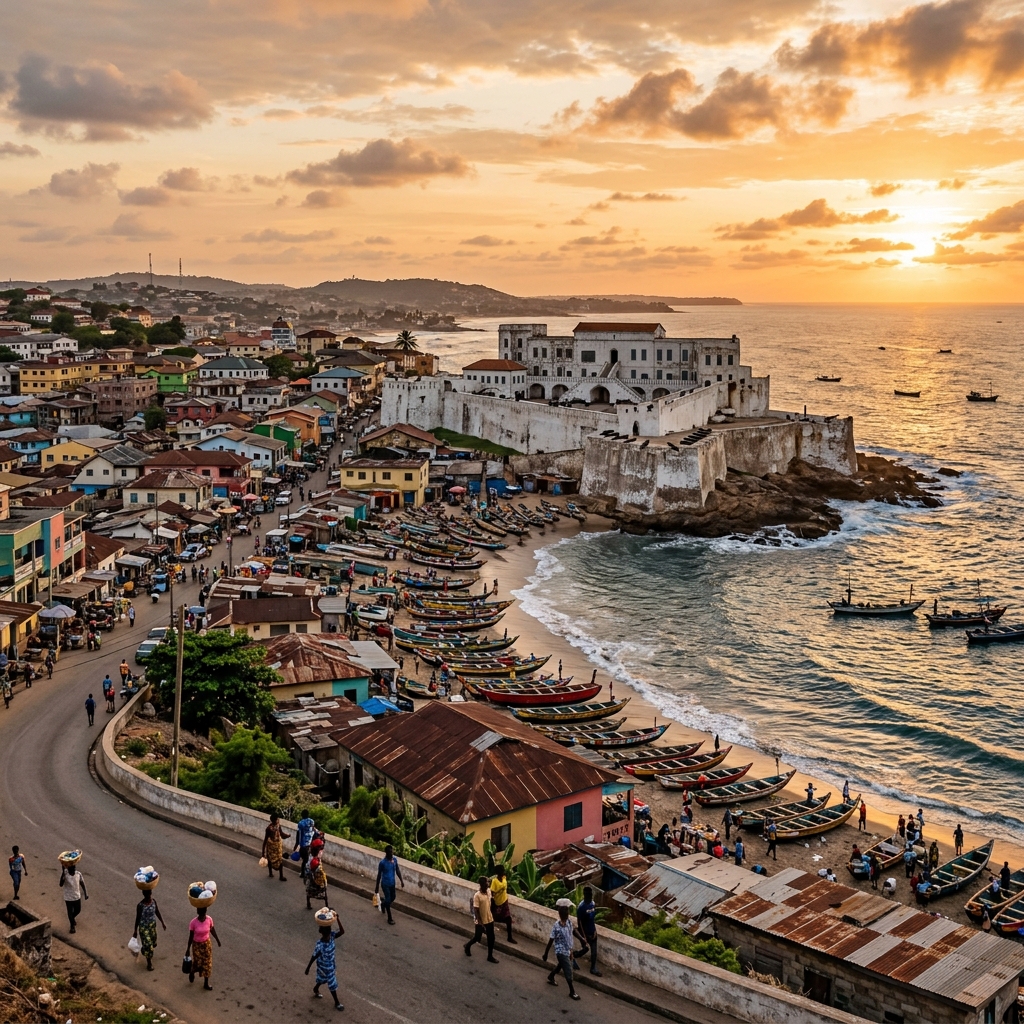
Perched on the windswept shores of the Gulf of Guinea, Cape Coast Travel Budget is the cultural and historical heartbeat of Ghana. For international travelers and diaspora pilgrims alike, walking through the solemn portals of its colonial-era fortifications—most notably Cape Coast Castle—is an unforgettable encounter with world history. Beyond its monumental heritage, the Central Region boasts teeming fishing harbors, serene coastal palm groves, and the lush equatorial rainforest canopy of nearby Kakum National Park.
Traveling through Ghana in 2026 remains remarkably cost-effective compared to Western destinations, yet smart financial planning requires up-to-date insight into the local economy. Currency fluctuations, updated entrance fees for heritage sites, and modern payment methods like mobile money (MoMo) mean travelers need real, on-the-ground numbers. This comprehensive 2026 budget guide breaks down daily expenses across three distinct travel tiers, equipping you with the precise figures needed to use our Travel Cost Calculator for your upcoming Ghanaian journey.
Daily Travel Cost Benchmarks for Cape Coast in 2026
Your overall spending in Cape Coast will largely depend on your choice of lodging and how you decide to travel between towns. Below are the verified daily spending benchmarks per person in 2026, calculated across three standard travel styles:
- Backpacker Tier: Approximately $32 per day (Accommodation: $17, Food: $10, Transport: $5). Geared toward travelers staying in eco-hostels or guesthouses, eating at local chop bars, and using shared minibuses (tro-tros).
- Standard / Mid-Range Tier: Approximately $91 per day (Accommodation: $58, Food: $23, Transport: $10). Geared toward travelers staying in air-conditioned boutique hotels or beachfront lodges, dining at established local restaurants, and utilizing private chartered taxis for regional day trips.
- Luxury Tier: Approximately $262 per day (Accommodation: $173, Food: $58, Transport: $31). Designed for travelers booking premium oceanfront resorts, dining on fresh grilled seafood with cocktails, and employing dedicated private drivers with air-conditioned SUVs.
Accommodation Costs in Cape Coast
Lodging prices along the Central Coast reflect a spectrum ranging from rustic, open-air beach huts to polished heritage retreats. Most independent travel lodging is situated either within the historic town center or a few miles west along the beach road toward Elmina.
Budget Guesthouses and Hostels ($14 – $20 per night)
Backpackers can secure comfortable, no-frills accommodation for around the benchmark rate of $17 per night. At this tier, expect clean rooms with ceiling fans, mosquito nets, and either private or shared cold-water bathrooms. Some budget staples, particularly community-run lodges along the coastline near Oasis Beach or Orange Beach, offer vibrant evening drumming sessions, ocean breezes, and a welcoming backpacker community. While power cuts (locally called dumsor) can occur, most reputable budget properties maintain modest backup generators or solar lighting for essentials.
Mid-Range Hotels and Heritage Lodges ($45 – $75 per night)
If you prefer reliable air-conditioning, ensuite hot water, and a swimming pool or direct ocean access, mid-range options average $58 per night in 2026. Properties around Brenu Akyinim, Elmina Bay, or central Cape Coast provide spacious rooms, complimentary breakfast, secure parking, and on-site generators. This price bracket hits the sweet spot for couples and small families looking for comfort, security, and tranquility away from the midday heat.
Luxury and Beachfront Resorts ($140 – $210 per night)
For top-tier comfort, the luxury benchmark sits at $173 per night. Cape Coast's upscale scene focuses on boutique eco-luxury and expansive beach resorts situated just outside the dense town center along the coastal road toward Takoradi. Guests enjoy panoramic sea views, manicured tropical gardens, top-tier international and Ghanaian hospitality, tennis courts, infinity pools, and round-the-clock concierge services capable of arranging private historical guides and private bush excursions.
Food and Dining Expenses
Ghanaian cuisine is bold, aromatic, and deeply satisfying. In Cape Coast, fresh seafood dominates the culinary landscape, freshly hauled in each morning by colorful, hand-carved pirogues lined across the shoreline.
Street Food & Meal Cost Index and Local Chop Bars ($1 – $4 per meal)
Independent travelers eating on a budget of $10 per day will thrive on Cape Coast's street food offerings. A hearty breakfast of waakye (rice and beans cooked with sorghum leaves) served with spaghetti, boiled egg, shito (black pepper sauce), and stew costs between $1.20 and $2.00. For lunch or dinner, roadside chop bars serve generous bowls of fufu or banku submerged in light goat soup or groundnut (peanut) soup for around $2.50. Freshly roasted plantains with peanuts (kofi broke man) or sweet coconuts cracked open on the spot cost less than $0.80.
Casual Sit-Down Dining and Beach Cafes ($6 – $12 per meal)
A daily mid-range food budget of $23 per day allows you to enjoy sit-down coastal dining with ocean views. A plate of authentic Ghanaian Jollof rice served with grilled chicken or fresh Atlantic red snapper typically costs $6 to $9. Pair this with a cold bottle of local beer (such as Club or Star) for about $1.50 to $2.00, or a fresh tropical fruit smoothie for $2.50. Most mid-range restaurants also serve familiar continental plates, including vegetable stir-fries, club sandwiches, and pasta.
Fine Dining and Hotel Seafood Grills ($20 – $35 per meal)
Those operating on a luxury food budget of $58 per day can indulge in gourmet multi-course meals featuring jumbo prawns, grilled lobster tail, seasoned calamari, and imported steaks at high-end resort restaurants. High-end dining in Cape Coast includes premium cocktails, fine international wines, and customized tasting menus featuring artisanal takes on traditional West African flavors.
Transportation and Getting Around
Navigating Cape Coast and the surrounding Central Region is straightforward once you understand the local transit hierarchy.
Tro-Tros ($0.30 – $1.50 per ride)
The ubiquity of the tro-tro (privately operated minibus) makes it the most economical way to move around. For travelers on the $5 daily transit budget, tro-tros connect Cape Coast’s Kotokuraba market station to Elmina Castle for less than $0.75, or up north to Jukwa (the access point for Kakum National Park) for about $1.20. While they can be crowded and require patience as they fill to capacity before departing, they offer an authentic, unbeatable slice of daily Ghanaian life.
Shared and Chartered Taxis ($1.50 – $15 per ride)
Within town, shared taxis run fixed routes and cost roughly $0.50 to $0.80 per seat. However, most mid-range travelers prefer negotiating a "drop" (a private chartered taxi). In 2026, a private drop within central Cape Coast costs between $2.50 and $4.50. Chartering a taxi for a dedicated half-day excursion—such as a round trip to Kakum National Park including wait time—typically ranges between $25 and $35 total, which comfortably fits the mid-range budget of $10 to $15 per day when Split Travel Budget between travel companions.
Private Drivers and Chauffeur Services ($40 – $70 per day)
Luxury travelers opting for the $31 daily transport budget (or slightly more for full day rentals) usually hire an air-conditioned salon car or SUV with a professional driver. Having dedicated private transport eliminates the need for roadside price negotiations and guarantees air-conditioned comfort when transferring between Accra Travel Budget, Cape Coast, Elmina, and secluded beach destinations.
Sightseeing, Heritage, and Activity Fees in 2026
Cape Coast's premier attractions possess separate pricing tiers for non-resident foreign nationals, ECOWAS citizens, and Ghanaian locals. When budgeting your trip, allocate a separate activity fund for these essential experiences:
- Cape Coast Castle: Non-resident adult admission is approximately $10 to $12 (roughly 140 to 170 GHS). This mandatory ticket covers an exceptional, emotionally charged guided tour through the dungeons, the governor's quarters, and the historic "Door of No Return." Photography permits for professional cameras may cost a nominal extra fee ($1.50).
- Elmina Castle (St. George's): Located 20 minutes west of Cape Coast, entry is similarly priced at approximately $10 to $12 for international adults. Exploring the oldest European building south of the Sahara offers critical complementary perspective to Cape Coast Castle.
- Kakum National Park: Entry to the park visitor center is modest, but the world-famous Canopy Walkway costs approximately $15 to $18 for non-resident adults. If you opt for an early-morning guided medicinal forest hike or birdwatching tour, plan an additional $8 to $12 for specialized guide fees.
- Hans Cottage Botel: A popular rest stop on the way to Kakum where visitors can see protected Nile crocodiles; entrance and feeding viewing costs roughly $3 to $5.
- Local Fishing Port Tours: Walking tours of the vibrant Elmina fish market and harbor are best accompanied by a local community guide; standard tipping or guide compensation is between $5 and $10.
Practical 2026 Budgeting Tips for Cape Coast
To keep your finances running smoothly and avoid unnecessary transaction fees in Ghana, follow these tactical rules:
- Embrace Mobile Money (MoMo): In 2026, cash is no longer the sole king in Ghana. Mobile money transfers via local SIM cards (such as MTN or Telecel) are universally accepted—from upscale beach clubs down to fruit vendors and taxi drivers. Set up a local wallet upon arrival at Kotoka International Airport in Accra to make day-to-day spending seamless.
- Carry Clean Cash for Castles and Small Vendors: While MoMo and credit cards are spreading, heritage site ticketing kiosks and rural guides occasionally experience network outages. Keep small denominations of Ghanaian Cedis on hand for entrance fees, tips, and cold drinks.
- Negotiate Fares in Advance: Except when using digital ride-hailing platforms (which are rare in Cape Coast compared to Accra), always agree on taxi fares before getting inside the vehicle. Ask your hotel front desk staff beforehand for the standard going rate to calibrate your bargaining.
- Stay Hydrated Economically: The tropical humidity is intense. Instead of constantly buying single-use bottled water, look for certified 500ml purified water sachets (popularly called "pure water") at $0.05 each if you are comfortable, or purchase large 5-liter bottles at supermarkets for $1.80 to refill your personal reusable canteen.