
 Canada
Wood Buffalo National Park
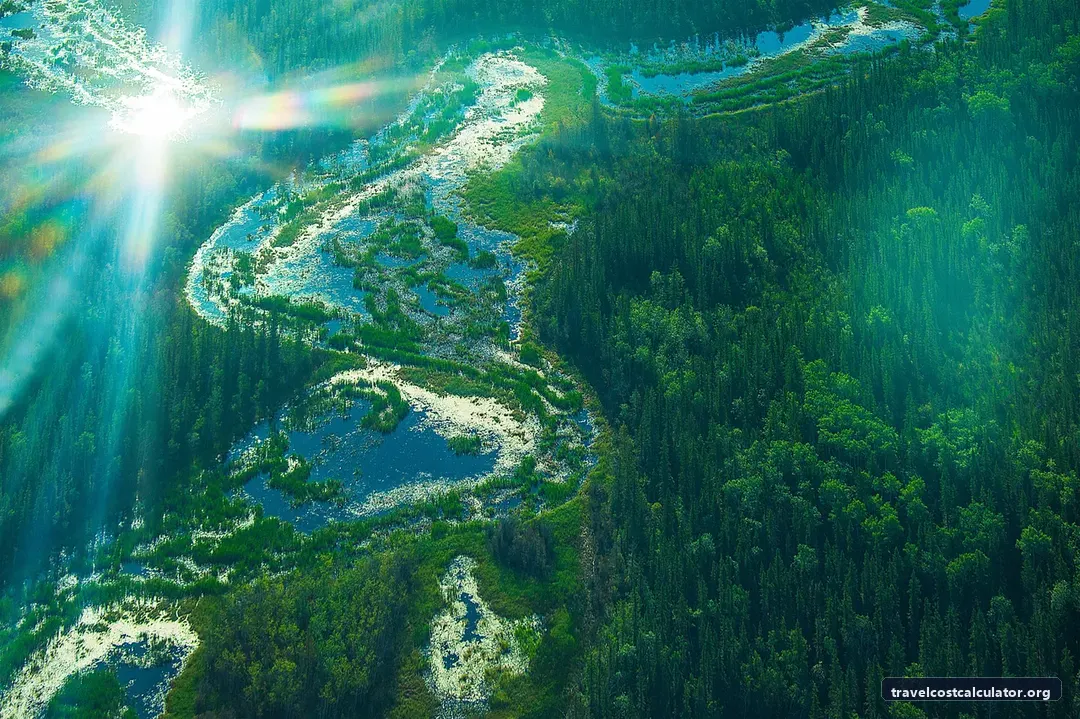
Situated on the plains in the north-central region of Canada, the park (which covers 44,807 km2) is home to North America's largest population of wild bison.
Wood Buffalo National Park
🏛️ Overview & Historical Significance
Spanning an astounding 44,807 square kilometers (17,300 square miles)—an area larger than the country of Switzerland—Wood Buffalo National Park is Canada’s largest national park and the second-largest national park on Earth. Straddling the boundary between northeastern Alberta and the southern Northwest Territories, this pristine wilderness represents one of the planet's last vast, intact boreal ecosystems.
In 1983, UNESCO designated Wood Buffalo National Park as a World Heritage Site under three critical criteria:
-
✦
Conservation of Threatened Species: The park was originally created in 1922 to save the last remaining wild herds of North American Wood Bison (Bison bison athabascae). Today, it protects the largest free-roaming, self-regulating herd of Wood Bison in the world, numbering over 3,000 individuals. Furthermore, it contains the only natural nesting habitat in the world for the endangered Whooping Crane (Grus americana).
-
✦
The Peace-Athabasca Delta: Recognized as a wetland of international importance under the Ramsar Convention, this massive inland delta is one of the largest freshwater deltas in the world. It acts as a vital migratory bottleneck for millions of waterfowl across four major North American flyways.
-
✦
Exceptional Geological Phenomena: The park features world-renowned karst topography, including extensive sinkhole chains, underground rivers, and vast salt plains where underground saline springs leave behind blinding white salt crusts.
Adding to its international accolades, in 2013 the Royal Astronomical Society of Canada declared Wood Buffalo National Park the world’s largest Dark Sky Preserve. For Indigenous peoples—including the Cree, Chipewyan (Dënesųłı̨në), and Métis—this landscape has been a cultural homeland for thousands of years, offering an extraordinary blend of natural grandeur and living heritage.
🎟️ Entrance Fees, Opening Hours & Ticket Booking Tips
Wood Buffalo National Park is managed by Parks Canada. While the park grounds and highways remain accessible year-round, visitor facilities operate on seasonal schedules, primarily based out of the main gateway office in Fort Smith, Northwest Territories.
2026 Admission Fees & Pricing
-
✦
Adult Pass (Ages 18–64): ~$11.00 CAD ($8.00 USD) per day
-
✦
Senior Pass (Ages 65+): ~$9.50 CAD ($7.00 USD) per day
-
✦
Youth Pass (Ages 17 & Under): FREE
-
✦
Family / Group Daily Pass (Up to 7 people in one vehicle): ~$22.00 CAD ($16.00 USD) per day
-
✦
Parks Canada Discovery Pass (Annual Access to 80+ sites): ~$75.25 CAD ($55.00 USD) for individual adults, or ~$151.25 CAD ($110.00 USD) for a family pass. If you plan to visit other Canadian National Parks within 12 months, the Discovery Pass provides exceptional value.
Opening Hours & Visitor Centers
The park itself is open 24 hours a day, 365 days a year. However, safety conditions and road accessibility vary dramatically by season. The Fort Smith Visitor Centre (126 McDougal Road, Fort Smith, NT) operates on the following schedule in 2026:
-
✦
Summer (Victoria Travel Budget Day to Labour Day): Monday to Sunday, 9:00 AM – 5:00 PM (MST)
-
✦
Fall / Winter / Spring: Monday to Friday, 8:30 AM – 12:00 PM & 1:00 PM – 5:00 PM (Closed weekends & statutory holidays)
Booking Tips & Logistics
You do not need to pre-book day-use permits for entry, but backcountry permits, camping spots at Pine Lake Campground, and guided interpretive tours (such as ranger-led walks on the Salt Plains) fill up rapidly. Campground reservations for the 2026 summer season open online via the Parks Canada Reservation System in early spring 2026. Bring physical cash (CAD) or major credit cards for visitor center transactions, as cellular data across remote trailheads is nonexistent.
🚌 How to Get There & Local Transit Costs
Reaching Wood Buffalo National Park is a true Northern expedition. Due to its sheer remoteness, there is no direct public transit, passenger rail, or intercity bus service operating directly into the park. Visitors must choose between flying into northern hubs or undertaking a legendary long-haul road trip.
Option 1: Fly-Drive via Edmonton (Fastest Route)
The main commercial hub connecting to Wood Buffalo is Edmonton, Alberta (YEG).
-
✦
Fly to Fort Smith (YSM): Regional airlines such as Northwestern Air Lease run scheduled flights connecting Edmonton (YEG) or Hay River (YHY) to Fort Smith, NT. Round-trip flights in 2026 typically range from $550 to $850 CAD ($400 – $620 USD).
-
✦
Local Car Rental in Fort Smith: Vehicles in Fort Smith are extremely limited. It is mandatory to reserve a rental car or truck well in advance. Car rental rates average $110 – $160 CAD ($80 – $115 USD) per day with limited mileage allowances.
Option 2: The Epic Northern Road Trip (Edmonton to Fort Smith)
For budget-conscious travelers and self-drive adventure seekers, driving offers total independence.
-
✦
Route: Take Highway 43 north from Edmonton, connect to Highway 35 (Mackenzie Highway) up through Grimshaw and High Level into the Northwest Territories, then turn east onto NT Highway 5 toward Fort Smith.
-
✦
Distance & Duration: Approximately 1,360 kilometers (845 miles) one-way, requiring 14 to 16 hours of pure driving time. Most travelers Split Travel Budget this over 2 days, overnighting in High Level or Hay River.
-
✦
Car Rental & Fuel Costs (2026 Estimates): SUV/4WD vehicle rental from Edmonton costs ~$65 – $100 USD per day. Round-trip fuel expenses will average around $300 – $420 USD ($410 – $570 CAD) due to premium gas prices in remote northern stations.
Option 3: Visiting Fort Chipewyan (Southern Gateway)
The historic community of Fort Chipewyan, AB offers access to the Peace-Athabasca Delta in the southern region of the park. It has no year-round road access. In summer, you can reach it via a charter flight from Fort McMurray (~$350–$500 CAD round-trip) or passenger water taxi along the Athabasca River. In winter (typically January through March), the Winter Ice Road connects Fort McMurray to Fort Chipewyan for heavy 4x4 vehicles only.
📸 Best Photography Spots & Insider Visit Hacks
Top Photography Locations
-
✦
The Salt Plains Overlook & Trail: Located roughly 30 km from Fort Smith off Pine Lake Road, this viewpoint displays vast, dazzling white salt crusts formed by saline groundwater upwellings. Frame shots from the high vantage point at sunrise, or hike down the wooden stairs to capture the stark contrast of red glasswort plants against crystalline white salt.
-
✦
Pine Lake: Formed by five merging sinkholes, Pine Lake features stunning aquamarine and turquoise waters surrounded by dense boreal pine forest. It is the premier spot for reflection shots during sunset, summer stand-up paddleboarding photography, and late-summer Aurora viewing.
-
✦
Grosbeak Lake: Accessible via a challenging backcountry trek, this surreal karst area features exposed sinkholes, bizarre rock formations, and ancient salt flats surrounded by dwarf spruce trees.
-
✦
Peace-Athabasca Delta (Scenic Flight): Renting a local bush-plane charter over the delta yields breathtaking aerial photography of winding river channels, thousands of pristine oxbow lakes, and roaming bison herds.
Insider Visit Hacks
-
✦
Conquer the Bugs: June and July bring notorious swarms of mosquitoes and blackflies. Pack a high-quality head net, long sleeve bug-jackets, and heavy-duty insect repellent containing DEET or Icaridin. Late August and September offer virtually bug-free conditions.
-
✦
Wildlife Safety & Etiquette: Wood Bison weigh up to 2,000 lbs (900 kg) and can run at speeds of 60 km/h (35 mph). Always stay inside your vehicle or maintain a safety buffer of at least 100 meters (330 feet). If a bison raises its tail or paws the ground, you are dangerously close.
-
✦
Chasing the Aurora: As the world's largest Dark Sky Preserve, winter and early autumn (late August through October) offer world-class viewing of the Northern Lights (Aurora Borealis). The lack of light pollution means even moderate solar storms trigger vibrant displays across the horizon.
-
✦
Prepare for Gravel Roads: Pine Lake Road and secondary park access tracks are unpaved gravel. Carry two functional spare tires, extra windshield washer fluid, a tow strap, and a satellite messaging device (such as a Garmin InReach), as cellular service vanishes once you exit Fort Smith.
🏨 Nearby Accommodation & Daily Budget Allocation
Accommodation within Wood Buffalo National Park is intentionally minimal to protect the fragile wilderness, but comfort can be found in the adjacent gateway community of Fort Smith, NT.
Accommodation Options
-
✦
Budget Camping (Inside the Park): Pine Lake Campground offers frontcountry campsites equipped with fire pits, firewood, pit toilets, and water pumps. Standard tent/RV sites cost roughly $20.00 – $30.00 CAD ($15 – $22 USD) per night. Backcountry camping permits cost ~$10.50 CAD ($8 USD) per person/night.
-
✦
Mid-Range Inns & Motels (Fort Smith): Properties like the Pelican Rapids Inn or local bed & breakfasts offer cozy, basic accommodations with Wi-Fi and hot showers. Rates range between $130.00 and $210.00 CAD ($95 – $155 USD) per night. Book 3–6 months in advance during peak summer!
-
✦
Eco-Lodges & Cabins: Parks Canada operates fully furnished Pine Lake Rental Cabins equipped with solar power, wood stoves, and kitchenware for roughly $120 – $160 CAD ($88 – $118 USD) per night.
Dining & Grocery Supplies
Dining choices in Fort Smith are small-scale and authentic. A standard pub or diner meal costs $20 – $35 CAD ($15 – $26 USD) per person. Northern supply chains elevate grocery prices by 20–30% compared to southern Canada. Budget travelers driving up from Edmonton should stock up on dry goods and cooler staples before crossing the NWT border.
Estimated Daily Budget Breakdowns (2026 Estimates)
1. Low-Budget Camper (Solo / Drive-In):
-
✦
Campground Fee: $18 USD
-
✦
Park Daily Entry: $8 USD
-
✦
Self-Catering Groceries & Fuel Share: $35 USD
-
✦
Total Daily Budget: ~$61 USD ($83 CAD) per day
2. Mid-Range Explorer (Couple sharing Inn & Rental Car):
-
✦
Hotel Room (Fort Smith): $130 USD ($65 USD per person)
-
✦
Car Rental + Fuel (Split): $70 USD per person
-
✦
Dining Out & Snacks: $50 USD per person
-
✦
Parks Pass Fee: $8 USD per person
-
✦
Total Daily Budget: ~$193 USD ($265 CAD) per person/day
3. Luxury Expedition (Fly-in, Flight Charter & Cabin):
-
✦
Parks Canada Cabin / Inn: $150 USD
-
✦
Scenic Charter Flight (Amortized): $250 USD
-
✦
Local Guided Tour / Vehicle Rental: $120 USD
-
✦
Full Board & Fine Dining: $80 USD
-
✦
Total Daily Budget: ~$600 USD ($820 CAD) per person/day
Frequently Asked Questions
Essential visitor FAQs for Wood Buffalo National Park
What is the entrance fee for Wood Buffalo National Park?
How much time do you need to explore Wood Buffalo National Park?
How do I get to Wood Buffalo National Park from the nearest city?
📊 Heritage Quick Specs
Visiting Canada on a Budget?
Calculate your full daily travel budget for Canada — including hotel costs, local transport, food, and sightseeing expenses.
View Canada Daily Travel Costs →Explore more UNESCO World Heritage Sites
🏛️ All 1,200+ Heritage Sites →