
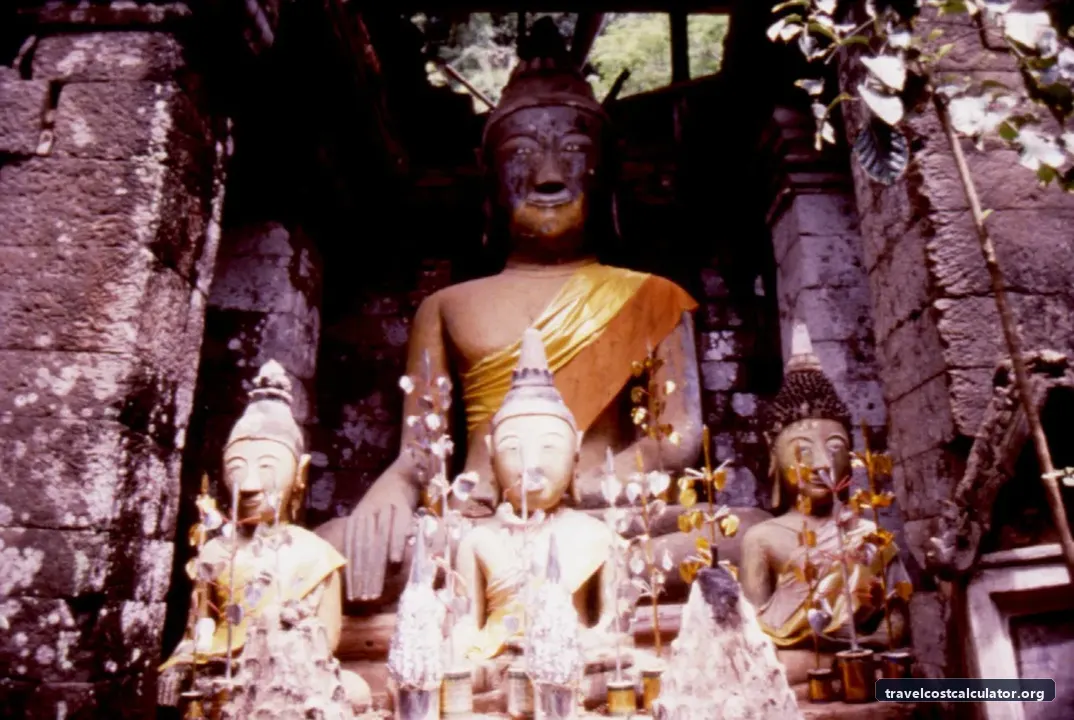
 Laos
Laos
Vat Phou and Associated Ancient Settlements within the Champasak Cultural Landscape
The Champasak cultural landscape, including the Vat Phou Temple complex, is a remarkably well-preserved planned landscape more than 1,000 years old.
Vat Phou and Associated Ancient Settlements within the Champasak Cultural Landscape
🏛️ Overview & Historical Significance
Inscribed as a UNESCO World Heritage site in 2001, Vat Phou and Associated Ancient Settlements within the Champasak Cultural Landscape represent one of Southeast Asia’s most extraordinary cultural landscapes. Located in southern Laos at the foot of the sacred Mount Phu Kao (historically known as Lingaparvata), this ancient temple complex and its surrounding urban layout offer an unmatched window into early Khmer civilizational planning, religious cosmology, and landscape architecture.
While many travelers naturally compare Vat Phou to Cambodia’s iconic Angkor Wat, Vat Phou is significantly older. The site evolved over more than a millennium, with initial structures dating back to the 5th century AD, though most of the surviving sandstone ruins were constructed between the 10th and 14th centuries during the height of the Khmer Empire. The entire landscape was intentionally planned along a 1.4-kilometer east-west axis, running from the banks of the Mekong River straight up to the sacred spring at the base of a natural rock formation resembling a shiva linga on Mount Phu Kao.
UNESCO granted World Heritage status to the complex because it perfectly preserves a symbolic Hindu landscape. The arrangement of barays (reservoirs), processional causeways, lower palaces, and the main elevated sanctuary was designed to express the Hindu vision of the relationship between nature, humanity, and the divine. As the Khmer Empire transitioned, Vat Phou adapted to Theravada Buddhism while retaining its Hindu roots. Today, it remains an active place of pilgrimage and worship for Lao Buddhists, especially during the annual Boun Vat Phou festival held under the full moon of the third lunar month.
🎟️ Entrance Fees, Opening Hours & Ticket Booking Tips
Visiting Vat Phou is straightforward, budget-friendly, and manageable without advance reservations. However, keeping updated 2026 practical details in mind will save you time and money on-site.
2026 Ticket Prices
-
✦
Foreign Visitors: 110,000 LAK (approx. $5.00 USD / €4.60 EUR).
-
✦
Lao Nationals: 20,000 LAK (approx. $0.90 USD).
-
✦
Children (under 10): Free admission.
Note: The entrance fee covers admission to the archaeological zone, access to the multi-room Vat Phou Museum near the entrance, and a round-trip ride on an open-air electric shuttle cart that transports visitors from the ticket office across the outer barays to the start of the ancient causeway.
Opening Hours
-
✦
Vat Phou Grounds & Ruins: Daily from 8:00 AM to 6:00 PM (Last admission at 5:00 PM).
-
✦
Vat Phou Site Museum: Daily from 8:30 AM to 4:30 PM.
Pro Tips for Ticket Purchase & Savings
-
✦
Cash is King: Due to fluctuating local currency rates, always carry Lao Kip (LAK) in small, crisp banknotes. While credit cards are increasingly accepted at high-end hotels in Pakse Travel Budget, the Vat Phou ticket booth strictly operates on cash.
-
✦
Visit the Museum First: Stop at the air-conditioned museum *before* climbing the complex. It houses key statues, restored stone lintels, and historical maps that provide vital context for what you will see on the mountain terrace.
-
✦
Dress Code Compliance: Because Vat Phou remains a practicing Buddhist sanctuary, modest dress is strictly enforced. Shoulders and knees must be covered. Wearing respectful attire saves you from having to rent a sarong at the entrance gate.
🚌 How to Get There & Local Transit Costs
Vat Phou is situated in Champasak Province, roughly 45 kilometers south of Pakse, the region's main transportation hub. Travelers generally use Pakse or the peaceful heritage town of Champasak (located 8 kilometers north of the ruins) as their base.
Step-by-Step Routes & 2026 Transit Costs
1. Renting a Motorbike/Scooter from Pakse (Best for Independent Travelers)
Riding a scooter from Pakse along the west bank of the Mekong via Route 13 and the Lao-Japan Bridge is the most scenic and flexible option. The paved roads are generally in fair condition, taking about 1 hour to 1.15 hours each way.
-
✦
Scooter Rental: 150,000 – 200,000 LAK ($7.00 – $9.50 USD) per 24 hours.
-
✦
Fuel Cost: Approx. 40,000 – 60,000 LAK ($2.00 – $3.00 USD) for a round trip.
2. Shared Songthaew or Local Bus (Best Budget Option)
Shared open-air pick-up trucks (songthaews) depart regularly from Pakse's Dao Heuang Market or Southern Bus Terminal toward Champasak town.
-
✦
Fare: 70,000 – 100,000 LAK ($3.20 – $4.50 USD) per person one way.
-
✦
Local Tuk-Tuk from Champasak Town to Vat Phou Gate: 40,000 – 60,000 LAK ($2.00 – $3.00 USD) round trip.
3. Private Tuk-Tuk or Taxi Hire (Best for Groups & Families)
Hiring a private vehicle from Pakse allows you to combine Vat Phou with nearby sights (such as Um Muang ruins or local weaving villages) in a single easy day trip.
-
✦
Private Tuk-Tuk (Full Day Round Trip): 500,000 – 650,000 LAK ($23 – $30 USD).
-
✦
Air-Conditioned Car / Minivan (Full Day): 850,000 – 1,200,000 LAK ($40 – $55 USD).
📸 Best Photography Spots & Insider Visit Hacks
Top Photography Angles
-
✦
The Ancient Causeway & Palaces: Position yourself near the lower quadrangles (the North and South Palaces) facing west toward Mount Phu Kao. The dramatic backdrop of the cliff face framing the crumbling stone corridors offers a timeless composition.
-
✦
Frangipani-Lined Naga Staircase: The steep stone staircase leading to the upper sanctuary is flanked by centuries-old, gnarled plumeria (frangipani) trees. When these blossom (springtime), fallen white flowers decorate the mossy steps, creating an incredible foreground for wide-angle shots.
-
✦
Upper Sanctuary Panorama: From the top terrace, turn back toward the east. You get a panoramic vista across the ceremonial processional path, the twin barays, and the sweeping Mekong River valley.
-
✦
Sacred Reliefs & Monoliths: Behind the main sanctuary structure, look for stone carvings embedded directly into the cliff wall: the Trimurti carving, the mysterious Crocodile Stone, and an elephant relief.
Insider Hacks to Avoid Crowds & Heat
-
✦
Arrive at Opening (8:00 AM): Southern Laos gets exceptionally hot by mid-day. Arriving right at 8:00 AM ensures cooler climbing temperatures and gives you the ruins almost entirely to yourself before tour buses arrive from Pakse around 10:30 AM.
-
✦
Best Seasonal Window: November to February brings dry weather, clear blue skies, and comfortable temperatures (20°C – 28°C). If you visit during the green season (June to October), rain turns the surrounding landscape vivid emerald green, and small waterfalls cascade down the cliff face behind the sanctuary.
-
✦
Footwear Matters: The original stone stairs ascending the mountain are steep, uneven, and slippery when wet. Leave flip-flops at your hotel and wear sturdy walking shoes or sandals with solid traction.
-
✦
Hydration Check: While vendors sell cold drinks near the entrance, there are no beverage stalls once you start climbing the mountain staircase. Carry at least 1.5 liters of water per person up to the shrine.
🏨 Nearby Accommodation & Daily Budget Allocation
Travelers can either stay in the vibrant regional city of Pakse or opt for a slower-paced experience in the charming riverside village of Champasak, which sits right inside the UNESCO buffer zone.
Recommended Stays
-
✦
Budget Pick (Champasak Town): Vongpaseud Guesthouse ($12 – $20 USD/night). Clean, simple fan or A/C rooms within walking distance of local riverside eateries.
-
✦
Mid-Range Pick (Champasak Town): The Residence Bassac ($55 – $85 USD/night). A beautifully restored French-colonial boutique hotel offering leafy courtyard gardens and exceptional local Lao dining.
-
✦
Luxury/Boutique Pick (Riverside): The River Resort Champasak ($110 – $180 USD/night). Eco-friendly luxury villas directly overlooking the Mekong River, featuring swimming pools and free bicycle rentals.
Daily Budget Estimations for Visiting Vat Phou (2026 Rates)
1. Backpacker / Low-Budget Model
-
✦
Guesthouse (Shared/Private Room): $15.00
-
✦
Scooter Rental & Gas (Shared between 2): $5.00
-
✦
Vat Phou Entrance Fee: $5.00
-
✦
Street Food & Local Meals (Lao Noodle Soup, Sticky Rice, Grilled Chicken): $8.00
-
✦
Water & Incidentals: $2.00
-
✦
Total Estimated Daily Budget: $35.00 USD per person
2. Mid-Range Comfort Model
-
✦
Boutique Heritage Hotel (Per Person based on double occupancy): $40.00
-
✦
Private Tuk-Tuk Transfer / Car Share: $15.00
-
✦
Vat Phou Entrance Fee: $5.00
-
✦
Sit-Down Dining (Riverside Cafes & Coffee): $22.00
-
✦
Museum & Guide Tips: $8.00
-
✦
Total Estimated Daily Budget: $90.00 USD per person
Frequently Asked Questions
Essential visitor FAQs for Vat Phou and Associated Ancient Settlements within the Champasak Cultural Landscape
What is the entrance fee for Vat Phou and Associated Ancient Settlements within the Champasak Cultural Landscape?
How much time do you need to explore Vat Phou and Associated Ancient Settlements within the Champasak Cultural Landscape?
How do I get to Vat Phou and Associated Ancient Settlements within the Champasak Cultural Landscape from the nearest city?
📊 Heritage Quick Specs
Visiting Laos on a Budget?
Calculate your full daily travel budget for Laos — including hotel costs, local transport, food, and sightseeing expenses.
View Laos Daily Travel Costs →Explore more UNESCO World Heritage Sites
🏛️ All 1,200+ Heritage Sites →