
 Saudi Arabia
‘Uruq Bani Ma’arid
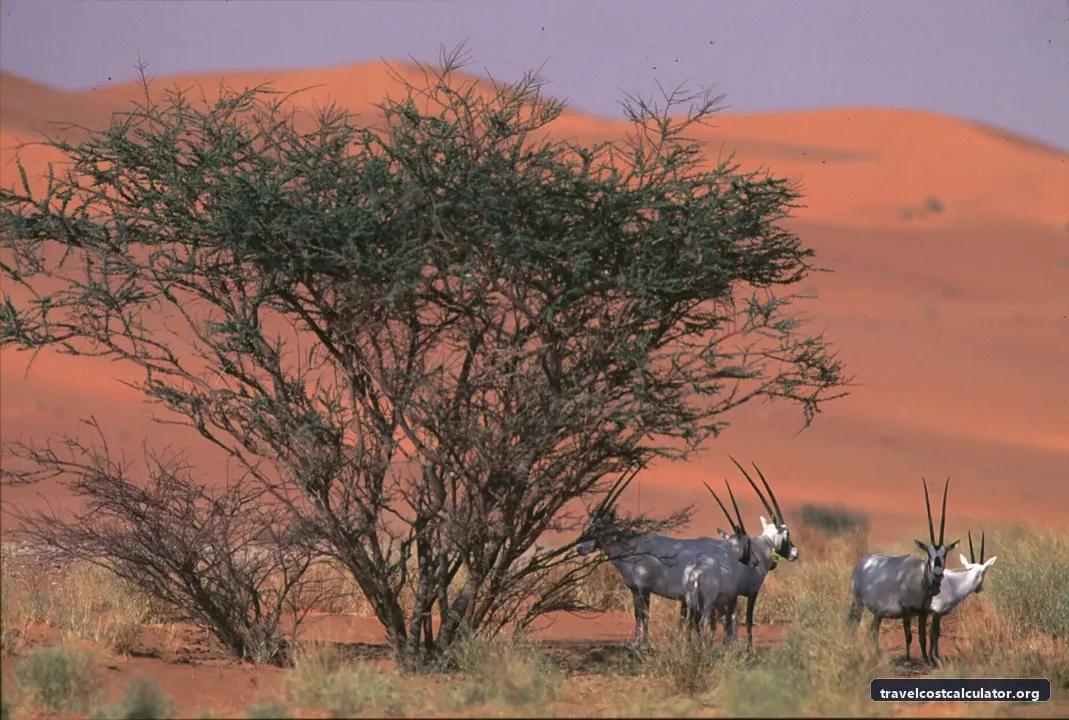
The property encompasses the western part of the greatest expanse of windblown sand on Earth, known as Ar Rub' al-KhaIi, and conserves a portion of one of the Earth’s most spectacular desert landscapes.
‘Uruq Bani Ma’arid
🏛️ Overview & Historical Significance
Inscribed as Saudi Arabia’s very first natural UNESCO World Heritage site in 2023, ‘Uruq Bani Ma’arid (عروق بني معارض) is a breathtaking, hyper-arid sanctuary spanning over 12,750 square kilometers along the southwestern edge of the Rub' al Khali (the legendary Empty Quarter). Positioned where the dramatic limestone cliffs of the Tuwaiq Escarpment plummet into a sea of towering red longitudinal dunes, this reserve is widely recognized by desert ecologists as one of the most visually stunning and ecologically vital hyper-arid landscapes on Earth.
For centuries, this harsh wilderness was navigated primarily by nomadic Bedouin tribes who understood the shifting secrets of the sand dunes (known locally as ‘uruq). However, the site’s world-heritage status stems from its monumental role in modern global conservation. ‘Uruq Bani Ma’arid serves as the benchmark sanctuary for the reintroduction of iconic Arabian wildlife that had once been hunted to near-extinction in the wild. Through intensive, world-class breeding and rewilding programs spearheaded by Saudi Arabia’s National Center for Wildlife (NCW), the reserve is now home to thriving free-ranging populations of the Arabian Oryx (Oryx leucoryx), the Sand Gazelle (Gazella marica), the Mountain Gazelle (Gazella gazella), and the elusive Nubian Ibex.
Visiting ‘Uruq Bani Ma’arid in 2026 offers travelers an unforgettable encounter with pure, untouched wilderness. Unlike manicured tourist hubs, this UNESCO treasure remains a strictly protected biosphere where ancient desert geology, rare wildlife tracking, and deep Bedouin cultural heritage converge under some of the clearest dark skies in the Middle East.
🎟️ Entrance Fees, Opening Hours & Ticket Booking Tips
To preserve its fragile desert ecosystem and protect endangered species, access to ‘Uruq Bani Ma’arid is carefully regulated by the National Center for Wildlife (NCW). Independent, unguided off-road driving inside the core reserve is strictly prohibited. Visitors must obtain official visitor permits or travel with licensed eco-tour operators.
Estimated 2026 Ticket & Permit Costs
-
✦
Standard Individual Reserve Permit (NCW Platform / Tour Base Entry): 150 SAR – 250 SAR (~$40 – $67 USD) per person.
-
✦
Full-Day 4x4 Wildlife Eco-Safari (Includes guide, ranger permit, & recovery vehicle): 1,200 SAR – 2,800 SAR (~$320 – $745 USD) per vehicle (up to 4 passengers).
-
✦
Overnight Wilderness Camping Permit: 300 SAR – 500 SAR (~$80 – $133 USD) per campsite/night (requires pre-approval and designated zone allocation).
-
✦
Children (Under 12): Approximately 50% discount on permit entry when accompanied by paying adults.
Opening Hours & Logistics
The protected area gates open daily from 06:00 AM to 06:00 PM for day tours. Morning wildlife tracking tours typically launch at first light (06:00 AM – 06:30 AM), when desert fauna is most active before the midday heat sets in.
Insider Booking Tips for 2026
-
✦
Book Permits Early: Access permits must be requested at least 2 to 4 weeks prior to your journey via the official Saudi wildlife portal (NCW) or through verified tour operators based in Najran, Sharurah, or Riyadh Travel Budget.
-
✦
Passport & Visa Copies Required: Permit issuance requires valid passport details, tourist e-Visa verification, and full emergency contact details.
-
✦
Ranger Escort Requirement: Deep-zone expeditions into the sand dunes require a licensed ranger or local Bedouin tracker. Always verify that your operator includes ranger coordination in their package price.
🚌 How to Get There & Local Transit Costs
‘Uruq Bani Ma’arid lies in a remote region bordering the Najran and Riyadh provinces along the edge of the Empty Quarter. The primary gateway settlements are Sharurah (approx. 150 km southeast) and Najran City (approx. 220 km west).
Step 1: Flying to the Gateway Cities
The fastest route for international and domestic travelers in 2026 is to fly into one of two regional airports via domestic connections from Riyadh (RUH) or Jeddah Travel Budget (JED):
-
✦
Sharurah Domestic Airport (SHW): Closest airport hub to the reserve base (approx. 2-hour drive to reserve checkpoints). Round-trip flights from Riyadh average 450 SAR – 850 SAR (~$120 – $226 USD).
-
✦
Najran Domestic Airport (EAM): Offers more flight frequencies and rental car choices. Round-trip flights from Riyadh average 400 SAR – 750 SAR (~$107 – $200 USD).
Step 2: Highway Drive & 4x4 Off-Road Transport
From Sharurah or Najran, driving along Highway 15 / Route 105 leads toward the reserve edge. However, entering the dune fields requires specialized equipment and expertise.
-
✦
Heavy-Duty 4x4 Rental (Land Cruiser / Nissan Patrol): 450 SAR – 750 SAR (~$120 – $200 USD) per day from Najran or Sharurah rental agencies. Note: Standard SUVs or 2WD sedans cannot navigate the soft sand dunes and will get stranded.
-
✦
Private Driver-Guide Escort: Hiring an experienced local Bedouin driver with an equipped 4x4 costs approximately 700 SAR – 1,200 SAR (~$186 – $320 USD) per day (inclusive of fuel and sand recovery equipment like traction mats and air compressors).
-
✦
Fuel Costs: Gasoline in Saudi Arabia remains very affordable. Expect to spend around 90 SAR – 140 SAR (~$24 – $37 USD) per full tank fill-up. Always enter the reserve with a full tank plus extra fuel canisters.
📸 Best Photography Spots & Insider Visit Hacks
Prime Photography Angles
-
✦
The Tuwaiq Escarpment Dune Boundary: Capture the dramatic geological junction where the dark limestone cliff faces meet the bright orange-red crests of the sand sea.
-
✦
Arabian Oryx at Sunrise: Position yourself near the lower gravel basins (sabkhas) between the dunes during early morning light to photograph white oryx grazing against red sand backgrounds.
-
✦
The Crest of "Seif" Dunes: Frame the sharp, razor-edged ridge lines of the long linear dunes late in the afternoon when dramatic shadows Split Travel Budget the landscape in half.
-
✦
Bortle Class 1 Astrophotography: Zero light pollution makes ‘Uruq Bani Ma’arid a world-class destination for Milky Way and deep-sky astro photography during moonless nights.
Seasonal Weather & Travel Windows
The absolute Best Time to Visit Planner is during the winter months, from November through March. Daytime temperatures range from a pleasant 20°C to 28°C (68°F to 82°F), while night temperatures in the desert can plunge rapidly to 5°C – 10°C (41°F – 50°F). Avoid visiting between May and September, when daytime heat regularly exceeds 45°C (113°F), rendering desert expeditions dangerous.
Insider Survival & Travel Hacks
-
✦
Tire Deflation: Always lower your 4x4 tire pressure to 12–15 PSI before driving onto dune sand. Bring a 12V portable air compressor to re-inflate tires before returning to asphalt highways.
-
✦
Camera Protection: Super-fine desert silica dust can ruin camera lenses and sensors. Use weather-sealed camera bodies, change lenses inside vehicle cabins only, and keep gear sealed in dust-proof cases (like Pelican cases) when not in use.
-
✦
Satellite Connectivity: Cellular service drops completely within 10–15 km of entering the dune core. Travelers should carry a satellite communicator (e.g., Garmin InReach or Thuraya satellite phone) for safety.
-
✦
Hydration & Supplies: Carry a minimum of 5 liters of drinking water per person per day, plus emergency rations for an extra 48 hours.
🏨 Nearby Accommodation & Daily Budget Allocation
Accommodation options range from comfortable city hotels in nearby Sharurah or Najran to immersive mobile desert glamping camps inside or near the buffer zones of the reserve.
Where to Stay
-
✦
Sharurah City Hotels (Mid-Range Comfort): Hotels like EWA Sharurah Hotel or local apartment suites offer clean rooms, Wi-Fi, and air conditioning. Rates: 250 SAR – 450 SAR (~$67 – $120 USD) per night.
-
✦
Najran City Hotels (Full Amenities): For higher-end international hotel options before or after your desert trek, Najran offers options like Lotus Hotel Najran or Gloria Inn. Rates: 350 SAR – 650 SAR (~$93 – $173 USD) per night.
-
✦
Private Eco-Glamping Camps: Specialized tour operators can set up luxury Bedouin-style tented camps complete with carpeted flooring, fire pits, traditional dinners, and bedding near the reserve perimeter. Rates: 1,100 SAR – 2,500 SAR (~$293 – $666 USD) per night (includes meals and guide service).
-
✦
Wilderness Camping: Self-sufficient camping inside designated reserve zones (requires an NCW camping permit). Free once permitted, but you must supply all tentage, food, water, and waste-removal gear (Leave No Trace policy is strictly enforced).
Daily Budget Allocation (Estimated 2026 USD)
1. Budget Explorer (Self-Organized Group Sharing Costs)
-
✦
Shared 4x4 Rental & Fuel: $45 / person
-
✦
Permit Fees: $40
-
✦
Food & Supplies (Self-Catering): $25
-
✦
Wilderness Camping: $20
-
✦
Total Daily Budget: ~$130 – $170 USD per person
2. Mid-Range Traveler (Hotel Base + Local 4x4 Safari Tour)
-
✦
Hotel in Sharurah/Najran: $90
-
✦
Guided 4x4 Safari Share & Permit: $180
-
✦
Dining & Local Restaurants: $40
-
✦
Miscellaneous & Transit: $40
-
✦
Total Daily Budget: ~$350 – $500 USD per person
3. Luxury Expedition (Private All-Inclusive Desert Safari & Glamping)
-
✦
Private Mobile Glamping Camp: $450
-
✦
Private Master Tracker 4x4 Escort & Permits: $450
-
✦
Gourmet Desert Meals & Logistics: $150
-
✦
Domestic Transport & Concierge: $200
-
✦
Total Daily Budget: ~$1,250 – $1,500 USD per person
Frequently Asked Questions
Essential visitor FAQs for ‘Uruq Bani Ma’arid
What is the entrance fee for ‘Uruq Bani Ma’arid?
How much time do you need to explore ‘Uruq Bani Ma’arid?
How do I get to ‘Uruq Bani Ma’arid from the nearest city?
📊 Heritage Quick Specs
Visiting Saudi Arabia on a Budget?
Calculate your full daily travel budget for Saudi Arabia — including hotel costs, local transport, food, and sightseeing expenses.
View Saudi Arabia Daily Travel Costs →Explore more UNESCO World Heritage Sites
🏛️ All 1,200+ Heritage Sites →