
 Australia
Uluru-Kata Tjuta National Park
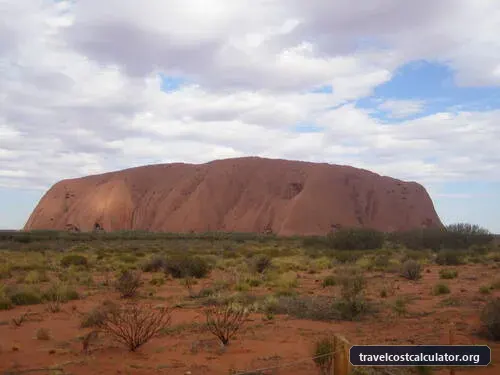
This park, formerly called Uluru (Ayers Rock – Mount Olga) National Park, features spectacular geological formations that dominate the vast red sandy plain of central Australia.
Uluru-Kata Tjuta National Park
🏛️ Overview & Historical Significance
Rising dramatically from the red soil of Australia’s Central Desert, Uluru-Kata Tjuta National Park is one of the most awe-inspiring landscapes on Earth. Spanning over 320,000 acres, this ancient sanctuary encompasses two extraordinary geological formations: Uluru (formerly known as Ayers Rock), a massive sandstone monolith towering 348 meters (1,141 feet) high with a circumference of 9.4 kilometers, and Kata Tjuta (The Olgas), a stunning collection of 36 domed rock formations located 25 kilometers west of Uluru.
Inscribed as a UNESCO World Heritage site in 1987 for its exceptional natural beauty and unique geological significance, the park achieved rare dual World Heritage status in 1994 when UNESCO formally recognized its cultural landscape. This secondary inscription acknowledged the profound, unbroken connection between the land and the Anangu people, the traditional Aboriginal owners who have inhabited and managed the region for over 30,000 years.
For the Anangu, the park is not merely a scenic masterpiece or a geological anomaly; it is a living cultural landscape shaped by Tjukurpa (the fundamental law, creation stories, and spiritual philosophy governing Anangu life). Every groove, fissure, cave, and waterhole across Uluru and Kata Tjuta represents the physical actions of ancestral creation beings such as the Kuniya (woma python) and Liru (poisonous snake).
A pivotal moment in modern Australian history occurred on October 26, 1985, when the Australian Government officially handed title deeds for the national park back to the Anangu traditional owners, who in turn leased the land back to Parks Australia to be jointly managed. Marking another major milestone in cultural respect, the board of trustees permanently closed the physical climb up Uluru in October 2019, encouraging visitors to walk around its base and appreciate its spiritual weight from ground level.
🎟️ Entrance Fees, Opening Hours & Ticket Booking Tips
Visiting Uluru-Kata Tjuta National Park requires a digital park pass issued by Parks Australia. In 2026, all revenues generated from park passes are directly reinvested into park conservation, local Indigenous employment programs, and infrastructure maintenance.
2026 Ticket Pricing Breakdown
-
✦
Adult Pass (Ages 18+): AUD $38.00 (~$25.00 USD)
-
✦
Child Pass (Ages 0–17): FREE
-
✦
Northern Territory Residents: FREE (Verification required at entry)
-
✦
Pass Validity: Standard passes are valid for 3 consecutive days. If you pre-purchase your pass online via the official Parks Australia site, you can extend your pass to 5 days at no additional charge.
Park Opening Hours (2026 Seasonal Schedule)
The national park gates open early every morning to allow visitors to experience sunrise and close shortly after sunset. Gate times vary throughout the year:
-
✦
Summer (December – February): 5:00 AM – 9:00 PM
-
✦
Autumn/Spring (March – April & September – November): 5:30 AM – 7:30 PM / 8:30 PM
-
✦
Winter (May – August): 6:00 AM – 7:30 PM
Essential Ticket Booking Hacks
-
✦
Book Online in Advance: Pre-purchase your digital pass at the official Parks Australia website before arriving in Yulara. Mobile connectivity can be spotty at the physical entry station, and pre-booking allows you to use the automated QR-code lane.
-
✦
Save Screenshots Offline: Save a PDF copy or screenshot of your digital pass with its QR code directly to your smartphone wallet, as cellular signal inside the park can be inconsistent.
-
✦
Cultural Center Operating Hours: The Uluru-Kata Tjuta Cultural Centre is open daily from 8:00 AM to 5:00 PM. Make this your first stop after sunrise to gain deep context on Anangu customs, artwork, and park safety rules.
🚌 How to Get There & Local Transit Costs
Uluru-Kata Tjuta National Park is located in the remote Red Centre of Australia. The primary gateway to the park is the resort village of Yulara, situated just outside the park boundary.
Step 1: Arriving in the Region
Travelers generally reach the Red Centre via two main transit pathways:
-
✦
Fly Directly to Ayers Rock Airport (AYQ): Located in Yulara, just 20 minutes from Uluru. Major Australian airlines (Qantas, Jetstar, Virgin Australia) operate direct flights from Sydney Travel Budget, Melbourne, Brisbane, and Cairns. Return domestic airfares in 2026 average AUD $350 – $750 (~$230 – $490 USD) depending on seasonality.
-
✦
Fly to Alice Springs Airport (ASP) & Drive: Alice Springs is the nearest regional city, located 450 kilometers (280 miles) northeast of Uluru. Driving from Alice Springs takes roughly 4.5 to 5 hours via the fully sealed Stuart and Lasseter Highways.
Step 2: Local Transit & Getting Around
Because there is no public transit network in the Australian outback, visitors must select one of the following local transit options:
-
✦
Rental Vehicles (Recommended for Flexibility): Car hire is available directly at Ayers Rock Airport (AYQ) or Alice Springs (ASP). In 2026, rental cars cost approximately AUD $95 – $155 USD per day (~$62 – $100 USD). Note: Most rental agencies include 100km to 200km per day; ensure unlimited mileage if driving roundtrip from Alice Springs. Petrol in Yulara costs approximately AUD $2.30 – $2.60 per liter ($5.80 – $6.50 USD per gallon).
-
✦
Uluru Hop-On Hop-Off Bus: For non-drivers, private bus operators service the main park tracks from Yulara. A 1-day pass costs approximately AUD $90 (~$59 USD), while a 3-day unlimited pass costs around AUD $185 (~$120 USD) per person.
-
✦
Resort Shuttle: Free resort shuttles operate continuously around the Yulara village complex (connecting hotels, campgrounds, and the town square), but do not enter the national park itself.
📸 Best Photography Spots & Insider Visit Hacks
Prime Photography Locations
-
✦
Uluru Car Sunset Viewing Area: Located on the western side of Uluru. As the sun sinks behind you, the monolith undergoes a dramatic color shift from ochre to fiery orange, brilliant red, and finally deep mauve.
-
✦
Talinguru Nyakunytjaku (Uluru Sunrise): Offers a 360-degree panoramic vista across the desert scrub. You can photograph the sun rising alongside Uluru with the distant silhouettes of Kata Tjuta in the background.
-
✦
Kata Tjuta Dune Viewing Area: Positioned off the Kata Tjuta access road, this platform provides exceptional sunrise photography of the 36 domes glowing under soft purple and golden morning light.
-
✦
Karingana Lookout (Valley of the Winds): Located deep within Kata Tjuta, this breathtaking natural saddle framed by sheer rock walls offers one of the most iconic landscape shots in Central Australia.
Insider Visit Hacks & Safety Rules
-
✦
Respect Sacred Site Photography Restrictions: Certain areas along the base of Uluru (such as parts of the Mala Walk and Kantju Gorge) are deeply sacred Anangu cultural sites. Clearly marked signs request that travelers do not photograph or film these specific rock faces. Respecting these rules is vital for cultural compliance.
-
✦
The Heat Closure Rule (36°C / 97°F): If the ambient temperature is forecast to reach 36°C (97°F) or higher, the challenging Valley of the Winds Walk past Karu Lookout closes automatically at 11:00 AM for visitor safety. Start this hike at first light (around 6:00 AM) to complete the full 7.4 km loop comfortably.
-
✦
Fly Nets Are Mandatory in Warm Months: From October through March, native bush flies can be relentless. Purchase a AUD $10 – $15 (~$7 – $10 USD) head net at the Yulara Town Center to protect your face and mouth.
-
✦
Water Requirements: Carry a minimum of 1 liter of water per hour of walking. Hydration stations are located at major trailheads (Base Walk, Mala Carpark, Valley of the Winds), but water is unavailable along the mid-points of remote trails.
🏨 Nearby Accommodation & Daily Budget Allocation
All accommodation near the park is concentrated in the purpose-built resort village of Yulara (Ayers Rock Resort), situated 15 km outside the park gates. Because all properties in Yulara are managed by Voyages Indigenous Tourism Australia, pricing is centralized across budget tiers.
Accommodation Options in Yulara (2026 Nightly Rates)
-
✦
Budget / Camping: Ayers Rock Campground – Unpowered tent/campervan sites start at AUD $48 – $60 (~$31 – $39 USD) per night. Shared dormitory beds at Outback Hotel & Lodge cost roughly AUD $65 (~$42 USD) per night.
-
✦
Mid-Range: The Lost Camel Hotel or Desert Gardens Hotel – Contemporary hotel rooms featuring pool access and central village location range from AUD $380 – $520 (~$248 – $340 USD) per night.
-
✦
Luxury: Sails in the Desert – Upscale 5-star hotel featuring Indigenous art galleries and fine dining from AUD $650 – $850 (~$425 – $555 USD) per night. Experiential ultra-luxury glamping at Longitude 131° starts around AUD $3,800+ (~$2,480+ USD) per night (all-inclusive).
Daily Budget Allocation (Estimated 2026 Costs per Person)
1. Backpacker / Budget Traveler (~$110 – $145 USD / day)
-
✦
Accommodation: Campsite or Hostel Dorm ($35 – $42 USD)
-
✦
Food: Grocery shopping at Yulara IGA & self-cooking ($25 – $35 USD)
-
✦
Transport: Shared rental car cost or budget shuttle pass ($25 – $40 USD)
-
✦
Park Pass & Misc: Pro-rated park pass + fly net ($25 USD)
2. Mid-Range Traveler (~$290 – $430 USD / day)
-
✦
Accommodation: Desert Gardens / The Lost Camel ($130 – $170 USD per person twin share)
-
✦
Food: Casual dining at Gecko’s Cafe / Outback Pioneer BBQ ($60 – $85 USD)
-
✦
Transport: Rental car + fuel ($50 – $75 USD per person)
-
✦
Tours & Field of Light Experience: ($50 – $100 USD)
3. Luxury Traveler (~$950 – $2,800+ USD / day)
-
✦
Accommodation: Sails in the Desert or Longitude 131° ($300 – $2,480 USD)
-
✦
Food: Premium dining (e.g., Tali Wiru open-air dining under the stars) ($250 USD)
-
✦
Transport: Private guided 4WD tour or helicopter scenic flight ($350 – $550 USD)
Frequently Asked Questions
Essential visitor FAQs for Uluru-Kata Tjuta National Park
What is the entrance fee for Uluru-Kata Tjuta National Park in 2026?
How much time do you need to explore Uluru-Kata Tjuta National Park?
How do I get to Uluru-Kata Tjuta National Park from the nearest city?
📊 Heritage Quick Specs
Visiting Australia on a Budget?
Calculate your full daily travel budget for Australia — including hotel costs, local transport, food, and sightseeing expenses.
View Australia Daily Travel Costs →Explore more UNESCO World Heritage Sites
🏛️ All 1,200+ Heritage Sites →