
 Namibia
Twyfelfontein or /Ui-//aes
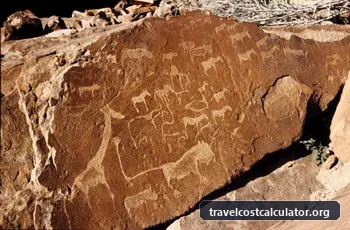
Twyfelfontein or /Ui-//aes has one of the largest concentrations of ... petroglyphs, i.e. rock engravings in Africa. Most of these well-preserved engravings represent rhinoceros, . The site also includes six pa...
Twyfelfontein or /Ui-//aes
🏛️ Overview & Historical Significance
In the arid heart of Namibia’s red-rock Damaraland region lies Twyfelfontein or /Ui-//aes, one of Africa’s largest, most significant concentrations of ancient rock petroglyphs. Inscribed as Namibia’s first UNESCO World Heritage Site in 2007 under Criterion (iii), this open-air gallery features over 2,500 individual rock engravings alongside rare rock paintings executed between 2,000 and 6,000 years ago by early San hunter-gatherers and Damara pastoralists.
The site’s dual identity is captured in its names. Twyfelfontein is Afrikaans for "Doubtful Fountain," coined in 1947 by European settler Top Levin, who doubted the seasonal spring would provide reliable water. Its indigenous Damara name, /Ui-//aes (pronounced with click consonants), translates to "Jumping Water Hole" or "Fountain of the Earth," reflecting its ancient role as an essential survival post in the Huab valley desert landscape.
Rather than simple decorative art, these masterfully carved sandstone petroglyphs served as central ritual spaces. San shamans used the location to enter trance states, seeking communion with the spirit world, praying for rain, and initiating youth into tribal customs. Masterpieces like the iconic "Lion Man"—showing a lion with an exaggeratedly long, five-toed human foot instead of a paw—demonstrate the shamanic belief in human-to-animal transformation. Carvings of marine creatures like seals and flamingos, hundreds of kilometers from the Atlantic coast, prove that these ancient communities maintained vast trade routes and deep geographical knowledge of Southern Africa.
🎟️ Entrance Fees, Opening Hours & Ticket Booking Tips
Twyfelfontein is managed jointly by the National Heritage Council of Namibia (NHC) and the local Damara community. Every ticket sold directly aids local heritage preservation and community development funds.
2026 Admission Rates & Charges
-
✦
International Adult Visitors: N$180 (~$9.50 USD)
-
✦
SADC Regional Visitors: N$120 (~$6.30 USD)
-
✦
Namibian Citizens/Residents: N$60 (~$3.15 USD)
-
✦
Children (Ages 6–16): N$40 (~$2.10 USD); under 6 enter free.
-
✦
Vehicle Access Fee: N$30 (~$1.60 USD) per light vehicle.
-
✦
Local Community Guide: Included in entrance ticket, though tipping your guide N$100 to N$200 ($5 – $10 USD) per group is standard practice and strongly encouraged.
Opening Hours & Visitor Logistics
The site visitor center and trails are open daily from 08:00 AM to 05:00 PM (last entry at 04:15 PM). You cannot explore the petroglyph trails independently; a trained local guide is mandatory for all visitors to protect the delicate sandstone artwork from vandalism or accidental damage.
Insider Booking & Payment Tips
Tickets must be purchased in person at the Twyfelfontein Visitor Center reception upon arrival. While credit card facilities (Visa/Mastercard) are available, remote cellular connections in Damaraland frequently fail. Always carry cash in Namibian Dollars (N$) or South African Rand (ZAR)—which is accepted 1:1 throughout Namibia—to avoid getting stranded at the gate without access.
🚌 How to Get There & Local Transit Costs
Twyfelfontein is situated in a remote desert landscape. Public transit options such as trains or scheduled intercity buses do not operate directly to the site. Self-driving or taking a pre-arranged safari tour are the primary transportation options.
Option 1: Self-Drive Rental (Most Popular)
Most travelers approach Twyfelfontein via Khorixas (100 km east) or Swakopmund Travel Budget (330 km southwest).
-
✦
Route from Swakopmund/Henties Bay: Drive north on the salt/gravel C34 along the Skeleton Coast, turn inland on the C35 to Uis, then follow the C39 and turn onto the unpaved D2612. Expect a 4.5 to 5-hour drive.
-
✦
Route from Khorixas/Outjo: Head west on the paved C39, transition to gravel near the D2612 turnoff, and follow signs toward Twyfelfontein. Drive time is approximately 1.5 to 2 hours.
-
✦
Vehicle Type & 2026 Rental Costs: While the gravel roads (C39/D2612) are regularly graded and passable in a standard 2WD high-clearance sedan during the dry season, renting a 4x4 SUV (e.g., Toyota Hilux) is strongly recommended due to sharp rocks and corrugation. High-season 4x4 rental rates average $110 – $180 USD (N$2,100 – N$3,400) per day.
-
✦
Fuel Costs: Gasoline/diesel in Namibia averages N$22.50 per liter ($1.20 USD). Budget around $60 – $90 USD in fuel for the round trip from coastal or central hubs.
Option 2: Guided Day Tours & Overland Safaris
If you prefer not to navigate gravel roads yourself, several operators offer organized excursions:
-
✦
Day Tours from Swakopmund: Private or small-group 4x4 day excursions to Twyfelfontein (often combined with the Brandberg Mountain or Himba villages) run between $220 and $350 USD per person, inclusive of transfers, lunch, and park fees.
-
✦
Multi-Day Overland Safaris: 3-to-7-day Damaraland & Etosha Travel Budget loop safaris starting in Windhoek Travel Budget average $250 – $450 USD per person/day, covering transport, lodging, meals, and guided entrance.
📸 Best Photography Spots & Insider Visit Hacks
Capturing the shallow relief engravings etched into reddish-brown sandstone requires proper timing and lighting techniques.
Prime Photography Angles & Key Artworks
-
✦
The Lion Man (Lion Panel): Located along the main guided loop trail, this iconic petroglyph depicts a transformation scene featuring a lion with human feet, an extended tail ending in a hand, and surrounding prey animals. Use a polarizing filter to bring out the contrast against the sandstone.
-
✦
The Dancing Kudu: A detailed carving of an elegant kudu surrounded by geometric circles, traditionally interpreted as ritual mapping or waterhole indicators.
-
✦
The Marine Panel: Snap a close-up of the seal engraving—a geological curiosity carved deep inland by semi-nomadic hunters.
-
✦
Organ Pipes & Burnt Mountain (Verbrande Berg): Located just 10 km from Twyfelfontein, these geometric basalt rock formations and volcanic ridges are best photographed during late afternoon light.
Lighting, Weather & Timing Strategy
Ideal Time of Day: Schedule your tour for early morning (08:00 AM – 10:00 AM) or late afternoon (03:30 PM – 05:00 PM). Low sun angles illuminate the carved grooves, creating high contrast against the rock face. Midday sun flattens the engravings, making them difficult to photograph, while ambient temperatures regularly exceed 38°C (100°F).
Seasonal Guidance: The optimal travel window is the dry winter season between May and October, featuring clear skies and moderate daytime temps (20°C–28°C). Avoid peak summer afternoons (December to February) when heat stress is high and unexpected rain showers can make gravel roads slick.
Gear & Trail Hacks: The walking tour involves navigating uneven stone steps, loose gravel, and unshaded boulders. Wear sturdy hiking shoes with high-grip soles, carry at least 1.5 liters of drinking water per person, and pack a wide-brimmed hat and sunblock. Touch-free policies are strictly enforced: physical oils from human hands degrade the prehistoric rock art.
🏨 Nearby Accommodation & Daily Budget Allocation
Accommodations in the Aba-Huab River Valley range from desert campsites to luxury eco-lodges integrated into the granite boulders.
Accommodation Options
-
✦
Budget / Camping: Twyfelfontein Adventure Camp (Campsite) or Aba-Huab Community Campsite. Basic pitches with shared ablution blocks, hot showers, and braai (BBQ) facilities.
Cost: N$300 – N$550 ($16 – $29 USD) per pitch per night. -
✦
Mid-Range Lodging: Twyfelfontein Country Lodge. Built into the mountainside using natural stone and thatched roofs, offering air-conditioned rooms, a swimming pool, restaurant, and fuel station.
Cost: N$2,800 – N$4,600 ($145 – $240 USD) per double room per night (includes breakfast). -
✦
Luxury Eco-Resorts: Mowani Mountain Camp or Camp Kipwe. Premium luxury tented suites set amid giant granite boulders, offering open-air plunge pools, gourmet dining, and guided nature drives.
Cost: N$9,500 – N$16,000 ($500 – $840 USD) per night (half/full board included).
Daily Budget Breakdown (Per Person in USD)
| Expense Category | Budget (Camping) | Mid-Range (Lodge) | Luxury (Resort) |
|---|---|---|---|
| Accommodation | $20 | $120 | $550 |
| Meals & Drinks | $15 | $45 | Included ($0) |
| Site Entry & Guide Tip | $15 | $18 | $25 |
| Transport/Fuel (Shared) | $35 | $65 | $120 (Private Transfer) |
| ESTIMATED DAILY TOTAL | $85 USD | $248 USD | $695 USD |
Frequently Asked Questions
Essential visitor FAQs for Twyfelfontein or /Ui-//aes
What is the entrance fee for Twyfelfontein or /Ui-//aes in 2026?
How much time do you need to explore Twyfelfontein or /Ui-//aes?
How do I get to Twyfelfontein or /Ui-//aes from the nearest city?
📊 Heritage Quick Specs
Visiting Namibia on a Budget?
Calculate your full daily travel budget for Namibia — including hotel costs, local transport, food, and sightseeing expenses.
View Namibia Daily Travel Costs →Explore more UNESCO World Heritage Sites
🏛️ All 1,200+ Heritage Sites →