
 Botswana
Tsodilo
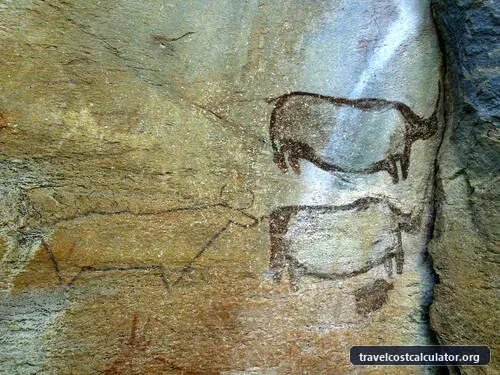
With one of the highest concentrations of rock art in the world, Tsodilo has been called the ''Louvre of the Desert''.
Tsodilo
🏛️ Overview & Historical Significance
Rising dramatically out of the flat, red sand dunes of the northwestern Kalahari Desert, Tsodilo is one of the most spiritually charged and culturally significant landscapes on the African continent. Frequently revered as the "Louvre of the Desert," this UNESCO World Heritage Site (designated in 2001 under criteria i, iii, and vi) contains one of the highest concentrations of rock art in the world. Across an area of just 10 square kilometers, more than 4,500 individual paintings are preserved across four massive quartzite inselbergs known as the Male Travel Budget Hill, Female Hill, Child Hill, and Grandchild (North) Hill.
For the indigenous San (Basarwa) and Hambukushu communities, Tsodilo is not merely an archaeological monument; it is a sacred place of worship and the spiritual home of ancestral gods. Archaeological excavations indicate that humans have inhabited, hunted, and performed rituals at Tsodilo for over 100,000 years, making it one of the longest continuous records of human activity on Earth. The rock paintings themselves—executed primarily in natural red ochre, white clay, and charcoal—range from depictions of wild animals (such as rhinos, elands, and giraffes) to complex geometric patterns and dancing human figures. Some of these artworks date back more than 24,000 years.
Tsodilo was awarded UNESCO status because it represents an exceptional testament to human creativity and spiritual connection with the environment. Unlike many global heritage sites that feel like static outdoor museums, Tsodilo remains a living cultural space. Local guides from the nearby villages of Tsodilo and Sepopa still walk these grounds with deep spiritual reverence, sharing oral histories that bring the silent stone canvas to life.
🎟️ Entrance Fees, Opening Hours & Ticket Booking Tips (2026 Estimates)
Visiting Tsodilo requires direct coordination with the Botswana Department of National Museum and Monuments and the local Tsodilo Community Trust. Entrance procedures are straightforward, but advance planning for cash payments is essential, as there are no electronic payment terminals or cellular networks at the main gate.
Official 2026 Fee Structure
-
✦
International Adult Site Entrance Fee: 50 BWP (~$3.70 USD) per person.
-
✦
SADC Resident Entrance Fee: 30 BWP (~$2.20 USD) per person.
-
✦
Botswana Citizen Entrance Fee: 20 BWP (~$1.50 USD) per person.
-
✦
Vehicle Access Fee (Non-BWP Registered): 50 BWP (~$3.70 USD) per vehicle per day.
-
✦
Obligatory Local Guide Fee: 150 BWP to 300 BWP (~$11.00 – $22.00 USD) per group/trail, paid directly to the Tsodilo Community Trust guide office at the gate.
Opening Hours & Site Museum Access
The main gates and the small on-site Tsodilo Site Museum are open daily from 07:30 to 17:00. The latest recommended entry for major walking trails is 15:30 to ensure hikers return before dark.
Crucial 2026 Ticket Booking & Payment Hacks
-
✦
Cash Only Policy: There are no credit card machines or ATMs anywhere near Tsodilo. You must carry sufficient Botswana Pula (BWP) cash for all entrance, vehicle, camping, and guiding fees. Withdraw cash in Maun Travel Budget, Sehitwa, or Shakawe before departing.
-
✦
Compulsory Guiding: While you can view the small museum independently, exploring the trails without a certified community guide is strictly prohibited to prevent vandalism and preserve sacred San heritage. Hiring a guide directly supports local indigenous livelihoods.
-
✦
Museum First: Always visit the interpretation museum at the site entrance before starting your hike. It provides crucial context regarding the distinct painting styles (Red vs. White period art) and archaeological history.
🚌 How to Get There & Local Transit Costs
Tsodilo is situated in a remote corner of northwestern Botswana, approximately 400 kilometers northwest of Maun (the tourism gateway to the Okavango Delta) and 53 kilometers southwest of Shakawe. Reaching the site requires navigation across rugged, sandy desert terrain.
Option 1: Self-Drive 4x4 Rental from Maun (Most Popular)
The most independent way to visit Tsodilo is renting a fully equipped 4x4 safari vehicle in Maun.
-
✦
Route: Drive northwest from Maun along the paved A35 highway towards Sehitwa, Nokaneng, and Sepopa (~340 km paved). Turn west off the A35 at the marked Tsodilo junction (near Nxamasere) onto the unpaved access road (~40 km of deep sand tracks).
-
✦
Vehicle Requirement: A high-clearance 4WD vehicle is strictly required. Standard 2WD cars will get bogged down in the thick Kalahari sand tracks within minutes.
-
✦
Cost Breakdown (2026):
- 4x4 Rental (e.g., Toyota Hilux Bushcamper): $130 – $190 USD per day.
-
✦
Fuel (Round-trip from Maun + local driving): ~$80 – $110 USD.
Option 2: Guided Day Excursion from Okavango Panhandle Lodges
If you are staying at a river lodge along the Okavango Panhandle (near Shakawe or Sepopa), most lodges offer guided 4x4 day excursions to Tsodilo.
-
✦
Transit Time: 1.5 to 2 hours each way from Sepopa or Nxamasere.
-
✦
Estimated Cost (2026): $160 – $260 USD per person (includes round-trip 4x4 transport, driver/guide, site entry fees, packed lunch, and bottled water).
Option 3: Public Transport + Local Charter (Budget Option)
For intrepid budget travelers, public transit is possible but requires multi-leg planning:
-
✦
Take a public minibus (combi) from Maun Bus Rank to Sepopa or Shakawe along the A35 (~120 BWP / ~$9.00 USD).
-
✦
From Sepopa or the Tsodilo turnoff, arrange a local 4x4 shuttle transfer through local community drivers or your campsite host (typically costs ~750 – 1,100 BWP / ~$55 – $80 USD total for the private vehicle transfer).
📸 Best Photography Spots & Insider Visit Hacks
Tsodilo's contrast between sheer orange-red quartzite cliffs, ancient ochre art, and clear blue desert skies offers incredible visual opportunities. However, photographing rock art requires technical awareness and spatial respect.
Top Photography Spots & Iconic Art Panels
-
✦
The Van der Post Panel (Rhino Trail): Located on the Female Hill, this famous panel features bold red paintings of a white rhino, an eland, and a giraffe. It is named after author Sir Laurens van der Post who brought global fame to the hills in the 1950s.
-
✦
The Whale Panel (Female Hill): An extraordinary red painting depicting a whale-like creature—a mystery considering the nearest ocean is over 1,000 kilometers away, suggesting far-reaching trade or migratory knowledge.
-
✦
Male Hill Summit Viewpoint: A challenging 2 to 3-hour hike leads to the highest point in Botswana (1,400 meters above sea level). The summit offers breathtaking 360-degree panoramic photography of the surrounding green and red Kalahari bushveld.
-
✦
The Dancing Figures / Ritual Panel: Intricate paintings of human figures engaged in what scholars believe is a San trance dance (cure dance).
Insider Photography & Travel Hacks
-
✦
Optimal Lighting Times: Visit early in the morning (07:30 to 10:30) or late afternoon (15:00 to 17:00). Midday sun flattens the contrast on rock faces and makes ambient temperatures uncomfortably hot. Morning light casts a warm glow over the red ochre pigments.
-
✦
Lens Selection: Bring a wide-angle lens (16-35mm) to capture the grandeur of the cliffs rising from the sand, alongside a fast prime lens (50mm or 85mm f/1.8) or macro lens for detailed close-ups of the rock art textures.
-
✦
Flash Prohibition: Never use camera flashes or artificial light directly on the paintings, as UV and intense artificial rays degrade the thousands-of-years-old mineral pigments over time. Touching the art is strictly illegal.
-
✦
Spiritual Etiquette: Ask your guide about cultural taboos. San tradition dictates that visitors enter the hills with an open heart. Avoid pointing directly at certain rocks with your index finger, as local beliefs hold that spirits reside within specific rock formations.
-
✦
Hydration & Footwear: The terrain consists of sharp quartzite scrambles and soft sand. Wear high-traction hiking boots and carry at least 3 liters of water per person for morning hikes.
🏨 Nearby Accommodation & Daily Budget Allocation
Because of Tsodilo’s remote desert location, accommodation choices range from rugged wilderness camping right at the base of the hills to full-service safari lodges located along the Okavango River Panhandle (40–60 km away).
Accommodation Options (2026 Rates)
1. Budget: Tsodilo Community Campground (On-Site)
-
✦
Overview: Located directly at the base of the hills near the main entrance gate. Facilities are basic, featuring pit latrines, basic bucket showers, and braai (barbecue) pits. You must bring all your own water, firewood, food, and camping gear.
-
✦
Price Range: ~$15 – $25 USD (200 – 330 BWP) per person per night.
2. Mid-Range: Okavango Panhandle River Lodges (Sepopa & Nxamasere)
-
✦
Overview: Located along the lush banks of the Okavango River, roughly a 1.5-hour 4x4 drive from Tsodilo. Excellent comfort with air-conditioned chalets, river views, swimming pools, and on-site dining (e.g., Nxamasere Island Lodge, Swamp Stop Chalets, or Drotsky's Cabins).
-
✦
Price Range: ~$140 – $320 USD per room/night (including breakfast or half-board).
3. Luxury: Exclusive Panhandle & Delta Fly-In Safari Lodges
-
✦
Overview: High-end safari lodges offering private helicopter charter transfers directly into the Tsodilo airstrip, combined with world-class dining, private San cultural guides, and luxury tented suites.
-
✦
Price Range: ~$750 – $1,500+ USD per person per night (all-inclusive).
Daily Budget Allocation (Estimated 2026 Travel Costs)
To help you plan your itinerary, here is a realistic daily financial breakdown based on travel style:
-
✦
Self-Drive Backpacker / Camper Budget: $60 – $90 USD / day
- Camping: $20 USD
-
✦
Self-catering food & water: $15 USD
-
✦
Shared 4x4 rental & fuel share: $35 USD
-
✦
Site fees & community guide share: $15 USD
- Comfortable river lodge room: $160 USD
- Luxury safari lodge: $1,200 USD
Frequently Asked Questions
Essential visitor FAQs for Tsodilo
What is the entrance fee for Tsodilo in 2026?
How much time do you need to explore Tsodilo?
How do I get to Tsodilo from Maun?
📊 Heritage Quick Specs
Visiting Botswana on a Budget?
Calculate your full daily travel budget for Botswana — including hotel costs, local transport, food, and sightseeing expenses.
View Botswana Daily Travel Costs →Explore more UNESCO World Heritage Sites
🏛️ All 1,200+ Heritage Sites →