
 Mali
Mali
Tomb of Askia
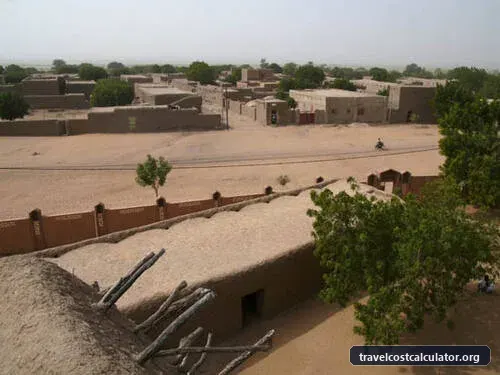
The dramatic 17-m pyramidal structure of the Tomb of Askia was built by Askia Mohamed, the Emperor of Songhai, in 1495 in his capital Gao.
Tomb of Askia
🏛️ Overview & Historical Significance
Standing dramatically on the edge of the Sahara Desert in the historic city of Gao, Mali, the Tomb of Askia is one of West Africa's most iconic and architecturally profound monuments. Commissioned in 1495 by Askia Mohamed I—the legendary ruler of the Songhai Empire and founder of the Askia dynasty—the site serves as a monumental testament to the power, wealth, and cultural sophistication of West Africa's medieval Islamic empires.
According to local oral tradition, when Askia Mohamed returned from his grand pilgrimage to Mecca Travel Budget in 1495, he brought back thousands of camels carrying construction materials, including sacred soil from Mecca used to mix the clay plaster. The main complex features a striking 17-meter-high earthen pyramid, two flat-roofed mosque structures, a sacred cemetery, and a historic open-air assembly square. The protruding wooden scaffolding spikes (known locally as torons) give the pyramid its distinct hedgehog-like appearance, acting both as permanent scaffolding for annual plastering and as architectural stabilization against Sahelian rains.
In 2004, UNESCO inscribed the Tomb of Askia on the World Heritage list. UNESCO recognized the site as an extraordinary example of the monumental mud-brick architectural tradition (Sudano-Sahelian style) that swept across the West African Sahel between the 13th and 17th centuries. Furthermore, it exemplifies how indigenous African earthen building techniques seamlessly fused with Islamic architectural forms. While the site was placed on the UNESCO List of World Heritage in Danger following security instability in northern Mali in 2012, ongoing community-led preservation programs—spearheaded by local guilds of traditional masons—continue to protect and maintain this invaluable global treasure into 2026.
🎟️ Entrance Fees, Opening Hours & Ticket Booking Tips
Visiting the Tomb of Askia requires minimal official expenditure, but hiring a local expert guide is paramount to support the local conservation committee and gain deep historical context.
Estimated 2026 Ticket Prices & Fees
-
✦
Standard International Adult Ticket: 3,000 West African CFA Francs (XOF) (~$5.00 USD).
-
✦
Local / ECOWAS Citizen Entry: 1,000 XOF (~$1.65 USD).
-
✦
Official Local Cultural Guide (Mandatory/Recommended): 10,000 – 15,000 XOF (~$16.50 – $25.00 USD) paid directly to the site guide association.
-
✦
Camera / Photography Permit: 2,000 XOF (~$3.30 USD) contribution toward building maintenance.
Opening Hours
-
✦
Monday – Sunday: 8:00 AM – 6:00 PM.
-
✦
Note: Access to the interior mosque prayer rooms during active prayer times (especially Friday noon prayers) is restricted to practicing Muslims. The central pyramid exterior and museum courtyard remain accessible throughout daylight hours.
Booking Tips & Cash Realities
There is no online ticketing system for the Tomb of Askia. All admission fees must be paid in cash upon arrival using physical West African CFA Francs (XOF). Ensure you carry crisp, small-denomination banknotes, as credit card processors and ATMs near the site can be unreliable. Booking a trip through an accredited Malian cultural travel agency based in Bamako Travel Budget or Gao is the best way to secure smooth entry, authorized security escorts, and vetted local historical guides.
🚌 How to Get There & Local Transit Costs
The Tomb of Askia is located in central Gao, approximately 1,200 kilometers northeast of Mali's capital city, Bamako. Reaching Gao requires advance preparation and careful transit logistics due to Sahelian geography and security protocols.
Option 1: Domestic Flights from Bamako (Recommended)
The safest and most efficient mode of travel in 2026 is flying directly from Modibo Keita International Airport (BKO) in Bamako to Gao Korogoussou Airport (GEO) via domestic carriers such as Sky Mali or authorized regional charters.
-
✦
Flight Duration: Approximately 2 hours.
-
✦
Estimated Roundtrip Fare: 150,000 – 230,000 XOF (~$250 – $380 USD).
-
✦
Airport Transfer to Site: A pre-arranged private 4x4 transfer from Gao Airport to the city center (10 km) costs around 10,000 – 15,000 XOF (~$16.50 – $25.00 USD).
Option 2: Overland Travel (Bush Taxi / Convoy Bus)
Overland long-distance buses operate along the National Route (RN16) connecting Bamako to Gao via Mopti and Sevaré. However, this trip spans over 24 to 36 hours across remote terrain.
-
✦
Estimated Bus Fare: 25,000 – 35,000 XOF (~$40 – $58 USD) one-way.
-
✦
Critical Safety Note: Due to lingering regional security risks in northern Mali, international travelers are strongly advised to check current travel advisories (e.g., U.S. State Department or UK FDO guidelines) and travel only with licensed security-cleared escorts or official tour operators.
Local Transit within Gao
-
✦
Moto-Taxi (Jakarta Motorbikes): 500 – 1,000 XOF (~$0.80 – $1.65 USD) per ride across town.
-
✦
Private Hire 4x4 Vehicle with Driver: 35,000 – 50,000 XOF (~$58 – $82 USD) per day (excluding fuel).
📸 Best Photography Spots & Insider Visit Hacks
Capturing the dramatic curves and shadow plays of the earthen pyramid requires careful timing and cultural respect.
Prime Photography Angles & Timing
-
✦
Golden Hour Glow (4:30 PM – 5:45 PM): The late afternoon sun illuminates the red-ochre plaster of the main pyramid, casting dramatic long shadows from the wooden torons.
-
✦
Southeastern Courtyard Perspective: Frame the towering main spire from the outer courtyard to capture both the scale of the structure and the expansive Sahelian blue sky.
-
✦
The Ancient Cemetery Grounds: Capture wide shots from the edge of the historic cemetery to highlight how the structure dominates the flat landscape surrounding the Niger River valley.
Insider Travel Hacks
-
✦
Best Season to Visit: Travel between November and February during the dry, cooler winter months. Temperatures hover around 28°C – 34°C (82°F – 93°F). Avoid the extreme heat of April–May (often exceeding 45°C / 113°F) and the rainy season (July–September).
-
✦
Protect Gear from Harmattan Dust: The dry Harmattan wind carries fine Saharan dust particles from December through February. Bring sealed dust covers, lens filters, and air blowers to protect camera sensors.
-
✦
Dress Respectfully: As an active cultural and religious landmark, conservative attire is required. Men and women should cover shoulders and knees. Female travelers should bring a lightweight scarf to cover their heads when exploring adjacent sanctuary grounds.
-
✦
Witness Community Maintenance: If traveling around major seasonal restoration periods, ask your guide if you can observe traditional plasterers applying banco (a mixture of mud, straw, and rice husks) to preserve the exterior walls.
🏨 Nearby Accommodation & Daily Budget Allocation
Tourism infrastructure in Gao is modest, focused on traditional hospitality, municipal guesthouses, and comfortable riverfront lodges catering to humanitarian workers, heritage researchers, and intrepid culture travelers.
Accommodation Options in Gao (2026 Rates)
-
✦
Budget Guesthouse / Auberge: Basic private room with fan and shared or private bath (e.g., local cultural guesthouses). 15,000 – 25,000 XOF (~$25 – $40 USD) per night.
-
✦
Mid-Range Hotel / River Lodge: Air-conditioned rooms, secure perimeter, local dining, and generator backup (e.g., historic regional hotels near the Niger River). 35,000 – 65,000 XOF (~$58 – $105 USD) per night.
Local Food & Dining Costs
Sample authentic Songhai culinary specialties at local eateries along the banks of the Niger River:
-
✦
Freshly Grilled Capitaine (Nile Perch): Serviced with fried plantains or spices at riverbank stalls: 2,500 – 5,000 XOF (~$4.10 – $8.20 USD).
-
✦
Tigadègèna (Malian Peanut Sauce Stew with Rice): 1,500 – 3,000 XOF (~$2.50 – $5.00 USD).
-
✦
Bottled Mineral Water (1.5L): 500 – 800 XOF (~$0.80 – $1.30 USD). Always consume sealed bottled water.
Estimated Daily Budget Summary
-
✦
Budget Backpacker: $40 – $60 USD / day (Includes local guesthouse, street food, shared moto-taxis, and basic entrance ticket).
-
✦
Mid-Range Cultural Traveler: $120 – $220 USD / day (Includes mid-range air-conditioned hotel, private 4x4 local transfers, fine dining, official guide fees, and photography permits).
Frequently Asked Questions
Essential visitor FAQs for Tomb of Askia
What is the entrance fee for Tomb of Askia?
How much time do you need to explore Tomb of Askia?
How do I get to Tomb of Askia from the nearest city?
📊 Heritage Quick Specs
Visiting Mali on a Budget?
Calculate your full daily travel budget for Mali — including hotel costs, local transport, food, and sightseeing expenses.
View Mali Daily Travel Costs →Explore more UNESCO World Heritage Sites
🏛️ All 1,200+ Heritage Sites →