
 Mali
Mali
Timbuktu
Home of the prestigious Koranic Sankore University and other madrasas, Timbuktu was an intellectual and spiritual capital and a centre for the propagation of Islam throughout Africa in the 15th and 16th centuries.
Timbuktu
🏛️ Overview & Historical Significance
Rising like a mythical mirage from the southern fringes of the Sahara Desert, Timbuktu Travel Budget (Tombouctou) stands as one of the world's most evocative crossroads of commerce, faith, and intellect. Located along the northern arc of the Niger River in Mali, Timbuktu was officially inscribed as a UNESCO World Heritage site in 1988. This prestigious designation recognizes its extraordinary contribution to global Islamic scholarship between the 13th and 16th centuries, its pivotal position in the trans-Saharan trade routes, and its striking architectural heritage crafted entirely from earth, wood, and stone.
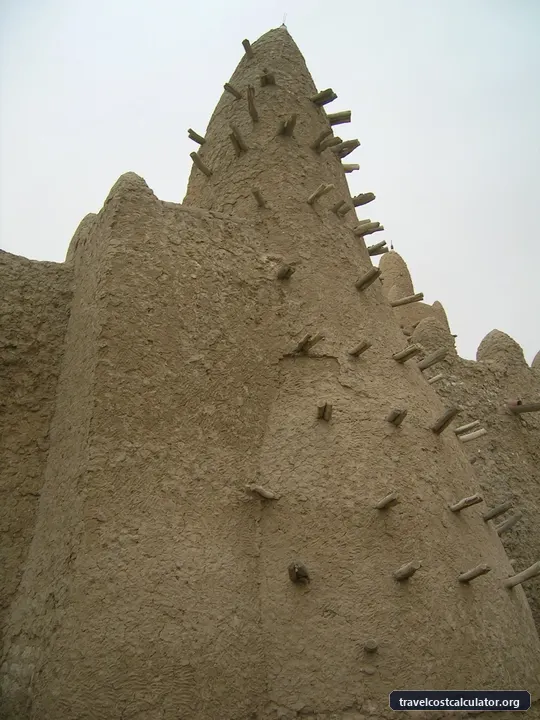
Founded around the 11th century by Tuareg nomads as a seasonal encampment, Timbuktu rapidly evolved into the crown jewel of the Mali Empire under the legendary reign of Mansa Musa in the 14th century. Mansa Musa’s extravagant pilgrimage to Mecca Travel Budget in 1324 put the city on European maps, showcasing its immense wealth derived from gold, rock salt, ivory, and enslaved labor. Upon his return, Mansa Musa commissioned Andalusian architect Abou Es Haq Es Saheli to construct the monumental Djingareyber Mosque in 1327, establishing the iconic Sudano-Sahelian architectural style characterized by earthen mud walls, projecting wooden scaffold beams (toron), and conical minarets.
By the 15th and 16th centuries, during the zenith of the Songhai Empire, Timbuktu transformed into the intellectual powerhouse of Africa. The legendary University of Sankoré, along with dozens of madrasas (Islamic schools), hosted over 25,000 scholars and students within a population of 100,000. Timbuktu became home to hundreds of thousands of rare illuminated manuscripts covering astronomy, mathematics, medicine, philosophy, law, and poetry, proving that a rich written tradition flourished in West Africa long before European colonization.
While armed conflicts in 2012 damaged several sacred mausoleums of local Sufi saints (which led to the site being placed on the UNESCO List of World Heritage in Danger), an inspiring international and local restoration effort successfully rebuilt the destroyed shrines using traditional techniques. Today, visiting Timbuktu is not merely a sightseeing tour; it is a profound journey into the living soul of West African history, resilience, and architectural brilliance.
🎟️ Entrance Fees, Opening Hours & Ticket Booking Tips
Exploring Timbuktu differs significantly from visiting standard Western monuments. There is no single ticket office or centralized turnstile. Instead, access relies on a combination of municipal heritage permits, community contribution fees for individual mosques and manuscript libraries, and the mandatory accompaniment of an official local guide for security and cultural navigation.
Estimated 2026 Costs & Visitor Fees
-
✦
Heritage Site Cultural Pass & Local Guide Permit: 15,000 – 25,000 XOF (~$25 – $40 USD / €23 – €37) per person. This mandatory daily fee pays for accredited local guides and contributes to local preservation funds.
-
✦
Ahmed Baba Institute of Higher Islamic Studies & Research: 3,000 – 5,000 XOF (~$5 – $8 USD / €4.50 – €7.50) per visitor to access the manuscript viewing galleries.
-
✦
Individual Mosque Architectural Access (Djingareyber, Sankoré, Sidi Yahya): 2,000 – 4,000 XOF (~$3.30 – $6.50 USD / €3 – €6) donation per site, paid directly to local neighborhood caretakers (Imam’s custodians).
-
✦
Private Family Manuscript Libraries (e.g., Mamma Haidara, Fondo Kati): 3,000 – 6,000 XOF (~$5 – $10 USD / €4.50 – €9) per private library visit.
Opening Hours & Timing Rules
-
✦
Mosque Exterior Grounds & Courtyards: Accessible daily from 7:30 AM to 6:00 PM. Interior prayer halls are strictly reserved for practicing Muslims during active daily prayer times (Fajr, Dhuhr, Asr, Maghrib, Isha). Non-Muslim visitors are permitted to view the interiors only outside prayer windows, under the direct supervision of an authorized guide.
-
✦
Manuscript Libraries & Museums: Open Monday through Saturday from 8:30 AM to 4:00 PM (closed Fridays during communal prayers between 12:00 PM and 2:30 PM).
Essential Booking & Logistics Tips for 2026
-
✦
Mandatory Local Permits: Foreign visitors arriving in Timbuktu must check in with local municipal authorities and the regional tourism office (OMAT) alongside their certified local guide to validate identity and travel clearance.
-
✦
Cash is Sovereign: Neither credit cards nor digital wallets are accepted anywhere in Timbuktu. Carry all payments in crisp West African CFA Francs (XOF), preferably in smaller denominations (1,000, 2,000, and 5,000 XOF notes).
-
✦
Photography Fees: While general street photography is included in your guide permit, non-commercial tripod usage or video filming inside manuscript archives requires prior written approval from the ministry of culture and library directors.
🚌 How to Get There & Local Transit Costs
Reaching Timbuktu is an adventure in itself. Given its isolated geographic location on the edge of the Sahara Desert, travel requires careful pre-planning, administrative coordination, and up-to-date awareness of local transit corridors.
1. By Air from Bamako Travel Budget (Recommended Route)
The safest and most practical route to Timbuktu in 2026 is flying from the capital city, Bamako (Modibo Keita International Airport - BKO), directly to Timbuktu Airport (TOM).
-
✦
Domestic Flight (Sky Mali / Regional Charters): Commercial flights operate 1 to 2 times weekly depending on seasonal demand. Flight time is approximately 1 hour 45 minutes. Expect round-trip ticket costs between 180,000 XOF and 300,000 XOF (~$300 – $500 USD).
-
✦
Airport to City Center Transfer: Timbuktu Airport is located about 6 kilometers (3.7 miles) south of the town center. A private pre-arranged 4x4 transfer costs roughly 10,000 – 15,000 XOF (~$16 – $25 USD).
2. By Riverboat (Pinasse) via the Niger River (Seasonal)
For those seeking a historic overland experience, river transport along the Niger River connects regional transport hubs like Mopti or Koura to the port of Kabara (8 km from Timbuktu).
-
✦
High Water Season: Operating strictly between August and December when the Niger River is deep enough for large motorized wooden boats (pinasses).
-
✦
Travel Time: 3 to 4 days of scenic river transit stopping at riverside villages along the inland Niger Delta.
-
✦
Cost: A seat on a standard commercial pinasse costs between 25,000 XOF and 45,000 XOF (~$40 – $75 USD), including basic communal meals. Renting a private private motorized pinasse for a small group ranges from 350,000 to 600,000 XOF (~$570 – $980 USD).
3. Local City Transportation
Once inside Timbuktu, vehicles are rarely needed due to the compact layout of the historic quarter and narrow sand alleys.
-
✦
Walking: Navigating on foot is the best way to explore the old city quarters (Badjindé, Sankoré, Djingareyber). Always walk with your local guide.
-
✦
Local Taxi / 4x4 Hire: For trips to outer sand dunes or Kabara port, private 4x4 vehicles with a driver can be rented for 35,000 – 50,000 XOF (~$58 – $82 USD) per day, excluding fuel.
📸 Best Photography Spots & Insider Visit Hacks
Photographing Timbuktu is a dream for cultural photographers, featuring textured mud plaster, hand-carved Tuareg wooden doors, and dramatic desert lighting. However, respectful photography protocol is mandatory in this conservative Islamic community.
Top 4 Photography Hotspots
-
✦
Djingareyber Mosque Outer Wall & Minaret: The grandest example of Sudano-Sahelian architecture. Capture the southwest facade in late afternoon when the warm sunlight highlights the earth plaster and wooden toron spikes projecting from the clay walls.
-
✦
Sankoré Mosque Courtyard View: Famous for its pyramidal minaret, built to match the exact dimensions of the Kaaba in Mecca. Early morning light (around 7:00 AM) provides a soft golden glow with minimal shadows.
-
✦
The Ancient Manuscript Collections: Photographing centuries-old Arabic, Arabic-Afrika, and Ge'ez calligraphy at the manuscript archives. Note: Always turn off camera flashes to prevent degrading organic parchment inks.
-
✦
Sahara Dune Heights (Arawan Road): Head 3 kilometers north of the town edge at sunset for panoramic shots of the desert sand dunes meeting the historic earth rooftops of Timbuktu.
Insider Visit Hacks for a Smooth Experience
-
✦
Optimal Seasonal Weather: The prime window to visit is during the cool dry season between November and February. Daytime temperatures average 28°C to 32°C (82°F–90°F), with comfortably cool desert nights (14°C / 57°F). Avoid the extreme heat of April to June when temperatures routinely exceed 45°C (113°F).
-
✦
Respectful Cultural Attiquette: Dress modestly at all times. Men should wear loose long trousers and covered shoulders; women should wear loose-fitting dresses or pants with covered shoulders and carry a light scarf to cover their hair when near religious sites.
-
✦
Ask Before Photographing People: Never point a camera at local residents, children, or elders without explicit verbal permission. Always consult your guide before capturing portraits.
-
✦
Dust Protection: The dry Harmattan wind blows fine Saharan sand through the air from December to February. Pack protective sealed camera bags, dry bags, lens cleaning kits, and UV filters to protect electronic equipment.
🏨 Nearby Accommodation & Daily Budget Allocation
Hospitality in Timbuktu is characterized by deep-rooted desert traditions of welcome (known locally as Diyafa). While luxury resort chains do not exist here, clean, secure, authentic local guest houses (auberges) provide comfortable lodging and traditional meals.
Accommodation Options
-
✦
Budget Guesthouses & Campsites: Simple rooms with fan cooling, shared facilities, and authentic mud-brick courtyards. Expect to pay 15,000 – 25,000 XOF (~$25 – $40 USD) per night.
-
✦
Mid-Range Cultural Auberges (e.g., Auberge La Colombe / Hotel Hendrina area): Private air-conditioned rooms, en-suite bathrooms, generator backup power, secure perimeter walls, and traditional courtyard dining. Expect 45,000 – 80,000 XOF (~$75 – $130 USD) per night including breakfast.
Local Dining & Food Costs
Dining in Timbuktu offers unique desert flavors influenced by Songhai, Tuareg, and Bella culinary traditions. Try Alabadja (a festive dish of finely shredded meat and rice cooked in clarified butter) or Toukassou (steamed bread dumplings simmered in a spiced tomato-meat sauce).
-
✦
Local Eateries & Street Food: Grilled mutton skewers, fresh flatbread (Tafanou), or rice dishes cost between 1,500 and 3,500 XOF (~$2.50 – $6.00 USD) per meal.
-
✦
Guesthouse Restaurant Dinners: Full three-course traditional meals prepared at your hotel cost around 6,000 – 12,000 XOF (~$10 – $20 USD).
Daily Budget Allocation Table (Estimated 2026)
To help you budget your journey effectively, here is a practical estimation of daily expenses per traveler (excluding long-distance flights into Mali):
-
✦
Budget Traveler ($60 – $95 USD / 36,000 – 58,000 XOF per day):
- Lodging: $25 – $35 (Budget room / shared bath)
-
✦
Meals & Water: $12 – $18 (Local street stalls & simple dishes)
-
✦
Guiding & Site Access: $15 – $25 (Shared guide fees & mosque permits)
-
✦
Local Transit: $8 – $17 (Walking & occasional shared transport)
- Lodging: $75 – $130 (Comfortable A/C Guesthouse with breakfast)
Frequently Asked Questions
Essential visitor FAQs for Timbuktu
What is the entrance fee for Timbuktu?
How much time do you need to explore Timbuktu?
How do I get to Timbuktu from the nearest city?
📊 Heritage Quick Specs
Visiting Mali on a Budget?
Calculate your full daily travel budget for Mali — including hotel costs, local transport, food, and sightseeing expenses.
View Mali Daily Travel Costs →Explore more UNESCO World Heritage Sites
🏛️ All 1,200+ Heritage Sites →