
 China
Three Parallel Rivers of Yunnan Protected Areas
Consisting of eight geographical clusters of protected areas within the boundaries of the Three Parallel Rivers National Park, in the mountainous north-west of Yunnan Province, the 1.7 million hectare site feat...
Three Parallel Rivers of Yunnan Protected Areas
🏛️ Overview & Historical Significance
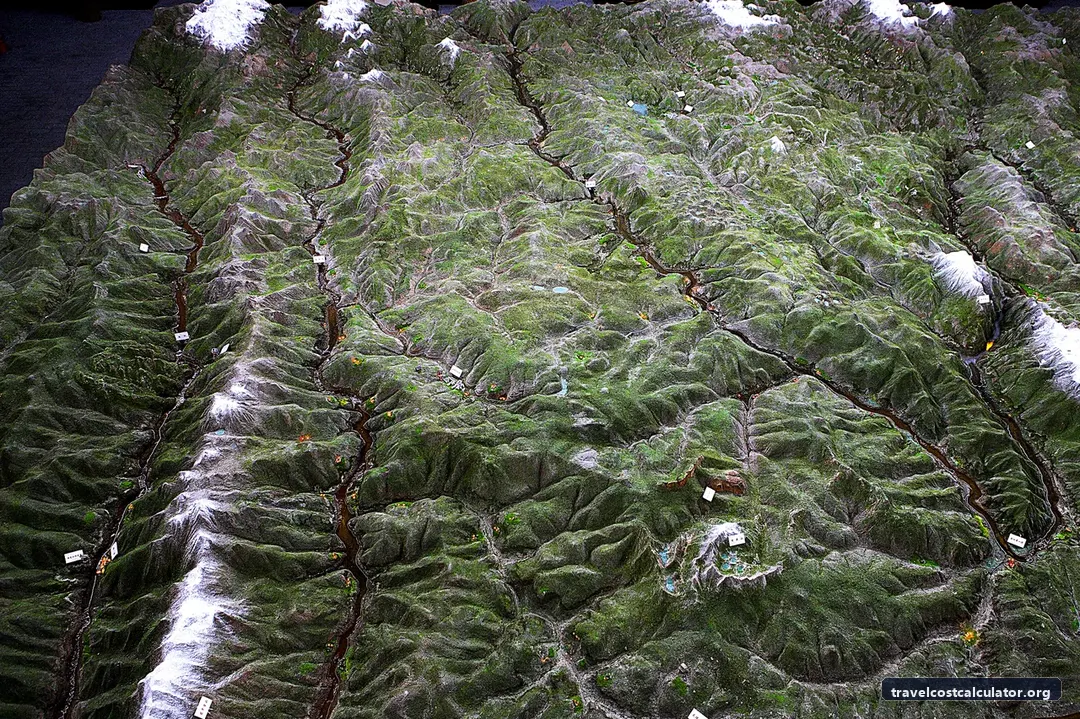
In the rugged, cloud-shrouded wilderness of northwestern Yunnan province lies one of Earth’s most extraordinary geographical and ecological wonders: the Three Parallel Rivers of Yunnan Protected Areas. Inscribed as a UNESCO World Heritage site in 2003, this vast 1.7 million-hectare sanctuary is where three of Asia’s greatest rivers—the Yangtze (Jinsha), the Mekong (Lancang), and the Salween (Nu)—flow parallel to one another from north to south, carved into dramatic gorges over 3,000 meters deep, bounded by snow-capped peaks exceeding 6,000 meters in elevation.
Remarkably, over a 300-kilometer stretch, these three immense river systems travel side-by-side without intersecting, separated by towering mountain ranges including the Gaoligong, Biluo, Meili, and Dianyankou mountains. Geologically, this landscape represents the epic collision of the Indian tectonic plate with the Eurasian continent, producing a dramatic relief that ranges from subtropical river valleys to alpine glaciers within a span of just a few horizontal kilometers.
Recognized under all four UNESCO natural site criteria, the region is designated as one of the world's most bio-diverse temperate zones. It hosts over 6,000 plant species, 173 species of mammals (including the endangered Yunnan snub-nosed monkey and snow leopard), and over 400 species of birds. Beyond its environmental majesty, the Three Parallel Rivers area is an ancient cultural mosaic where Tibetan, Naxi, Lisu, Yi, Nu, and Dulong ethnic groups have lived in harmony with the steep mountain slopes for centuries. Exploring this region provides an unforgettable journey through high-altitude sacred mountains, legendary trekking gorges, and preserved ethnic enclaves.
🎟️ Entrance Fees, Opening Hours & Ticket Booking Tips
Because the UNESCO site comprises 15 distinct protected areas grouped into eight geographic clusters, there is no single ticket for the entire territory. Instead, entry fees, transport passes, and operating hours are managed per scenic cluster. Below are estimated costs for the primary accessible zones within the protected region:
-
✦
Pudacuo National Park (Shangri-La): ¥138 CNY (~$19.00 USD) per person, which includes the mandatory eco-shuttle bus through Shudu Lake and Bitahai area. Hours: 08:30 – 16:00 daily.
-
✦
Tiger Leaping Gorge (Shangri-La / Deqin side): ¥45 CNY (~$6.20 USD) for main scenic area entrance. Hours: 08:00 – 17:30 daily.
-
✦
Meili Snow Mountain Scenic Area (Deqin): Combined pass covering Feilai Temple viewing platform, Glacier Valley, and Yubeng Village entry is approximately ¥150–¥228 CNY (~$20.75 – $31.50 USD) depending on seasonal package inclusions. Feilai Temple observation platform opens at 06:00 for sunrise.
-
✦
Laojun Mountain Liming Red Rock Park (Lijiang): ¥70 CNY (~$9.70 USD) entry fee; optional cable car ride costs ¥100 CNY (~$13.80 USD) round-trip. Hours: 08:30 – 17:00.
-
✦
Bingzhongluo & Nu River Valley (Nujiang): Most public viewpoints along the Nu River Grand Canyon remain free of entry fees, though local cultural village access points may charge nominal fees of ¥20–¥40 CNY (~$2.75 – $5.50 USD).
Essential Ticket Booking & Digital Hacks: Real-name ticket registration using your passport is mandatory across all national parks in China. Foreign visitors can easily pre-book tickets through international travel platforms such as Trip.com or official regional WeChat Mini Programs using linked foreign credit cards (Visa/Mastercard integration on WeChat Pay and Alipay is now seamless across China). Booking 1–3 days in advance during high season (October and May national holidays) is strongly recommended to guarantee entry slots for restricted ecological parks like Pudacuo.
🚌 How to Get There & Local Transit Costs
The main urban gateways for entering the Three Parallel Rivers region are Lijiang and Shangri-La (Zhongdian). High-speed rail infrastructure makes transit fast, efficient, and cost-effective.
Step 1: Arriving at the Regional Gateways
Fly into Lijiang Sanyi Airport (LJG) or Diqing Shangri-La Airport (DIG). Alternatively, take the bullet train from Kunming (the capital of Yunnan). The bullet train from Kunming South/Main Station to Lijiang takes roughly 3.5 hours (~¥220 CNY / $30.40 USD 2nd Class). The extended High-Speed Rail line directly links Lijiang to Shangri-La Station in approximately 1 hour and 20 minutes (~¥63 CNY / $8.70 USD 2nd Class).
Step 2: Onward Local Transport & Regional Costs
-
✦
To Tiger Leaping Gorge (Qiaotou): Daily express tourist buses run from Lijiang Bus Station directly to Qiaotou (the trailhead) for ~¥35 CNY (~$4.80 USD) one-way (approx. 1.5 hours).
-
✦
To Meili Snow Mountain & Deqin: From Shangri-La Long-Distance Bus Station, coaches operate daily to Deqin (~4 hours, ¥65 CNY / $9.00 USD). Shared minivans or chartered taxis from Shangri-La to Feilai Temple cost around ¥80–¥120 CNY (~$11.00 – $16.50 USD) per seat.
-
✦
To the Nu River Valley (Bingzhongluo): Take a long-distance bus or express shuttle from Dali or Baoshan to Lushui (Nujiang prefecture seat), then transfer to local coaches traveling north through Gongshan to Bingzhongluo (~6–8 hours total, combined fare ~¥140 CNY / $19.30 USD).
-
✦
Private Car/SUV Hire: Hiring a licensed driver with a 4WD or SUV for multi-day mountain mountain traverses costs between ¥600 and ¥1,000 CNY (~$83.00 – $138.00 USD) per day inclusive of fuel and highway tolls, easily shared among 3–4 travelers.
📸 Best Photography Spots & Insider Visit Hacks
Capturing the epic scale of three major rivers cutting through 6,000-meter peaks requires precise timing, location planning, and physical preparation:
-
✦
Feilai Temple (Feilai Si) Observation Deck: Located near Deqin, this is the ultimate vantage point for photographing Kawagarbo (6,740m), the highest peak in Yunnan and sacred to Tibetan Buddhists. Arrive before dawn to shoot the legendary "Rizhao Jinshan"—the first golden rays of sunlight illuminating the snow peak in pink and gold.
-
✦
Middle Tiger Leaping Gorge (Tina's Area to Rapids): Hike down to the river bank where the roaring Yangtze squeezes through narrow rock walls. Use a fast shutter speed to capture the terrifying white-water cascades framed by sheer limestone cliffs rising 3,000 meters above.
-
✦
First Bend of the Yangtze (Shigu Town): Photograph the dramatic 180-degree V-shaped horseshoe bend where the Jinsha River makes a sudden turn northeast back into China’s heartland.
-
✦
Pudacuo’s Shudu Lake Boardwalks: Visit during autumn (October–November) when alpine larch forests turn brilliant copper-yellow, reflecting perfectly on pristine high-altitude lakes.
Insider Visit Hacks:
-
✦
Optimal Weather Window: The absolute Best Time to Visit Planner is from October to May (Dry Season). October to November offers crisp autumn colors and clear skies, while December to March brings dusting snow and brilliant mountain clarity. Avoid the summer monsoon (July–August), when heavy mountain rains trigger mudslides, cloud cover blocks peak views, and trail conditions deteriorate.
-
✦
Altitude Acclimatization Strategy: Shangri-La sits at 3,300 meters above sea level, and Meili passes exceed 3,500 meters. Spend 1 to 2 days acclimating in Lijiang (2,400m) before traveling higher. Keep portable oxygen canisters (¥20–¥30 CNY at local pharmacies) on hand and stay well-hydrated.
-
✦
Independent Trekking Permits: While standard viewing platforms require basic entry tickets, multi-day treks into Yubeng Village or around Mt. Laojun require signing safety registers at village checkpoints. Carry cash, lightweight rain gear, and offline GPS maps (such as Maps.me or AllTrails).
🏨 Nearby Accommodation & Daily Budget Allocation
Accommodations along the Three Parallel Rivers circuit range from authentic Tibetan family guesthouses and high-altitude hiking lodges to world-class eco-luxury resorts tucked away in secluded valleys.
Recommended Stays
-
✦
Budget / Hostels ($12 – $30 USD / night): Sean's Guesthouse or Tina's Trekking Guesthouse in Tiger Leaping Gorge; local Tibetan wooden homestays in Yubeng Village or Dukezong Old Town (Shangri-La).
-
✦
Mid-Range Boutique ($50 – $110 USD / night): Shangri-La Horizon High-Altitude Hotel or alpine boutique inns near Feilai Temple offering direct views of Meili Snow Mountain from floor-to-ceiling balcony windows.
-
✦
Luxury Eco-Resorts ($250 – $650 USD / night): The acclaimed Songtsam Lodge Network (properties in Shangri-La, Meili, Tacheng, and Cizhong), featuring hand-crafted Tibetan furnishings, organic culinary experiences, and private guides.
Daily Budget Estimations
Below is a breakdown of estimated daily expenses to help plan your trip budget depending on your travel style:
-
✦
Backpacker Budget Planner: $35 – $55 USD per day (¥250 – ¥400 CNY)
- Accommodation: Shared dormitory or budget private guesthouse ($12 – $20 USD)
-
✦
Meals: Local Naxi noodles, Tibetan momos, and street food ($10 – $15 USD)
-
✦
Transport: Shared public buses and train connections ($8 – $12 USD)
-
✦
Sightseeing: Selective park tickets / basic gorge entry ($5 – $8 USD averaged)
- Accommodation: Private boutique hotel or comfortable Tibetan lodge ($55 – $90 USD)
- Accommodation: Luxury sanctuary lodge such as Songtsam Meili or Shangri-La ($300 – $600 USD)
Frequently Asked Questions
Essential visitor FAQs for Three Parallel Rivers of Yunnan Protected Areas
What is the entrance fee for Three Parallel Rivers of Yunnan Protected Areas?
How much time do you need to explore Three Parallel Rivers of Yunnan Protected Areas?
How do I get to Three Parallel Rivers of Yunnan Protected Areas from the nearest city?
📊 Heritage Quick Specs
Visiting China on a Budget?
Calculate your full daily travel budget for China — including hotel costs, local transport, food, and sightseeing expenses.
View China Daily Travel Costs →Explore more UNESCO World Heritage Sites
🏛️ All 1,200+ Heritage Sites →