
 Italy
Italy
The Trulli of Alberobello
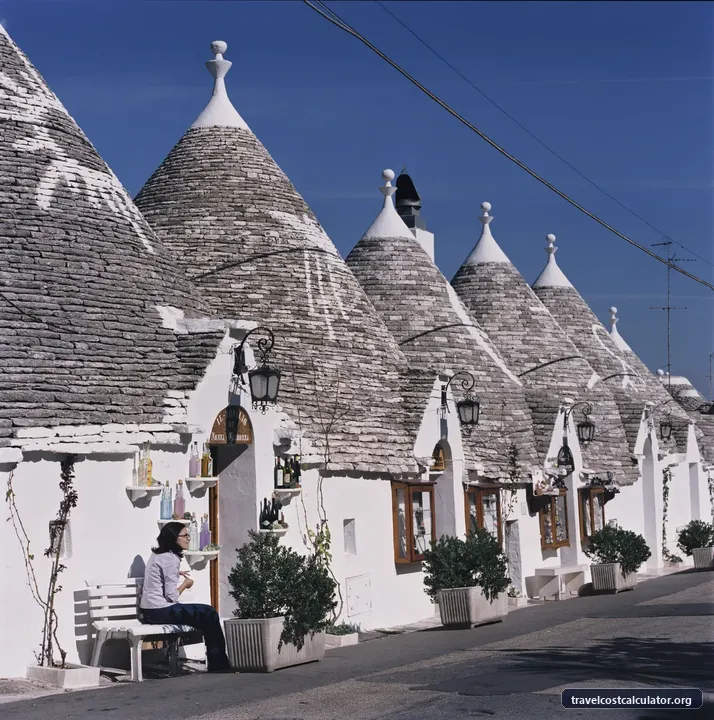
The trulli , limestone dwellings found in the southern region of Puglia, are remarkable examples of drywall (mortarless) construction, a prehistoric building technique still in use in this region.
The Trulli of Alberobello
🏛️ Overview & Historical Significance
Nestled in the heart of Puglia’s fertile Itria Valley (Valle d'Itria) in Southern Italy, The Trulli of Alberobello represent one of the most distinctive and remarkably preserved architectural phenomena in the Mediterranean basin. Designated as a UNESCO World Heritage site in 1996, this enchanting municipality contains over 1,500 drystone conical structures known as trulli (singular: trullo). Dating back to the mid-14th century, these unique white-washed dwellings were built using an ancient mortarless limestone construction technique that traces its engineering heritage back to prehistoric times.
The historical impetus behind the creation of Alberobello's trulli is a classic tale of feudal ingenuity and tax evasion. During the 15th to 17th centuries, the local rulers—the Counts of Conversano (most famously Count Giangirolamo II Acquaviva d'Aragona)—wished to populate the forest of Arboris Belli without paying property taxes to the Spanish Viceroy of the Kingdom of Naples. To circumvent taxes levied on permanent urban settlements, the Count ordered the local peasant laborers to construct all dwellings using dry limestone slabs (chiancarelle) gathered from nearby fields, completely devoid of mortar or cement. If royal tax inspectors were spotted approaching the valley, the villagers could quickly pull out key support stones, collapsing the conical roofs into harmless piles of loose rock, making the area appear as simple agricultural rubble rather than a taxable town.
UNESCO awarded Alberobello World Heritage status under criteria (iii), (iv), and (v), recognizing it as an outstanding example of a human settlement that maintains exceptional prehistoric drystone building techniques while surviving intact into the modern era. The site is primarily divided into two historic districts:
-
✦
Rione Monti: The larger, highly picturesque commercial district scaling a steep hillside, featuring over 1,000 trulli lined with artisan shops, cafes, and rooftop vantage points.
-
✦
Rione Aia Piccola: A quieter, predominantly residential zone with around 400 trulli where local families still live, offering an authentic, uncommercialized glimpse into rural Italian heritage.
Architecturally, each trullo features double-layered limestone walls for natural climate control—keeping interiors cool during sweltering Italian summers and retaining warmth during winter. The conical roofs are frequently adorned with hand-painted white symbols derived from Christian imagery, pagan folklore, and astrological traditions, designed to ward off bad luck and bring prosperity to the household. At the tip of each cone sits a decorative stone cap called a pinnacolo (finial), served as the master builder's unique signature.
🎟️ Entrance Fees, Opening Hours & Ticket Booking Tips
Unlike traditional monument complexes, the historical center of Alberobello is an open, living town. Visiting the main districts of Rione Monti and Rione Aia Piccola is completely free of charge and accessible 24 hours a day, 365 days a year. However, specific historic trulli, museums, and private panoramic terraces have nominal admission fees.
2026 Ticket Pricing & Entrance Costs
-
✦
Historic Town Access (Rione Monti & Rione Aia Piccola): Free (€0 / $0 USD).
-
✦
Trullo Sovrano Museum: €3.00 - €3.50 (~$3.25 - $3.80 USD). Located behind the Church of Santi Medici, this is the only two-story trullo ever constructed, featuring authentic 18th-century period furnishings and kitchen tools.
-
✦
Museo del Territorio (Casa Pezzolla): €4.00 - €5.00 (~$4.35 - $5.45 USD). A connected complex of 15 trulli showcasing local agricultural tools, historical winemaking, and traditional Pugliese crafts.
-
✦
Chiesa di Sant'Antonio (The Trullo Church): Free entry (€0 / $0 USD), though voluntary donations for maintenance are welcomed.
-
✦
Guided Walking Tours: Shared 1.5-to-2-hour historical walking tours with certified local guides cost approximately €15.00 - €30.00 (~$16.30 - $32.60 USD) per person in 2026. Private customized tours range from €80.00 - €150.00 (~$87.00 - $163.00 USD).
Opening Hours & Insider Booking Hacks
Museums and commercial trulli typically operate from 10:00 AM to 1:00 PM and reopened after the traditional Italian afternoon break (riposo) from 3:30 PM to 7:30 PM (extending to 8:30 PM in peak summer months). Public areas remain lit throughout the evening, offering spectacular night walking conditions.
Booking Advice for 2026: You do not need advance tickets to stroll the streets of Alberobello. However, if traveling during high season (June through September), book official walking tours or specialized tasting experiences (such as olive oil and Primitivo wine masterclasses inside a trullo cellar) at least 2 to 3 weeks in advance. Many gift shops inside Rione Monti invite visitors upstairs to their rooftop terraces for free, provided you browse their souvenir selections—be respectful and consider buying a small ceramic artifact or local snack in exchange for the viewpoint access.
🚌 How to Get There & Local Transit Costs
Alberobello is situated in the Metropolitan City of Bari in Puglia. The primary international gateway is Bari Karol Wojtyła Airport (BRI), located approximately 55 kilometers (34 miles) north, followed by Brindisi Salento Airport (BDS), located 75 kilometers (46 miles) southeast.
1. Travel from Bari to Alberobello (Most Common Route)
-
✦
By FSE Regional Bus / Train (Budget Choice): The regional transport network Ferrovie del Sud Est (FSE), managed by Trenitalia, operates direct buses and combined train-bus routes from Bari Centrale railway station directly to Alberobello. In 2026, single journey tickets cost between €4.50 and €5.50 (~$4.90 - $6.00 USD). Journey times range from 1 hour 10 minutes to 1 hour 45 minutes depending on traffic. Tickets can be purchased at station kiosks, via the Trenitalia mobile app, or on the FSE website.
-
✦
By Rental Car (Flexible & Fast Choice): Driving from Bari takes roughly 50 to 60 minutes via the SS100 highway to Casamassima, connecting to the scenic SS172 (Strada Statale 172 dei Trulli). Rental car rates at Bari Airport in 2026 average €35.00 - €70.00 (~$38.00 - $76.00 USD) per day.
Parking Notice: Driving directly inside the historic UNESCO trulli zone is strictly prohibited (ZTL zone). Pay-and-display street parking and dedicated lots (e.g., Parcheggio Nel Verde or Largo Martellotta) cost €2.00 - €2.50 per hour (~$2.15 - $2.70 USD) or €12.00 - €15.00 (~$13.00 - $16.30 USD) for a full day. -
✦
By Private Taxi or Airport Transfer: Pre-arranged private transfers from Bari Airport or Bari City Center to Alberobello cost approximately €85.00 - €120.00 (~$92.00 - $130.00 USD) one-way for up to 4 passengers.
2. Travel from Brindisi or Lecce
From Brindisi Airport, public buses connect to Brindisi station, where regional trains head north to Fasano, followed by a local FSE connecting bus to Alberobello (total travel time ~1.5 to 2 hours; public transit cost ~€8.00 - €12.00 / $8.70 - $13.00 USD). Drivers can follow the SS16 coastal route north to Monopoli, taking the exit up into the hills toward Alberobello via the SP113.
📸 Best Photography Spots & Insider Visit Hacks
With its striking contrast of brilliant white lime plaster, weathered grey limestone tiles, vibrant green potted plants, and deep blue Apulian skies, Alberobello is a photographer's dream. To capture master-level images and avoid the throngs of day-trippers, follow these strategic insider recommendations.
Top Photography Locations
-
✦
Belvedere Santa Lucia (Piazza Giangirolamo): Located right beside the Church of Santa Lucia, this elevated observation deck provides the quintessential, wide panoramic vista looking over the entire sloping hillside of the Rione Monti district.
-
✦
Rione Aia Piccola Alleyways: Head down Via Duca d'Aosta and Via Galilei. Unlike the main tourist drag, this area is free of commercial storefront signs, hanging clothing racks, and souvenir displays, giving you clean shot compositions of authentic historic streetscapes.
-
✦
Via Monte Pertica & Via Monte San Michele: Steep, stone-paved lanes in Rione Monti lined with classic trulli cones adorned with mysterious white whitewashed symbols. Early morning light reveals rich textures in the ancient drystone work.
-
✦
Chiesa di Sant'Antonio: Standing at the crest of Rione Monti, this 1920s church was built entirely in the traditional trullo style, featuring a majestic 21-meter-high main cone structure.
Lighting, Timing & Crowd Control Strategies
The Early Morning Golden Hour (6:30 AM – 8:30 AM): Large tourist coaches from cruise ships docked at Bari and Monopoli flood Alberobello starting around 10:00 AM. Arriving or stepping out of your hotel by 7:00 AM allows you to photograph silent, empty cobblestone streets illuminated by soft, golden morning light.
Sunset & The Blue Hour (7:30 PM – 9:00 PM in Summer): As the daytime heat fades, municipal warm lanterns illuminate the base of the white trulli structures against the deep twilight sky, producing an incredible fairy-tale aesthetic ideal for long-exposure photography.
Best Seasons to Visit:
• Spring (April to May) & Autumn (September to October): The absolute sweet spot. Temperatures range from a comfortable 18°C to 24°C (64°F to 75°F), wildflower blooms adorn the valley in spring, harvest festivals light up autumn, and crowd levels are moderate.
• Summer (July to August): Expect intense heat (often exceeding 35°C / 95°F) and heavy pedestrian traffic.
• Winter (November to February): Peaceful and low budget, though days are shorter and select seasonal shops remain closed. (Note: Alberobello lights up dramatically with Christmas light projections from early December through early January).
🏨 Nearby Accommodation & Daily Budget Allocation
To truly experience the charm of Alberobello, stay overnight in an authentic converted trullo. Known as an Albergo Diffuso (scattered hotel model), historic dwellings throughout the town have been lovingly restored with modern plumbing, vaulted ceilings, and luxurious amenities while retaining their historical stone architecture.
Recommended Accommodations for Every Budget (2026 Pricing)
-
✦
Budget Choice: B&B Trulli e Puglia or Trulli Sovrano B&B (approx. €60.00 - €95.00 / $65 - $103 USD per night). Excellent budget-friendly private rooms located just outside or on the edge of the historic UNESCO boundaries, featuring traditional breakfasts and authentic hospitality.
-
✦
Mid-Range Experiential Choice: Trulli Holiday Albergo Diffuso or Tipico Resort (approx. €120.00 - €210.00 / $130 - $228 USD per night). Offers guests the unique opportunity to sleep inside private, historic stone trulli cones scattered throughout Rione Monti and Aia Piccola, complete with modern bathrooms, Wi-Fi, and air conditioning.
-
✦
Luxury & Boutique Choice: Le Alcove Luxury Hotel nei Trulli or Grand Hotel La Chiusa di Chietri (approx. €280.00 - €500.00+ / $304 - $543+ USD per night). 5-star style boutique suites housed within premium historic trulli structures featuring private plunge pools, stone-carved bath tubs, personal concierge service, and fine dining.
Dining & Culinary Highlights
Pugliese cuisine (cucina povera) focuses on fresh local vegetables, olive oil, and handmade pasta. Don't leave Alberobello without sampling Orecchiette con cime di rapa (ear-shaped pasta with turnip greens and anchovy breadcrumbs), Capocollo di Martina Franca (cured pork), and Burrata di Andria cheese paired with local Primitivo or Negroamaro wine.
-
✦
Street Food / Light Lunch: A local Puccia (stuffed wood-fired flatbread sandwich) or fresh Focaccia Barese costs between €4.50 - €8.00 (~$4.90 - $8.70 USD).
-
✦
Casual Osteria Dinner: A complete meal at a local trattoria (e.g., Osteria del Poeta or Ristorante La Cantina) with wine averages €22.00 - €38.00 (~$24.00 - $41.00 USD) per person.
Daily Budget Allocation Summary (2026 Estimates)
To assist in planning your travel budget for 2026, here is an estimated daily expenditure breakdown per person based on travel style (excluding long-distance transit):
-
✦
Backpacker / Low Budget: €60.00 - €90.00 / day ($65 - $98 USD)
Includes: Regional bus from Bari, stay in a budget B&B outside center, street food lunch, casual dinner, free street viewing, and 1 museum entry. -
✦
Mid-Range Traveler: €160.00 - €260.00 / day ($174 - $283 USD)
Includes: Rental car or train, overnight stay inside an authentic historic trullo suite, breakfast included, sit-down lunch & trattoria dinner with wine, museum entries, and a guided walking tour. -
✦
Luxury Traveler: €450.00 - €800.00+ / day ($489 - $870+ USD)
Includes: Private luxury transfer, luxury boutique trullo suite, fine dining wine-pairing menus, private custom guide, and artisanal shopping.
Frequently Asked Questions
Essential visitor FAQs for The Trulli of Alberobello
What is the entrance fee for The Trulli of Alberobello?
How much time do you need to explore The Trulli of Alberobello?
How do I get to The Trulli of Alberobello from the nearest city?
📊 Heritage Quick Specs
Visiting Italy on a Budget?
Calculate your full daily travel budget for Italy — including hotel costs, local transport, food, and sightseeing expenses.
View Italy Daily Travel Costs →Explore more UNESCO World Heritage Sites
🏛️ All 1,200+ Heritage Sites →