
 Bangladesh
The Sundarbans
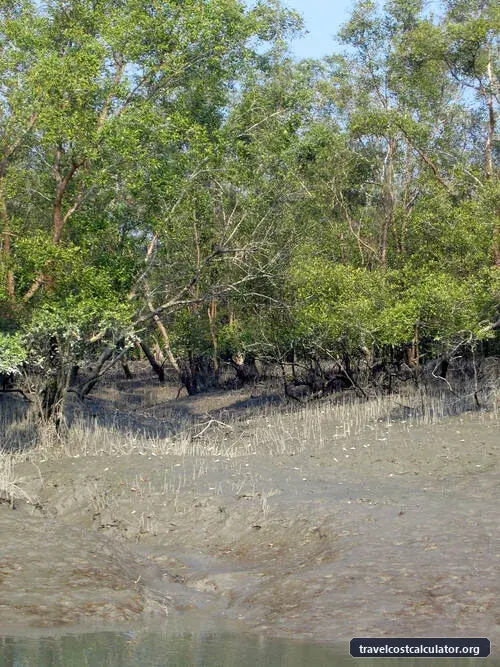
The Sundarbans mangrove forest, one of the largest such forests in the world (140,000 ha), lies on the delta of the Ganges, Brahmaputra and Meghna rivers on the Bay of Bengal.
The Sundarbans
🏛️ Overview & Historical Significance
Inscribed as a UNESCO World Heritage Site in 1997, the Bangladeshi portion of The Sundarbans forms the largest continuous halophytic mangrove forest on Earth. Spanning over 6,000 square kilometers across the Bay of Bengal delta, this vast wilderness is a labyrinth of tidal waterways, mudflats, and dense mangrove vegetation where the deltaic waters of the Ganges, Brahmaputra, and Meghna rivers converge into the sea.
UNESCO awarded World Heritage status to the Sundarbans Reserved Forest due to its outstanding ecological processes and unmatched biodiversity. It serves as an irreplaceable natural sanctuary for the world’s largest single population of the endangered Royal Bengal Tiger (Panthera tigris tigris). Unlike tigers elsewhere, the apex predators of the Sundarbans have adapted to swim across wide, salty rivers, hunt in muddy intertidal zones, and navigate treacherous mangrove roots.
Beyond its iconic tigers, the ecosystem supports over 300 bird species, the endangered Irrawaddy and Gangetic river dolphins, estuarine crocodiles, spotted deer (Chital), and monitor lizards. The forest plays a vital role as a natural defense barrier, shielding southern Bangladesh from severe cyclonic storms and oceanic tidal surges. Steeped in coastal lore, the region is also defined by its cultural heritage, including the ancient reverence for Bonbibi (the protective lady of the forest) honored by local honey gatherers (Mawalis) and woodcutters (Bawalis) who risk their lives daily entering tiger territory.
🎟️ Entrance Fees, Opening Hours & Ticket Booking Tips
Visiting the Sundarbans requires government permits issued by the Bangladesh Forest Department. Because deep forest zones are strictly protected sanctuaries, casual independent exploration on foot is illegal. Most travelers access the forest via multi-day liveaboard boat tours or authorized day-trips departing from Mongla or Khulna.
2026 Estimated Forest Entry & Permit Fees
-
✦
Foreign Tourists Daily Entry Permit: 2,000 – 3,000 BDT (~$16.50 – $25.00 USD) per person, per day.
-
✦
SAARC Country Citizens Daily Entry Permit: 1,200 – 1,800 BDT (~$10.00 – $15.00 USD) per person, per day.
-
✦
Bangladeshi Citizens Daily Entry Permit: 150 – 250 BDT (~$1.25 – $2.00 USD) per day.
-
✦
Karamjal Eco-Tourism Center Day-Visit Fee: 350 BDT (~$3.00 USD) for foreign visitors; 50 BDT for local visitors.
-
✦
Mandatory Armed Forest Guard Escort: 1,500 – 2,500 BDT (~$12.50 – $20.00 USD) per day per boat/group (required for overnight deep-forest navigation).
-
✦
Still Camera Fee: 350 – 500 BDT (~$3.00 – $4.00 USD) per camera; Professional Video Camera Fee: 3,500 – 6,000 BDT (~$29.00 – $50.00 USD).
-
✦
Vessel Entry Tax (Boat Fee): 2,000 – 5,000 BDT (~$16.50 – $41.50 USD) per vessel per day, depending on boat size (usually included in tour packages).
Opening Hours & Permit Booking Rules
Forest stations (such as Karamjal, Harbaria, Katka, and Kochikhali) are generally open to visitors from 8:00 AM to 5:00 PM. However, overnight liveaboard vessels travel through authorized channels 24 hours a day under river traffic regulations.
Booking Tip: Independent travel into the deep forest reserve is impossible without a licensed tour operator or Forest Department clearance. Independent travelers taking day trips to Karamjal can purchase permits directly at the Mongla Forest Department Office or Mongla Ghat. For 3-day deep-forest river cruises (Katka/Kochikhali), permit applications must be submitted by your tour agency at least 5 to 7 days in advance along with passport copies.
🚌 How to Get There & Local Transit Costs
The main transit hub to access the Sundarbans is Khulna, while the primary river embarkation point for boats is the port town of Mongla, situated 50 km south of Khulna.
Step 1: Traveling from Dhaka Travel Budget to Khulna or Mongla
-
✦
By AC Express Bus (Via Padma Bridge): Modern long-distance AC buses (e.g., Green Line, Hanif Enterprise, Shohag Express) run from Dhaka (Sayedabad or Gabtoli terminals) directly to Khulna or Mongla in 5 to 6 hours thanks to the Padma Bridge highway infrastructure. Fare: 1,200 – 1,800 BDT ($10.00 – $15.00 USD) one-way.
-
✦
By Train: The Sundarban Express and Benapole Express travel from Dhaka’s Kamalapur Station to Khulna Junction in roughly 7 to 8 hours. Fare (Air-Conditioned Chair / Snigdha): 1,000 – 1,500 BDT ($8.50 – $12.50 USD).
-
✦
By Air: Fly from Dhaka (DAC) to Jessore (JSR) via Biman Bangladesh or US-Bangla Airlines (approx. 45 minutes, 3,500 – 6,000 BDT / $29 – $50 USD), followed by a 2-hour private taxi ride to Khulna or Mongla (2,500 – 3,500 BDT / $20 – $29 USD).
Step 2: Transit from Khulna to Mongla Ghat
If arriving in Khulna, local transport to Mongla Ghat is quick and cheap:
-
✦
Shared Microbus / Local Bus: 1.5 hours; 150 – 250 BDT (~$1.25 – $2.00 USD).
-
✦
Private Taxi / Hired Auto (CNG): 1.5 hours; 1,800 – 2,500 BDT (~$15.00 – $21.00 USD).
Step 3: River Transport into the Sundarbans
-
✦
Day-Trip Engine Boat Rental (Mongla to Karamjal / Harbaria): A private wooden motorboat holding 4–8 people costs 2,500 – 5,000 BDT (~$21.00 – $41.50 USD) for the round trip.
-
✦
3-Day / 2-Night Liveaboard Tour Vessel: Standard shared group packages depart from Mongla or Khulna. All-inclusive costs (covering accommodation on board, all meals, national park fees, forest guard fees, and guide) range from $200 to $380 USD per person on mid-range vessels, and up to $500 – $850 USD per person on luxury boutique cruisers.
📸 Best Photography Spots & Insider Visit Hacks
Prime Wildlife & Landscape Locations
-
✦
Katka Wildlife Sanctuary & Jamtola Beach: Features a tall watchtower overlooking open grasslands where spotted deer, wild boars, and monkeys gather at dusk. A 3 km canopy walk leads to the untouched Jamtola Beach, famous for fresh tiger tracks imprinted on the wet sand.
-
✦
Kochikhali (Tiger Point): Deep inside the forest, Kochikhali features narrow channels flanked by high grass and dense mangroves. It is one of the best areas for quiet creek-boating to photograph saltwater crocodiles sunbathing on mudbanks.
-
✦
Harbaria Eco Park: Located closer to Mongla, Harbaria offers a wooden boardwalk over tidal creeks, providing safe and stunning canopy photography, spider-web macro shots, and views of wild mangrove roots (pneumatophores).
-
✦
Dublar Char: An isolated island facing the Bay of Bengal. Famous for its traditional fishing encampments, drying fish racks, and dramatic coastal sunsets.
Insider Travel & Photography Hacks
-
✦
The Early Morning Silent Rowing Boat: To capture wildlife, insist on launching small country rowing boats into narrow creeks at dawn (6:00 AM). Motor sounds scare off wildlife; silent rowing allows you to get close to kingfishers, deer, and rare birds.
-
✦
Tide Timing is Everything: Coordinate creek excursions during mid-tide. High tide submerges mudbanks (hiding crocodiles and crabs), while extreme low tide makes narrow channels unnavigable.
-
✦
Essential Gear: Bring a telephoto lens (at least 300mm to 500mm), waterproof dry-bags for camera gear, high-grade insect repellent, and knee-high rubber muck boots if walking on forest trails.
-
✦
Optimal Season: Visit between November and February when the weather is cool (15°C–25°C), rainfall is rare, water is calm, and wildlife visibility is at its peak. Avoid the monsoon season (June to September) due to heavy cyclones and rough seas.
🏨 Nearby Accommodation & Daily Budget Allocation
Overnight stays inside the reserve are exclusively spent aboard sleeping vessels moored in river channels. However, if taking day trips, base yourself in Mongla or Khulna.
Accommodation Options
-
✦
Liveaboard Cruise Ships (Recommended): Ranging from basic wooden cruisers with shared cabins to luxury vessels featuring air-conditioned suites, private baths, and sun decks. (Cost: $70 to $300+ USD per night including meals).
-
✦
Mongla Hotels (Base for Day-Trippers): Hotel Pasur (Government Parjatan Hotel) offers clean mid-range rooms near the river ($30 – $55 USD/night). Basic local guesthouses cost $10 – $20 USD/night.
-
✦
Khulna City Hotels: Hotel Castle Salam or City Inn offer modern mid-range/upmarket amenities ($45 – $85 USD/night).
-
✦
Eco-Resorts (Forest Boundary): Eco-lodges in Dacope or Munshiganj near the forest perimeter offer rustic thatched cottages ($30 – $60 USD/night).
Estimated Daily Budget Allocation (Per Person in 2026)
1. Backpacker / Day-Tripper Budget ($35 – $55 USD / day)
-
✦
Accommodation (Mongla local guesthouse): $15 USD
-
✦
Meals & Water: $10 USD
-
✦
Shared boat ride to Karamjal + Entry fees: $15 USD
-
✦
Local transit (Bus/CNG): $5 USD
2. Standard Mid-Range (3-Day Liveaboard Cruise Package) ($120 – $180 USD / day)
-
✦
Liveaboard vessel berth (Includes all meals, tea, cabin): $100 – $140 USD
-
✦
Forest permits, guard fees, & guide fees (allocated per day): $20 – $30 USD
-
✦
Incidentals & Tips: $10 USD
3. Luxury Boutique Experience ($300 – $500+ USD / day)
-
✦
Private suite on a luxury charter cruiser (All-inclusive gourmet meals, private transfers): $250 – $420 USD
-
✦
VIP customized forest tours, private speedboats, & gear support: $50 – $80 USD
Frequently Asked Questions
Essential visitor FAQs for The Sundarbans
What is the entrance fee for The Sundarbans in 2026?
How much time do you need to explore The Sundarbans?
How do I get to The Sundarbans from Dhaka?
📊 Heritage Quick Specs
Visiting Bangladesh on a Budget?
Calculate your full daily travel budget for Bangladesh — including hotel costs, local transport, food, and sightseeing expenses.
View Bangladesh Daily Travel Costs →Explore more UNESCO World Heritage Sites
🏛️ All 1,200+ Heritage Sites →