
 Iran
Iran
The Persian Caravanserai
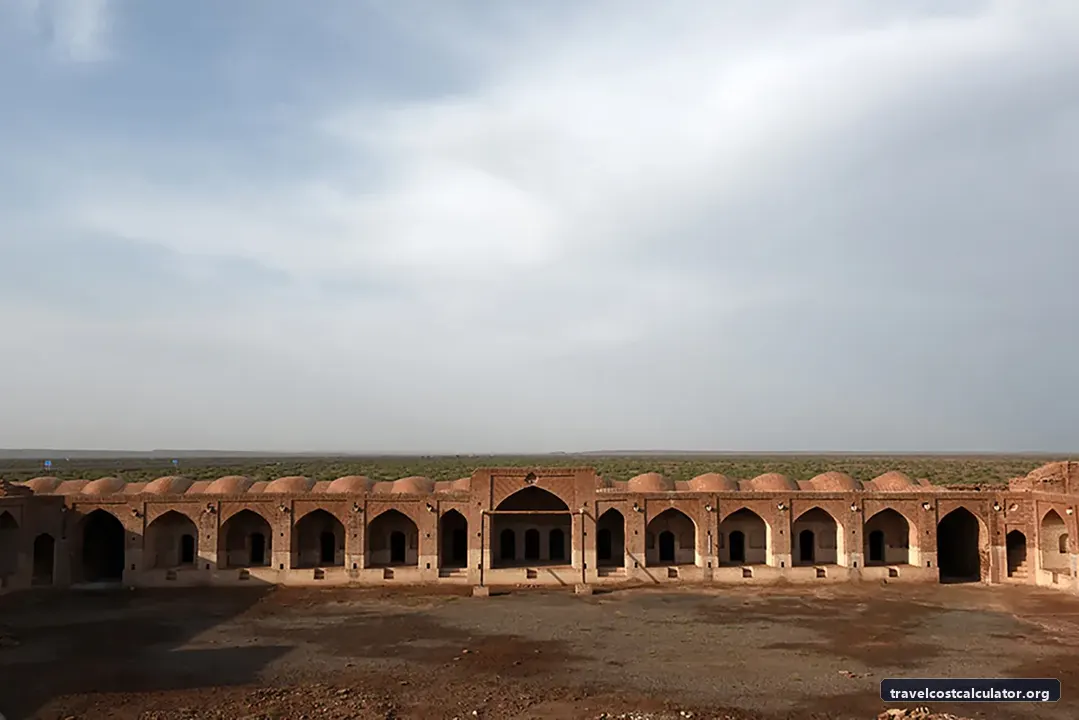
Caravanserais were roadside inns, providing shelter, food and water for caravans, pilgrims and other travellers.
The Persian Caravanserai
🏛️ Overview & Historical Significance
In September 2023, UNESCO officially inscribed "The Persian Caravanserai" onto the World Heritage list. Rather than a single standalone monument, this serial inscription highlights a architectural network of 54 historical caravanserais selected across 24 provinces in Iran. These roadside inns were the lifeblood of ancient global trade routes, serving as vital sanctuaries for merchants, pilgrims, scholars, and trade caravans traversing the Silk Road, the Incense Route, and the Royal Road of the Persian Empire.
Spanning over a thousand years of architectural evolution—from the early Islamic periods through the Golden Age of the Safavid Dynasty under Shah Abbas I, up to the late Qajar era—these structures represent masterclasses in vernacular desert engineering. Strategically placed approximately one day's travel apart (roughly 20 to 30 miles / 30 to 45 kilometers, which was the average distance a camel caravan could walk between sunrise and sunset), caravanserais offered far more than basic shelter.
Architecturally, a classical Persian caravanserai is built with defense and climatic adaptation in mind. Features typically include:
-
✦
Four-Iwan Layout: A central open-air rectangular courtyard surrounded by vaulted recessed halls (iwans), providing shade and ventilation.
-
✦
Fortified Exterior: Thick brick or adobe walls reinforced with semi-circular watchtowers, featuring a single, heavily guarded gateway to secure trade cargo against highway bandits.
-
✦
Integrated Infrastructure: Subterranean water reservoirs (ab anbars), windcatchers (badgirs) for natural cooling, stables for horses and camels, bathhouses (hammams), and prayer halls.
While all 54 inscribed sites possess exceptional universal value, key flagship locations easily accessible to international travelers in 2026 include:
-
✦
Zein-o-Din Caravanserai (Yazd Travel Budget Province): Built during the 16th century under Shah Abbas I, this is one of only two circular caravanserais ever constructed in Iran, now beautifully restored as an atmospheric desert hotel.
-
✦
Meybod Caravanserai (Yazd Province): A sprawling Safavid complex integrated with an ancient ice house (yakhchal), a post house (chapar khaneh), and a water cistern.
-
✦
Sa'd al-Saltaneh Caravanserai (Qazvin): The largest urban caravanserai in the Middle East, boasting covered bazaars, timber-detailed domes, and artisan craft shops.
-
✦
Robat Sharaf (Razavi Khorasan): Referred to by architectural historians as the "Caravanserai Album" due to its extraordinarily intricate Seljuk-era brickwork and stucco carvings.
🎟️ Entrance Fees, Opening Hours & Ticket Booking Tips
Visiting Iran's UNESCO-designated caravanserais in 2026 requires understanding the local economic landscape. International credit and debit cards (Visa, Mastercard, Amex) do not work in Iran due to international banking sanctions. Foreign visitors must carry physical cash (Euros or US Dollars) and exchange it locally, or use an Iranian prepaid tourist debit card (such as MahCard or Daric Pay).
Estimated 2026 Entrance Costs
Ticket prices for foreign tourists are set by the Ministry of Cultural Heritage, Tourism and Handicrafts (MCTH) and are standardized across major UNESCO heritage sites:
-
✦
Standard Individual Caravanserai Ticket: 1,500,000 to 2,500,000 IRR (approximately $3.50 – $6.00 USD / €3.20 – €5.50 EUR per site).
-
✦
Urban Caravanserai Complexes (e.g., Sa'd al-Saltaneh, Qazvin): Free entry to the general bazaar area; individual museum wings cost around 1,000,000 to 1,500,000 IRR ($2.50 – $3.50 USD).
-
✦
Children under 7: Free entry at almost all publicly run heritage sites.
Opening Hours & Logistics
-
✦
Desert & Roadside Sites (Zein-o-Din, Meybod, Izadkhast): Open daily from 8:00 AM to 6:00 PM in winter/autumn, and extended until 8:00 PM during peak spring and summer hours.
-
✦
Urban Caravanserais (Sa'd al-Saltaneh): Open daily from 8:30 AM to 9:30 PM. Shops inside close during afternoon siesta (1:30 PM – 4:30 PM).
-
✦
Ticket Purchasing Tip: Online advance booking platforms for international visitors remain limited. Tickets are purchased directly at the entrance ticket booth. Pay using your prepaid local tourist debit card or exact foreign exchange cash if accepted at official ticket offices.
🚌 How to Get There & Local Transit Costs
Because the UNESCO listing encompasses 54 locations across Iran, transit routes depend on which specific caravanserai you plan to visit. Below are transit routes for the most popular tourist hubs: Yazd (accessing Zein-o-Din and Meybod) and Qazvin (accessing Sa'd al-Saltaneh).
1. Reaching Zein-o-Din Caravanserai (from Yazd)
Located roughly 60 km (37 miles) south of Yazd along the main highway to Kerman.
-
✦
Private Taxi / Hired Driver: The most practical method. A round-trip taxi ride from Yazd city center, including 2 hours of wait time, costs approximately $20.00 – $35.00 USD (payable in IRR cash or Toman equivalent).
-
✦
Snapp Ride-Hailing App: Iran's localized version of Uber (requires an Iranian SIM card). A one-way Snapp fare from Yazd costs around 1,200,000 to 1,800,000 IRR ($3.00 – $4.50 USD), though securing a driver for the return ride from the desert highway can be challenging. We recommend arranging a round-trip driver.
2. Reaching Meybod Caravanserai (from Yazd)
Situated in the historic city of Meybod, 50 km (31 miles) northwest of Yazd.
-
✦
Intercity Shared Taxi (Savari): Departs regularly from Yazd’s Shohada Square or main terminal. Cost: approx. 300,000 IRR ($0.75 USD) per seat.
-
✦
VIP Intercity Bus: Any bus headed from Yazd towards Isfahan Travel Budget or Tehran Travel Budget can drop you off at Meybod's main turnoff. Cost: ~500,000 IRR ($1.20 USD).
-
✦
Private Taxi: One-way ride costs roughly 1,000,000 to 1,500,000 IRR ($2.50 – $3.80 USD).
3. Reaching Sa'd al-Saltaneh (from Tehran / Qazvin)
Located in downtown Qazvin, 150 km (93 miles) west of Tehran.
-
✦
VIP Bus from Tehran (West Terminal - Azadi): High-frequency departures every 15–30 minutes. Travel time is around 2 hours. Ticket cost: 600,000 to 900,000 IRR ($1.50 – $2.20 USD).
-
✦
Train from Tehran Railway Station: Daily regular trains to Qazvin. Cost: approx. 400,000 to 800,000 IRR ($1.00 – $2.00 USD). From Qazvin station, take a 5-minute Snapp taxi to the caravanserai for less than $1.00 USD.
📸 Best Photography Spots & Insider Visit Hacks
Prime Photography Locations
-
✦
Zein-o-Din Rooftop at Sunset: Climb up to the rooftop of the circular caravanserai right before dusk. Capture the contrast between the warm, illuminated brickwork, the sweeping desert horizon, and the rugged backdrop of the Central Iranian Range.
-
✦
Sa'd al-Saltaneh's Chahar-Sūq Dome: Stand directly beneath the main intersection dome inside the bazaar. The daylight streaming through the geometric skylight apertures creates dramatic light beams across the tiled brick floor.
-
✦
Meybod Chapar Khaneh Rooftop: Offers an elevated panoramic vantage point directly overlooking the vast quadrangle walls of the Meybod Caravanserai across the street.
-
✦
Izadkhast Elevation View: Shoot from the cliffside edge looking down toward the Izadkhast Caravanserai to capture its isolated, fortress-like position in the valley bed.
Insider Travel Hacks for 2026
-
✦
Optimal Seasons: The ideal time to visit Iranian caravanserais is during spring (March to May) and autumn (September to November). Summer temperatures in desert provinces (Yazd, Semnan, Kerman) routinely exceed 40°C (104°F), making daytime exploration unpleasant.
-
✦
Star-Gazing Night Visits: Desert caravanserais like Zein-o-Din and Dehnamak have zero light pollution. Staying overnight lets you capture brilliant astrophotography images of the Milky Way framed by centuries-old desert battlements.
-
✦
Dress Code Etiquette: As official heritage sites in Iran, standard dress regulations apply. Women are required to wear a headscarf (hijab) covering hair, along with loose-fitting clothing covering arms and legs. Men should avoid sleeveless shirts and shorts in public spaces.
-
✦
Hydration & Logistics: High-desert humidity drops sharply. Always carry refillable water flasks; many restored sites feature clean, modern filtered water dispensers near their main court entrances.
🏨 Nearby Accommodation & Daily Budget Allocation
Where to Stay: Authentic Caravanserai & Boutique Stays
To fully appreciate the historical context, consider spending a night inside a converted caravanserai hotel:
-
✦
Zein-o-Din Caravanserai Hotel (Yazd Province): Experience sleeping in converted carpeted alcoves with heavy curtains, wool mattresses, and traditional Iranian hospitality right along the desert.
Price Range: $45 – $80 USD / night (Includes traditional breakfast and dinner). -
✦
Bisotun Laleh Caravanserai Hotel (Kermanshah Province): A 5-star luxury accommodation housed inside a massive restored 17th-century Safavid caravanserai directly below the famous Mount Bisotun cliff face carvings.
Price Range: $90 – $140 USD / night. -
✦
Boutique Traditional Hotels in Yazd/Qazvin: High-end renovated desert mansions (e.g., Dad Hotel Yazd or Behroozi House in Qazvin) offering authentic central courtyards, plunge pools, and badgir cooling towers.
Price Range: $50 – $90 USD / night. -
✦
Budget Hostels & Guesthouses: Backpackers can easily find traditional hostel dorms in Yazd, Isfahan, or Qazvin.
Price Range: $12 – $25 USD / night.
Daily Budget Allocation (Per Person in 2026)
Iran remains an extraordinarily cost-effective destination for foreign travelers managing physical currency. Below is an estimated daily breakdown when touring the Persian Caravanserai network:
-
✦
Budget Backpacker Tier ($30 – $45 USD / day):
- Accommodation (Dorm or simple guesthouse): $15
-
✦
Meals (Street food, falafel, local kebabs, fresh flatbread): $8
-
✦
Transport (Intercity buses, shared taxis): $5
-
✦
Site Entrance Fees (1-2 sites): $6
- Accommodation (Boutique hotel or Zein-o-Din overnight stay): $55
- Accommodation (5-star heritage properties like Bisotun Laleh): $130
Frequently Asked Questions
Essential visitor FAQs for The Persian Caravanserai
What is the entrance fee for The Persian Caravanserai?
How much time do you need to explore The Persian Caravanserai?
How do I get to The Persian Caravanserai from the nearest city?
📊 Heritage Quick Specs
Visiting Iran on a Budget?
Calculate your full daily travel budget for Iran — including hotel costs, local transport, food, and sightseeing expenses.
View Iran Daily Travel Costs →Explore more UNESCO World Heritage Sites
🏛️ All 1,200+ Heritage Sites →